Boston transplant in NC by way of LA. Endlessly Curious. VP Research & Insights @ employbridge. Workforce & Econ Dev Geek. DemonDeacon. tweets are my own.
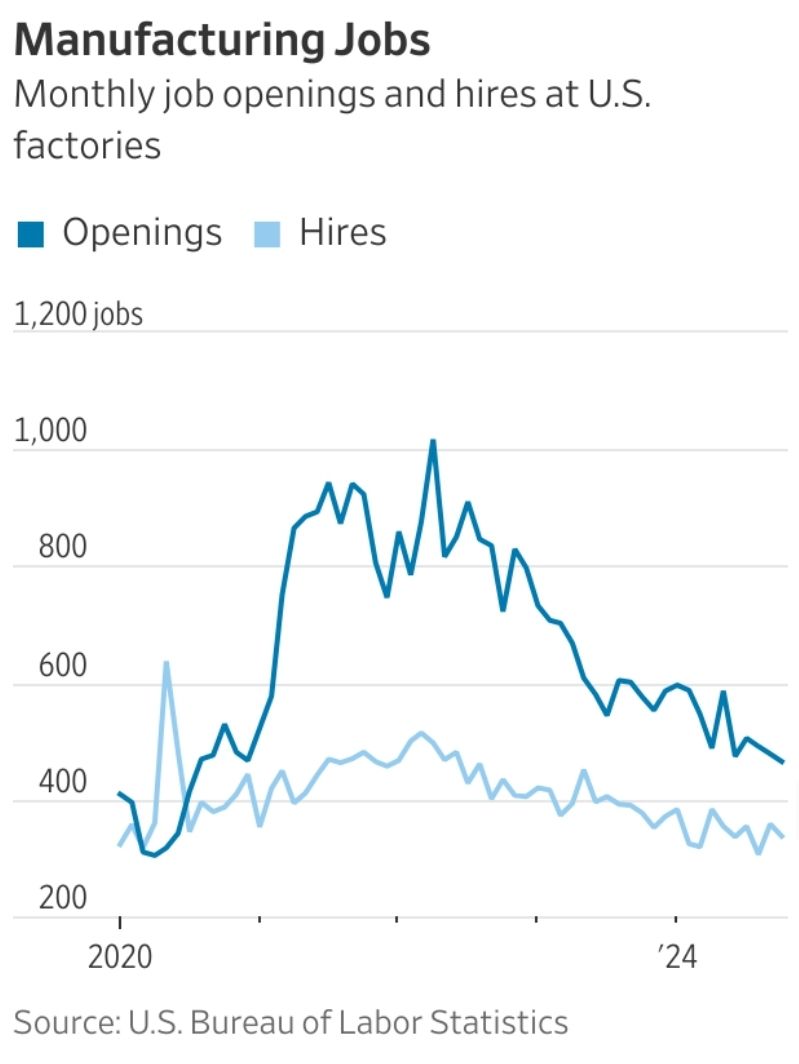
"U.S. factories employ about 13 million people. Plant owners are struggling to fill positions even as other sectors of the economy, such as transportation and warehousing, have recovered from pandemic-era labor shortages." https://t.co/8xtGGju4XO
@scottlincicome Remember when Skybus folded overnight due to a spike in jet fuel prices? We all used it in college because of the low $. A friend was in the middle of a trip when it stopped operating. That's the risk you take with that model.
@Abi0lvera@binarybits@TheRideshareGuy We have gig and flex programs. Our flex workers look like typical gig workers. It's more often for a career transition. Vast majority want a full-time permanent job at some point. Though, a small % do prefer it so they can be their own boss & have flexibility. Not majority though
👀 Demand for drivers & supply chain managers is spiking far above trend after SCOTUS ruling striking down IEEPA tariffs. Over past year this has happened when there's a burst of imports. Looks like industrial firms are stockpiling! #logistics
Read more: https://t.co/TsKoKak4p5
@scottlincicome In our tracker, supply chain disruptions had already jumped back up to the #2 business challenges for the first time in a while, especially for manufacturers. Will be interesting to see if & when new import surge comes if there's a lull.
BREAKING: The Supreme Court has struck down President Trump's tariff authority, saying his claim of emergency authority to issue sweeping tariffs to America's trading partners was unlawful. https://t.co/Hmmh0kVXOi
@scottlincicome In our gig workforce, that portion that's not captured is the bulk of our workers. Not interested in being part of the mainstream workforce; usually juggling other responsibilities like school, childcare, eldercare, retired, etc.
@JosephPolitano Why do you think employment has dropped so significantly over the past couple of years even as production has picked up? Same thing is happening in mfg more generally but to a lesser degree
In sum, we are seeing a big slowdown in labor supply and some weakness in labor demand. Not a whole lot the Fed can do when the biggest problem is not enough people. But it can and will cut rates, given inflation risks I would limit that to 25bp at the next meeting.
@scottlincicome@RichmondFed Looking at data on new leases signed since May, there's been a big uptick in warehouse leases of 20,000 sq ft or less primarily by industries expected to be heavily impacted by tariffs (auto, construction, furniture, 3pls, etc.). Lots of stockpiling too.
@scottlincicome Did a deep dive on this a few years ago. As labor market tightened (more options) in states where mfg $ was higher than private $ we had stable show rates. Where it was lower show rates went down w/ unemployment rate.
@InnovateEconomy Even within STEM this shuffle happens. Nearly all of the computational bio graduates in my husband's bio PhD program went to work at tech companies & not in bio
@chadmoutray@WSJ Nail salons I believe were one of the few sectors that didn’t see much of a decline during the Great Recession and among the first to rebound. That’s not a great sign.
Just introduced - new bill to pull back presidential power on tariffs. Trump admin has been trying to consolidate presidential power (and succeeding). Didn't factor in blowing up global economy would finally push congress to claw it back. https://t.co/nIlvdmP7XV
DETROIT, April 3 (Reuters) - Stellantis NV, maker of Ram trucks and Jeeps, said on Thursday it was temporarily laying off 900 workers at five U.S. facilities after President Donald Trump's tariffs were announced.
Industrial policy to bring back strategically important manufacturing is great, I’m not even opposed to some targeted tariffs to act as a backstop to such policy. But manufacturing also requires inputs that are often imported, so making them more expensive is *counterproductive*
The whole thing is maddening because we actually have a recent example of effective efforts to bring back manufacturing and the Trump admin is poised to undermine it (while also making bananas 10% more expensive for some reason?)
Trump's reciprocal tariffs:
1) Impose hundreds of billions of dollars in new taxes on Americans without public/congressional input
2) Are based on secret calculations that have little, if any, connection to actual foreign trade barriers
3) Ignore all US tariff/non-tariff barriers, which in some cases are quite high
4) Are justified by a "national emergency" that reflects a total misunderstanding of how trade deficits work
5) Disregard US trade agreement commitments, including ones made by Trump himself
6) Will make us all poorer, and likely do real & lasting harm to the US economy (incl in manufacturing)
7) Embolden our adversaries around the world
And those are just the ones off the top of my head.
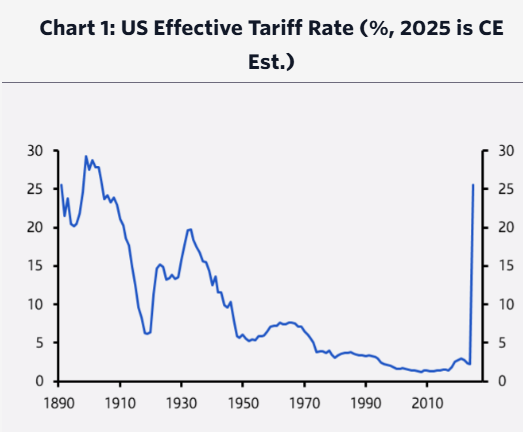
Capital Economics: if today's announcements are implemented, the effective US tariff rate will shoot straight past the Smoot-Hawley levels of the 1930s.
"The effective tariff rate on all imports will rise from 2.3% last year to around 26%, leaving it at a 131-year high"
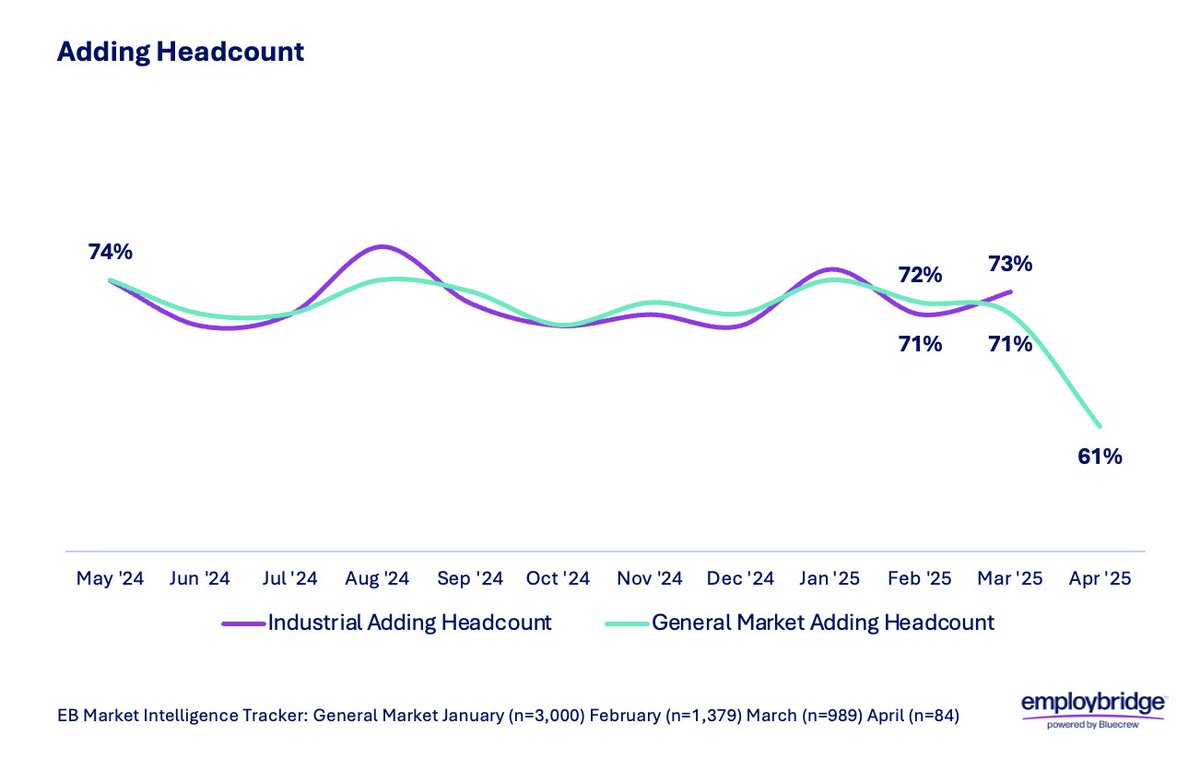
👀 April 1-2, even before details of tariffs were announced, we saw significant drop in # of companies adding headcount to lowest level since we started tracking. (Only 2 days into April; base size is small (n=84) + don't have industrial data yet) #tariffs#labor#staffing
🇺🇸February #JOLTS: Frozen labor market with downside risks
🔻Job openings: 7.6mn (-194k): near post-Covid low
⬆️Hiring: 5.4mn (+25k): still near post-Covid low
🔻Quits: 3.20mn (-61k): near post-Covid low
🔺Layoff: 1.79mn (+116k): slight uptrend & near post-Covid high