Over 1.1k views already! 🚀
How do you scale a single Elixir monolith across 50 engineering teams without slowing down?
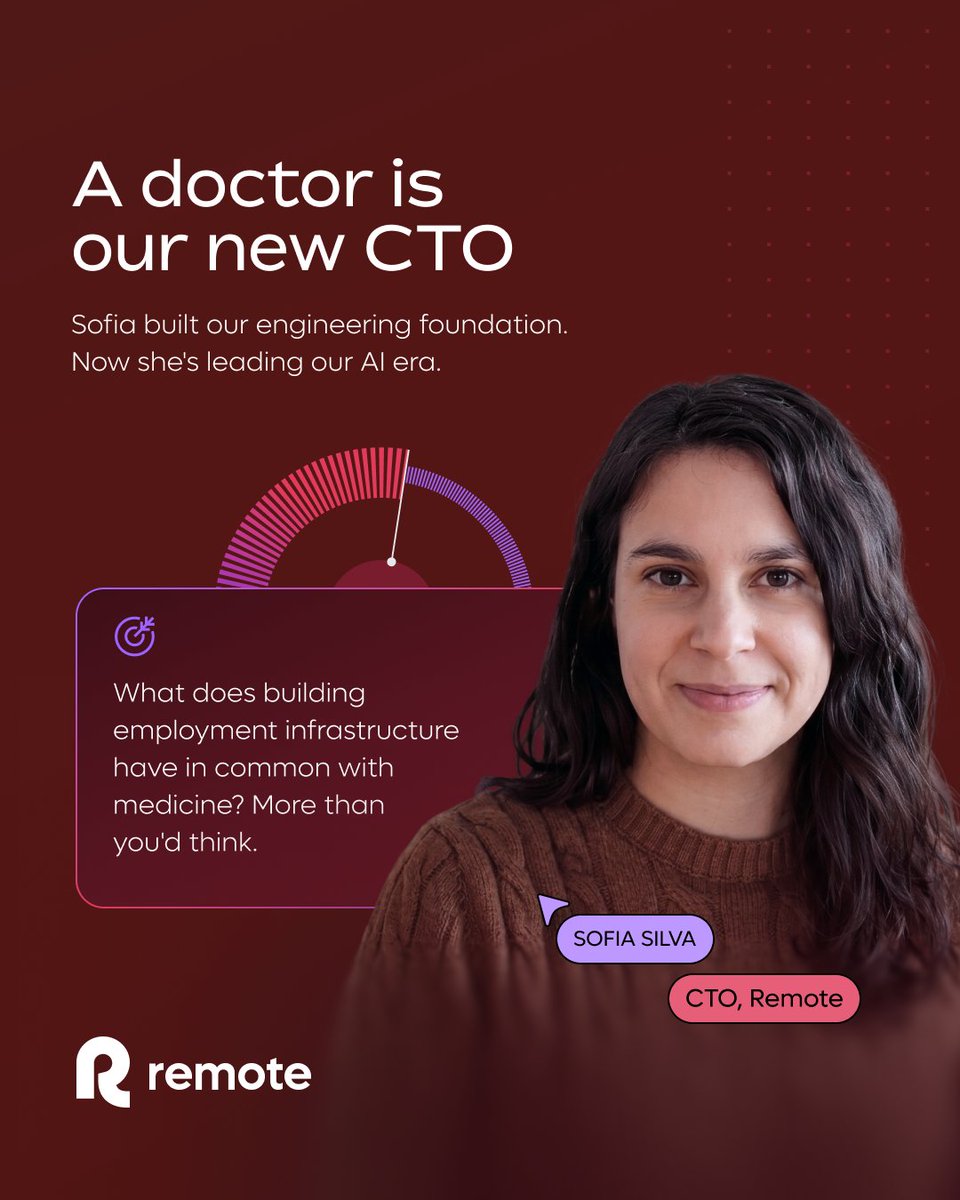
Sofia Silva & André Albuquerque took the #ElixirConfEU 2026 stage to share @remote's incredible journey.
Watch the full story here: https://t.co/VgWfa6bRa4
@Timur_Yessenov@remote Great callout. Remote MCP already authenticates through the user's own session and respects the same access controls they have in Remote. No elevated permissions, no shadow access. Audit and scoping are core to how we built it :) more here https://t.co/ApG7Qt6Hjp
We just launched @remote MCP. Your AI agent, connected directly to your workforce and payroll data in Remote.
We built the right foundations. Now anyone can build exactly what fits their needs. Check how we're using it internally here 👇
🔗 https://t.co/TQhiVbGgz1
@ScottShapiroUXD@remote Good! Whatever permissions you have in Remote, you have through MCP. The authentication, the permissions, and the compliance posture all carry over. More here https://t.co/ApG7Qt6Hjp :)
Big announcement today at @remote!
We are going all in on 𝗴𝗹𝗼𝗯𝗮𝗹 𝗽𝗮𝘆𝗿𝗼𝗹𝗹 𝗮𝗻𝗱 𝗲𝗺𝗽𝗹𝗼𝘆𝗺𝗲𝗻𝘁 𝗶𝗻𝗳𝗿𝗮𝘀𝘁𝗿𝘂𝗰𝘁𝘂𝗿𝗲, and opening our platform to the world.
Sounds simple until you try to build it:
Payroll in one country is already a dense topic. Payroll across the world becomes an insane systems problem: tax laws, social security, benefits, holidays, languages, currencies, equity, and local interpretations that change because a government updated a rule somewhere.
When we started Remote, my engineer brain thought we would plug into the payroll APIs that existed around the world.
They mostly did not exist, so we did the hard work.
We set up entities. We built in-house payroll engines. We documented compliance country by country. We learned the local details that make payroll work in practice.
It took seven years. It took a lot of investment. It took a lot of people doing important work.
Today we are opening that infrastructure up.
Any company, any tool, any workflow, any AI agent can plug into Remote and use the global payroll and employment infrastructure we have built.
You keep your systems. We handle the hard parts: payroll, compliance, employment infrastructure, country by country.
I am grateful to our team, our customers, our partners, and everyone who supports us along the way.
Seven years building toward this chapter. The best is yet to come.
Let’s go.
Full story: https://t.co/9tP4OGvqTy
Global payroll is one of the hardest problems in business.
We've spent 7 years solving it. Today we open it up, and step into our next chapter as the leading global employment infrastructure.
Any company, any tool, any AI agent can now connect directly to Remote via MCP. No API keys. No custom integrations. Just the infrastructure tens of thousands of companies already run on.
Watch @jobvo explain👇
Congratulations Sofia! It has been a pleasure working with you and the @remote team on the type system and making the Elixir compiler as fast as it can possibly be!
Excited to announce @remote as a Gold Sponsor for ElixirConf EU 2026!
Building global HR solutions for distributed teams. Thank you for supporting the community. https://t.co/SRkntWnaCb
Final keynote: @lejboua & @StaminaLoops (@remote ) on scaling from 1 to 50 engineering teams with an Elixir monolith.
Early Bird ends in 2 days. https://t.co/N4WCsNVLyR
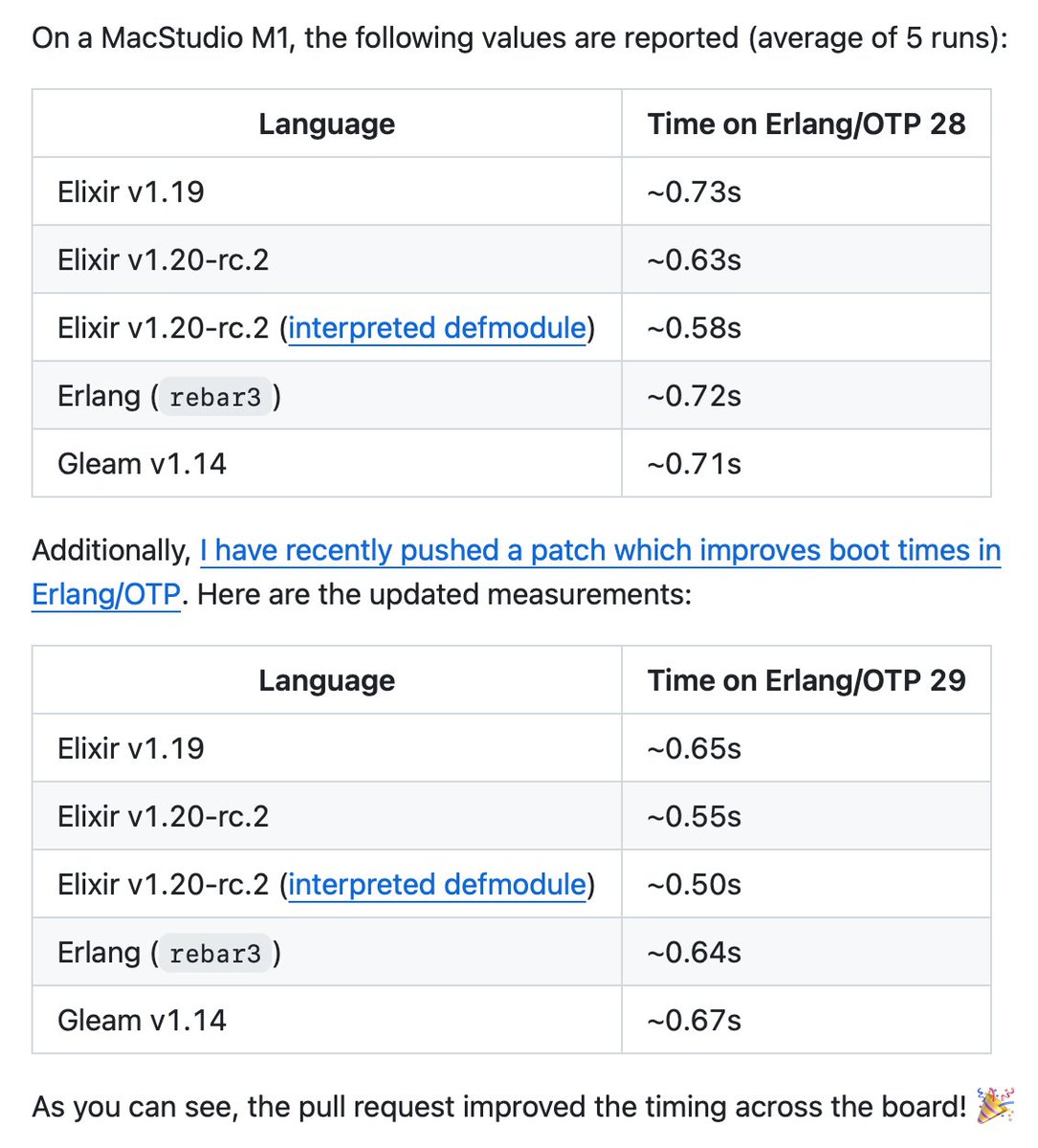
Lately I worked on compilation times for Elixir (and all BEAM languages). TL;DR:
* Elixir v1.20 compiles ~10% faster on OTP 28 and ~20% faster on OTP 29
* Boot times on BEAM is roughly 10% faster on OTP 29
* A new interpreted mode in Elixir v1.20 compiles up to 5x faster
🧵👇
My only advice to CEOs this year..
Hire tinkerers.
Make it high status.
Find ones that will explore the edges and (ideally) naturally gifted at teaching people.
Empower them to freely roam across the org and fix large problems that can be automated.
All your execs will complain that these tinkerers don’t understand scale or systems (rollout being a favorite word).
Listen, and ignore them. Or even better give them budget to hire a tinkerer to achieve their targets.
Give these tinkerers ambition, purpose and hard targets and watch them fly.
@remote is automating complex HR data migrations at scale with a Code Execution Agent built on LangChain + LangGraph. By combining LLM reasoning with sandboxed Python execution, they're:
• Transforming thousands of employee records into structured schemas in hours vs. days
• Eliminating hallucinations by keeping large datasets outside the context window
• Making migrations repeatable and auditable for sensitive compliance data across global jurisdictions
Read the full guest post: https://t.co/0Oa6D3jjmJ
This is the most fun moment to be a developer in years.
The AI tools are imperfect, the patterns are still emerging, and there's genuine room for experimentation. Roll up your sleeves and build something. The earthquake is further opening up what's possible.
The best news about this new layer: traditional engineering skills are more valuable than ever, not less. It helps us minimize shipping slop.
Developers who already invested in CI/CD, testing, documentation, and code review are having the most success with AI tools. These "boring" foundations are accelerators. They turn agents from chaos generators into productivity multipliers.
The real opportunity is learning to work at a different altitude. Instead of typing syntax, we're reviewing implementations, catching edge cases, and shipping features in hours that used to take days. That's genuinely exciting.
Yes, there's a learning curve. Understanding how to provide context, iterate on plans, and review AI-generated code quickly takes practice. But this is learnable through doing - build small tools, review everything, develop intuition through repetition.
The multiplier potential is real when you combine AI speed with engineering judgment. We're not replacing coding skills but we're finally able to focus them on the interesting problems while delegating the tedious parts.
New on the Anthropic Engineering Blog: Long-running AI agents still face challenges working across many context windows.
We looked to human engineers for inspiration in creating a more effective agent harness. https://t.co/aLDLQPhf1K
@andreasklinger@marcelolebre@Jobvo@remote Partly. We made mass updates to the inline endpoints specs using Cursor, and that required LLMs because it involved inference that a script couldn’t handle. Then we generated code with a script. It was a strong experiment, and we will write it up