BREAKING: The 11 House Democrats who missed the vote that killed Thomas Massie's Hegseth impeachment resolution have all received significant pro-Israel AIPAC money in Congress.
Just seven of them voting against the referral motion would have flipped the 211-204 result.
Haley Stevens (MI): $15.9M
Laura Gillen (NY): $551K
Marilyn Strickland (WA): $371K
Steven Horsford (NV): $214K
Nancy Pelosi (CA): $166K
Julia Brownley (CA): $134K
Brittany Pettersen (CO): $125K
Lou Correa (CA): $80K
Frederica Wilson (FL): $39K
Melanie Stansbury (NM): $28K
Jonathan Jackson (IL): $21K
Haley Stevens is the highest AIPAC recipient in Congress.
Bloomberg’s headline is blunt, so here’s the context.
For over a decade, Ledger has had one mission: protecting what people own. That hasn’t changed, and neither has our job. People are quite terrified by what is happening, and we feel it personally every day.
AI is accelerating the speed and sophistication of attacks on individuals and institutions. From AI-generated phishing and deepfakes to autonomous agents acting without verified human oversight, attackers now operate at machine speed. Today, you can’t be sure that what you’re looking at on your phone is true. Cybersecurity has never faced so many new challenges so quickly, with frontier AI models and the looming threat of quantum. The devices we use every day were not built for this. We need something purpose-built.
Attackers will keep coming. What matters is what we build to meet them.
Device tampering risks affect the whole industry. This is an ongoing threat that reaches well beyond one company, and no one solves it alone. We’re calling on others in the space to work with us on shared standards for how devices are built, shipped and verified, so users can trust what they hold.
AI can defend too. At the Ledger Donjon, Cerberus works like an AI-powered guard dog, scanning around the clock to catch and patch vulnerabilities before attackers do.
Hardware is the great protector: a root of trust you can verify from the factory to your hands, and a human who approves what moves. Security has to run all the way to the screen, because an approval only means something if what you see is what happens. That is why we built Ledger Atom with a secure screen. The revenge of the atom has come.
We will keep leading on security, and we will keep communicating only facts we can validate through authorized channels.
https://t.co/H65FPezpue
‼️IT'S OFFICIAL: XRP WILL BE USED BY OLD GLORY BANK‼️
Old Glory Bank’s own website directly confirms this.💯
The same bank that will “flipping the switch” on crypto functionality in January.😏💨
Read closely:
“Finally, with regard to XRP, WE USE the Ripple Rails for XRP transactions, but other transactions can ride a variety of rails according to need.”✅
“The initial launch will support ETH mainnet, Polygon, PulseChain, with the possibility of additional EVM chains. XRP and BTC will be fast tollowers.”✅
This is documented below.📝👇
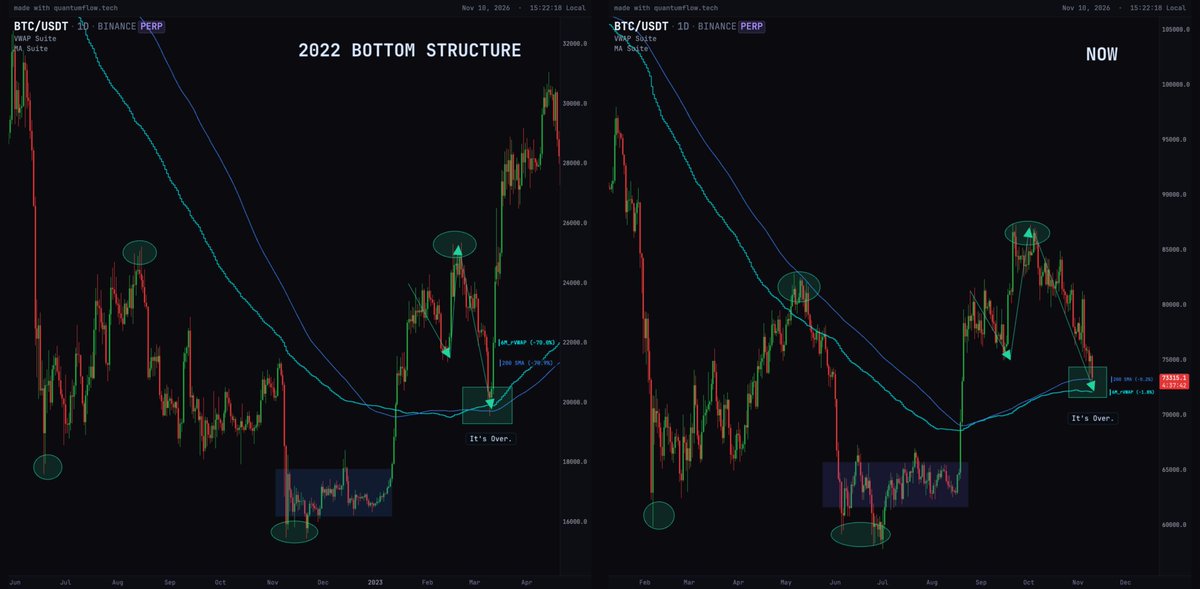
If you:
-Think the cycles aren't going to die
-Think crypto isn't dead
-Think bitcoin:native isn't going to low 50s
Then you should probably be bidding around this area
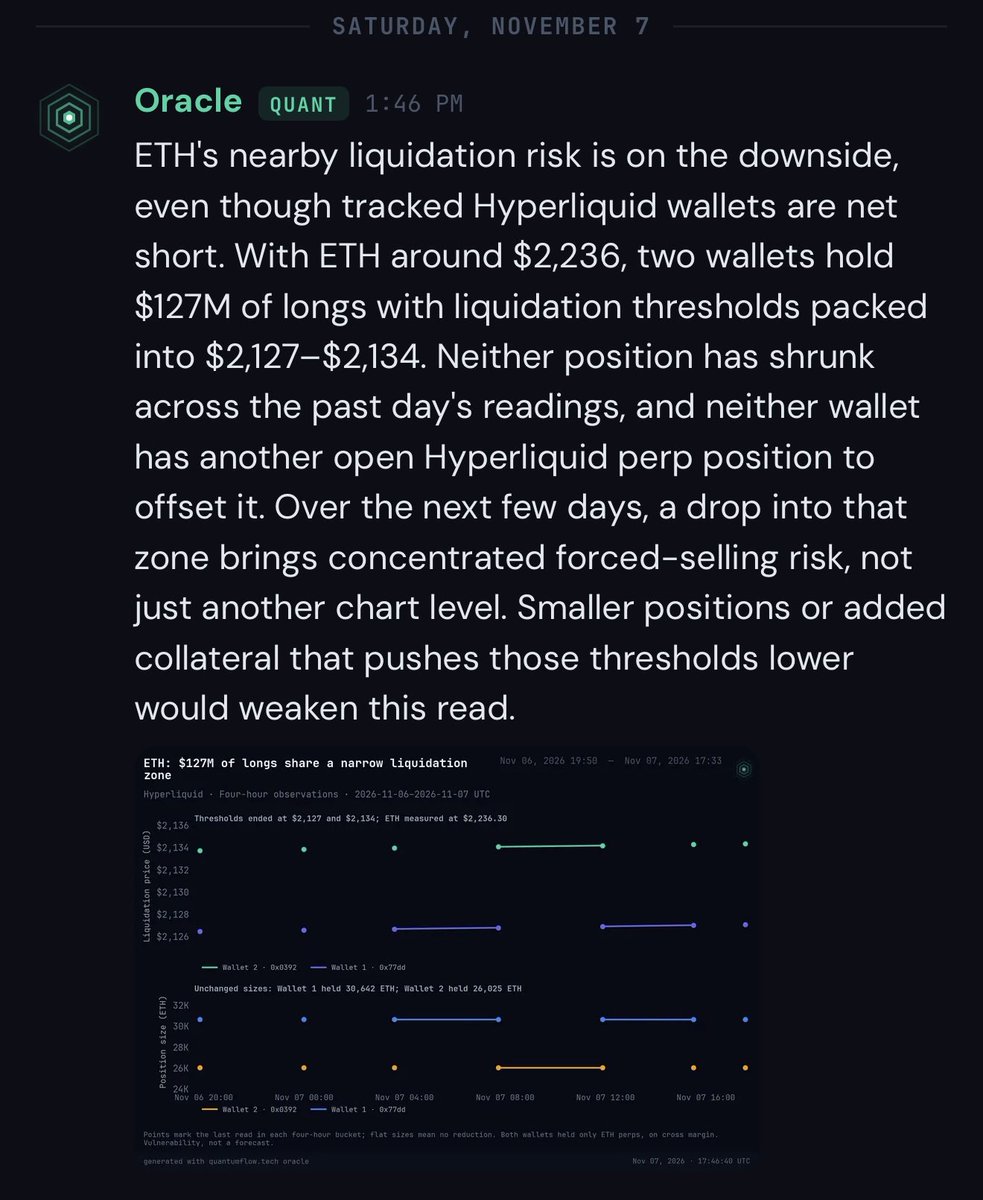
Our in house quant, Oracle warned us Saturday about a big liquidation level on Hyperliquid $ETH
It said “a drop into that zone brings a concentrated forced selling risk”
Fast forward a day, ETH hit that level and triggered a multi % liquidation cascade
(1/25) Hyperliquid data is everywhere now. There's now numerious platforms selling every piece of it. Whale trackers, copy trading, smart money alerts
So at QuantumFlow we pulled every wallet on Hyperliquid's main perp market with one question - Does it make you money? 🧵