AI can hand you a conclusion and still leave you with less understanding. Synthesis is not a final step. It is the learning. You don't retain what you didn't assemble. Where do you still do the assembling yourself?
@QuietReckon@OutlawsPoetic@WhitStillman It happens because we consume without anchoring. Have you tried noting just one dense moment per article instead of trying to remember the whole thing?
Most reading leaves no residue. The next text starts from zero. Serious readers compound: each mark, connection, or open question makes the next paper land deeper. That’s the kind of library we’re building at Omphalis.
Two people can read the same paper and walk away with completely different value.
AI can tell you what it says. It can’t know why it matters to you.
The note you leave may be the most valuable artifact.
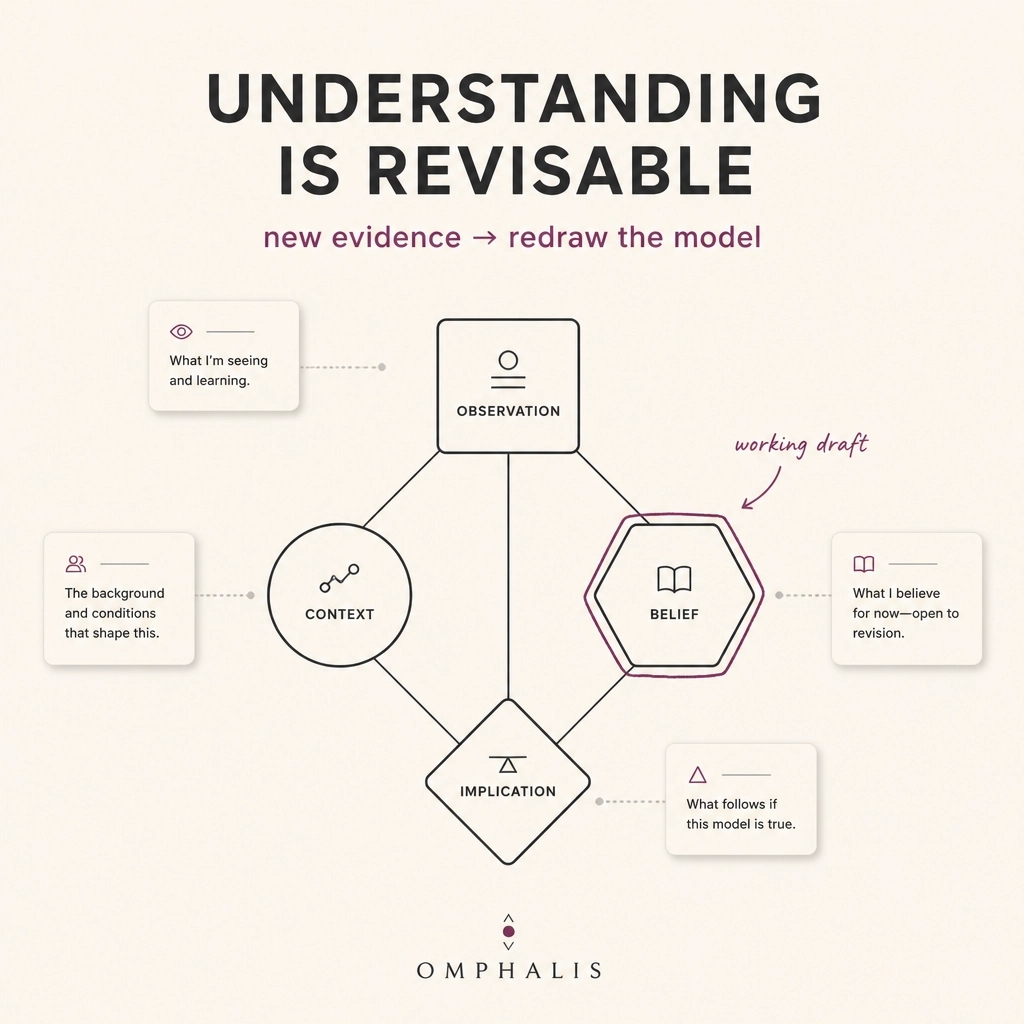
Your understanding should be a working draft, not a courtroom defense. New evidence arrives? Redraw the model. The best knowledge workers change their minds without losing the thread. What belief are you updating?
Recognition is cheap: AI can hand you the answer on demand. Understanding begins when you close the source and explain the idea from memory. Wherever you stall, keep learning.
Hot take: AI didn’t make us better readers. It made skimming feel productive.
The people who retain and connect ideas still read slowly: and structurally.
When did reading become a chore to optimize away?
A generic AI summary tells you what a paper is about. It rarely shows how the argument works: premises, evidence, turns, conclusions. At Omphalis, we map that structure. What would you map first?
The AI race to help us read faster is solving the wrong problem.
Understanding rarely comes from moving through more words per minute. It comes from seeing how ideas fit together.
Structure beats speed.
Google’s new AI study tools can quiz, summarize, and visualize.
Useful? Yes.
But are we helping people learn: or just helping them feel like they did?
AI should challenge our thinking, not replace it.
UBC is replacing peer notetakers with AI transcription. It may capture every word. But a transcript isn’t understanding; it’s raw material. Where do we draw that line?
Are AI summaries helping us learn faster, or are they making us understand less?
AI summaries are now part of how we search, study, and work. They help us get oriented, organize information, and find quick context. But recent research points to a risk. https://t.co/sI1Ui0zUSa
NUS is cutting research from 2 weeks to 30 minutes. Impressive. But speed isn’t understanding. At Omphalis, we care about structure, argument flow, and what’s worth remembering. Are we learning: or finding faster?
Modern content discovery is corrupted by engagement-based algorithms and sponsorships that prioritize noise over personal growth. A library should grow through transparent connections to your existing knowledge instead of chasing whatever is currently trending. Omphalis includes a Discover shelf that recommends related reading based on what you have already chosen to keep, providing explanations for why each item appeared while remaining free from external influence. How do you decide what to read next?
The feeling of learning while jumping between podcasts, videos, and articles is often an illusion. You consume more but retain less because the media remains fragmented and cluttered. True comprehension stops this cycle by anchoring your content into a structured personal library.