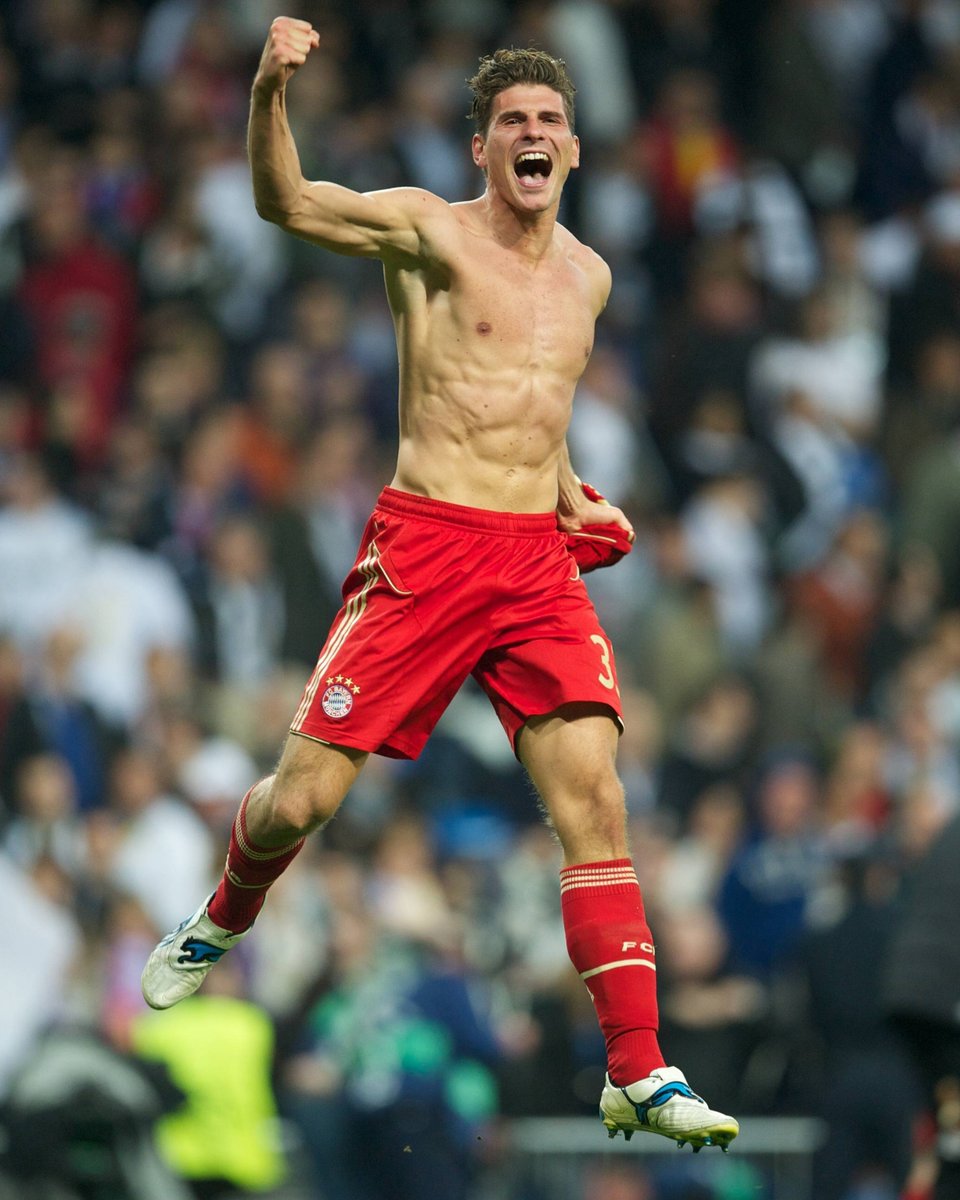
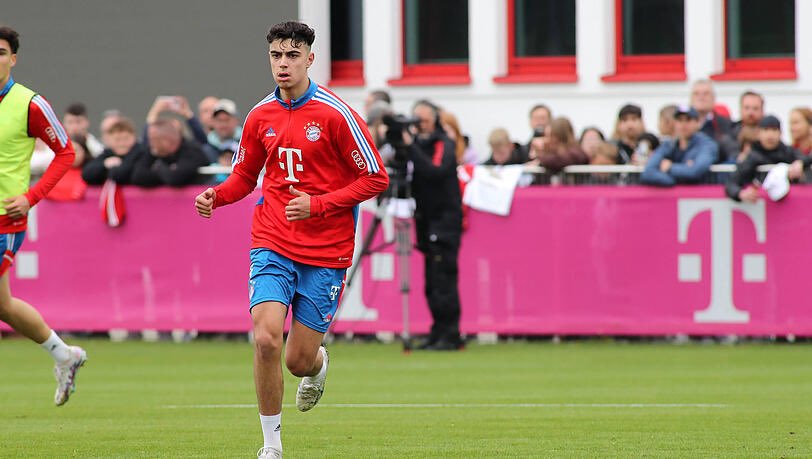
On a pas réussi à recruter 6 nous essaierons avec Aleksander Pavlovic qui est notre nouveau 6 à toi jouer maintenant je pense qu’il est capable de le faire #FCBayern
Solebakken ce qu’il propose tactiquement c’est très fort depuis le mondial déjà avec Copenhague il avait proposé des belles choses tactiquement dans le jeu avec son parcours en europa League #ENGNOR#Norway#England
🚨⤵️ DFB confirm our exclusive news:
“DFB President Bernd Neuendorf and DFB Vice-President Hans-Joachim Watzke held a first intensive meeting with Jürgen Klopp in New York yesterday regarding the possible appointment as Germany head coach. During the constructive talks, an understanding was reached on the key elements of a potential contract. The talks will continue next week. Both sides are confident that the negotiations – subject to an agreement with Klopp’s current employer Red Bull - can ultimately be concluded successfully.“
🚨💣 EXCLUSIVE | Jürgen Klopp and the DFB have now reached an agreement in principle.
Breakthrough after yesterday’s negotiations in New York. An agreement in principle has been reached on a contract running until the end of the 2030 World Cup. Only final details remain to be resolved.
Klopp is now just one step away from becoming Germany’s new Bundestrainer. His exit from Red Bull is expected to be finalised with Oliver Mintzlaff in New York by early next week at the latest.
The DFB are planning to announce the agreement with Klopp today.
@berger_pj@SkySportDE 🇩🇪
"EL PRÓXIMO EN SER ANUNCIADO"
Fabrizio Romano adelantó que el próximo entrenador de selecciones en ser anunciado será Jürgen Klopp. Se espera que el anuncio sea muy pronto. En las últimas horas, Neuendorf y Watzke, directivos de la DFB, viajaron a Estados Unidos a cerrar el acuerdo.
Va saliendo el sol en Alemania.
Mais upamecano j’ai RAREMENT vu une telle force de dissuasion depuis van dijk 2019.
C’est le meilleur défenseur du monde et DE LOIN cette saison désolé mais c’est trop trop grave le niveau
Let's talk about France against Morocco.
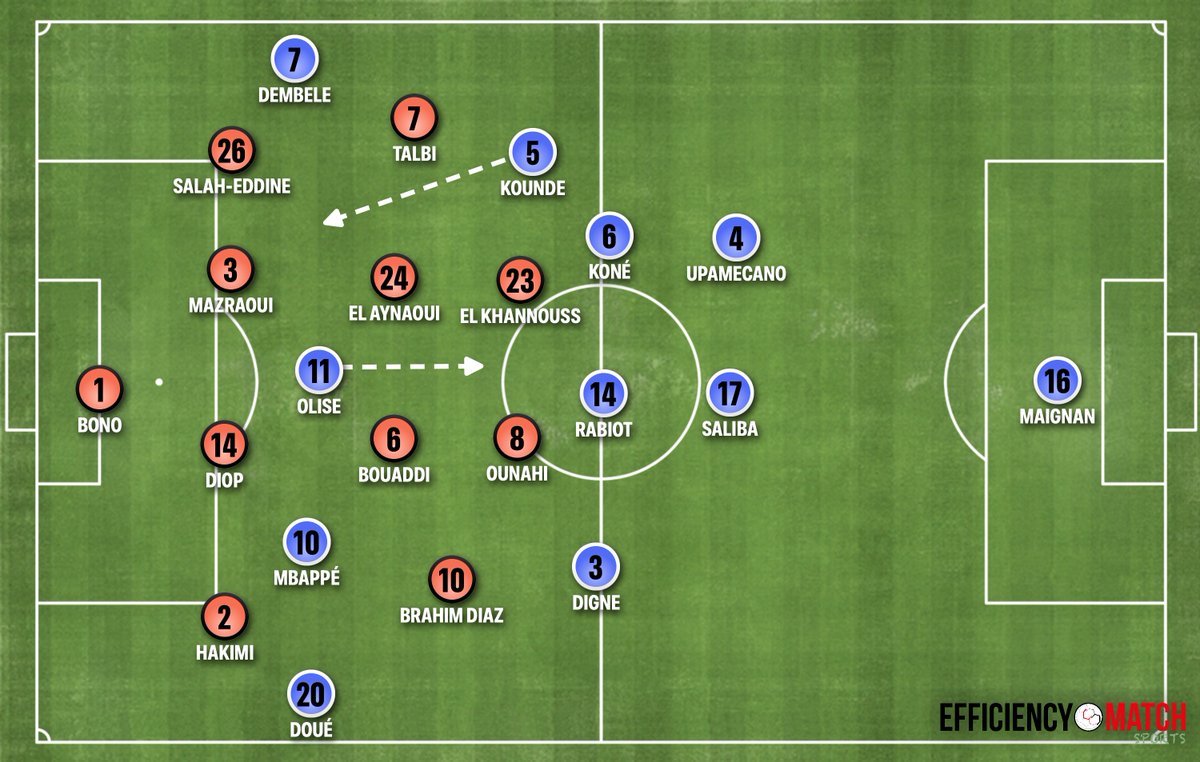
France attacked in a 3-2-5 structure, with Jules Koundé pushing into the right half-space to open a direct passing lane to Ousmane Dembélé. Lucas Digne stayed deeper, providing more defensive security. Michael Olise, as usual, started between the lines but had the freedom to drop deeper and organize play. Kylian Mbappé occupied the left half-space, where he eventually scored the opening goal.
France continue to attack with plenty of players behind the ball. The two midfielders, for example, usually stay very close to the centre-backs, always facing forward and rarely pushing higher up the pitch. Their role is mainly to circulate possession from side to side without taking unnecessary risks while protecting the team against transitions.
This can make France look a bit predictable in settled attacks, relying mainly on individual quality or quick combinations between their front four. They don't create many chances in these situations, but the trade-off is that they are almost impossible to hurt defensively because they always have so many players behind the ball.
France still look at their best when they have space to attack. That's why, during certain phases of the game, they became passive and allowed Morocco to dominate possession, patiently waiting for them to commit numbers forward and lose the ball in dangerous areas before launching counter-attacks.
Mbappé won a penalty after Hakimi lost possession with Morocco exposed, while Désiré Doué produced an excellent ball-carrying action in transition following a poor turnover from Bouaddi. France simply have too many elite players to defend against when they can run into space.
From restarts, however, France adopt a different approach. They often press high, sometimes even man-to-man. It makes sense because these situations allow them to organize the press properly, and the reward for winning the ball is very high. They also have a clear physical advantage. France's defenders and midfielders are stronger in duels and more athletic in large spaces than Morocco's players.
Morocco's players are technically outstanding and very agile, but they generally lack the physical profile to consistently beat France's defenders in open space or dominate offensive duels.
Outside of restarts, France rarely press aggressively. Instead, they are happy to defend in a compact mid-block, allowing opponents to have possession while protecting the space behind them. You can circulate the ball around them and occasionally even play through them, but playing behind them feels almost impossible. Teams sometimes manage to progress between the lines, yet very little happens after that.
At the start of the second half, with the score still 0-0, France counter-pressed more aggressively, taking slightly greater defensive risks. During the opening minutes, Morocco managed to break the first wave of pressure and attack in transition. Even then, they never generated clear chances because once the ball was forced wide, William Saliba and Dayot Upamecano proved almost impossible to beat in large spaces. Even when France become more aggressive, their defensive quality allows them to take risks without conceding much.
As for Morocco, I keep coming away with the same impression. I think there's still a lot of room for improvement.
They can dominate possession for long periods because they have many press-resistant players and clear positional ideas that allow them to progress into advanced areas. But once they get there, very little happens.
I like the overloads they create on the flanks, especially with Ounahi. They have many technically gifted players who rarely lose the ball in tight spaces, but they struggle to convert possession into clear chances. There is very little diagonal progression into dangerous central areas, and overall they don't take enough attacking risks.
The reality is that they have been missing Ez Abde so much. With his 1v1 out wide, Morocco would have been able to create wide overloads on the right side, to then find Ez Abde isolated on the left side to target defenders in 1v1 situations.
Morocco are excellent at slowing down the tempo of the game, and they are also difficult to create chances against. Their rest defense is usually well balanced, with Noussair Mazraoui staying deeper to allow Achraf Hakimi to attack more aggressively.
They have a very good team, but many of their goals have come outside of settled attacks and they felt short to create chances consistently. Their goal against Brazil came in transition, while their goals against Canada came from transitions and a set piece.




![PGeopardi's tweet photo. My TOP 8 greatest by position [1/11]
Let's start with keepers
1. Yashin 🇷🇺
2. Neuer 🇩🇪
3. Zoff 🇮🇹
4. Buffon 🇮🇹
5. Banks 🏴
6. Schmeichel🇩🇰
7. Zamora 🇪🇸
8. Kahn 🇩🇪
HM: Casillas 🇪🇸
https://t.co/HeHzT0amgj https://t.co/IywJFdu6PS](https://pbs.twimg.com/media/HM4xptrWAAA8vhP.jpg)