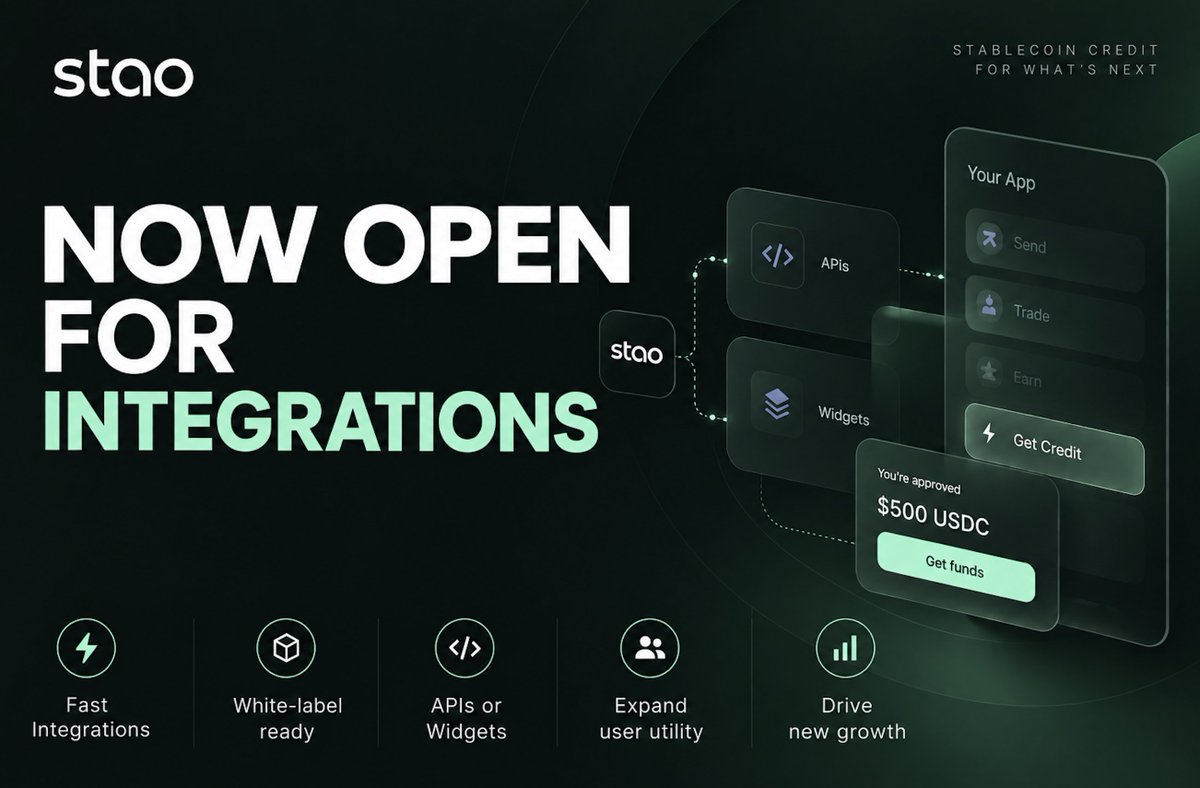
Stao is now open for integrations.
Apply here: https://t.co/BaQX4Hk4j6
Stao provides full-stack infrastructure for fintechs, wallets, dApps, and consumer apps to offer unsecured stablecoin credit to their users through APIs and widgets.
Stablecoins reduce settlement time.
They do not remove underwriting, servicing or collections time.
Credit infrastructure exists to keep those operating decisions connected to the money.
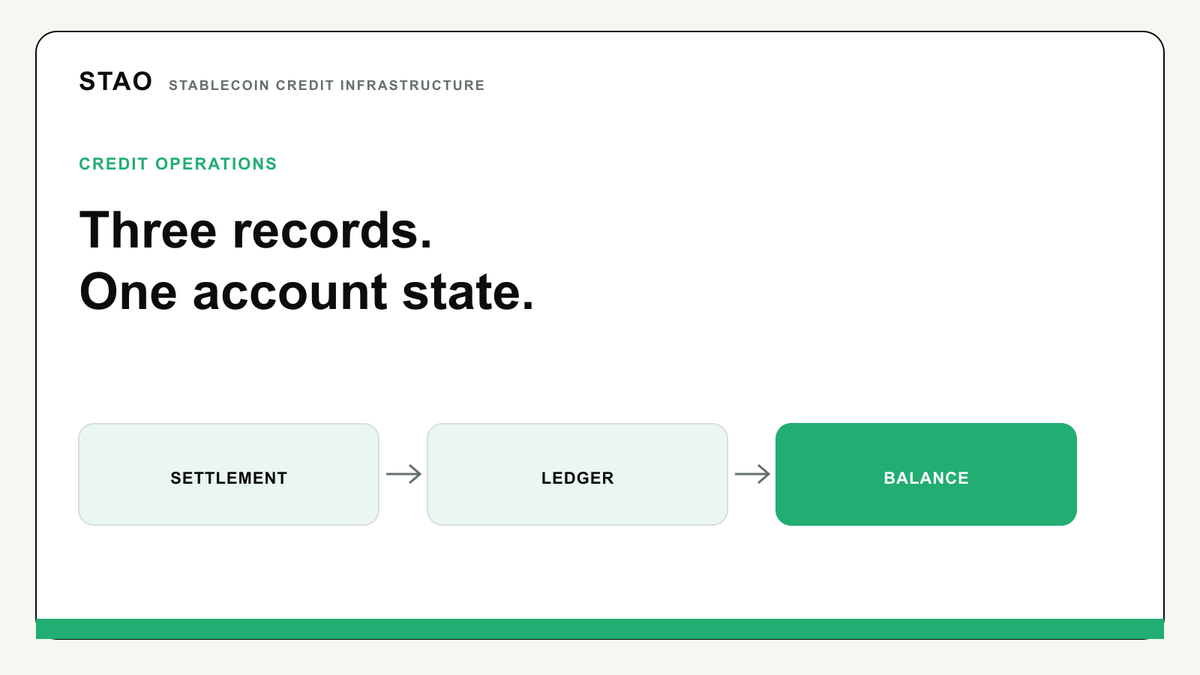
Three records should agree after every repayment:
• settlement record
• loan ledger
• borrower-facing balance
If one differs, the account is not ready for the next draw.
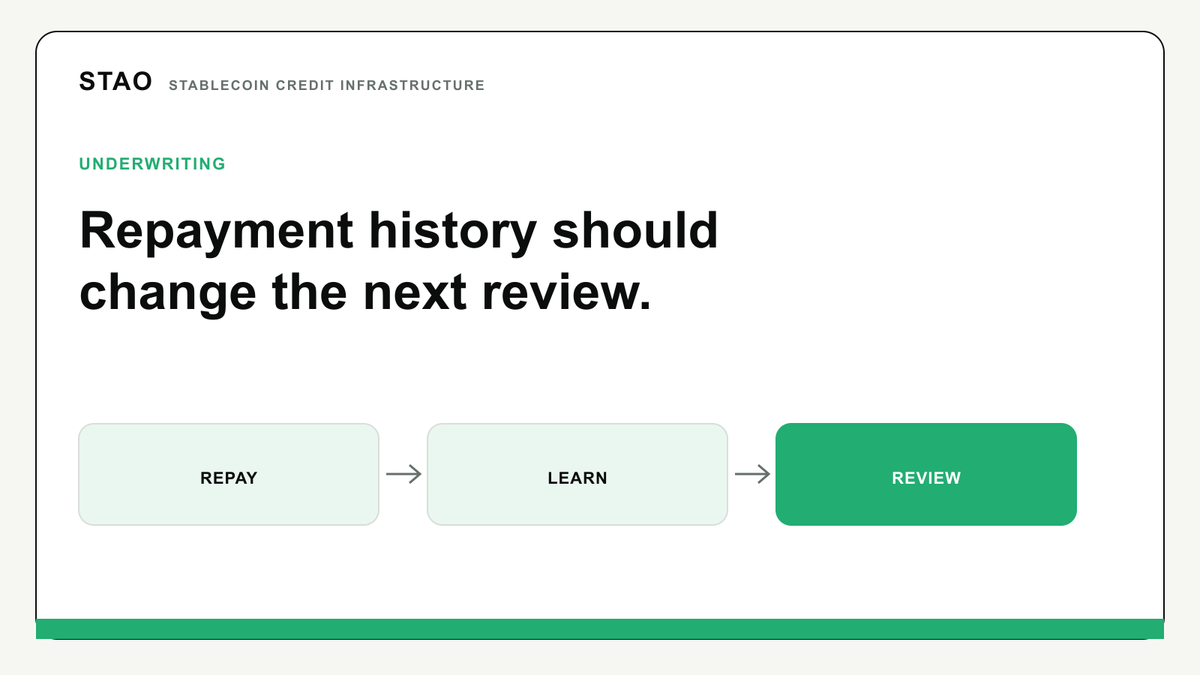
Repayment history should change the next credit review.
On-time payments, failed attempts, utilisation and outstanding balance add operating evidence that did not exist at the first approval.
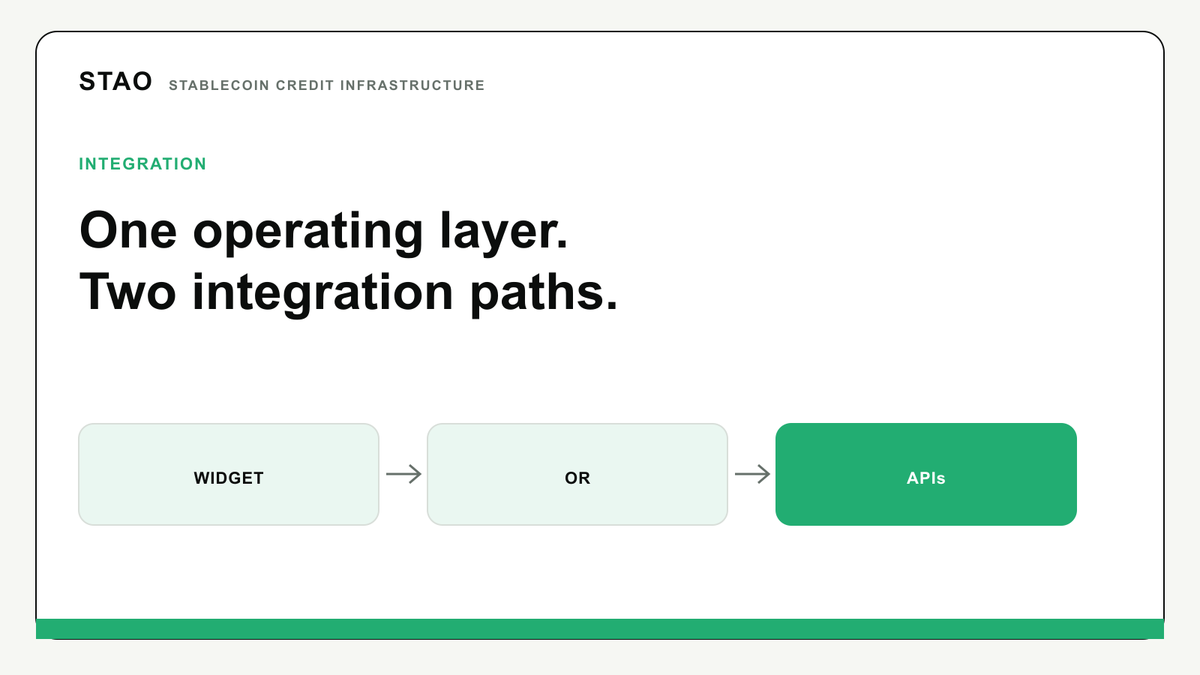
Use a widget when speed and a ready-made borrower journey matter most.
Use APIs when the product team wants to control screens, sequencing and logic.
Both should connect to the same underwriting, servicing and repayment layer.
A reusable credit line still needs an expiry.
Without a review date, an old decision can keep producing new draws after the borrower’s liquidity, obligations or behaviour has changed.
A failed repayment is an event, not a complete diagnosis.
The account still needs the failure reason, amount due, retry status and next servicing action. Collections should begin from recorded state, not guesswork.
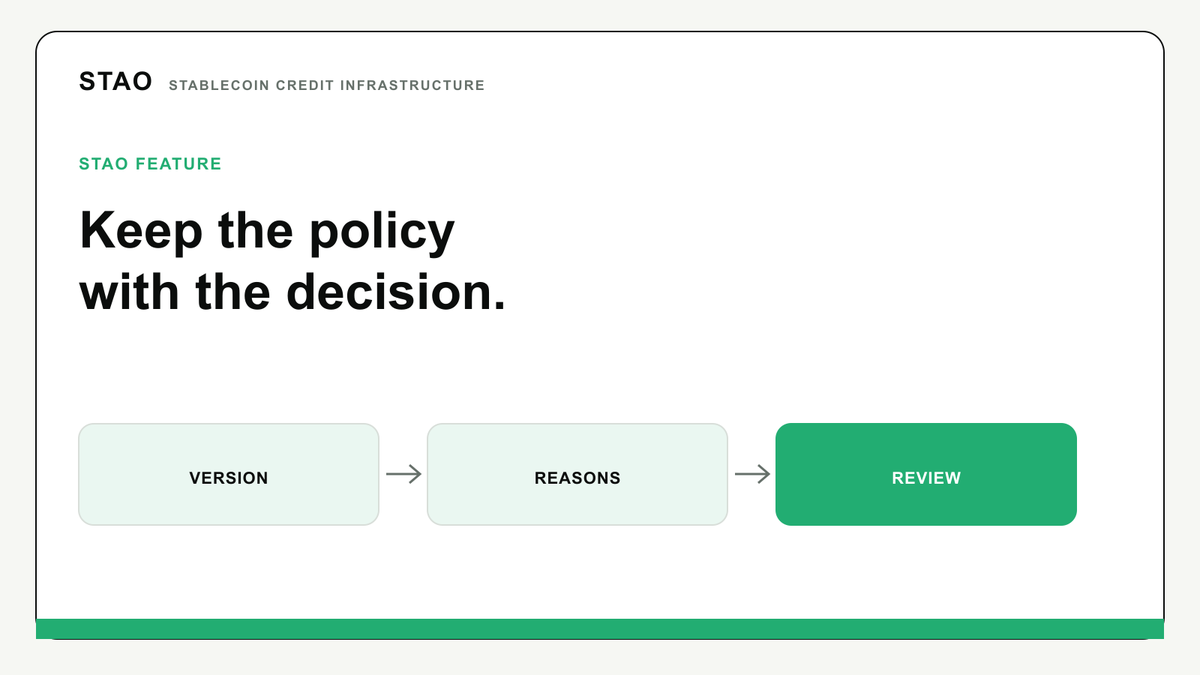
Credit policy changes. Past decisions should not change with it.
Retaining the policy version and reason codes used at decision time lets an operator review yesterday’s case without applying today’s rules retroactively.
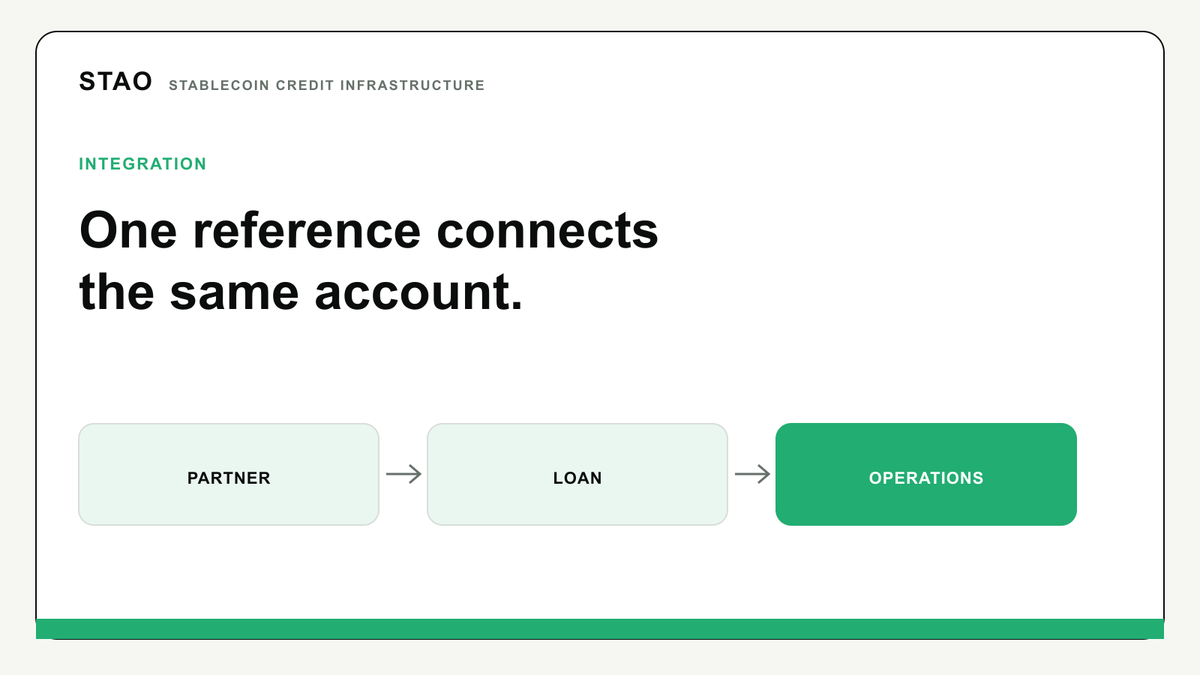
A merchant reference looks like a small integration detail until a customer asks about a loan.
The reference connects the partner journey, loan record and operating action so both teams can trace the same account.
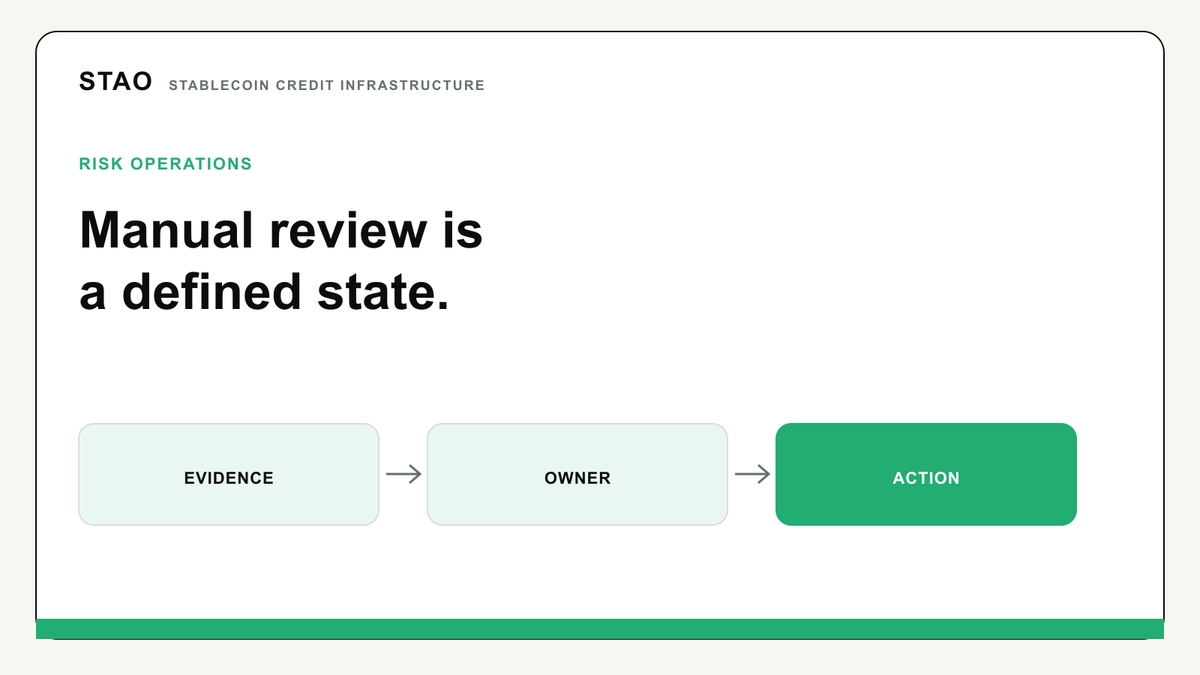
Manual review should be a defined credit state, not an inbox.
The case needs the evidence received, the policy checks already completed, the unresolved reason and the person responsible for the next action.
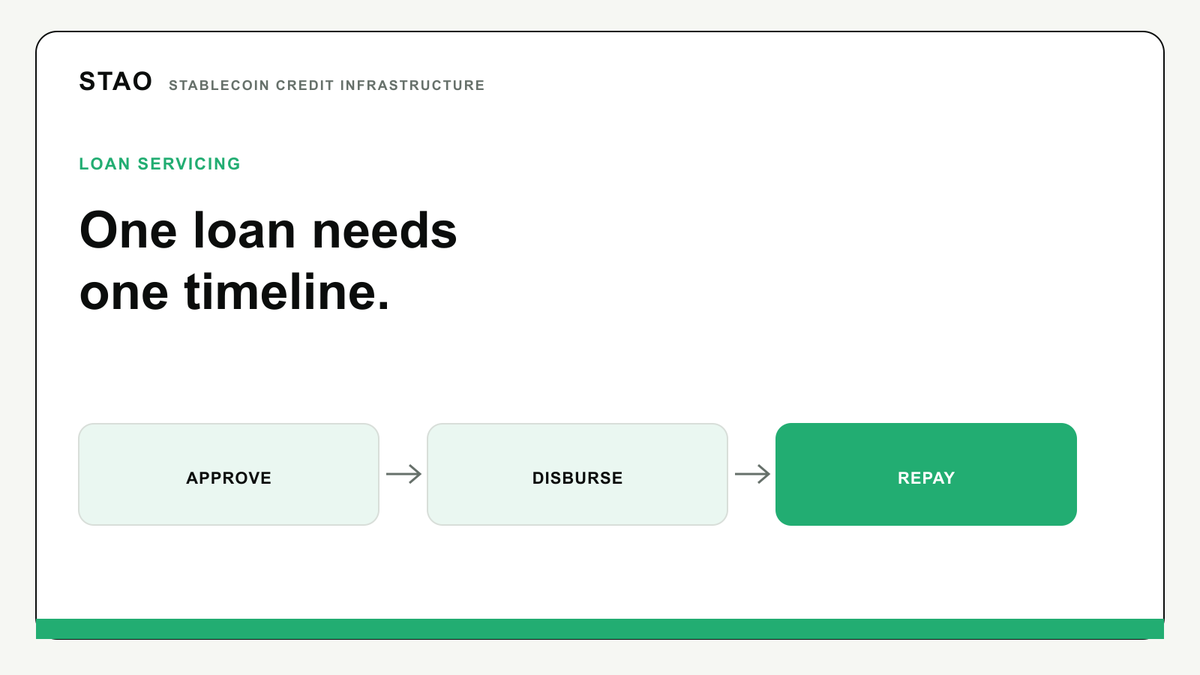
Approval, disbursement, due dates, repayment attempts and balance changes belong on one loan timeline.
When those events split across systems, servicing teams spend time reconciling history before they can act.
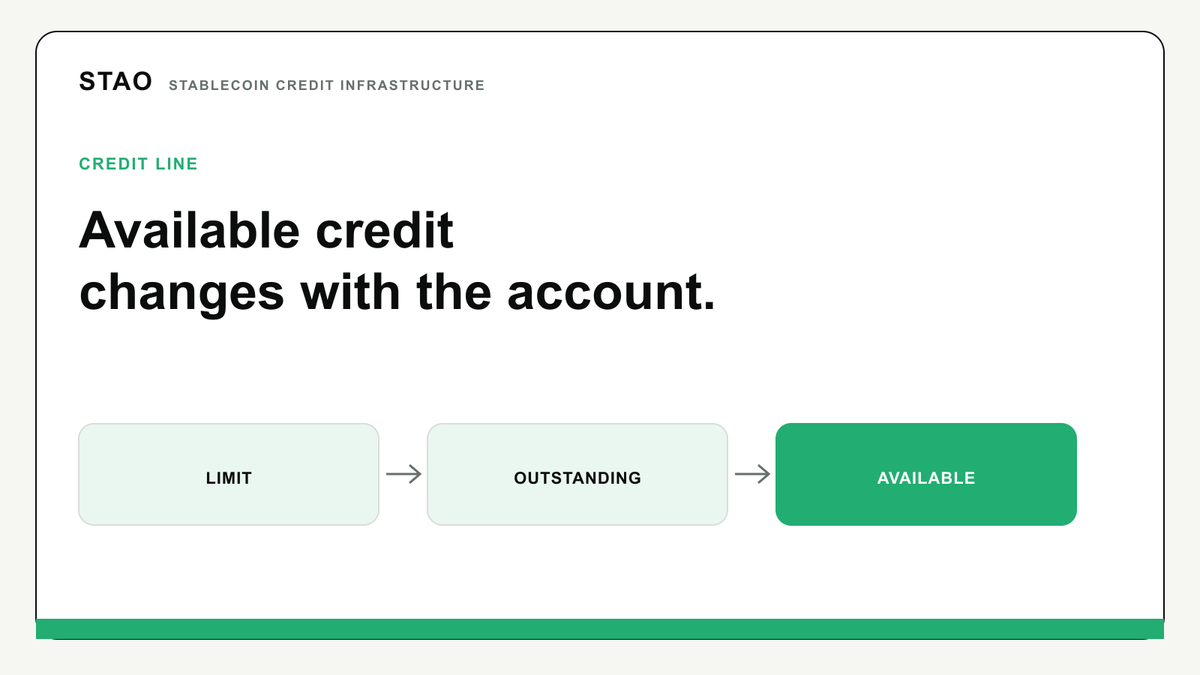
Available credit is not the approved limit.
It is the approved limit minus outstanding principal, subject to the active policy and account status.
That value must update whenever a draw or repayment changes the account.
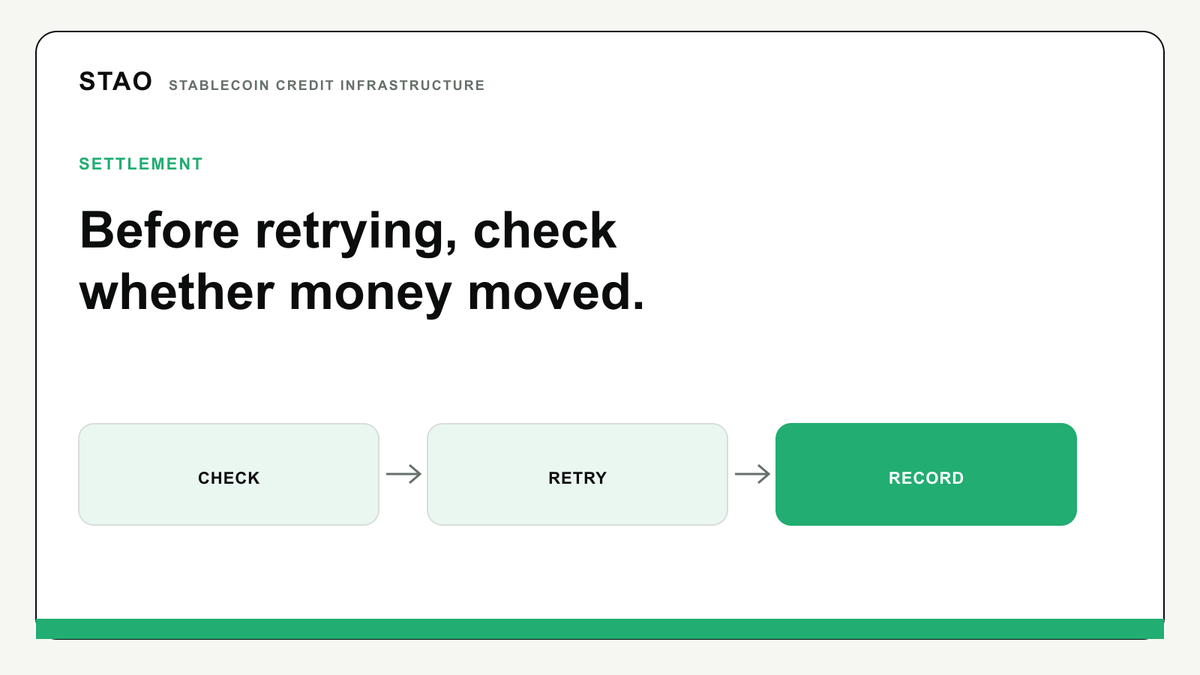
A disbursement retry should answer one question first: did money already move?
Without an idempotency check, a temporary timeout can become a duplicate draw. Fast settlement needs precise retry controls.
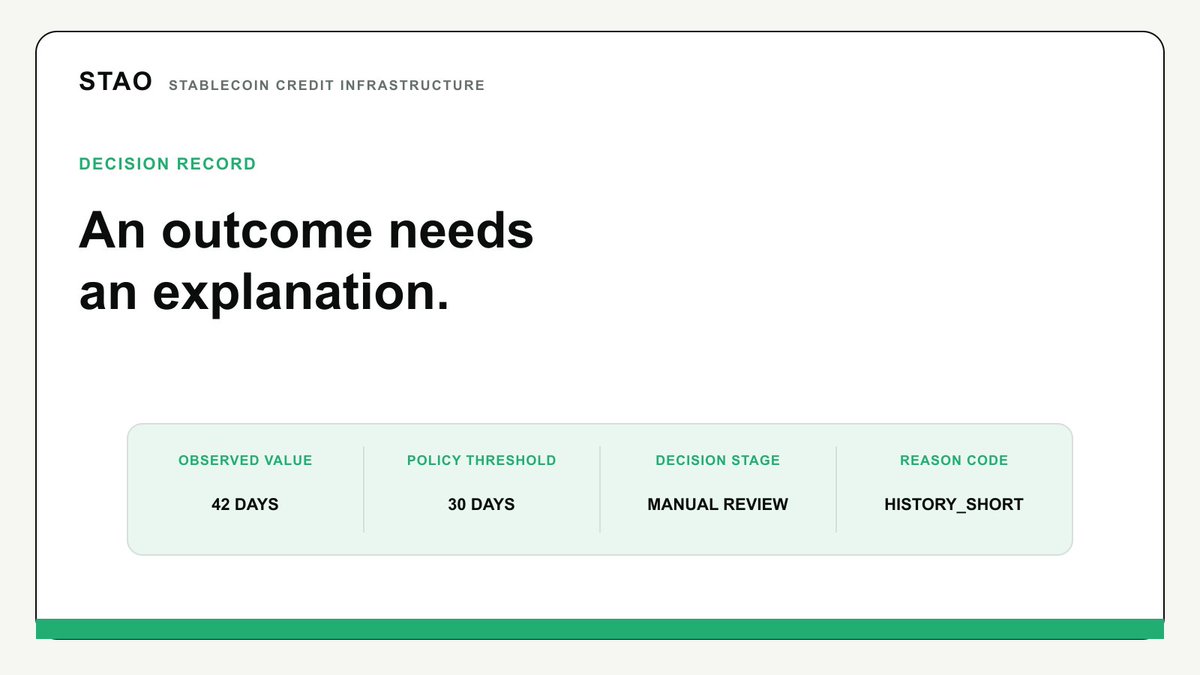
A credit score gives an answer. A decision record explains it.
Operators need the observed value, policy threshold, reason code and final outcome so they can review a case without reconstructing the decision later.
“Unable to assess” and “declined” should never mean the same thing.
A provider timeout says the evidence is missing. A decline says the evidence failed policy.
Credit operations need separate states because the next action is different.
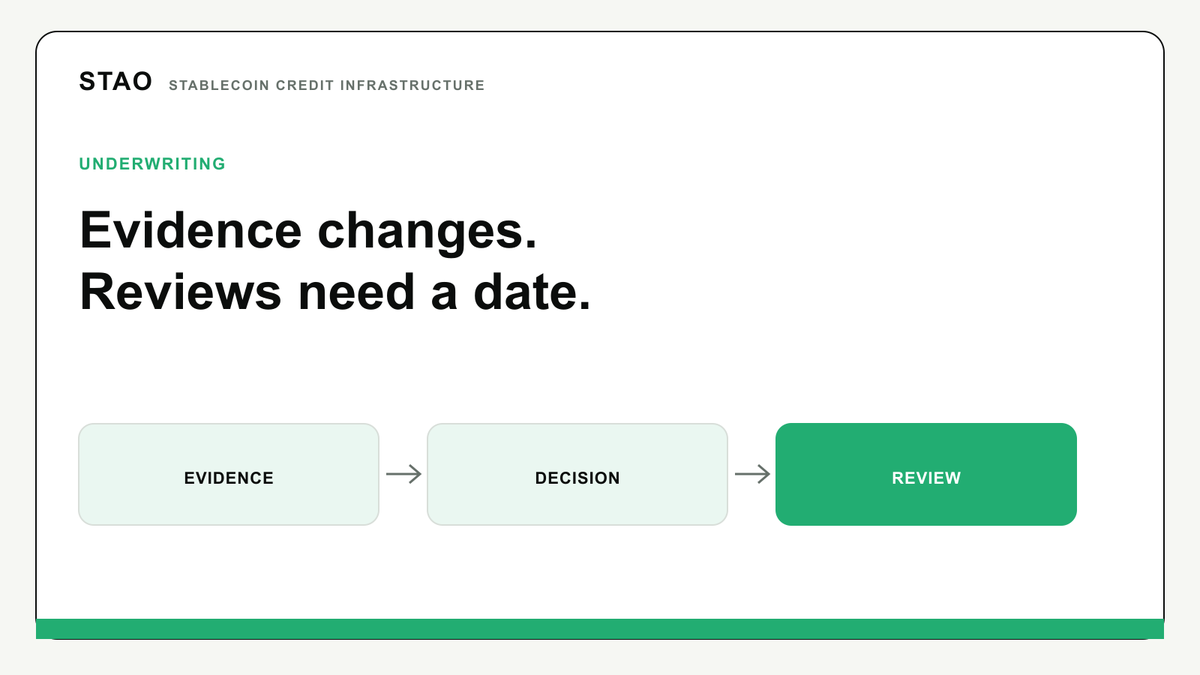
An underwriting decision is only as current as the evidence behind it.
Wallet activity, cash flow, liquidity and outstanding obligations can change after approval. Credit infrastructure needs a clear review point, not a permanent conclusion.
STAO feature: source-verified financial data.
Underwriting can use bank activity, income, assets and liabilities verified from their source. This gives policy decisions clearer evidence while reducing reliance on manual document uploads.
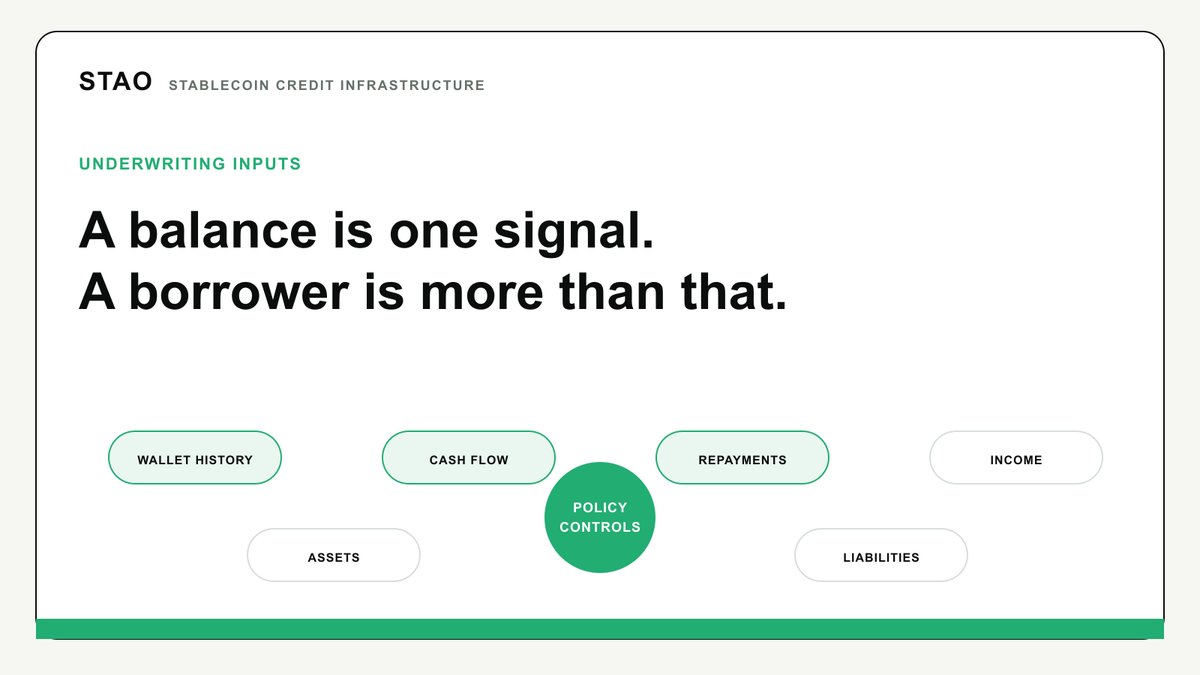
A wallet balance alone does not describe repayment capacity.
STAO combines wallet history, cash flow, borrowing and repayment activity with verified offchain data such as income, assets and liabilities to build a fuller borrower profile.
Fintechs, wallets, dApps, neobanks and consumer apps can own the customer experience.
STAO coordinates the infrastructure underneath: underwriting, third-party capital, loan servicing and repayments.
The next credit review should reflect what happened after disbursement.
STAO keeps repayment status and account history connected to the credit record, giving operators better context for servicing and future decisions.
“Declined” is an outcome, not an explanation.
A useful decision record shows the observed value, the policy threshold, the decision stage and the reason code. STAO keeps that context visible so risk teams can review what happened.