In our #acl2020nlp paper, we propose a generative model to analyze glyph shapes in early-modern printing. The interpretable variables account for spatial noise while the neurally parametrized uninterpretable latent variable explains other variation. https://t.co/WpngEn2ClB 1/6
We recently announced the groundbreaking work @ChrisVVarren and his team (including former CPNP asst. director Pierce Williams [@star_captain1]) had done, identifying the printer of John Milton's "Areopagitica." It has now been published in Milton Studies! https://t.co/m2uU6lVCf3
Hot off the press: the Print and Probability team's identification of who printed Milton's Areopagitica is now online, in print, and OPEN SOURCE. Many thanks to Milton Studies from @ChrisVVarren, @shrutirij, Max G'Sell and @star_captain1: https://t.co/J6iZeKgdx6
Over here at the Print & Probability project, we were so excited to see Claire McGann’s (@claireAMcGann) recent article on typographic features in the @bodleianlibs 1659 volume of Anna Trapnel’s prophecies
https://t.co/tySgDr0qZa [thread]
For @English_CMU seminar CSI: Underground Books & Printing (https://t.co/dssQFp4WE8), I’m compiling a list of letterpress whodunnits. What would you say are the most urgent examples of ESTC-era clandestine/anonymously/pseudonymously printed books, pamphlets, etc?
In ECTI, Pierce Williams (@star_captain1) turns to the pathology of political bodies in Smollett’s Humphry Clinker and its “distinctly materialist imagining of Britain’s artificial man." Read "Saved by God's 'Grease'" here!
https://t.co/blQAoJtXIT
The new issue of @18CTANDI is out! This issue has exciting scholarship about Defoe, Smollett, Celebrity, and Succession, as well as reviews of recent books on Samuel Auguste Tissot, Experimental Philosophy, and Jonathan Swift.
(link: https://t.co/iW2lTwUEv7)
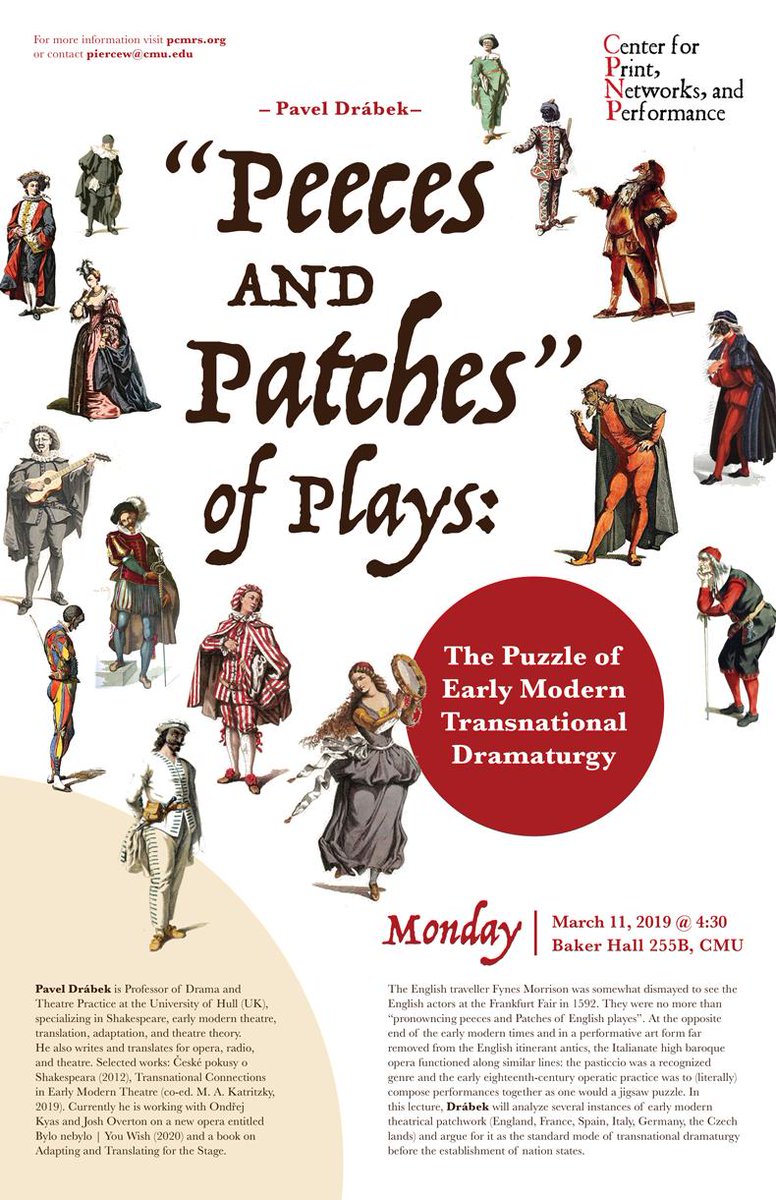
Pavel Drábek (Theater, University of Hull) will lecture on transnational theater and early modern "patchwork" plays on March 11th @ 4:30. Mark your calendars!
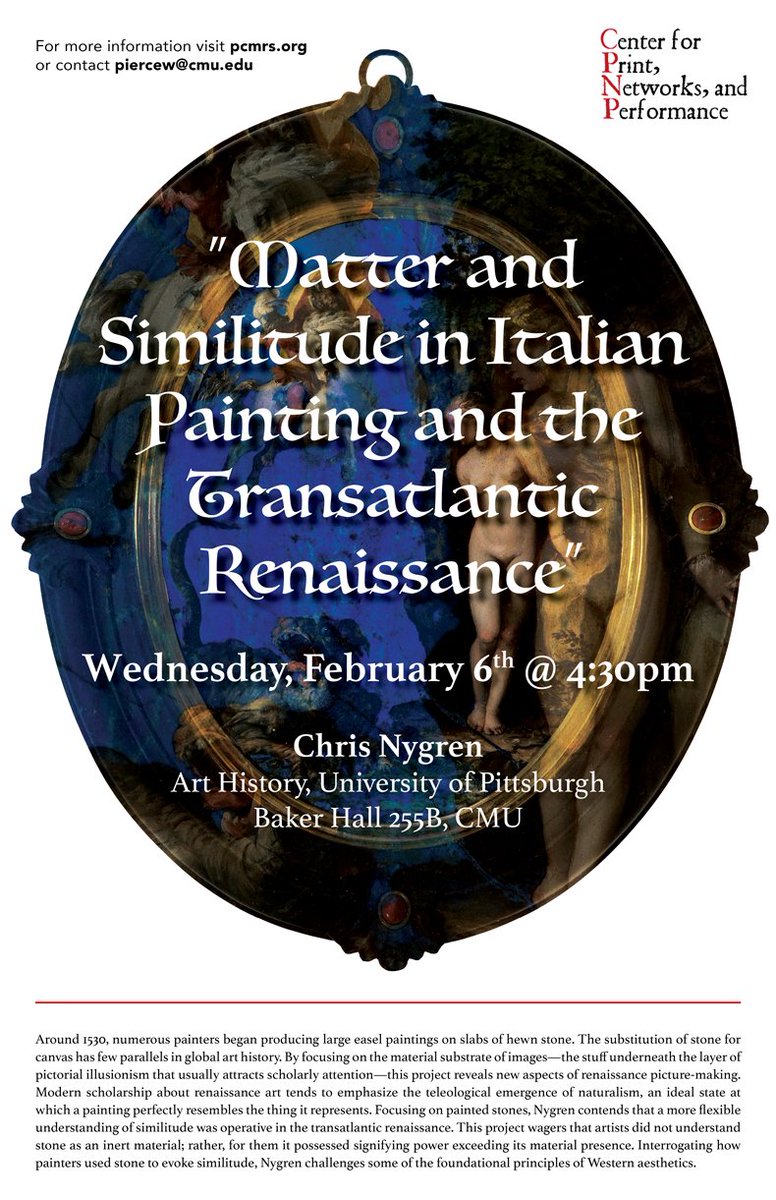
Chris Nygren, Assistant Professor of Art History and the director of Pitt’s MedRen program, will discuss the signifying power of painted stones in his talk, “Matter and Similitude in Italian Painting and the Transatlantic Renaissance” tomorrow at 4:30 (Baker Hall 255B, CMU).