Great energy at SPACETIDE 2026!
Eric Stallmer, Jeffrey Manber and Kohei Okamura took the stage to talk M&A trends reshaping the space sector and share the latest on Starlab's commercial strategy, including exciting progress on VISTA, Voyager Technology's science park project. Proud to connect with such a strong global community advancing space utilization.
Thanks to the SPACETIDE Foundation team for having us!
As the International Space Station approaches retirement, Switzerland and Liechtenstein aren't waiting to plan what comes next.
The Center for Space and Aviation Switzerland and Liechtenstein (CSA), an alliance of 13 leading institutions, has reserved payload space aboard Starlab. The agreement connects the region's pharmaceutical, biotechnology and high-precision electronics sectors to microgravity research and technology development, a direct line from laboratory to orbit.
Early work includes human tissue research and next-generation materials testing.
Fifty-seven years ago, Apollo 11 put the first human footprints on the Moon. Exploration didn't stop there. It's carried forward in every mission, every experiment, every reason humans keep choosing to go further.
We're proud to build on that legacy. Starlab is where it goes next.
Happy Space Exploration Day!
During Australian Space Week 2026, Chief Scientist @SpaceLuisZea is meeting with Australia's space and life sciences community, from government and industry leaders to biotech startups, to hear what researchers and end users need from microgravity access and to make the case for what low Earth orbit research can do for them. Catch him at:
· South Australian Space Community Town Hall, July 20, Adelaide
· Life in Space, German-Australian Chamber of Commerce, July 20, Adelaide
· Australian Space Forum, July 21-22, Adelaide Convention Centre
In Adelaide this week? We'd like to hear what you need from microgravity research.
Scotland's World Cup ended early, but the Tartan Army's disappointment on the pitch has nothing on the country's ambitions in orbit.
@ScottishSpaceLC has reserved payload space aboard Starlab, creating opportunities for Scottish companies, universities and research organizations to fly their microgravity projects. The partnership supports everything from scientific research and technology demonstrations to advanced manufacturing and future commercial applications.
Starlab is what happens when the world comes together.
Starlab is being built by commercial partners and academic researchers and institutions across 17 countries, all working toward one platform in orbit. This summer, 13 of those 17 countries have had a team on the World Cup pitch. One tournament. One planet watching. One station being built by the same global community.
But if you had to pick a team, who are you cheering for this week? Tell us in the comments.
Building a space station requires more than engineering. It requires a shared belief that what happens in orbit matters to people on the ground.
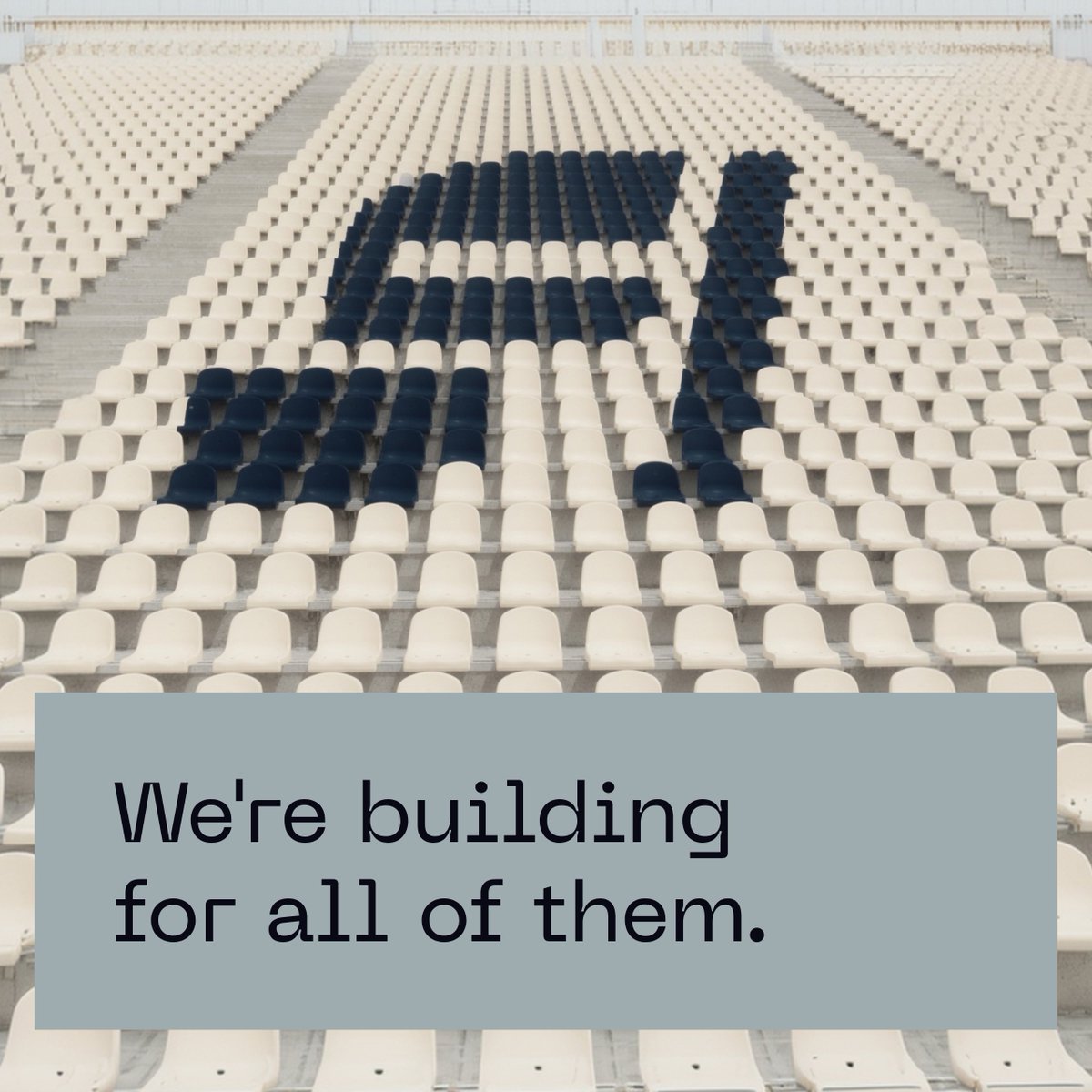
Picture a stadium at capacity for a World Cup match: every seat filled, every country represented, all watching the same moment. That is the audience Starlab is building for. The breakthroughs for human health, materials science, manufacturing and agriculture that come out of low Earth orbit will not belong to one country. They come back to everyone in the crowd.
The World Cup fills a stadium once every four years. Starlab's research runs for that same crowd every day.
The World Cup puts the world in one stadium. Yet every tournament still ends with one team left standing. Starlab isn't built that way. Six joint venture partners, five countries, each bringing its own expertise to build the same station.
🇺🇸 USA: @voyagertech_. Bishop Airlock, the ISS's first commercial airlock, plus 12 active ISS research facilities and over 1,400 completed customer missions.
🇩🇪 Germany: @AirbusSpace. The European Service Module, which provides the power, propulsion and life support for NASA's Orion spacecraft, plus the Columbus module, the Automated Transfer Vehicle and the Bartolomeo external research platform.
🇯🇵 Japan: Mitsubishi Corporation. Logistics and hardware proven on JAXA's HTV program, plus the manufacturing and supply chain reach opening Japan's industrial sector to low Earth orbit.
🇨🇦 Canada: @MDA_space. Over 55 years of space robotics leadership, from Canadarm2 to SKYMAKER external robotics system.
🇧🇪 Belgium: Space Applications Services. Decades supporting ISS payload operations, spacecraft, control centers and robotics, now building the systems behind Starlab's research environment.
The future of pharmaceutical research will be powered by more than microgravity alone.
Space LiinTech has reserved payload space aboard Starlab Space to bring AI-enabled pharmaceutical and life sciences research to low Earth orbit. Building on its ISS-proven automated module for protein crystallization, the company will combine artificial intelligence with microgravity-based experimentation to accelerate discovery, improve experimental precision, and unlock new approaches to biomanufacturing in space.
Together, the companies are helping build a future where intelligent, autonomous research platforms drive the next generation of breakthroughs in orbit.
Expanding the space economy requires more than technology; it requires access, investment and global partnerships.
As Starlab's strategic partner in Japan, Mitsubishi Corporation is helping connect researchers, companies and institutions to opportunities in low Earth orbit. Expanding participation from international markets will be critical to building a sustainable commercial ecosystem in space.
The future of research and innovation in orbit will be shaped by a global community.
#FlightHeritage #Starlab
Scientific discovery in space depends on more than launching an experiment.
Space Applications Services is helping develop the systems that will support payload operations aboard Starlab, making it easier for researchers to conduct investigations in microgravity. Their experience supporting science missions and spaceflight operations helps create a pathway from concept to on-orbit execution.
Because advancing research starts with building an environment designed around the needs of investigators.
#FlightHeritage #Starlab
What does it take to fly humans beyond Earth orbit?
The @AirbusSpace -built European Service Module (ESM), which provides the power, propulsion and life support for NASA's Orion spacecraft, has now answered that question twice.
In 2022, ESM-1 completed a successful uncrewed test mission. In April 2026, ESM-2 carried four astronauts on a 10-day crewed journey around the Moon as part of Artemis II. The ESM program made history as for the first time ever, NASA entrusted a non-US company to build a mission-critical element for a US human spaceflight mission. With four more modules contracted and being readied to support the next missions, the ESM represents the gold standard in human-rated spaceflight systems.
As #Starlab prepares for the next era of commercial space, that track record is exactly the foundation we're building on.
#FlightHeritage
Space stations run on more than hardware; they run on information.
@PalantirTech is partnering with Starlab to develop next-generation software solutions that support station operations, digital engineering and mission management. Integrating complex data into a single operational picture will help teams monitor systems, coordinate activities and make informed decisions.
Turning data into action will be critical for every mission, customer and crew aboard Starlab.
#FlightHeritage #Starlab
Canadarm2 has played a central role in International Space Station operations for more than two decades.
Developed by @MDA_space, the robotic system has supported everything from station assembly to visiting vehicle capture. Its legacy demonstrates how robotics can extend human capabilities and enable complex operations in orbit.
The future of station operations will rely on the same combination of precision, autonomy and reliability.
#FlightHeritage #Starlab
Our partners at Voyager Technologies have a new podcast!
Tune in to hear Chairman & CEO Dylan Taylor for insights on where Voyager and Starlab are headed.
The Voyager Podcast is live! For our first episode, we went straight to the source. Chairman & CEO @Dylan Taylor sits down with host @slickf16 to talk about where Voyager came from, where it is going, and what it actually takes to build something that matters.
Watch on YouTube: https://t.co/w2vKPSWFbp
Listen on Apple: https://t.co/I9mwFkhz6H
Listen on Spotify: https://t.co/7YziH7cIZ1
$VOYG #MissionReady #AcceleratingtheAdvantage
Starlab's flight heritage comes from a coalition no other commercial station can assemble.
The Bishop Airlock is the first and only commercial airlock on the International Space Station.
Developed and operated by Voyager Technologies, Bishop supports payload transfers, technology demonstrations and on-orbit operations—providing real-world experience that helps inform the future of commercial space stations.
This is the first in our Flight Heritage series highlighting the proven capabilities behind Starlab.
#FlightHeritage #Starlab
ILA Berlin 2026 highlighted the importance of international collaboration in shaping the future of research and innovation in low Earth orbit.
A key highlight for Starlab was signing an agreement with German Aerospace Center (DLR), securing dedicated research capacity aboard the Starlab space station and expanding opportunities for German microgravity research in the post-ISS era.
We were also honored to welcome distinguished guests throughout the week, including Cem Özdemir, Minister-President of Baden-Württemberg, Dr. Nicole Hoffmeister-Kraut, Minister of Economic Affairs, Labour and Tourism of Baden-Württemberg, and Dr. Silke Launert, Parliamentary State Secretary at the Federal Ministry of Research.
Thank you to DLR, our partners, the event organizers and everyone who stopped by during this incredible week.
For more than 20 years, researchers aboard the International Space Station have used microgravity to advance research in areas including disease, drug development and regenerative medicine.
That work has contributed to scientific advances on Earth and demonstrated the value of microgravity as a research environment.
As the ISS approaches retirement, maintaining access to microgravity research will be essential to building on that progress.
Starlab is being developed to help ensure researchers can continue conducting microgravity research and building on decades of work in low-Earth orbit.
Across more than 228 space-based semiconductor experiments conducted since Skylab, researchers found that roughly 70% produced crystals that were larger or more uniform than those grown on Earth.
That matters because crystal growth can directly influence the performance of semiconductor materials and devices.
Researchers have been studying these effects in microgravity for decades, and Starlab is being developed to help maintain access to this research environment in low-Earth orbit.
Why do life sciences researchers conduct experiments in microgravity?
One reason is that cells behave differently in space.
Instead of growing in flat layers, cells can form three-dimensional structures that more closely resemble human tissue. That can give researchers a more realistic environment for studying disease and evaluating potential treatments.
Microgravity can also accelerate certain biological changes, allowing researchers to observe processes related to aging and disease over shorter periods of time.
These are some of the reasons microgravity has become an important tool for life sciences research. Starlab is being developed to help expand access to that research environment after the ISS era.