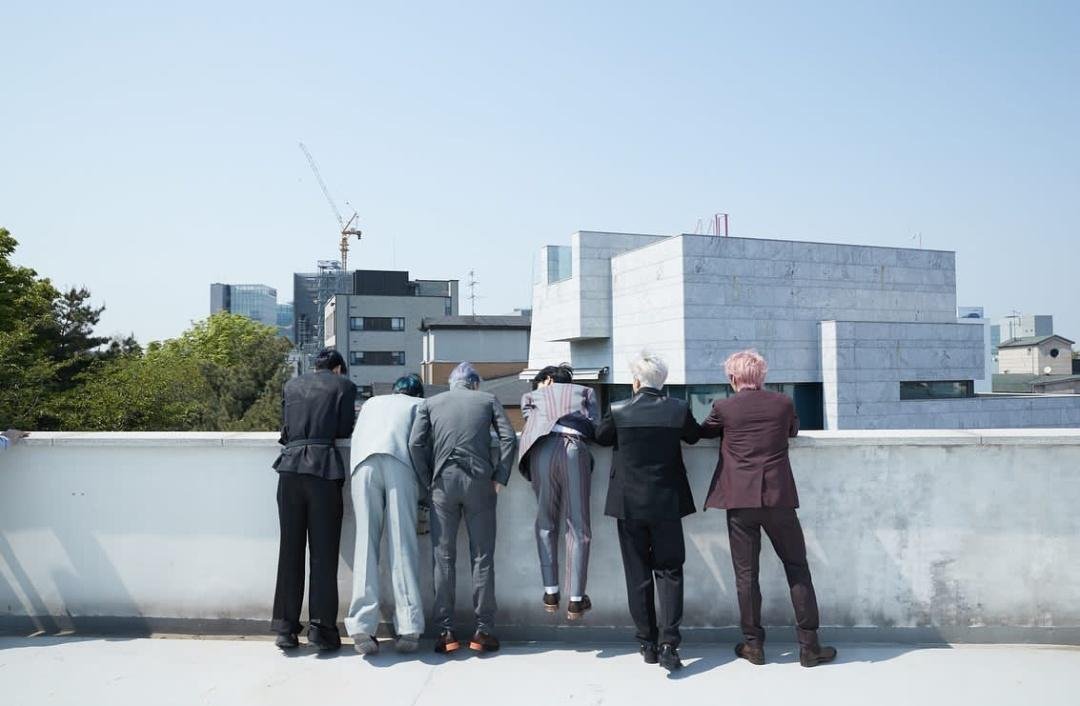
three years since you left binnie... yet you are still loved, you are missed and you are remembered by so many. hope you're hundreds and hundreds of times happier in the moonland. thank you and love you always 🤍
#빈아_가수해줘서_고마워
📘 Tax Incentives 101
Understanding the Implications of Collection-Based Bonuses
(Policy explainer · Public interest · Plain English)
From a governance and public-policy perspective, this overview explains commonly discussed risks of collection-based incentive schemes used by tax authorities, including the National Tax Service (NTS).
⚖️ 1. Fairness at Risk
Tax officials are meant to apply the law fairly and neutrally.
When bonuses depend on how much tax is collected, decisions can shift from fairness to revenue chasing.
Citizens may start to feel treated as “targets” rather than equals under the law.
🤝 2. Trust and Honest Filing Weakened
Good tax systems depend on people choosing to file honestly because they trust the system.
When audits become aggressive due to financial incentives, taxpayers may feel pressured and act defensively — which can reduce honest reporting instead of encouraging it.
🏛️ 3. People First, Not Bonuses
In a democracy, government exists to serve the people.
Tax officials are paid to enforce the law — not to profit from citizens.
When personal bonuses are tied to collections, it can feel like people exist to fund rewards, rather than the system working for them.
⏳ 4. Wrong Priorities
Bonuses reward money collected after audits, not efforts to help people comply early.
This shifts attention away from education, guidance, and prevention — even though these approaches reduce disputes and build trust.
📉 5. Lack of Accountability
Even when tax assessments are later overturned on appeal, bonuses may still be paid.
Taxpayers bear the cost — interest, legal fees, stress — while officials face little consequence. This weakens accountability and confidence in the system.
🌍 6. Out of Step with Global Practice
Many advanced countries avoid this approach:
*United States: Bans performance targets linked to tax collections.
*Sweden: Removed collection-based evaluations decades ago.
These systems prioritize fairness and trust, not short-term revenue.
🚨 7. Risk of Overreach
Large bonuses (reported up to 20 million KRW) can encourage overly aggressive audits or misuse of authority, putting taxpayer rights and public confidence at risk.
🎯 Core Message
A fair tax system works best when officials serve the public — not bonus targets.
Tax law should be about justice and balance, not winning a points game.
Disclaimer:
This document is intended for general information and public-policy discussion only. It does not allege wrongdoing by any individual or institution.
📰 Korea Taxpayers’ Association: Tax Official Bonus System Causes Administrative Distortion… ‘It Must Be Abolished’
The KTA stated that the system, introduced last March under the amended Framework Act on National Taxes, which allows tax officials to receive bonuses of up to 20M KRW per year, causes serious administrative distortions and must be abolished.
Article 84-3 of the Framework Act on National Taxes stipulates that “tax officials who have made special contributions to the assessment, collection, or litigation of national taxes may receive a reward,” and allows a bonus of up to 20M KRW or 10% of the additional taxes collected, amounts recovered through litigation, or delinquent collections.
The KTA expressed concern that this bonus system could undermine the fairness and objectivity of taxation. The association said, “Directly linking financial rewards to the performance of tax officials creates incentives for excessive taxation or aggressive audits in order to increase collection results.” They explained that “this poses a risk to the neutrality of tax administration”.
The association also argued that tax audits could instead encourage tax evasion: “In a system where collection results lead to bonuses, a strategy of ‘occasional evasion with partial collection’ may be a rational choice over ‘100% honest reporting,’” because even those who report honestly may have to pay additional taxes for the benefit of the investigating officials. “This can weaken the foundation of voluntary compliance”.
This, they said, also violates the principle of popular sovereignty. KTA emphasized, “Public officials serve all citizens,” adding that “the bonus system risks reducing taxpayers to mere tools for achieving audit targets”.
They further noted that the structure encourages after-the-fact collection rather than preventive measures. They explained, “Pre-audit guidance for honest reporting is not eligible for incentives, but high-value collections are immediately rewarded. In such cases, tax administration may become performance-driven rather than prevention-focused”.
KTA also questioned the actual revenue impact. “Even if the collected amount is later overturned in appeals or litigation, the bonus may already have been paid. Officials who lose in court years later face no real consequences, while taxpayers bear enormous time and financial costs, along with significant psychological stress”.
The association stated that the system is also inconsistent with international trends. “In the US, evaluation based on collection results or quota assignments is legally prohibited, and Sweden excludes collection performance from personnel evaluations,” the association explained. “By contrast, Korea institutionalized a performance-based reward system.”
They raised the possibility of abuse. “A bonus of up to 20M KRW is a significant financial incentive, which may lead to side effects such as the illegal leakage of tax information or excessive expansion of audit scope”.
Specifically regarding actor #CHAEUNWOO, the association commented, “The tax official who illegally leaked Cha Eunwoo’s tax information may have aimed for the bonus, expecting positive evaluation within the organization based on the apparent achievement of ‘20 billion KRW collected’ and the negative public opinion generated around high-income tax evasion”. They added, “Leaking tax information is clearly illegal, and a performance-driven system can encourage such deviations”.
Chairman Kim Seontaek said, “The Framework Act on National Taxes was hastily passed last March during the impeachment political crisis, and no lawmakers raised objections to this provision, indicating that the legislative function did not operate properly”. He continued, “High tax collections by the NTS do not necessarily represent socially desirable outcomes,” and concluded, “The bonus system must be abolished immediately”.
#차은우 #チャウヌ #车银优 #ชาอึนอู #車銀優
📰 Korea Taxpayers’ Association: Tax Official Bonus System Causes Administrative Distortion… ‘It Must Be Abolished’
The KTA stated that the system, introduced last March under the amended Framework Act on National Taxes, which allows tax officials to receive bonuses of up to 20M KRW per year, causes serious administrative distortions and must be abolished.
Article 84-3 of the Framework Act on National Taxes stipulates that “tax officials who have made special contributions to the assessment, collection, or litigation of national taxes may receive a reward,” and allows a bonus of up to 20M KRW or 10% of the additional taxes collected, amounts recovered through litigation, or delinquent collections.
The KTA expressed concern that this bonus system could undermine the fairness and objectivity of taxation. The association said, “Directly linking financial rewards to the performance of tax officials creates incentives for excessive taxation or aggressive audits in order to increase collection results.” They explained that “this poses a risk to the neutrality of tax administration”.
The association also argued that tax audits could instead encourage tax evasion: “In a system where collection results lead to bonuses, a strategy of ‘occasional evasion with partial collection’ may be a rational choice over ‘100% honest reporting,’” because even those who report honestly may have to pay additional taxes for the benefit of the investigating officials. “This can weaken the foundation of voluntary compliance”.
This, they said, also violates the principle of popular sovereignty. KTA emphasized, “Public officials serve all citizens,” adding that “the bonus system risks reducing taxpayers to mere tools for achieving audit targets”.
They further noted that the structure encourages after-the-fact collection rather than preventive measures. They explained, “Pre-audit guidance for honest reporting is not eligible for incentives, but high-value collections are immediately rewarded. In such cases, tax administration may become performance-driven rather than prevention-focused”.
KTA also questioned the actual revenue impact. “Even if the collected amount is later overturned in appeals or litigation, the bonus may already have been paid. Officials who lose in court years later face no real consequences, while taxpayers bear enormous time and financial costs, along with significant psychological stress”.
The association stated that the system is also inconsistent with international trends. “In the US, evaluation based on collection results or quota assignments is legally prohibited, and Sweden excludes collection performance from personnel evaluations,” the association explained. “By contrast, Korea institutionalized a performance-based reward system.”
They raised the possibility of abuse. “A bonus of up to 20M KRW is a significant financial incentive, which may lead to side effects such as the illegal leakage of tax information or excessive expansion of audit scope”.
Specifically regarding actor #CHAEUNWOO, the association commented, “The tax official who illegally leaked Cha Eunwoo’s tax information may have aimed for the bonus, expecting positive evaluation within the organization based on the apparent achievement of ‘20 billion KRW collected’ and the negative public opinion generated around high-income tax evasion”. They added, “Leaking tax information is clearly illegal, and a performance-driven system can encourage such deviations”.
Chairman Kim Seontaek said, “The Framework Act on National Taxes was hastily passed last March during the impeachment political crisis, and no lawmakers raised objections to this provision, indicating that the legislative function did not operate properly”. He continued, “High tax collections by the NTS do not necessarily represent socially desirable outcomes,” and concluded, “The bonus system must be abolished immediately”.
#차은우 #チャウヌ #车银优 #ชาอึนอู #車銀優
Think about what this means for Eunwoo's case. A tax official leaks his private information illegally. A "20 billion won tax evasion" headline explodes. The public destroys his reputation overnight. And the whole time, the official who started it all might have been chasing a performance bonus for that exact collection amount.
They didn't go after Cha Eunwoo because he did something wrong. They went after him because he was worth 20 billion won to someone's paycheck
#CHAEUNWOO #차은우
📰 “Korea Taxpayers’ Association: ‘In Cha Eunwoo’s Case, There Is a Possibility a Tax Official Sought Reward Money’”, report by Sejung Ilbo
On the 23rd, the Korea Taxpayers’ Association stated, in relation to the amendments to the Framework Act on National Taxes newly introduced in March of last year, that the system providing tax officials with rewards of up to 20 million won per year causes serious administrative distortion and must be abolished.
The Association said: “A reward of up to 20 million won constitutes a significant financial incentive. This could lead to side effects such as the illegal leakage of tax information or the excessive expansion of investigation scopes. In the case of actor #ChaEunwoo, the tax official who unlawfully leaked tax information may have aimed for the reward money, expecting positive evaluations within the organization based on the outward performance of having ‘imposed 20 billion won in additional tax assessments’ and on fostering negative public opinion regarding tax evasion by high-income earners.”
#차은우 #チャウヌ #车银优 #ชาอึนอู #車銀優
happy tenth anniversary to my forever home. a whole decade of love, comfort, happiness and hard work. thank you for the music and the memories that will last a lifetime. like a circle, i will always come back to you 💜
#아스트로10주년_영원히빛날별들