This is going to be my wallpaper
“...take the trouble to do all that, and you do it carefully, then it may begin to have the quality which has no name.”
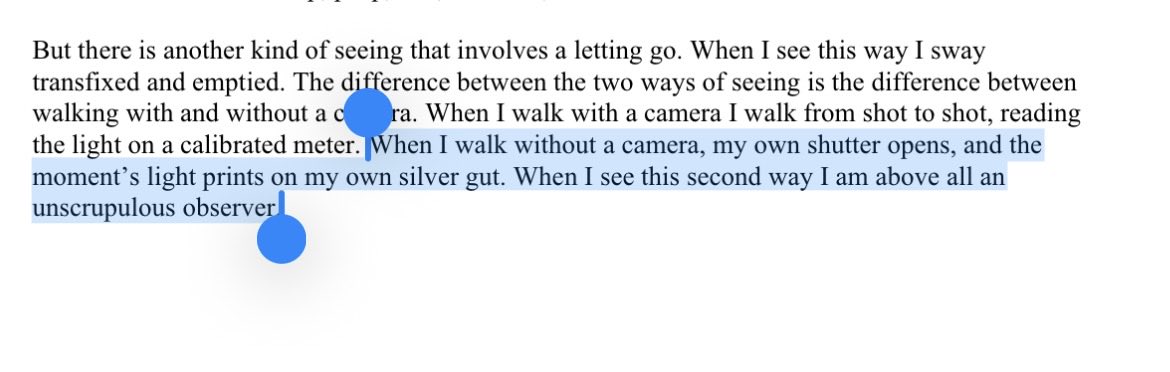
“When I walk without a camera, my own shutter opens, and the moment’s light prints on my own silver gut. When I see this second way I am above all an unscrupulous observer.”
Annie Dillard on seeing and newly sighted people:
“When at the end of that time she opened her eyes again, she did not recognize the objects, but, ‘the more she now directed her gaze upon everything about her, the more it could be seen how an expression of gratification and astonishment overspread her features; she repeatedly exclaimed: ‘Oh God! How beautiful!’”
Bernard Maybeck was presented with a list of qualities that one of his buildings ought to evoke. There was no input on style or structure:
"unity, harmony, beauty, adaptability, reverence, sincerity, honesty, simplicity, good taste, welcome, comfort, quietness and peace, joy, and home-like-ness"
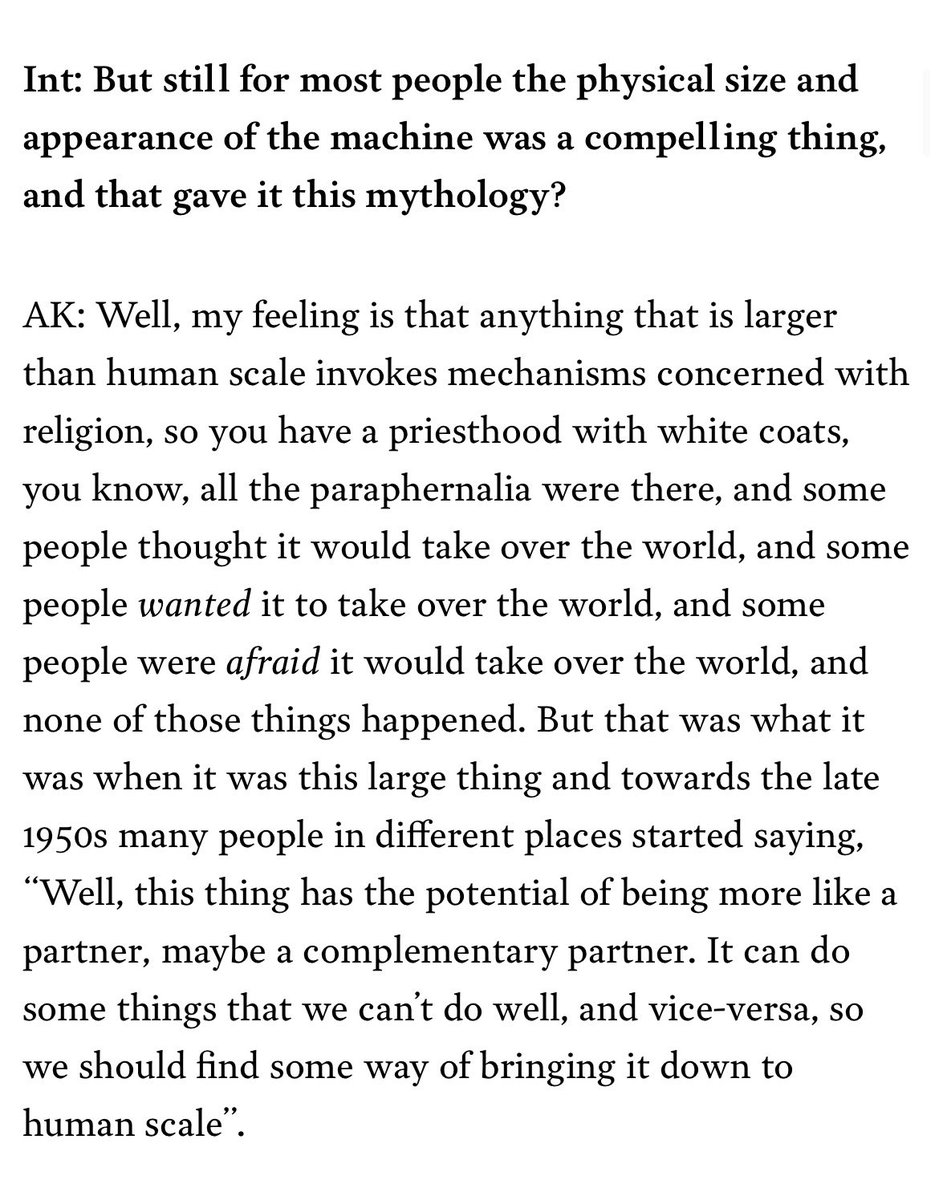
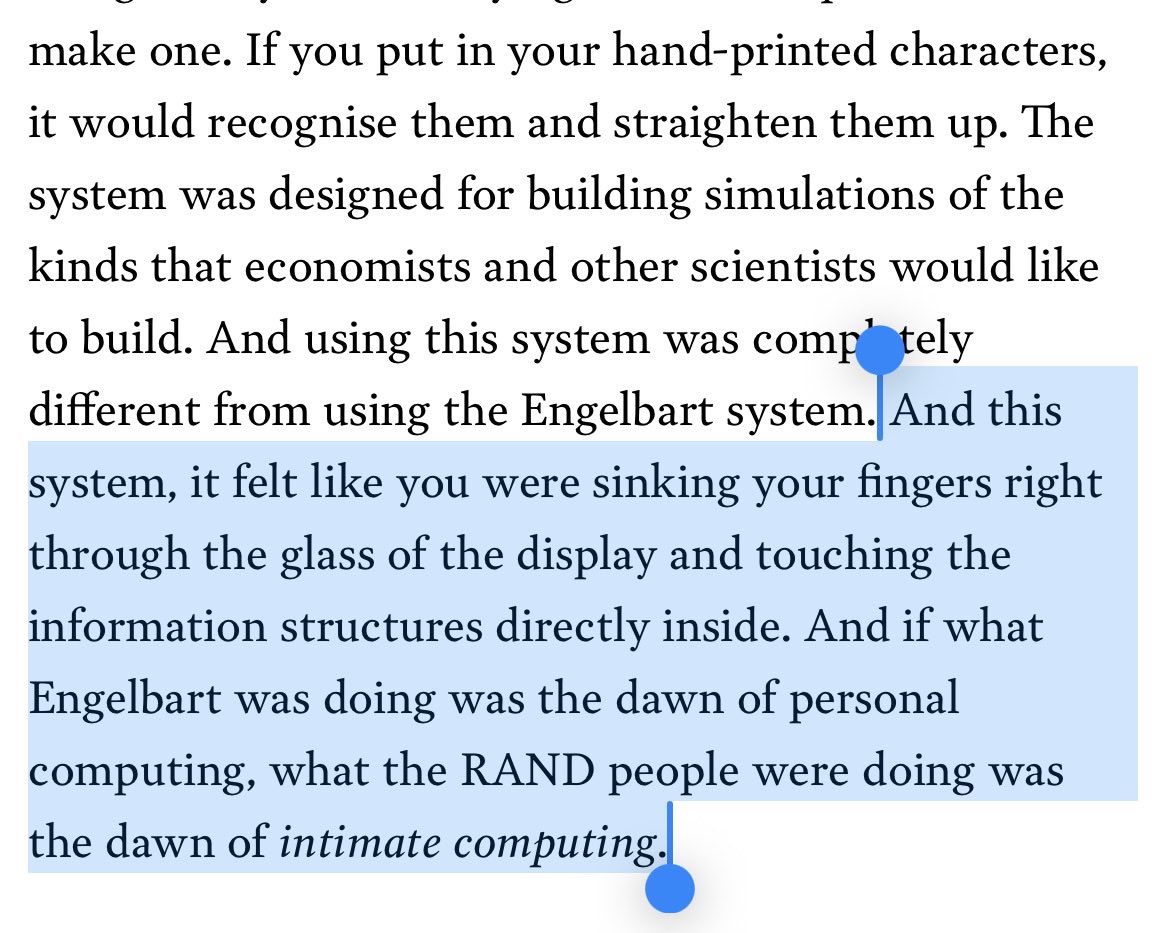
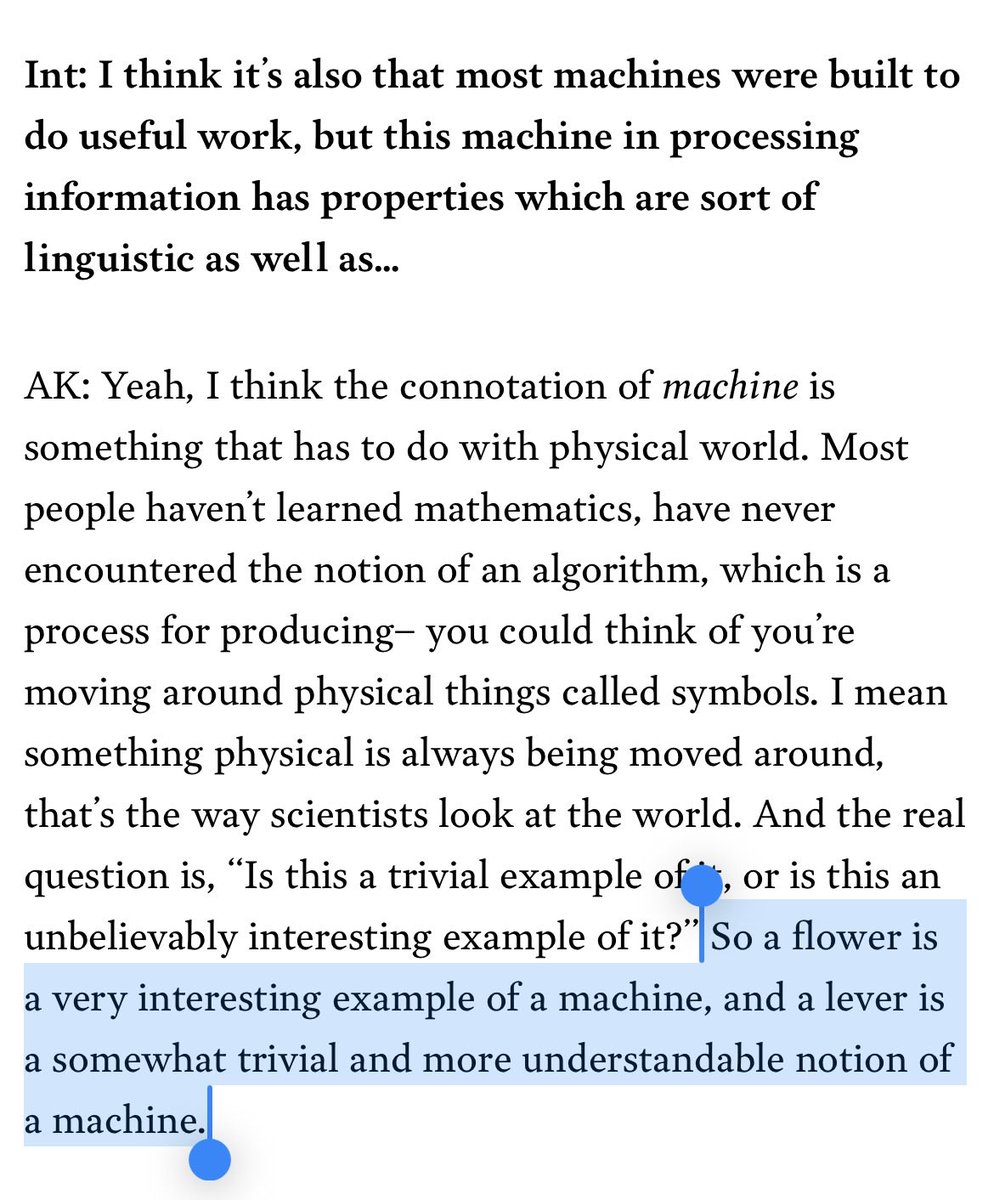
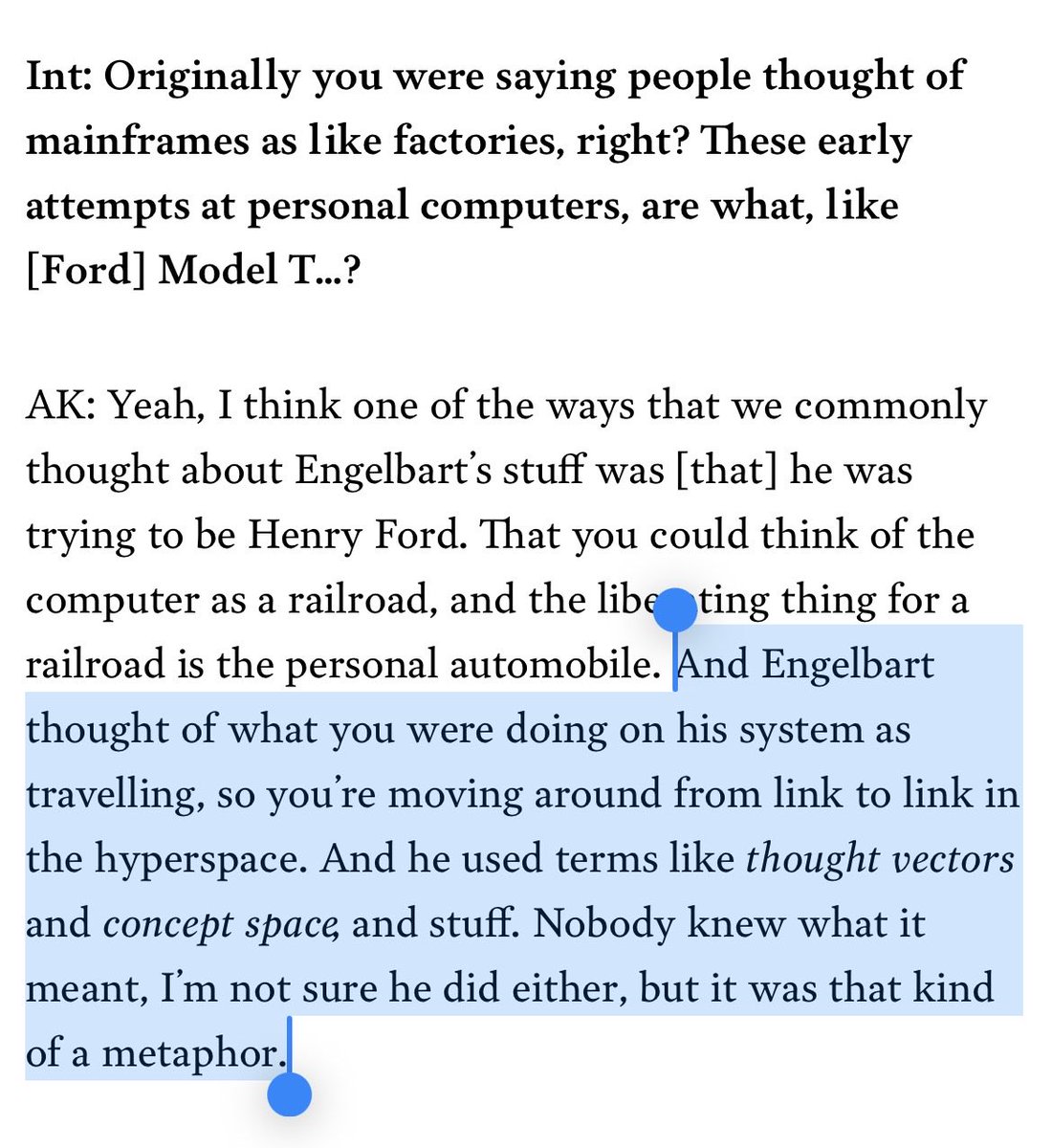
Here, Kay sees past large mechanisms that invoke the mythology of religion, bringing computers into the human scale. And what Kay later alludes to as a step even beyond personal computing — into the realm of intimate computing
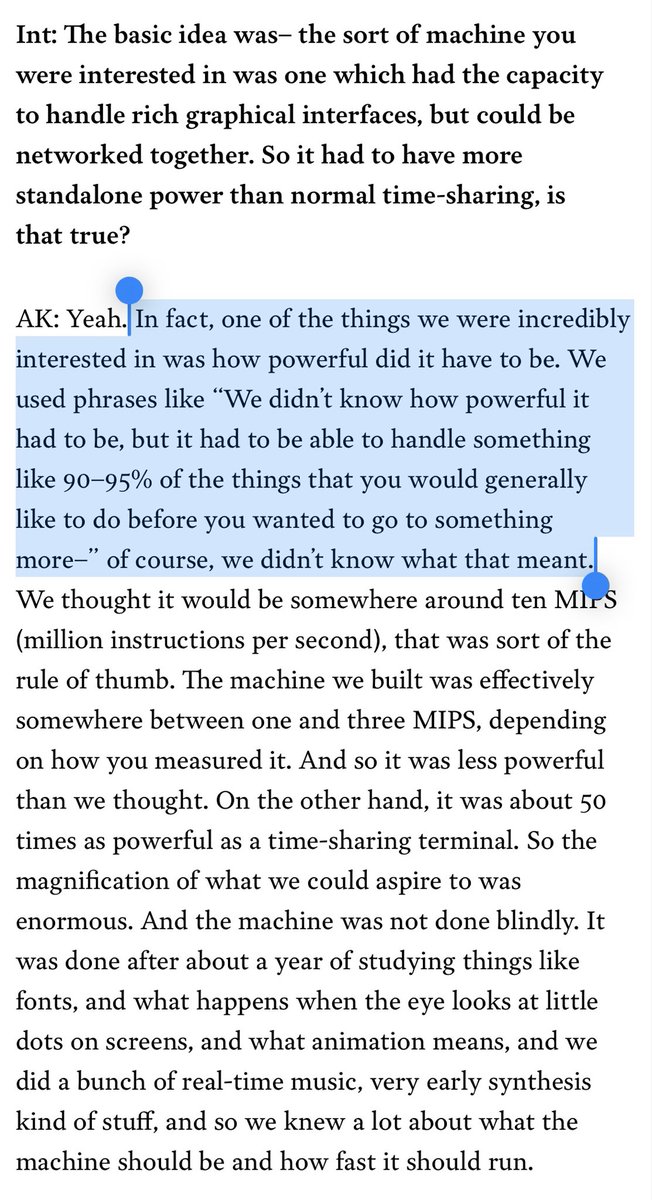
Alan Kay on the sort of machine that intrigued the imagination of the group:
“In fact, one of the things we were incredibly interested in was how powerful did it have to be. We used phrases like ‘We didn’t know how powerful it had to be, but it had to be able to handle something like 90–95% of the things that you would generally like to do before you wanted to go to something more—’of course, we didn’t know what that meant.”
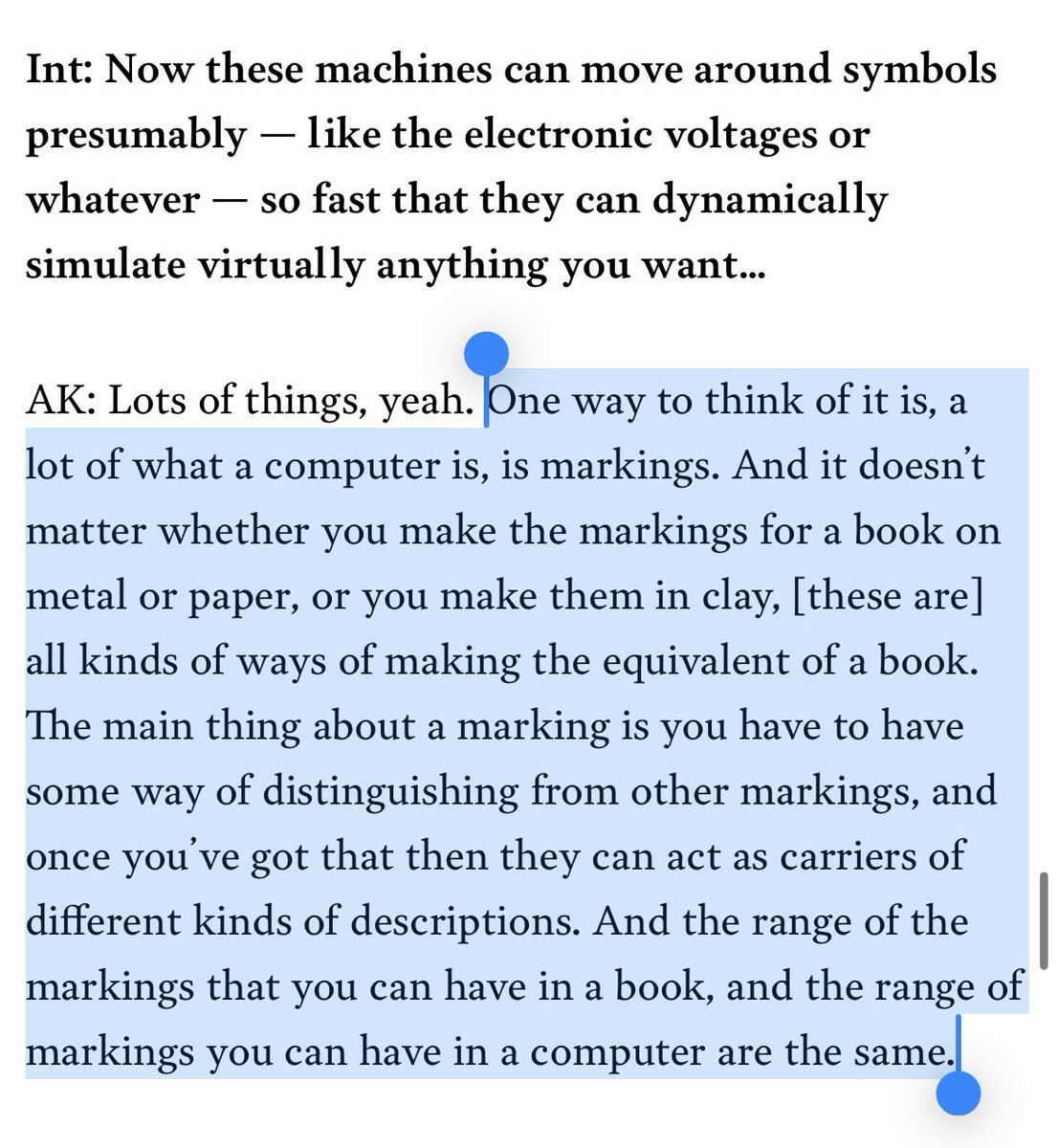
“One way to think of it is, a lot of what a computer is, is markings. And it doesn’t matter whether you make the markings for a book on metal or paper, or you make them in clay, [these are] all kinds of ways of making the equivalent of a book. The main thing about a marking is you have to have some way of distinguishing from other markings, and once you’ve got that then they can act as carriers of different kinds of descriptions.”
—Alan Kay
There is a very special delight in seeing children at serious, rapid play
9 yo nephew watched and heard his cousin play the keyboard, then pleaded his dad to teach him. Less than 12 hours later, I heard this melody wafting down the hall at ~1 am:
Kay believed it ought to be the latter, aspiring to a world where computers can be so malleable, so interactive with its human subject that it becomes more like the relationship between the piano and its player than a theatre screen and a passive moviegoer.
@compartmentcar A really fascinating point Kay brought out was how he thought of computers as a medium, a reflective object. Not instructional. More like art. It evoked something you never imagined existed inside of you until the human and interface met
"Art does not generally drive people towards a particular conclusion. It enables thoughts and feelings around a shared object -- the work of art -- in a way that offers multiple possibilities of understanding."
—Oatley
If you do this a 100+ times consciously, like practicing a specific rep, you'll eventually step into any kind of environment and almost instantly notice and feel things others won't.
But you won't be able to immediately tell why
something i recommend to anyone who's trying to discover how places make you feel - don't start with environments, start way smaller
go to any furniture/home goods store, and start holding objects in your hand, and describe what you feel as you hold them