Most people make this mistake when they compare generative AI tools.
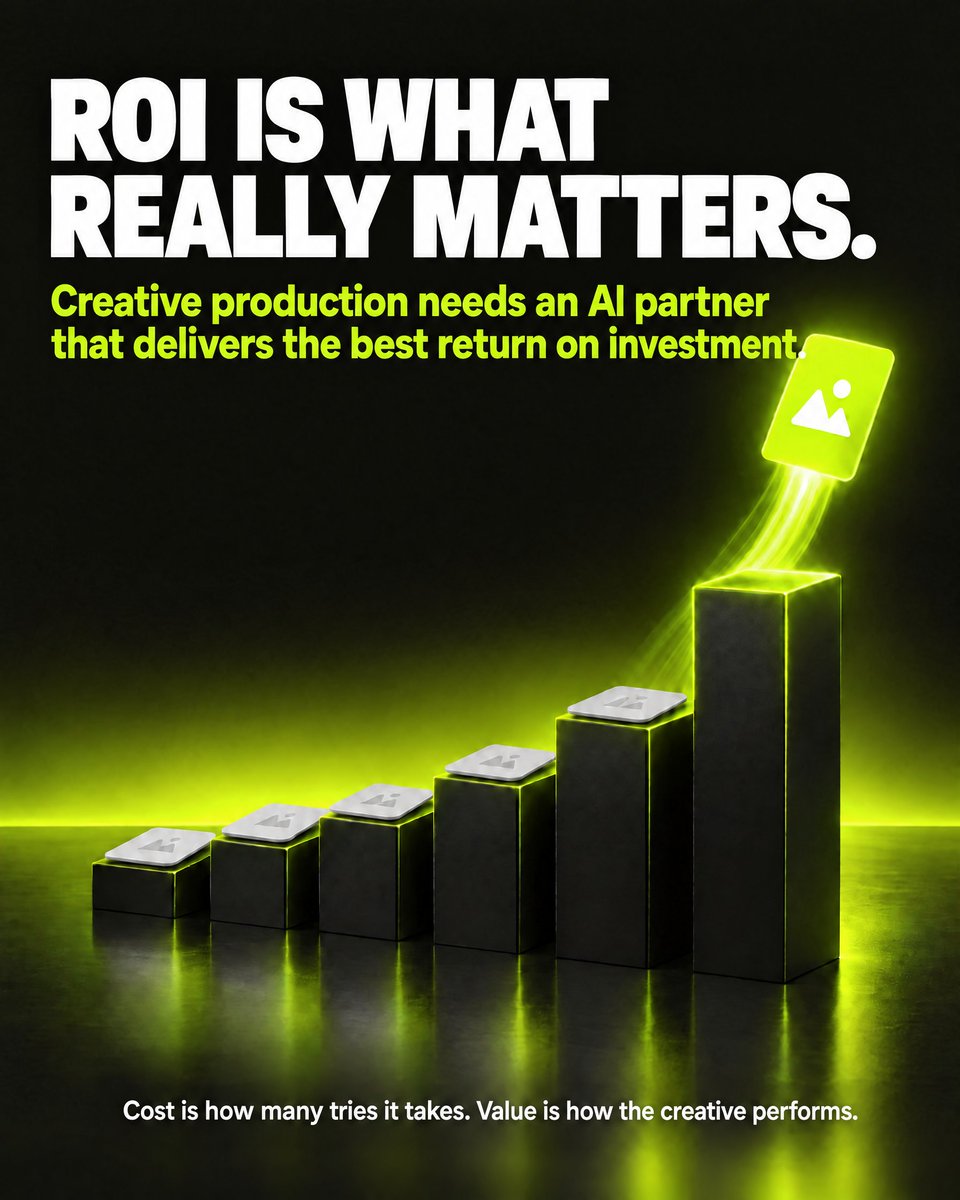
They treat AI models like a commodity. So the “smart” move is the shortest path to the lowest price per token. They forget that ROI is what matters.
That’s like thinking a haircut is a haircut, so an $8 cut is the way to go. Especially the day before the wedding.
Yes, you’ll get shorter hair. Will the result be great? I doubt it.
Same with generative AI.
A model provider is the scissors maker. A data center is the salon. The AI platform is the stylist that actually makes the result look good.
Go cheap, and you get a generic, mediocre video. It feels off, so you rewrite the prompt and regenerate. Then again. Each pass burns time and tokens.
By the time you’re done, you’ve spent hours and a pile of “cheap” credits on something that’s just good enough.
Now compare that to a best-in-class AI video platform.
You tell it what you want. You pay for the intelligence that gets you a strong result in a couple of iterations, without living inside prompt engineering.
The math is counterintuitive. You paid more per credit. You spent less on the finished result. And the video is much more engaging than the cheap one.
Lower cost per outcome × higher quality = better ROI.
Don’t chase the lowest price. Chase the best ROI.
Media, Targeting, and Creative.
These are the three main pillars of a successful ad campaign.
The first two are now mostly automated and optimized. It’s close to impossible to get an edge betting on specific publishers or targeting. Everyone has access to the same media inventory and data providers.
The big lever is creative.
Creative production used to be too expensive and too slow. A typical campaign started with creative and only then the advertiser runs media to learn that the creative isn’t performing as it should against certain audiences, but there is no time or budget to make the changes.
@Higgsfield changed that.
You can generate and iterate on ads with no limits.
You can try a new concept, change the character, test CTAs, localize offers and context, and so much more.
What becomes possible when your company 10x your video output?
Higgsfield is now being used by 390 of the Fortune 500 companies, many agencies and ad tech companies.
I’m thrilled to share that I joined Alex, Mahi, and many other talented people at Higgsfield.
I’ve spent years building and growing products at the intersection of ad tech, creative, and AI. We’re at the dawn of the new era in marketing technology driven by mindblowing advancement in AI technology.
Higgsfield is a phenomenal platform that already delivers the best AI video content in the world. The team ships new solutions and features literally every week, making it pretty much impossible to match by any player out there. The quality, the feature depth, and how much users love it are astounding.
This week, we announced a new funding round at a $5.4B valuation, eight months after the round that took the company past $1B.
My job is to expand strategic enterprise partnerships with brands, agencies, ad tech, and anyone who wants to scale video and image production with consistency and superior quality.
LFG!
@jonnylangefeld@bot Google’s Duplex did exactly the same thingg several years ago and then they shut it down. One of the reasons was business owners couldn’t handle the growing volume of calls and they stopped responding.
@paulg I don’t understand what the problem is. When I get an email clearly written by a human with grammar mistakes and just not clear, I’m thinking “why didn’t you just use Chatgpt?”
@andrewchen A possible reason is that both names (ChatGPT and Claude) started as products for geeks, so they sound awkward for other people, hence adapting them as a verb doesn’t feel natural. If it sounded like Bimbo or similar that would be a different story.
@KingKong9888@GraphCall What do you think about Jeff Currie’s analysis that true molecule shortages (oil) are coming in July-Aug with seasonal demand peak, free float deficit and now the extra demand to restock the drained reserves across the world?