Follow our tour through all of Berlin’s wonderful underground stations looking at the #history and #design of each one.
A main focus will be the amazing and unique #typography on their #StationWalls.
Next Friday U-Bahn line #U5 will be extended with 6 new stops by @BVG_Kampagne.
Can’t wait for it?
Here’s a sneak preview on how U Rotes Rathaus will look like:
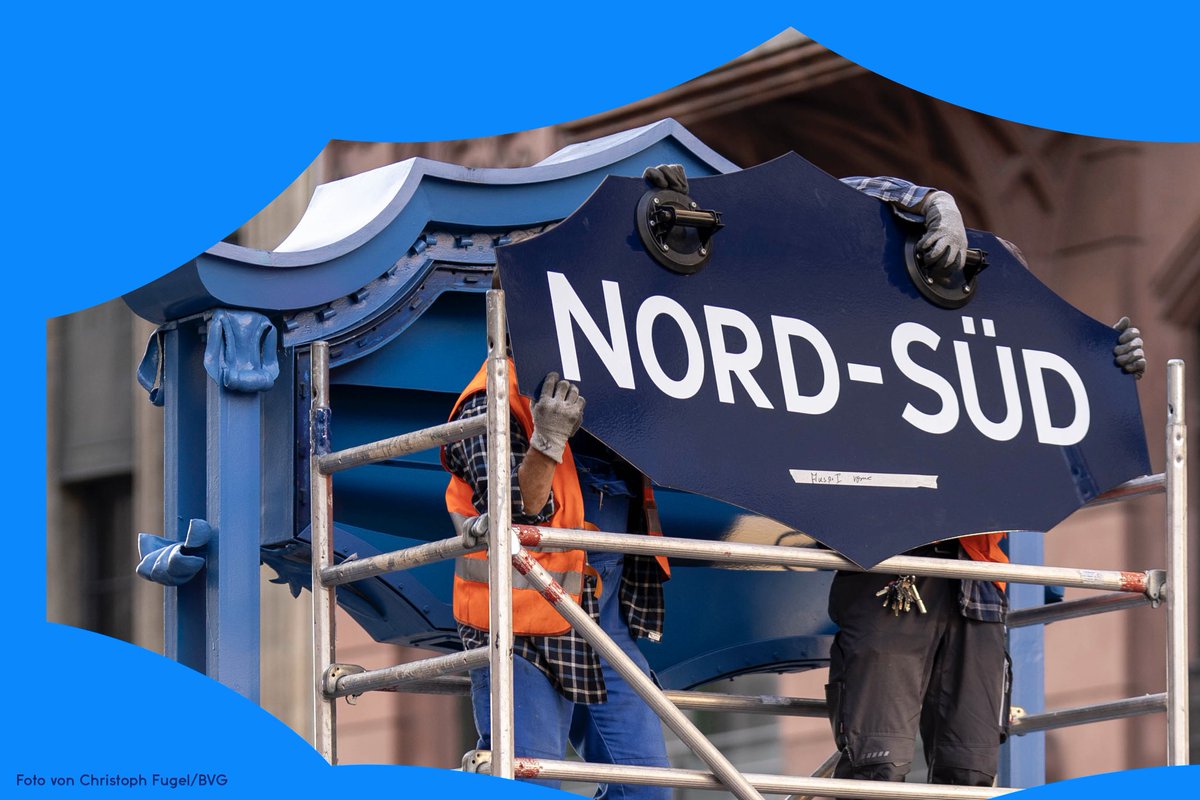
The sign only survived for about two years. In 1926, it was changed to the U, which is still in use today. Fortunately, despite the short time period, many historical photographs and documents still existed, so I was able to faithfully reproduce the lettering.
@dsracoon@kreuzberged The signs were installed last Thursday. The line’s name didn’t change. The historical monument has been restored in it’s original design of 1923.
The sign only survived for about two years. In 1926, it was changed to the U, which is still in use today. Fortunately, despite the short time period, many historical photographs and documents still existed, so I was able to faithfully reproduce the lettering.
@StephenBln@LozSchlepper37L It got reconstructed after the wall fell down. But the reconstruction was done in an authentic way (compare it with Stadtmitte). As described by the Landesdenkmalamt, the whole station including the entrances is protected.
https://t.co/8v0Cxxzkn0
It was a fun project beyond #typography – each of the 4 enamel signs had to perfectly match its frame. Unlike the usual plastic signs, enamel can’t be cut to fit.
The sign only survived for about two years. In 1926, it was changed to the U, which is still in use today. Fortunately, despite the short time period, many historical photographs and documents still existed, so I was able to faithfully reproduce the lettering.
It was a fun project beyond #typography – each of the 4 enamel signs had to perfectly match its frame. Unlike the usual plastic signs, enamel can’t be cut to fit.