Twitter Algorithm explained. If you want to help each other build your Tweepcred (including me) replies go the furthest. Turns out getting "ratio'd" is not a bad thing.
(Models Available To Subscribers)
British Columbia Provincial Polling:
CON: 45% (+1)
NDP: 41% (-4)
GRN: 8% (-)
Others: 6%
Leger / June 2, 2026 / n=806 / Online
(% Change With 2024 Election)
Check out BC details on @338Canada here: https://t.co/am7A0VoNSd
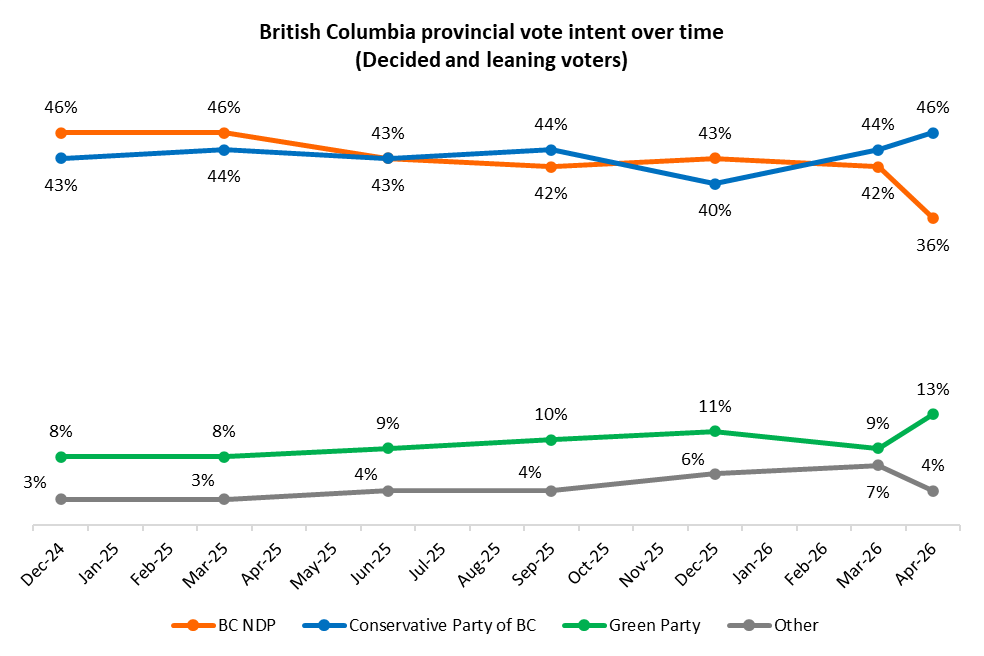
NEW - @angusreidorg numbers:
- BC Conservatives: 46% (+2)
- BC NDP: 36% (-6)
10pt lead for @Conservative_BC as 55% of BCers polled say @Dave_Eby has done a bad job on balancing reconciliation with private property rights.
https://t.co/D2b3ScjmYf
BREAKING: @NVanCaroline leads BC Conservative leadership favourability at 31%, followed by @KerryLynneFindl at 24% and @iainblackbc at 18%, according to new Pallas Data polling.
NEW - New BC poll by Innovative Research Group has decided voters at:
47% - BC Conservatives
39% - BC NDP
Tracking shows major drop in NDP support since fall Indigenous court cases, Rustad departure, and what pollster says is least popular BC budget since Gordon Campbell's HST.
The data shown here does support a strong statistical association between a higher reported number of male sexual partners and increased odds of infidelity among married women, with the difference in means being highly significant (p < 0.001).
Odds ratios from the stratified groups also show a clear stepwise increase: women with more lifetime male partners were several times more likely to report having cheated compared to those with only one partner, rising from about 6 times higher with 2–4 partners to over 16 times higher for those with more than 20.
Of course, this is a correlation, not a direct cause, and other factors could also be at play, but the statistical association is robust in this sample.
Before the election, an Angus Reid poll suggested support for separatism would rise from 25% to 30% if the Liberals were re-elected.
Now, a new Angus Reid poll shows it's actually up to 36%.
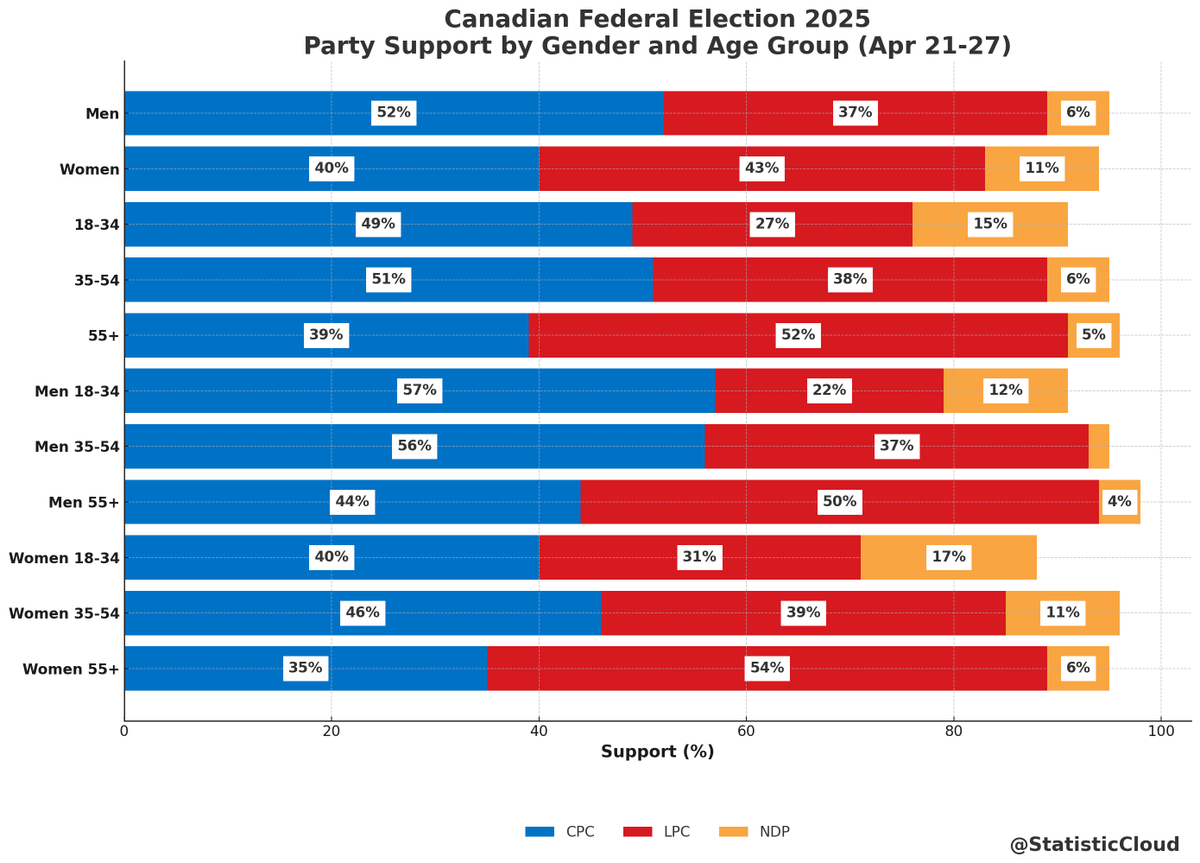
Older Canadians meant more likely to vote Liberal
There is a strong positive correlation (r=0.70) between the median age of a province and the proportion of people in a province who voted Liberal in the 2025 Canadian federal election.