🚀 Goal: 1M followers! 🌟 Join the journey and be part of the story! Discover amazing statistics, trends and facts! Stay informed and inspired with us! 📊🚀🧠
🚨 SHOCKING GOVERNMENT WASTE! 🚨
- Expired Programs: $516B in funding for programs that shouldn't even exist anymore! 🏛️💸
- Annual Waste: The US gov't flushes away $247B of your tax dollars every year! 💰🚽
- Lost Money: $24.5B spent on... who knows what? 🤷♂️💵
- Credit Card Abuse: USDA staff buying tattoos and concert tickets with your money! 🎫😲
- Bizarre Research: $33.2M on transgender monkey studies + $2.7M for cats on treadmills? 🧬🙀
- Neglect: The DoD left $170M in military gear out in the rain! ☔️⚔️
- Tourist Dollars: $6M to make Egypt a travel hotspot? 🇪🇬🌴
- PPP Fiasco: Celebrities like Post Malone got millions in small biz aid! 🎤🤑
- Overpriced Soap: Military soap dispensers cost 80X more than at your local store! 🧼💸
That's why we NEED @elonmusk and @VivekGRamaswamy's #DOGE to cut the fat! 🇺🇸💪 #GovernmentEfficiency #Viral #WasteExposed
Bitcoin Rockets to $93,000: Is $100,000 Next on the Horizon?
The crypto world is abuzz as Bitcoin smashes through the $93,000 barrier! 🚀 Everyone's asking: When will it soar to $100,000? Analysts predict this milestone could be just around the corner, with some betting on it before the year's end. Buckle up, the digital gold rush is on, and $100K might be closer than you think! 🔥 #BitcoinToTheMoon
👉 The sun has a significant impact on mood primarily through its influence on the body's production of serotonin and melatonin. Sunlight exposure increases the brain's release of serotonin, a neurotransmitter that contributes to feelings of well-being and happiness. When serotonin levels are optimal, it can help stabilize mood, enhance mood, and even reduce symptoms of depression. Conversely, lack of sunlight can lead to lower serotonin levels, which is often linked to Seasonal Affective Disorder (SAD), a type of depression that occurs at the same time each year, usually in the fall and winter. Additionally, exposure to natural light helps regulate the body's internal clock or circadian rhythm, which affects sleep patterns and mood. Therefore, getting enough sunlight can not only lift your spirits but also improve sleep quality, reducing irritability and stress.
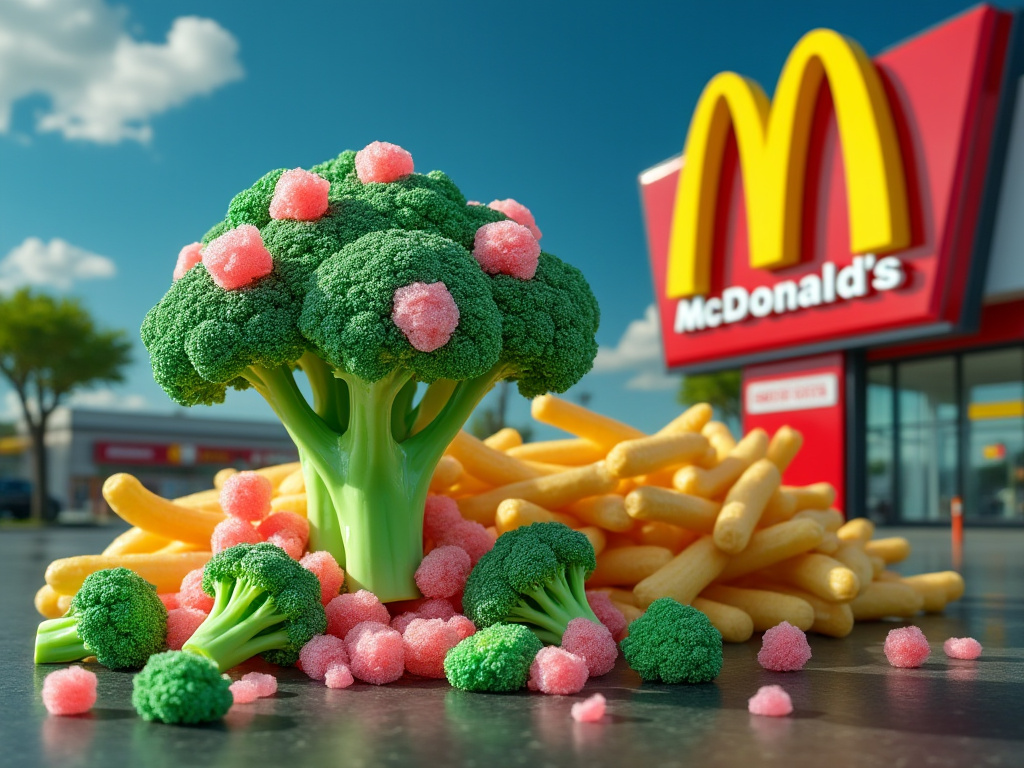
✅ McDonald’s once made bubblegum-flavored broccoli.
Did you know that McDonald's once tried to make broccoli taste like bubblegum?
They created bubblegum-flavored broccoli to encourage kids to eat more vegetables. The idea was to make broccoli fun and appealing by adding a flavor kids love.
But there was a catch: kids were totally confused by it! They couldn’t figure out if they were eating candy or vegetables, so the experiment didn’t go over as planned.
In the end, McDonald's decided it was a little too strange, and bubblegum broccoli never made it to the menu.
It's a quirky part of McDonald's history, and it shows how far they were willing to go to get kids to eat their greens!
Bananas Are Radioactive. 🍌
Due to their high potassium content, bananas contain a small amount of naturally occurring potassium-40, which is radioactive. However, you would need to eat around 10 million bananas at once to get a dose of radiation equivalent to that from undergoing one whole-body CT scan.
This closure is part of a court-ordered process to auction off Infowars' assets, including its name, video archives, and studio equipment, in order to pay a $1.5 billion judgment to families affected by the Sandy Hook shooting. The decision comes after legal battles where Jones was found liable for defamation due to his claims that the Sandy Hook massacre was a hoax.
Ketchup was once sold as medicine.
In the 1830s, ketchup was marketed as a medicinal remedy. Dr. John Cook Bennett, an American physician, claimed that his tomato-based ketchup could cure ailments such as diarrhea, indigestion, and jaundice. He even produced concentrated ketchup in pill form, which gained popularity among consumers seeking these health benefits.
However, the market soon became saturated with imitators producing their own versions of medicinal ketchup, often making exaggerated claims about their products' efficacy. Some of these products contained little to no tomato content and were essentially laxatives. This proliferation of dubious products led to public skepticism, and by the 1850s, the trend of selling ketchup as medicine had largely faded.
Despite its fall from medicinal grace, ketchup found a new life as a popular condiment. In 1876, Henry J. Heinz introduced a recipe that emphasized quality and taste, helping to establish ketchup as a staple in American cuisine.