After 5 years of tweeting the Rule of St Benedict, it's time for a change. This account will now feature a wider selection of posts about ancient churches, monasticism, medieval sacred art and literature, which you can find on my substack (see bio)
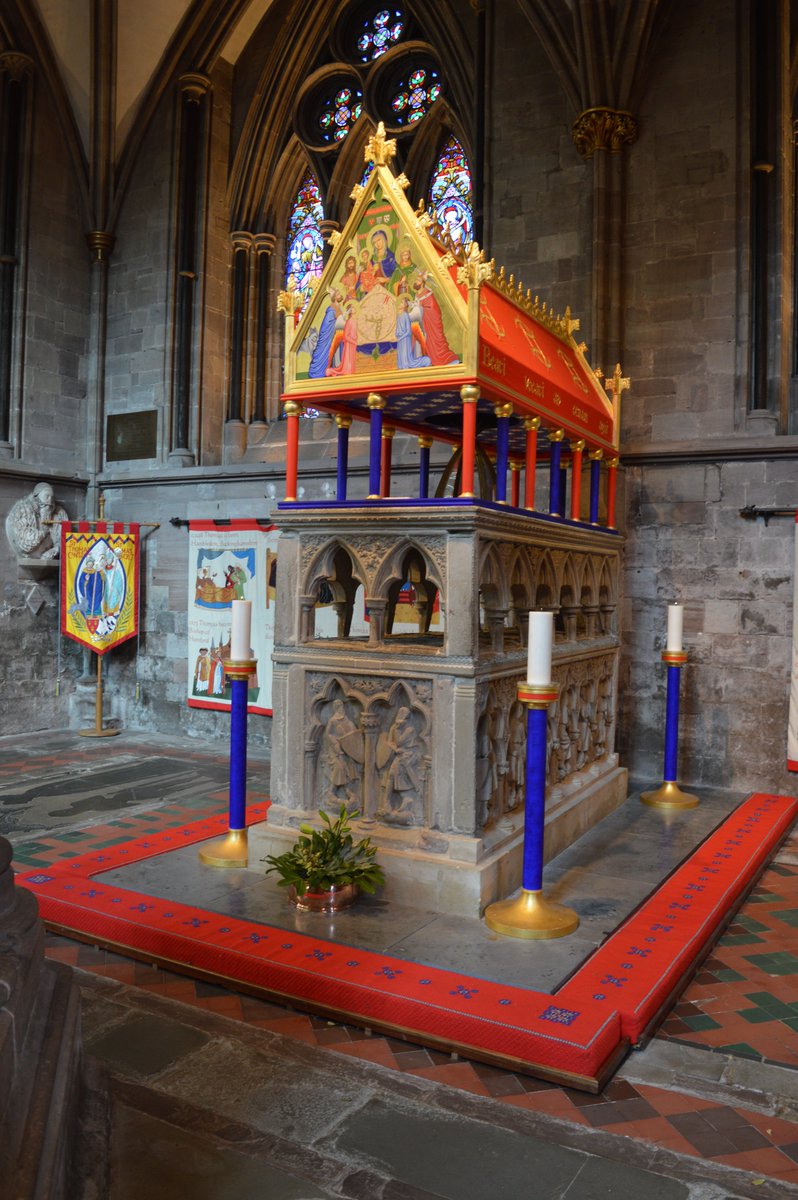
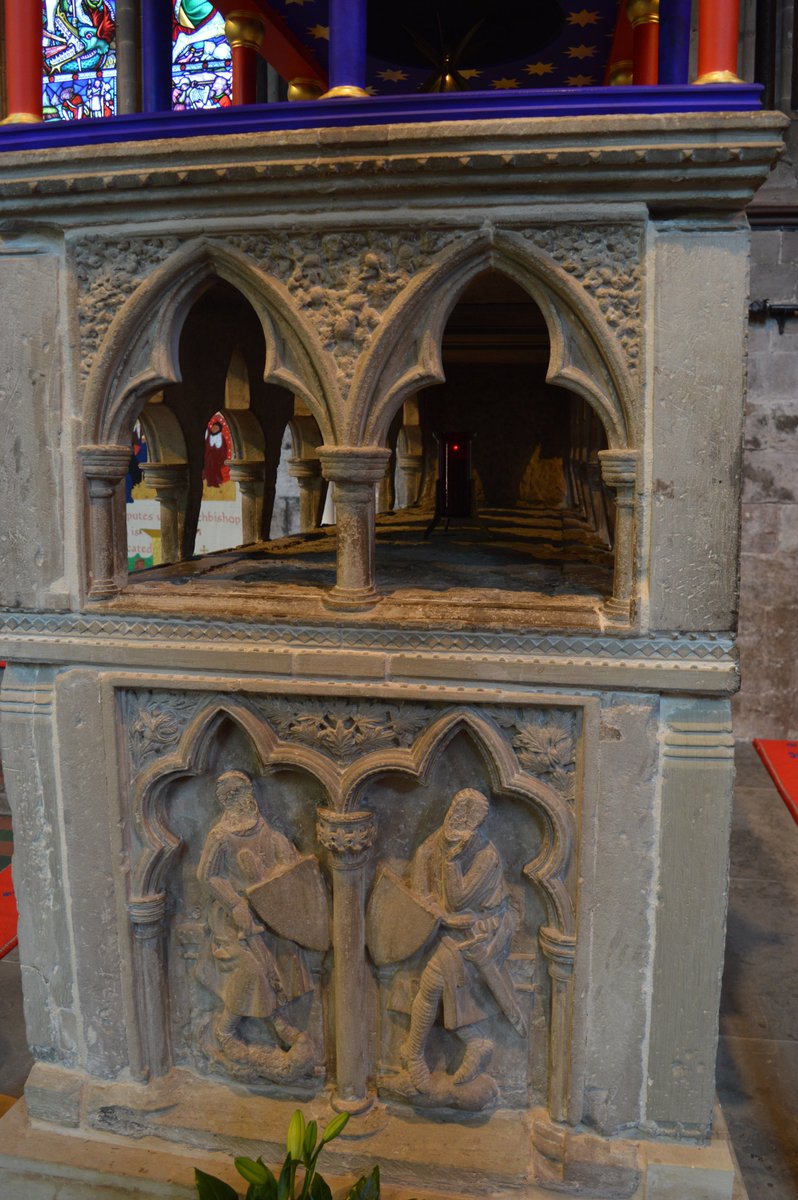
Today is the feast day of St Thomas Cantilupe of Hereford. I was fortunate to be able to visit and pray at his restored shrine in Hereford Cathedral this summer. The bottom part of the shrine is original, the upper canpy is the restoration.
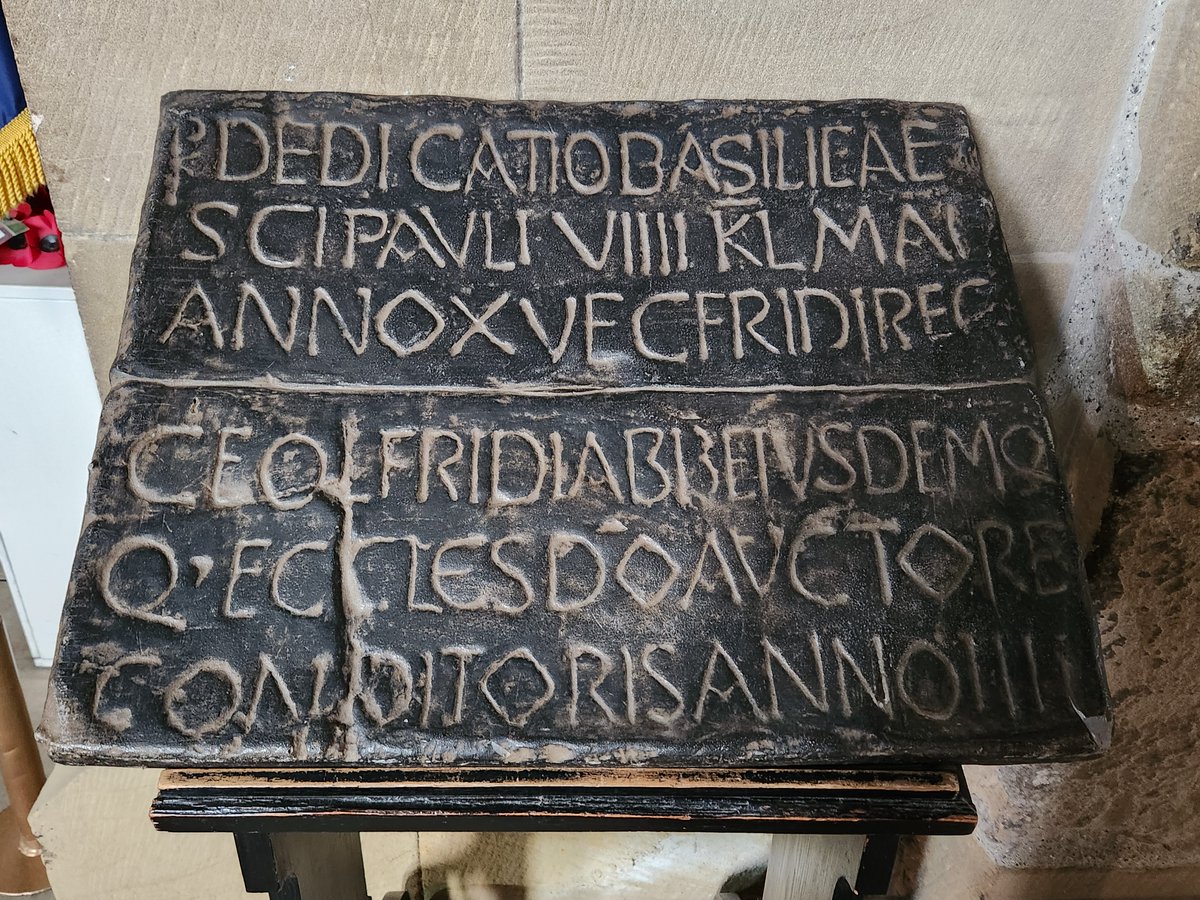
Today is the feast of St Ceolfrith, the Abbot of Monkwearmouth who admitted Bede to his monastery, the tower of which still stands (or at least the lower parts). Ceolfrith is named in the dedication plaque of the sister monastery at Jarrow. The church was dedicated in 685 AD.
Certainly it is true that the water of rebirth initially brings about our new life of grace, but for us it remains necessary to struggle every day against the rust of our earthly nature.
Pope St Leo the Great, Sermon 6 on Lent
12th century baptismal font at Kirkburn.
Today I visited a 10th/11th century Viking cross which stands (restored as you can see) in a graveyard at Halton, near Lancaster. Parts of an anglo-saxon cross also survive, inside the church.
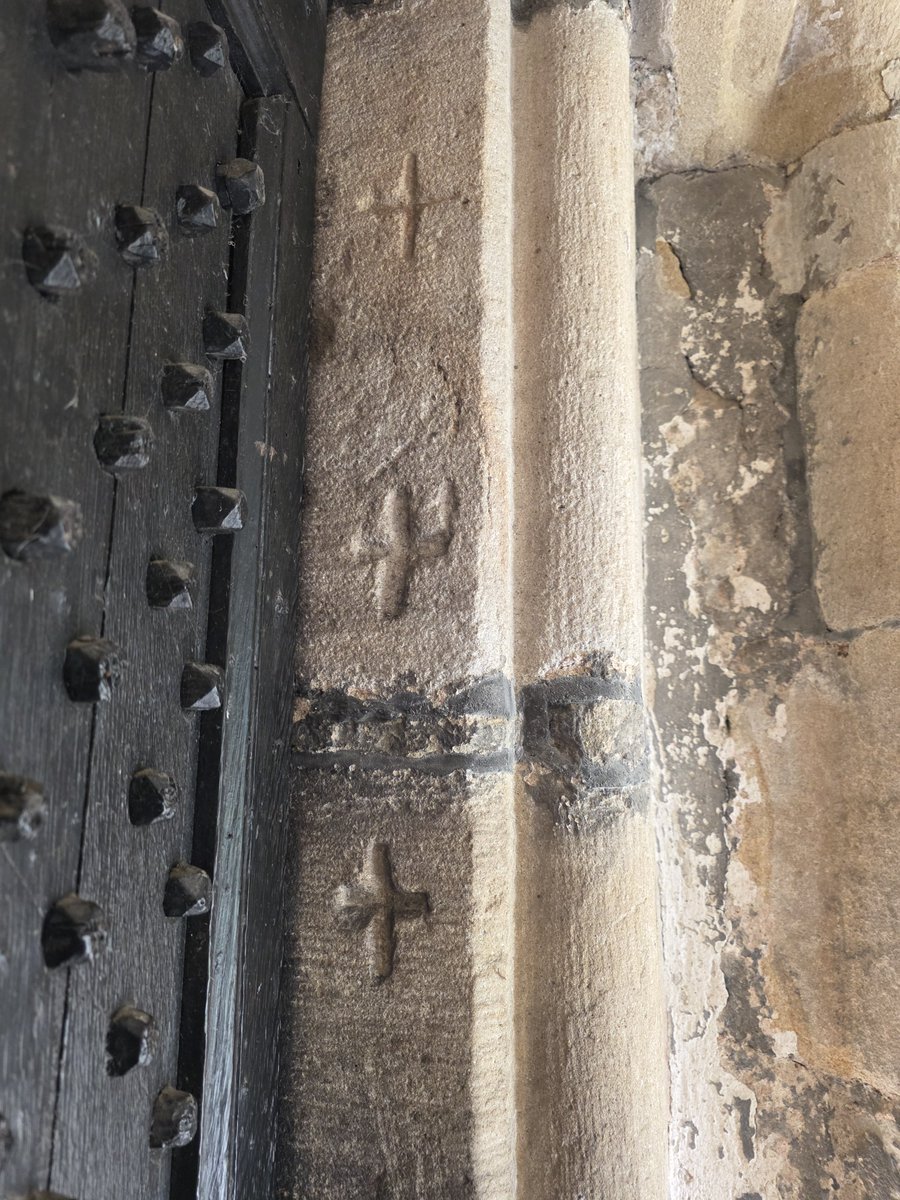
Sometimes we encounter mysteries in medieval churches. What was the purpose and meaning of these three carefully-incised crosses on the doorway?
We can only wonder at the actions of our forebears.
Bolton-by-Bowland church.
This 19th century window at Bishopstone caught my eye; it's a mix of “grisaille” - geometric patterns - and painted scenes, which is unusual. Scenes from the life and death of Jesus, with representations of the four Gospel writers at the top.
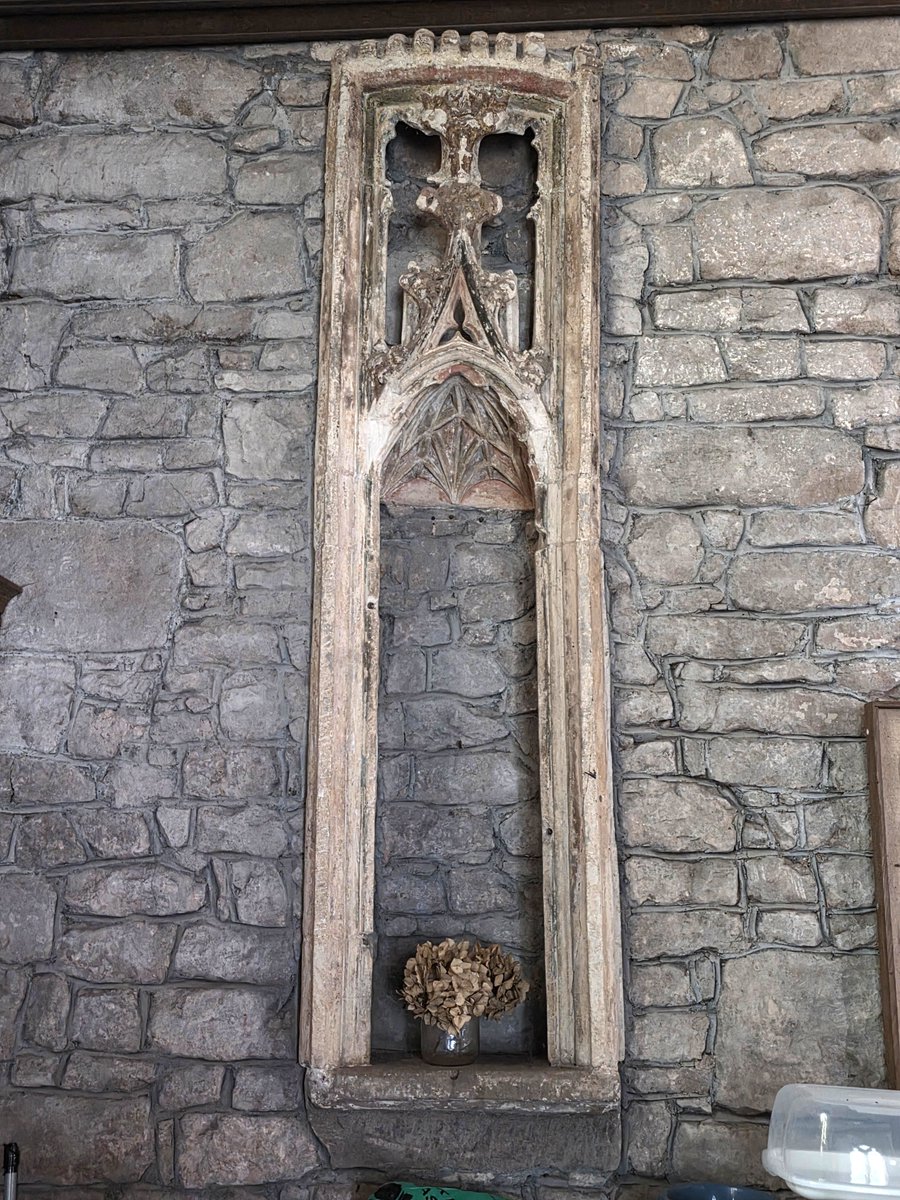
For the feast day of the Holy Name of Mary, here is a beautiful niche which may have held her statue at Dymock church. This niche is lovely and even has traces of its decorative colour.
Sancta Maria, ora pro nobis!
Part of the lost cloister of Tewkesbury Abbey - the monks’ entrance into the church survives, in part, but the rest of it is long gone. It appears to have been very like the cloister of Gloucester Cathedral and must have been beautiful.
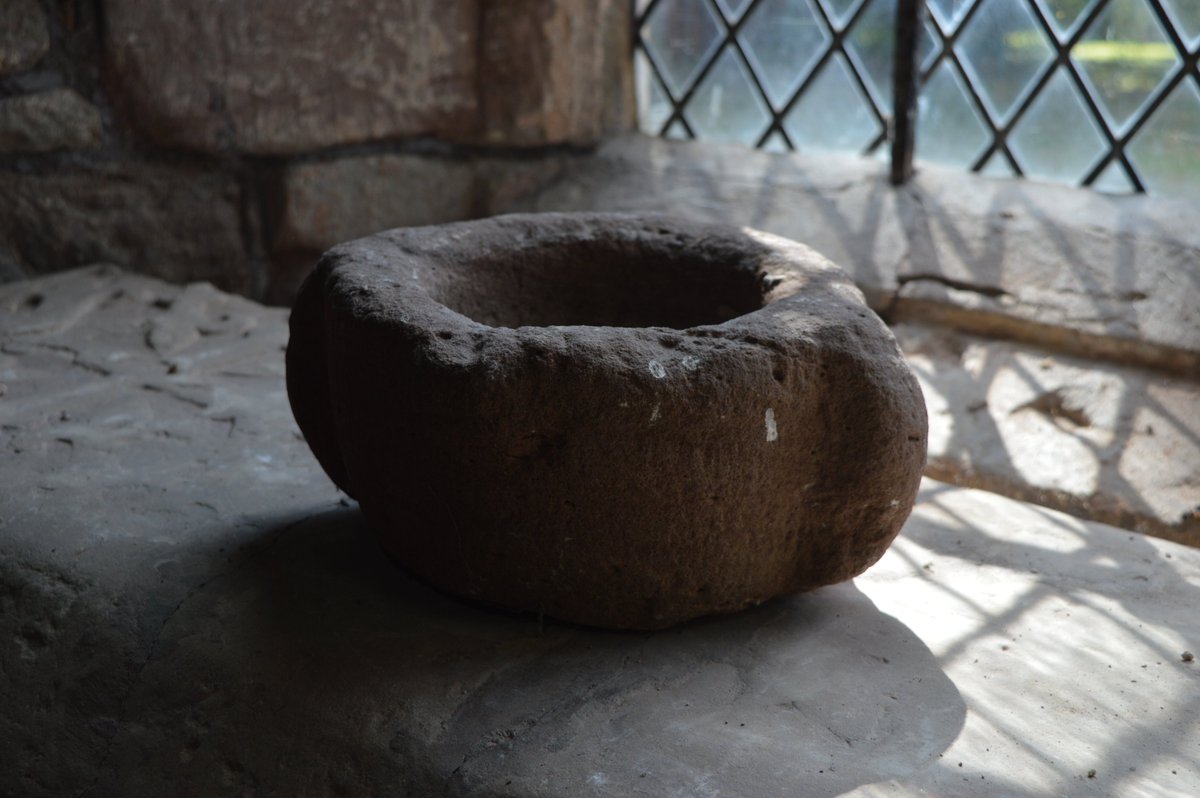
Most holy water stoups in England were destroyed after the Reformation. I came across these two stoups in Dymock; they’re very small and that gives us a clue to where they may have been used. They look the size for use by priests who used different doors to lay people.
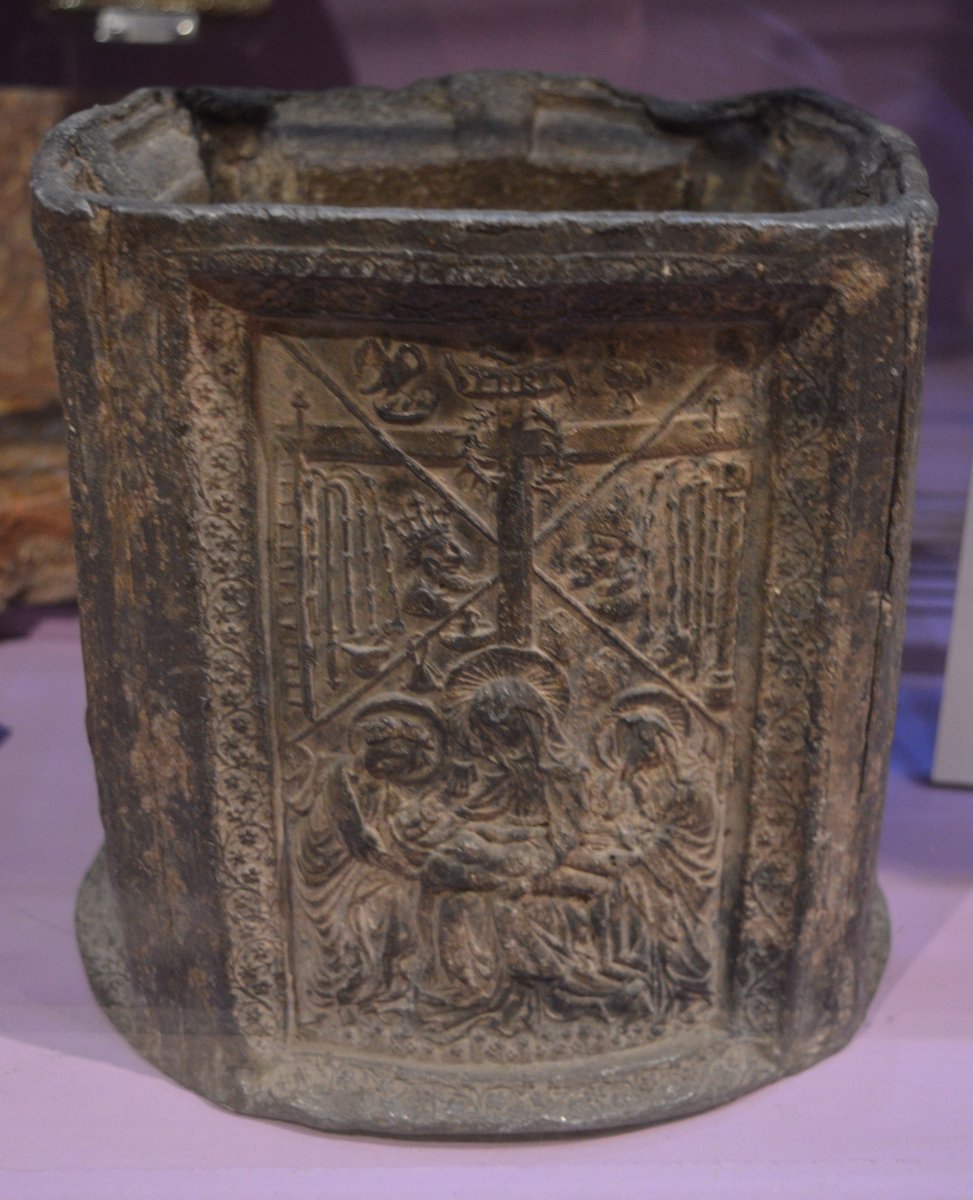
This lead container, made about 1300, may have been a Holy Water stoup. The image appears to be the same on each side - it is commonly known as the Pieta, the taking of Jesus down from the cross and laying him in the arms of his mother. Gloucester Museum.
This weekend I have been visiting ancient chu4ches in and around Gloucester. This 12th century lead baptismal font in Gloucester Cathedral caught my eye. Beautiful.
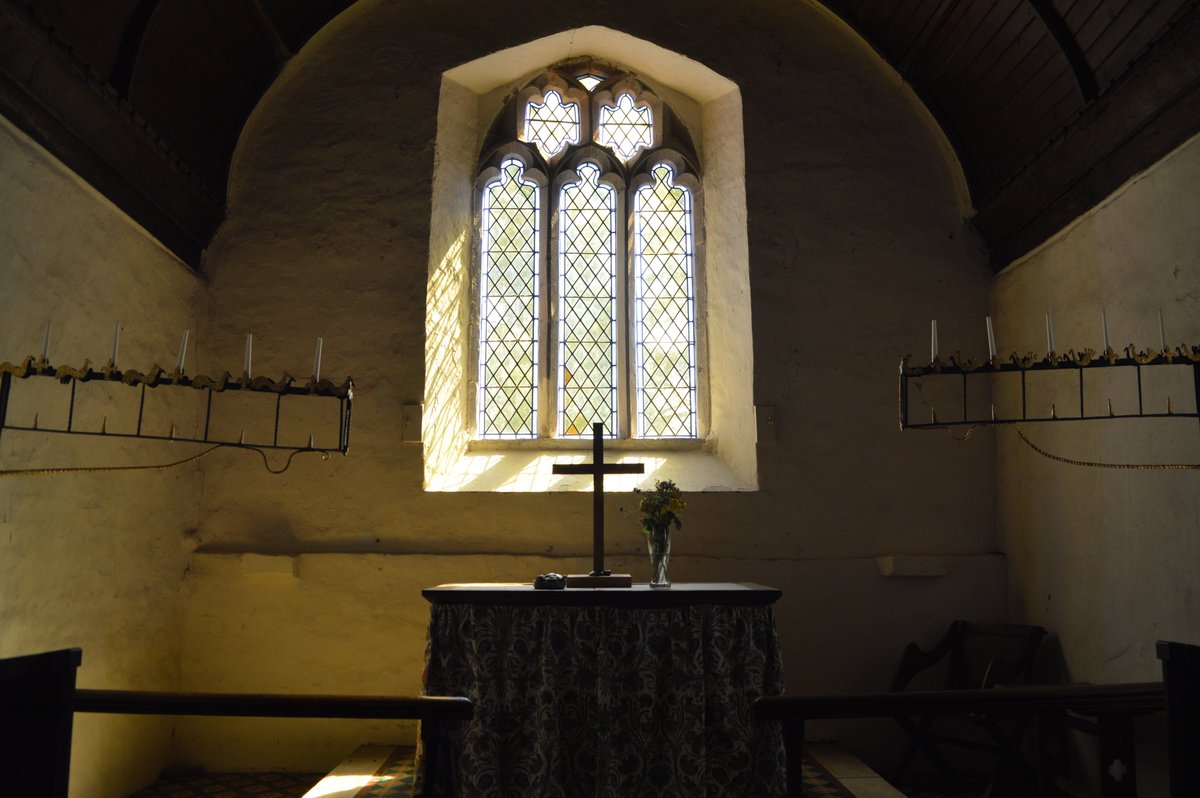
In June I visited a church at Rowlestone which had something I've never seen before. Each side of the altar is a long candle holder; these are medieval and I wonder if other churches had them too? Lovely, and the light here was wonderful.
@JLLiedl The ICKSP in England (Preston) house around 5 aspiring vocations for a year in preparation for seminary. They live with the 3 priests in the rectory, participate in the liturgy and carry out other duties in the church as well as getting a solid formation.