New paper out! “Objectify and commit: how reasons bring about cultural change and progress” It is open access so please check it out! https://t.co/Ads2jkY88C
A summary: 1/7
“The mystery and paradox surrounding consciousness is not inherent to it. It is a consequence of researchers not understanding it as an evolved representation.” Brilliant paper by @DavePietrasz with important implications for #philosophyofmind and the study of #consciousness
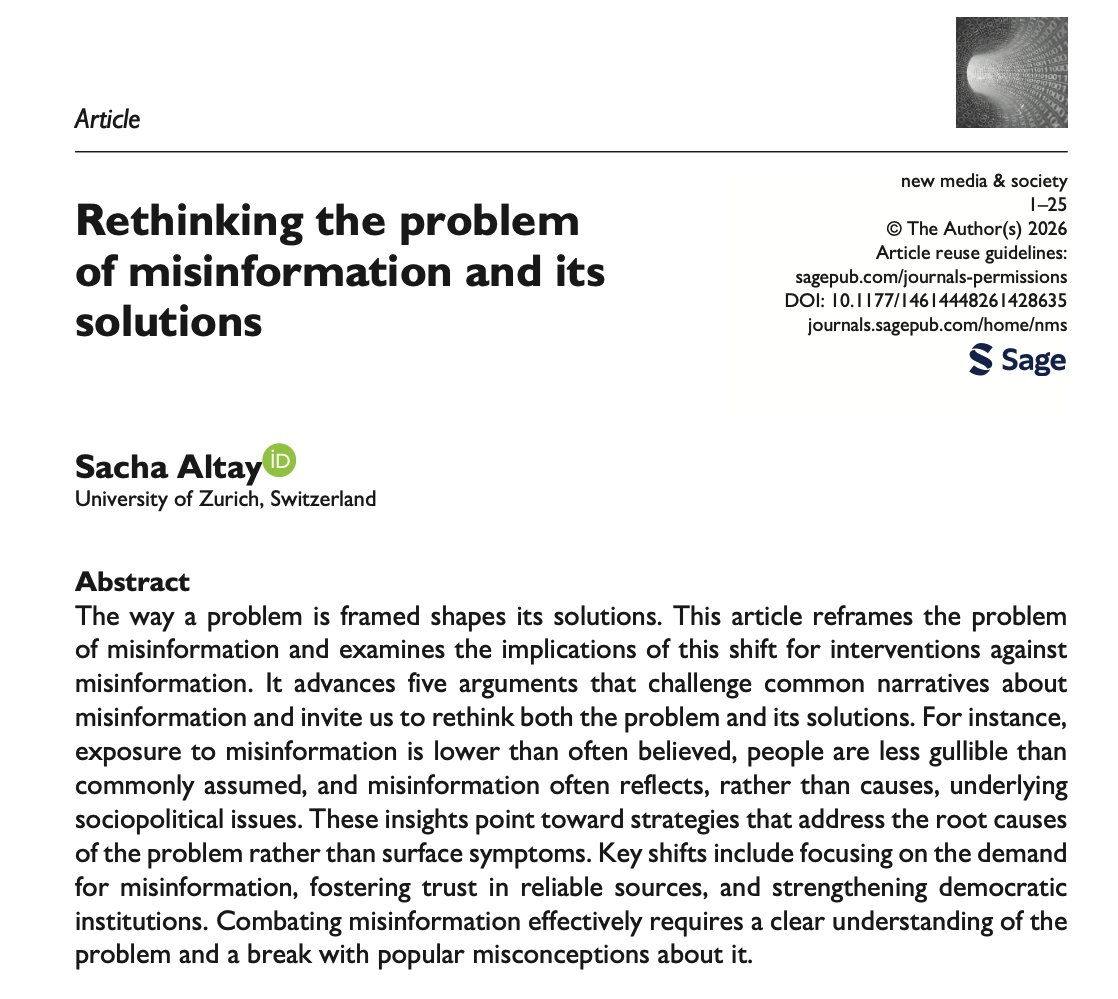
One of my favorites paper got published 🥳 It covers a lot of ground and it’s the best summary of my views on misinformation and what to do about it. Give it a read :)
Humans are odd. We try to get credit for not caring about getting credit, compete to be less competitive than others, and make people think we don't care what they think. I'm thrilled to announce the publication of my new paper on these and other "social paradoxes." (Link below).
Vanavond sluiten we een onfraai hoofstuk af van meer dan 20 jaar onverantwoord Belgisch energie- en klimaatbeleid, met dank aan dogmatisch antinucleaire groenen en machtsgeile liberalen. #RIPDoel2
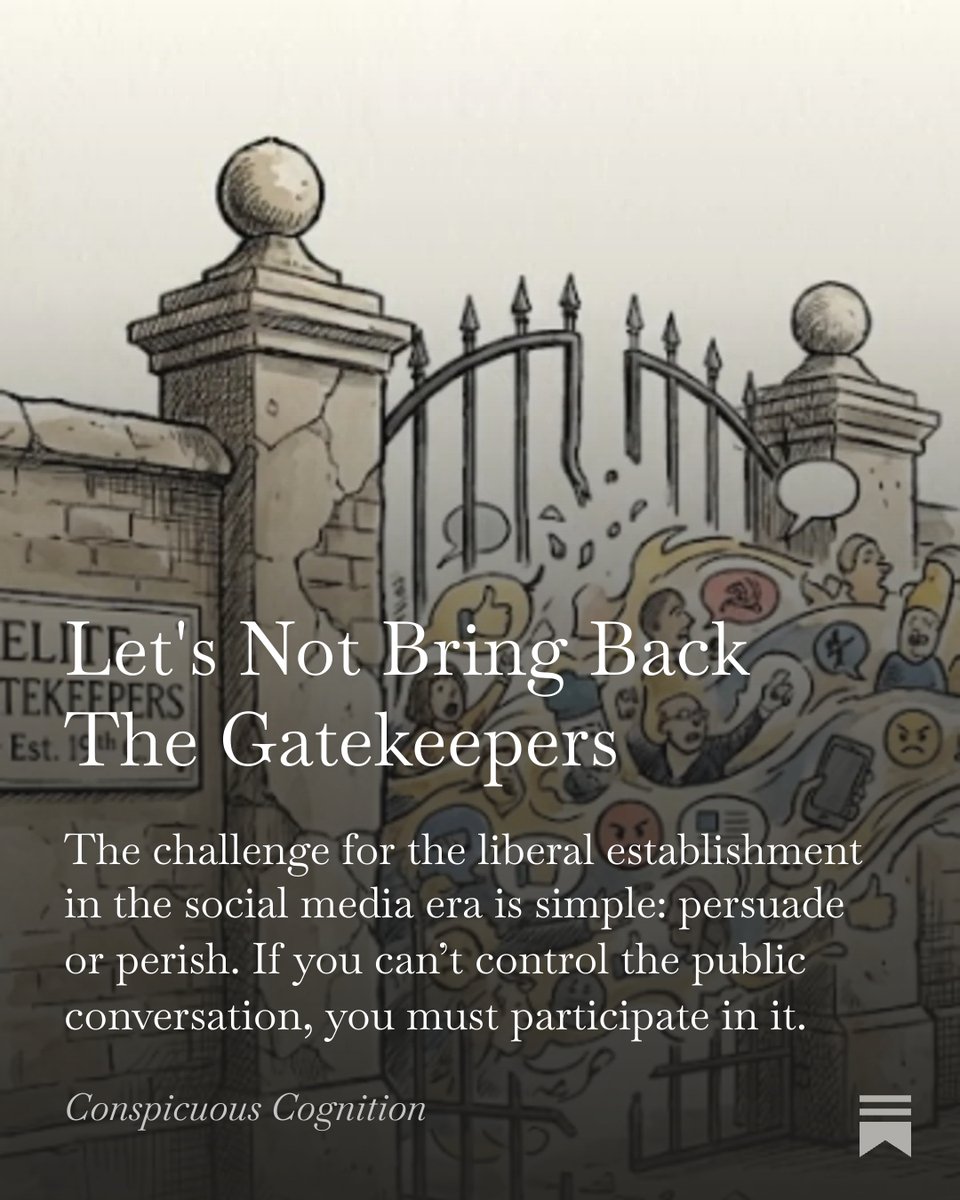
New essay! Why does social media benefit populism? And if, like me, you're a small "l" liberal who opposes populism, what can be done about it?
The essay has three parts.
Part 1 argues that the main reason social media benefits populism is that it destroys elite gatekeeping, providing a mass media platform for popular ideas historically stigmatised and marginalised by establishment elites.
Part 2 then outlines several reasons why we should nevertheless resist moves for more elite gatekeeping on social media. Not only are such efforts likely to make things worse, but the decline of elite gatekeeping has had many beneficial consequences, and the negative consequences, although real, are often overstated.
Finally, Part 3 argues that many of these negative consequences are not inevitable either. A large part of the blame for them lies in the fact that establishment institutions have failed to adapt to the new pressures and responsibilities of the social media age. Instead, they have clung to a set of habits and norms—most fundamentally, an aversion to engaging with illiberal ideas to avoid “platforming” and “normalising” them—adapted to a world that no longer exists.
Put simply: Once established institutions lost the privilege to control the public conversation, they acquired an obligation to participate within it, which, so far, they have mostly failed to do.
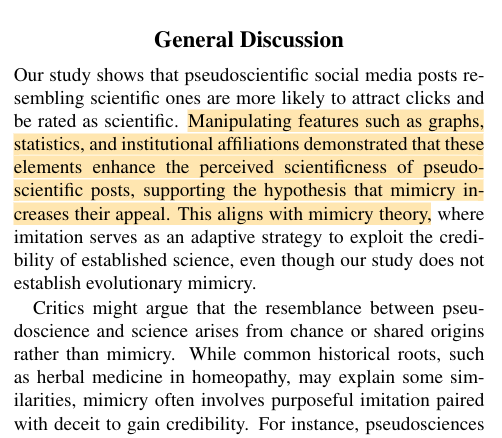
Do pseudosciences mimic the superficial features of real science (graphs, statistics, jargon, institutions) to gain credibility? Yes, we argued in our work (with @Stblancke). But we're just humble philosophers.💺Now actual scientists have tested (and confirmed!) our hypothesis.
Pseudosciences evolve to mimic the features of genuine science, because that enhances their appeal. This study vindicates our view: graphs, statistics & institutional affiliations "enhance the perceived scientificness of pseudoscientific posts, supporting the mimicry hypothesis".
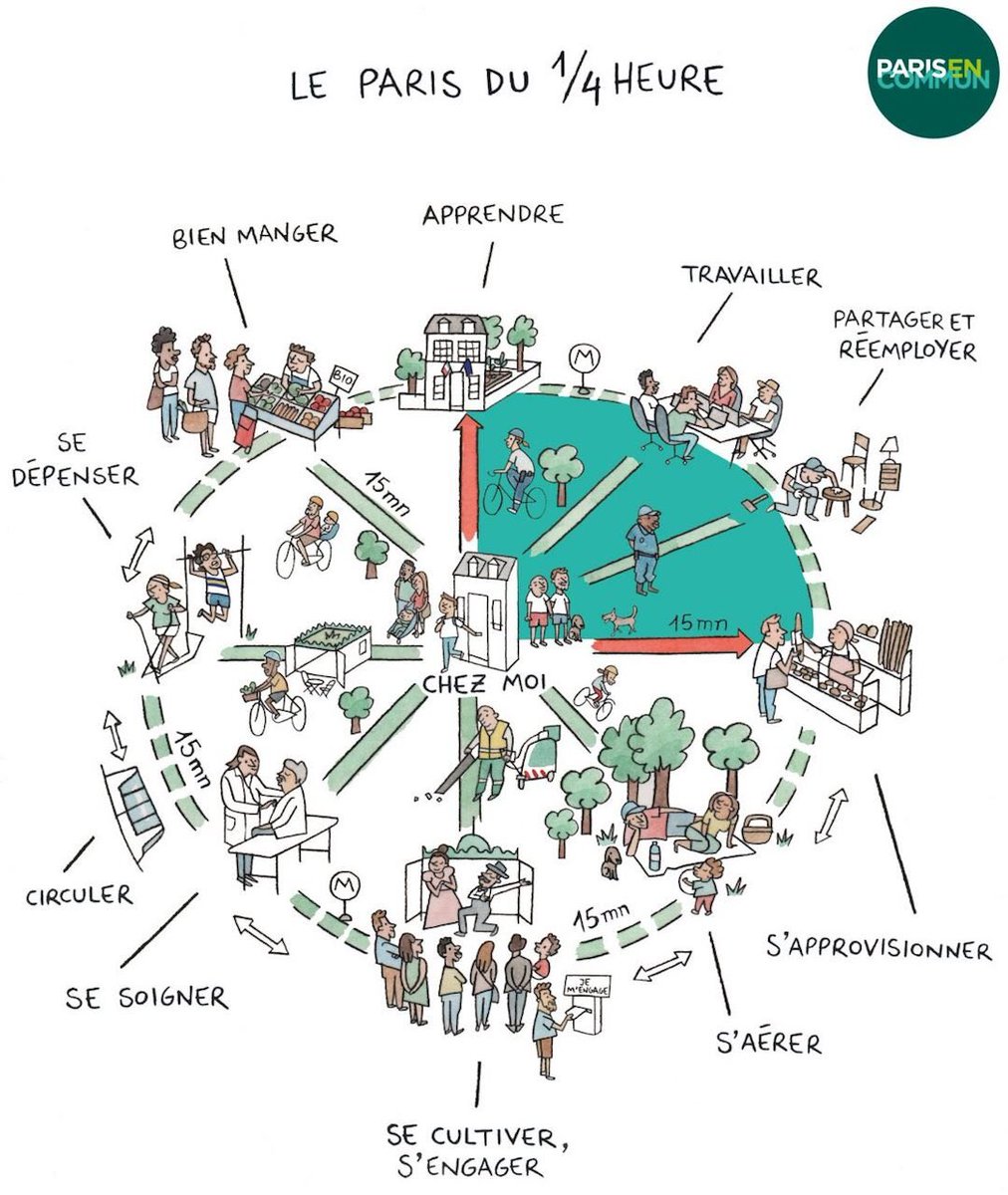
Another reminder that “15-Minute Cities” isn’t a new idea. It’s skilled packaging of an idea that’s been around for a LONG time.
It’s been called “city of short distances.” I used to call it “The Power of Nearness.” MANY names.
More things close by. Less car dependency. More CHOICE.
Common sense.
🚨 Now out in NHB 🚨
We show that following the news on WhatsApp or Instagram (N = 3,395 🇫🇷🇩🇪) increases current affairs knowledge, participants’ ability to discern true from false news stories, awareness of true news stories, as well as trust in the news.
Very happy to share the preprint of the study @acerbialberto and I have been working on, showing that, like fake news, factual news uses negative and divisive (including group-binding, anti-outgroup, and dominance-oriented) content to get attention. https://t.co/CvWECOGiq0
"...smartphonegebruik achter het stuur, onlogische voorrangsregels, een gebrekkige of ontbrekende fietsinfrastructuur en te veel gevaarlijke obstakels op fietspaden en -wegen." 3/3
"Wie echt begaan is met de veiligheid van fietsers, moet vooral naar de oorzaken kijken. Die zijn genoegzaam bekend: te veel en te snel sluipverkeer, te hoge snelheden, niet-conflictvrije verkeerslichtenregelingen, moorddadige voertuigontwerpen, alcohol- en drugsmisbruik,..."2/3
"when they reason and talk about abstract topics of society and politics, citizens don’t just care about the truth... communication in small scale, traditional societies is similarly structured by social goals of signaling, community-making, and policing" https://t.co/M6CDHfOzkZ
I just chipped in to stop the hypocrisy of global north countries and institutions like the World Bank -- and help save women and children's lives across Africa. Can you help too? https://t.co/hf2MHjR0H9
"Because of reputational concerns people objectivize their reasons and feel compelled to commit to them... which explains why reasoning does not necessarily result in good outcomes"
https://t.co/ESu9jDbJUp
I wrote a post for the excellent Imperfect Cognitions blog (@EpistInnocence) on my recent paper on the cultural impact of reason. If you want to have an idea of what the paper is about without having to read the whole damn thing, see here:
https://t.co/JaE7VIJeGN