Jensen surfing a wave with the American flag is the most accurate metaphor for what's actually happening right now. A kid immigrates from the country of Taiwan, washes dishes at Denny's, and builds a $3 trillion company that every nation on earth is now begging for access to. He is the definition of the American dream. In order for America to strive, Earth needs to be build on American standards
Jensen: "What the fuck did you just fucking say about my ecosystem, you little bitch? I have 300 million confirmed GPUs, I'm trained in accelerated computing, and I will wipe you out with parallelized precision.
You think you can get away with that loser premise? Think again, fucker. My secret network of TSMC plumbers is tracing your datacenter right now. You aren't talking to somebody that woke up a loser—we are not a car!
You're fucking dead, kid. I can be in any cloud, anytime, and obsolete your silicon in over 700 ways with just my bare CUDA kernels. I will use my entire arsenal of HBM memory to wipe your miserable ASIC off the Earth. You should have held your fucking tongue. I will shit Blackwell all over you and you will drown in tokens. You're fucking dead, kiddo."
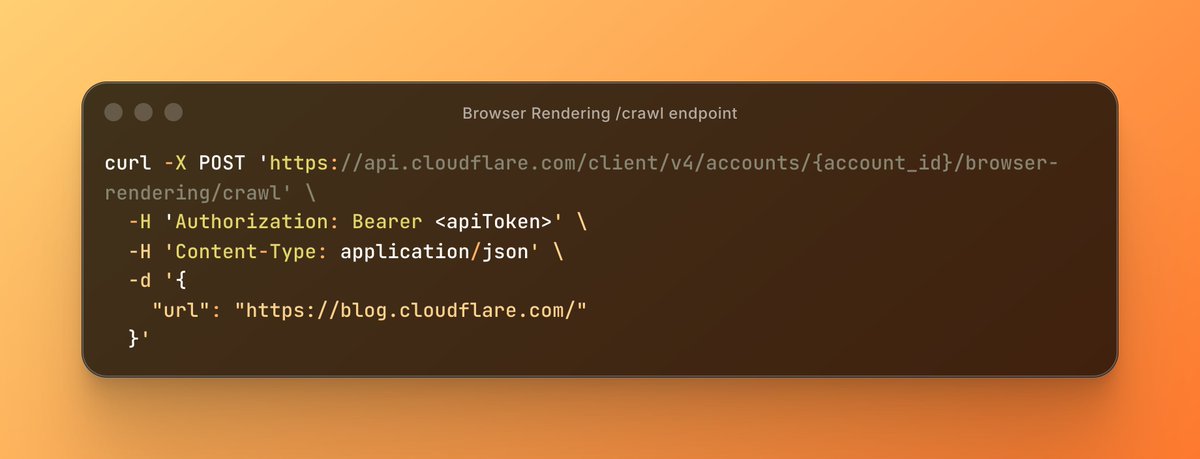
Introducing the new /crawl endpoint - one API call and an entire site crawled.
No scripts. No browser management. Just the content in HTML, Markdown, or JSON.
This gets to the core of the issue more than any debate about specific terms.
Do you believe in democracy? Should our military be regulated by our elected leaders, or corporate executives? Seemingly innocuous terms from the latter like "You cannot target innocent civilians" are actually moral minefields that lever differences of cultural tradition into massive control.
Who is a civilian and not? What makes them innocent or not? What does it mean for them to be a "target" vs collateral damage? Existing policy and law has very clear answers for these questions, but unelected corporations managing profits and PR will often have a very different answer.
Imagine if a missile company tried to enforce the above policy, that their product cannot be used to target innocent civilians, that they can shut off access if elected leaders decide to break those terms. Sounds, good, right? Not really - in addition to the value judgement problems I list above, you also have to account for questions like:
-What level of information, classified and otherwise, does the corporation receive that would allow them to make these determinations? How much leverage would they have to demand more?
-What if an elected President merely threatens a dictator with using our weapons in a certain way, ala Madman Theory/MAD? Is the threat seen as empty because the dictator knows the corporate executives will cut off the military? Is the threat enough to trigger the cutoff? How might either of those determinations vary if the current corporate executive happens to like the dictator or dislike the President?
-At what level of confidence does the cutoff trigger, both in writing and in reality?
The fact that this is a debate over AI does not change the underlying calculus. The same problems apply to definitions and use of ethically fraught but important capabilities like surveillance systems or autonomous weapons. It is easy to say "But they will have cutouts to operate with autonomous systems for defensive use!", but you immediately get into the same issues and more - what is autonomous? What is defensive? What about defending an asset during an offensive action, or parking a carrier group off the coast of a nation that considers us to be offensive?
At the end of the day, you have to believe that the American experiment is still ongoing, that people have the right to elect and unelect the authorities making these decisions, that our imperfect constitutional republic is still good enough to run a country without outsourcing the real levers of power to billionaires and corpos and their shadow advisors. I still believe.
And that is why "bro just agree the AI won't be involved in autonomous weapons or mass surveillance why can't you agree it is so simple please bro" is an untenable position that the United States cannot possibly accept.
The Hollow Men
American capitalism is rotting from the head down. We have replaced the "Owner-Operator"—the risk-taker-with a new, parasitic class of corporate bureaucrat: The Risk-Free Insider.
By "Insider," I am not referring to a specific title. I am referring to the entire administrative state that has captured the modern corporation. This includes the Directors who exist solely to collect fees, the Executives who exist solely to collect bonuses, and the Managers who exist solely to hire consultants.
These are the hollow men of the boardroom. They are masters of PowerPoint. They wear the right suits. They say the right buzzwords about "governance" and "ESG." But they are mercenaries fighting a war with someone else’s ammunition.
In a functioning economy, authority is tied to liability. If you make a bad decision, you lose your own money. That fear of loss is the only thing that keeps a business honest. It forces you to cut waste, obsess over the customer, and stay late to fix what is broken.
Today, we have severed that link.
We have rigged the game so that heads, the Insider wins; tails, the shareholder loses.
If the stock goes up, the Insider collects a massive performance bonus. If the stock crashes due to their own incompetence, they are fired with a "Golden Parachute" worth tens of millions. They are gambling with the house’s money, and they never leave the table poorer than they arrived.
This looting starts in the boardroom.
We have normalized a "Country Club" culture where directors are selected based on social profiling rather than their ability to build a business. The modern board member is often a professional tourist—paid an average of $350,000 a year.
Let’s be brutally honest about what that number represents. The average director is paid nearly five times the GDP per capita of the United States. They earn more for attending four quarterly lunches than the vast majority of Americans earn in five years of hard labor.
And for what?
Most of these directors are "over-boarded," sitting on three or four boards simultaneously. They treat directorships as a gig economy for the elite. They fly in, rubber-stamp a compensation package they didn't read, and fly out. They collect checks from companies they do not understand, do not use, and certainly do not love.
They are not there to ask hard questions. They are there to be collegial. They are there to protect the other Insiders.
And what happens when these boards hire executives who also have no personal capital at risk?
We get the Delegation Economy.
When a Risk-Free Insider faces a crisis—bloated expenses, a broken supply chain, or a stale product—they do not roll up their sleeves. They hire a consultant. They pay a strategy firm millions of shareholder dollars to produce a 100-page deck telling them what they already know.
This is not management. It is intellectual money laundering.
They use shareholder capital to buy an insurance policy for their own careers. If the plan fails, they can blame the consultants. They delegate the work because they are terrified of the responsibility. They would rather preside over a slow, comfortable decline than risk a bold mistake.
While American Insiders are busy optimizing their severance packages, our global competitors are optimizing their products. They are not slowed down by bureaucracy. They are not waiting for a slide deck. They are outworking us.
If we continue to fill our C-suites with administrators instead of operators, we will lose our edge. We will see iconic American franchises hollowed out by fees, managed for the benefit of the Insiders, while the true owners—the shareholders—are left holding the bag.
The time for polite governance is over.
If we want to save the American economy from mediocrity, we must demand a return to the "Owner’s Mentality." We need leaders who treat shareholder capital with the same reverence they treat their own savings. The era of the Risk-Free Insider must end.