TTP’s Annual Military Budget 🔻
Did you know that the TTP spends around $60 million every year on its operations? This includes fighters salaries, free monthly rations for their families, safe houses, and the transfer of explosives and weapons. They also train suicide attackers and maintain secret hideouts inside Pakistan.
TTP also pays guides who help fighters move from Afghanistan into Pakistan with weapons and supplies these guides take large sums of money for their work.
The group spends heavily on media too around $10–20 million to provide their workers with free laptops, fast internet, mobile devices, and other resources. They even pay local doctors and hospitals to treat wounded fighters for free, which can cost up to $100 million annually.
Moving weapons and explosives around costs another $150–200 million per year. For example, a single attack on Badhber Airbase reportedly cost them 70 million Pakistani rupees.
TTP also spends on the families and security of top leaders. For instance, Nur Wali’s family and security cost about $40,000 per year. Senior commanders receive luxury vehicles, big houses, and abundant food, while lower ranking fighters mostly get weapons and basic provisions. Many top leaders have multiple marriages.
The cash keeps pouring in, and we all know who’s secretly funding the carnage.
Yemen is still there. Bab el Mandab is still there. If Iran decides to push horizontally and shuts that corridor alongside Hormuz, two of the world's busiest trade routes go dark at the same time. The economic pain from that combination is on a completely different level from what's happening right now. And America has no clean military answer to it responding militarily means pulling the entire region into something nobody is prepared for.
Calling it purely Iran's fault ignores that Israel was bombing Lebanon throughout this entire period with American weapons and American backing. You cannot sign a regional ceasefire and then let your ally keep firing in the same region and act surprised when the other side stops cooperating.
Donald Trump said the US will reinstate its naval blockade of Iran and charge ships a 20% fee on cargo passing through the Strait of Hormuz. https://t.co/jKyWdL2iZ1
The only thing that moves the IRGC off this position is something tangible in hand unfrozen assets released upfront and a sanctions relief path that can't be reversed by the next American administration on a bad morning. Give Iran something real to protect and suddenly disrupting Hormuz becomes a risk rather than a strategy. Until that happens they have every reason to keep their hand exactly where it is.
The Islamabad Accord gave Iran a genuinely good deal economic relief, political legitimacy and a path back into the regional conversation. That was a serious diplomatic win for Tehran.
Which makes Iran's current behavior genuinely puzzling.
Squeezing Hormuz for maximum economic leverage doesn't just hurt America. It hits every country whose energy and trade runs through that strait. Gulf states that quietly absorbed Iranian strikes on US facilities located on their soil have been patient. That patience isn't unlimited. The goodwill the Islamabad process built is being spent faster than it's being earned back.
The question Iran needs to sit with is straightforward. Who wins if this drags on? Iran is bleeding economically. The Gulf is losing patience. The broader region is exhausted. The only party that genuinely benefits from permanent confrontation in the Middle East is Israel. If Iran's current moves are feeding that outcome even unintentionally then Tehran isn't applying pressure. It's doing Israel's job for it.
Iran also needs to look inward. There are factions inside the system that profit from tension and actively work against diplomatic progress. Identifying and containing those spoilers is not weakness. It's the most important thing Tehran can do right now to protect gains it has already secured.
Pakistan stands where it has always stood. A fair deal, honest mediation, and Saudi Arabia's security are not competing priorities they are the same priority. A stable Middle East is good for everyone in it. Everyone except the ones making money from the chaos.
Trump wants to charge for security in a waterway where his own navy could not stop Houthi drones for 18 months straight. Commercial shipping rerouted around Africa. American carriers were sitting in the Gulf and trade still got disrupted.
Iran did not even have to fire a single shot during most of that period. The Houthis did enough just by existing. That tells you everything about where the real control of that waterway sits.
Balochistan Police IG Muhammad Tahir and DIG Quetta Imran Shaukat visited the Shaban Operation frontline, meeting troops engaged in active operations against Fitna Al Khawarij.
The IG personally commended the bravery and sacrifices of frontline personnel, acknowledging the martyrs whose sacrifices will not go in vain. His message to the troops was direct the operation continues at full force until the last terrorist is eliminated. No compromise on peace. No concessions for those attempting to sabotage Balochistan's stability.
Security forces are advancing and the noose around remaining militants is tightening. Leadership visiting the frontline at this stage sends a clear signa this mission has full institutional commitment from top to bottom.
بلوچستان کے شیروں کو سلام 🇵🇰
The TTP-BLA Convergence 🔻
Balochistan just had one of its worst weeks in years, and the timing of the attacks tells you more than the casualty count does.
Three attacks, three locations, five days. On July 4, TTP hit Hanna Urak near Quetta, killing four civilians and kidnapping seven. Two days later, TTP struck Mangi Dam in Ziarat, killed nine policemen on the spot, and abducted 18 more, who were later found executed in the hills. Two days after that, BLA ambushed a military convoy on the N-25 near Bela and killed 11 soldiers. Official toll: around 42 dead across the three incidents.
Pakistan has absorbed worse in single attacks before. What's different here is the sequencing. TTP hits twice, two days apart. BLA hits once, two days after that. TTP goes after police. BLA goes after the army. Same province, same window, different groups, different targets. That's not coincidence.
Why this pattern matters more than the body count
A 2024 UN monitoring report already flagged this possibility, that BLA, TTP, and the East Turkistan Islamic Movement could end up operating in the same space against Pakistan despite having nothing ideologically in common. BLA is secular and separatist. TTP wants an Islamic emirate. On paper they're opposites. In practice they have built shared infrastructure around a common enemy smuggling routes, training camps, ammunition logistics, and now what looks like coordinated timing.
The part worth sitting with is where TTP struck. This group operates in Khyber Pakhtunkhwa and the ex-FATA districts as a rule. Hitting deep into Balochistan, in Pashtun populated areas, is new either TTP is expanding its own reach, or BLA is pulling it into Balochistan as an operational partner. Both possibilities point the same direction the alliance is functional now, not theoretical.
This isn't a one off convergence. Expect BLA and TTP to keep operating on overlapping timelines through the rest of the year, because coordinated attacks are proving harder for Pakistan to anticipate than isolated ones. The state's intelligence apparatus is built to track single group patterns. It's not built to track two groups moving in relay.
The state's response so far
DG ISPR held a press conference the day after the Bela ambush, said Pakistan isn't backing down, pointed at an India-Afghanistan nexus behind the funding and sanctuary, and said not to expect "rationality" in what comes next. That's a signal the response is about to get heavier.
PM Shehbaz Sharif flew to Quetta for an Apex Committee session with the Army Chief, the Governor, and CM Bugti. CM Bugti personally went to Ziarat without a bulletproof vehicle to meet protesters and got that sit-in ended, though the one in Quetta was still ongoing when this was recorded. The SP in Ziarat was removed over alleged negligence.
None of that fixes the actual gap. Every one of these three attacks was reported after it happened. Not one was prevented. That's the failure that matters, not resolve, not manpower, the intelligence picture.
Development won't fix this, and it's time to say that plainly
There's a standard argument that underdevelopment drives separatism in Balochistan, and that roads and schools will calm it down. That argument doesn't hold up anymore.
Mangi Dam was an electrification project. Nothing there to steal, no military value in the target itself. It was hit because building it represented state presence, and destroying it sends the message that the state can't protect what it builds. If that's the logic behind the targeting, more development spending doesn't reduce attacks, it just creates more targets.
It also helps to be honest about where Baloch separatism actually started. Not from neglect it started in 1948, right after Partition, when the Khan of Kalat's brothers went into the hills. Underdevelopment came later and added grievances on top of an existing separatist demand. That distinction matters for policy, because development was never going to be a cure by itself, and expecting it to work now, with militant numbers roughly ten times higher than a decade ago, isn't realistic.
This doesn't mean development is pointless. It means development without security and governance underneath it won't move separatism on its own.
What ordinary life looks like right now
A flour sack in Quetta reportedly costs around Rs 7,000 because supply routes are disrupted. 655 people were taken hostage across Balochistan in 2025. Families are living with a kind of constant low-grade fear, not knowing if someone who left the house is coming back. One case from a few weeks earlier a Karachi family on a trip to Quetta got rerouted by Google Maps into a remote area, militants opened fire, and the children watched their father die in front of them. The family's response afterward was blunt, if this is a war zone, people shouldn't be traveling through it at all.
2025 was Pakistan's deadliest year from terrorism since 2013, over 1,149 deaths. Pakistan now tops the 2026 Global Terrorism Index. That's the baseline any strategy has to work against, not a side note.
What's actually missing
Prevention, not response. Three attacks, three after-the fact reactions. Intelligence based operations need to start working before the attack, not after. Terrain is genuinely brutal here, even a country with a $900 billion defense budget has struggled to fully control terrain like Kharg Island against Iran, but terrain difficulty explains slow progress, it doesn't excuse zero prevention.
A real international case against India. If Pakistan has solid evidence of Indian sponsorship, that case needs to be built and pushed consistently on international platforms, not restated domestically after every attack. Right now the claim exists, the diplomatic follow through doesn't match it.
Coordination across police, army, and civilian government that's actually implemented, not just announced in a committee meeting. Police are being hit separately from the army, and the response to each has stayed in its own lane.
Local ownership of Balochistan's resources, so an attack on infrastructure reads as an attack on people's own stake in the province, not something the state is doing to them from a distance.
Here's the part that should worry planners most TTP and BLA figured out how to be tactically useful to each other without agreeing on anything ideologically. That's a harder problem than fighting either group alone, because it means degrading one doesn't degrade the other, and disrupting the alliance itself, the shared routes and camps, has to become its own target, not a side effect of fighting each group separately. If that shift doesn't happen, this week won't be the worst one. It will just be the most recent one.
BLA doesn't operate independently. The evidence consistently points to a network connecting Hindutva backing, Zionist intelligence support and BLA operations on Pakistani soil. Three different actors with three different agendas sharing one common interest a destabilized Balochistan and a weakened Pakistan.
CPEC alone gives all three of them sufficient motivation.
The figure being highlighted here is exactly what that intersection looks like in practice. These links don't appear by coincidence. They are built deliberately and maintained actively.
What we are looking at is not an insurgency born from genuine grievance. It is a managed destabilization project with foreign addresses. Kulbhushan Jadhav wasn't in Balochistan by accident. RAW's Afghan network didn't collapse with the Taliban takeover it redirected. And BLA's media operation runs far too professionally for a group supposedly hiding in mountains. Someone is paying for all of this someone is directing it. And that someone has a flag that isn't Pakistani.
Maulana Fazlur Rehman calling soldiers "paid to die" isn't just offensive. It tells you everything about how far removed he is from reality.
Pakistan has lost over 80,000 lives to terrorism since 2001. Soldiers serving in Siachen, Balochistan and the western border aren't doing a transaction. They are standing between armed militants and civilian lives in conditions no salary justifies. A junior soldier earns somewhere between Rs30,000 to Rs50,000 a month. That is what Maulana considers adequate compensation for dying.
Meanwhile Maulana has spent four decades in Pakistani politics accumulating institutional and personal wealth through coalition deals, donations and political maneuvering without ever once standing anywhere near personal danger. His madrassa network pulls in millions annually. His rallies cost more than the annual salary of the soldiers he just insulted.
He has delivered nothing measurable to the people who vote for him. No governance record worth pointing to. No personal sacrifice worth mentioning. Just decades of positioning, deal making and religious branding converted into political capital.
A man with that record questioning the sincerity of soldiers actively fighting on multiple fronts right now isn't making a political argument. He is exposing his own emptiness. And given what Pakistan's security forces are dealing with at this exact moment, the statement deserves one word.
Shameful.
Operation Shaban Update
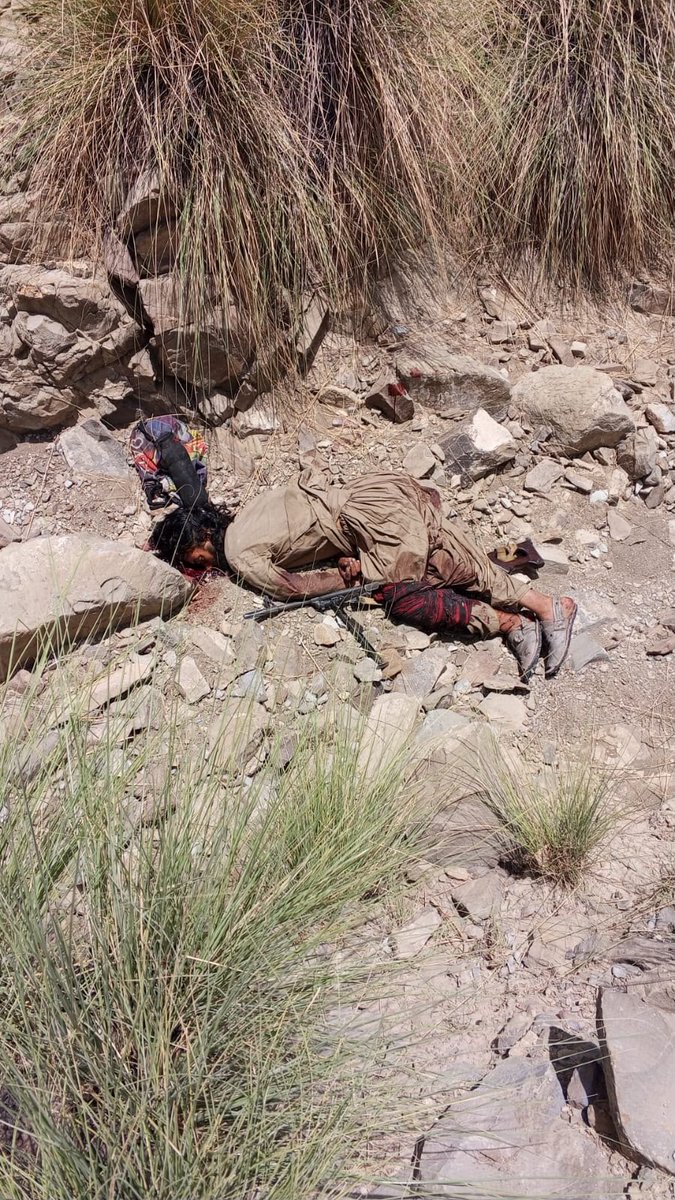
With terrorists fleeing in small groups due to mounting operational pressure, FC established a block party on the night of 11/12 July. A group of 4-6 terrorists on motorcycles was spotted, challenged, and engaged 5 killed.
Recovered equipments
- 1x M4 Carbine with 455 rounds
- 3x SMGs with 951 rounds
- 1x Rocket Launcher with 3 rockets
- 1x UBGL Launcher
- 1x Night Vision Device
- 4x ICOM Sets
- 2x Alpha Devices
- 2x Motorcycles
- 1x Handheld Jammer
The equipment says it all these terrorists are well armed and well funded by their Indian masters and Afghan regime abettors.
Operation Sha'ban Update
Joint operations by Pakistan Army, FC Balochistan, and Police continue across the area with relentless ground and aerial action against FAK.
3 more terrorists killed in the latest operations bringing the Operation Shaban total to 67.
Since 5 July, combined count across Operation Shaban and other IBOs 105 terrorists killed.
Operation Sha'ban will continue until the last terrorist is eliminated IA.
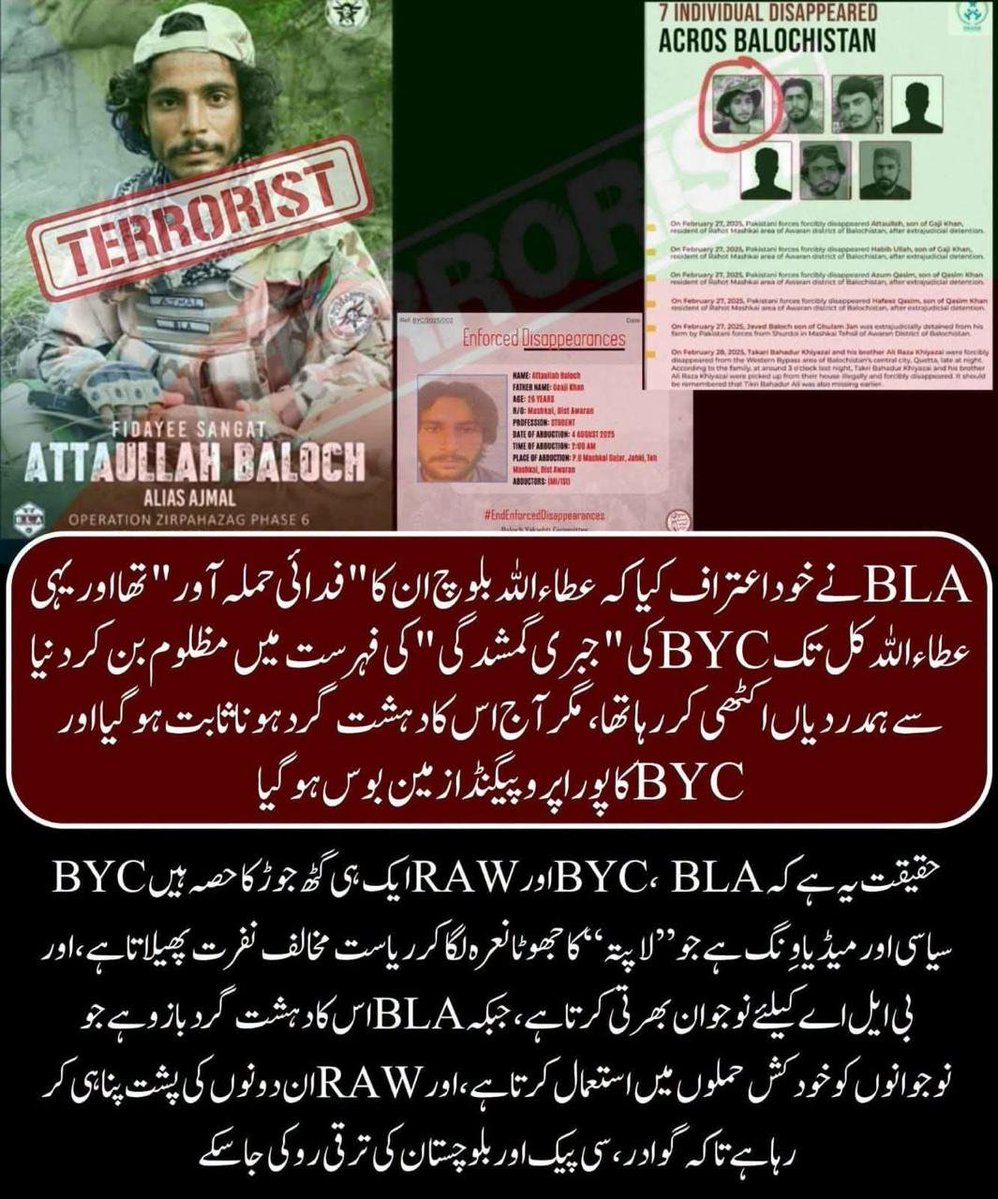
BLA's own statement today accidentally destroyed years of carefully built propaganda.
Think about what this reveals. These organisations are not running parallel operations. They are one operation with three different faces. BYC handles the optics it speaks the language of human rights, gets quoted in western media, and builds emotional cases around names and families. That emotional infrastructure then serves a very practical purpose it shields active terrorists from scrutiny and recruits the next generation by convincing vulnerable young men that the state is their enemy. BLA then receives those recruits and weaponises them. RAW finances and coordinates the entire chain because a stable, developing Balochistan with a fully operational Gwadar port is a strategic nightmare for New Delhi.
What makes this nexus particularly dangerous is its sophistication. It does not look like terrorism from the outside. It looks like a grassroots movement. It speaks in the vocabulary that western audiences and international institutions are conditioned to sympathise with.
But today that cover cracked. You cannot mourn someone as a disappeared innocent and then celebrate him as your suicide bomber. Those two positions cannot coexist and BLA just tried to hold both of them at the same time.
Pakistani troops engage Fitna al-Hindustan/BLA enemy terrorist combatants in their cave hideouts, in the rugged mountains of Balochistan, as part of counterterrorism operation SHABAN:
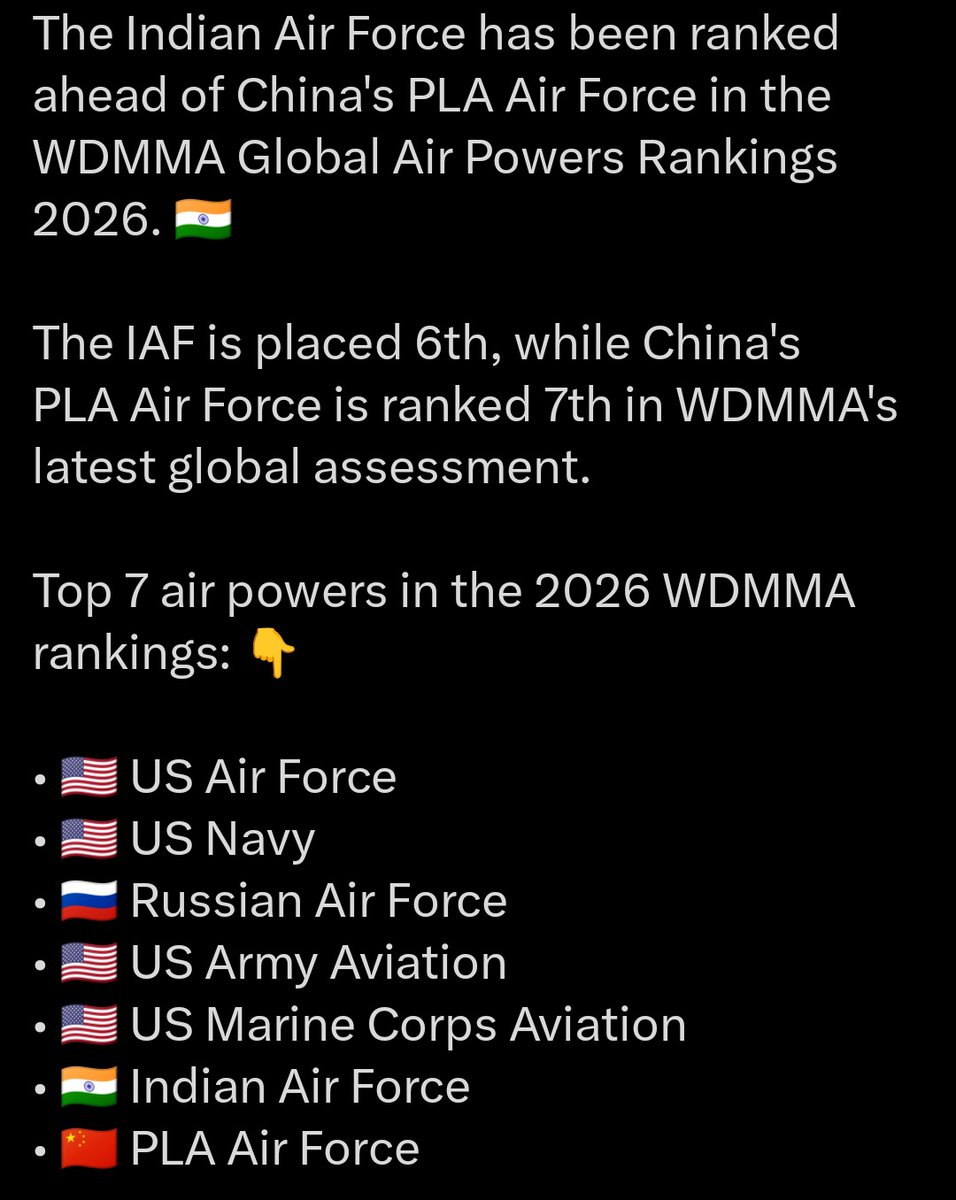
While PLAAF has 1500+ 4th+ Generation fighter jets, 2x 5th Generation platforms in service & 2x 6th Generation platforms in final trials, its Indian Air Force which stands above PLAAF in some "Global Air Power" rankings.
Operation Sha'ban Update
Following the Mangi Dam Police Station attack, Pakistan Army, FC, and Balochistan Police are conducting Operation Shaban in the rugged mountainous terrain of the area.
26 FAK terrorists were already killed on 6 and 7 July. In the last 24 hours, 13 more eliminated bringing the Operation Shaban total to 39.
Separately, a terrorist attack on Khuzdar Zaidi Police Station this morning was also repulsed. Army and FC troops responded swiftly 8 terrorists confirmed killed, with reports of 5 to 6 more taken out in helicopter operations.
Total count since 5 July across Operation Sha'ban and other IBOs: 75 terrorists killed.
Following the cowardly attack on Zehri Police Station, security forces went after them hard.
3 more FAH terrorists wasted in ground operations. Another 4 to 5 taken out in helicopter strikes.
Total kill count now stands at 12 to 13.
Fitna Al Hindustan terrorists attacked Zeedi Police Station in Khuzdar. The police held their ground and fought back immediately, buying time until FC and Army QRFs arrived to reinforce.
The moment security forces arrived, the terrorists fled. 5 FAH terrorists were killed in the engagement while 3 soldiers sustained injuries.
The area is being swept and the hunt for remaining militants continues.