Chandra hace un siguimiento del desarrollo del jet producido por M87*, el agujero negro supermasivo en el centro de la galaxia Messier 87, https://t.co/G7qBRTWN3M
An IBM mathematician spent 3 years convinced he was the worst programmer at his company at work.
He built to escape that embarrassment became the first high-level programming language in history. Every line of code running on Earth today traces back to that one act of shame.
His name was John Backus.
He was born in 1924 in Philadelphia, the son of a wealthy stockbroker who expected him to follow the same path. He failed out of the University of Virginia. He dropped out of Haverford College. He enrolled in a medical program in the Army and decided he hated medicine. He spent years doing exactly nothing the conventional way.
Then one afternoon in 1945 he walked past a radio repair shop in New York and got talking to the owner and ended up building a radio from scratch in the shop's back room. Surprising thing is he had never done it before. He stayed for hours. When he left he knew what he wanted to study.
He taught himself mathematics and got into Columbia. From Columbia he walked into IBM in 1950 with a degree and no idea what he was doing.
He learned to program on machines that had no business being programmed. IBM computers in 1950 spoke in machine code. Raw binary. Every instruction written as a string of ones and zeros that told the hardware exactly which switches to flip. There were no shortcuts. No syntax. No vocabulary a human brain could hold in its head.
The programmers who were good at it held the entire machine inside their minds. They saw the binary and felt the logic. Backus could not do this. He wrote programs that were slow, tangled, and embarrassing next to what his colleagues were producing. He was not the worst programmer at IBM. But he believed he was, which amounted to the same thing.
He started building a tool to help himself. Not out of ambition. Out of humiliation.
The idea was simple to the point of seeming naive. He wanted to write mathematical expressions in something that looked like mathematics, not machine code, and have the computer translate them automatically into the binary the hardware needed. He called the project a "formula translation" system. His colleagues thought it was a nice idea that would never work.
The problem everyone could see was speed. Machine code written by a skilled human would always run faster than code generated by an automatic translator. The translator had to make guesses. Guesses meant inefficiency. Inefficiency meant the whole project was a toy.
Backus spent three years proving them wrong.
In 1957 IBM released FORTRAN to its customers. The first compiled programming language in history. The translator Backus built was so efficient that the code it generated ran at speeds within 20 percent of hand-written machine code. Not a toy. Not a curiosity. A working tool that let scientists and engineers write programs in expressions their own minds had generated, and watch the machine execute them.
The adoption was immediate and total. Scientists who had spent careers translating their equations into machine code by hand were suddenly writing programs in hours instead of weeks. Labs that had used IBM machines for narrow tasks started using them for everything. The market for computing changed overnight.
Then something happened that nobody predicted. Other people started building other languages using the same idea. COBOL. LISP. ALGOL. BASIC. Every language built its own translator using the architectural logic FORTRAN had demonstrated. The idea that a computer could read something resembling human thought, rather than the other way around, was now a proof of concept that anyone could extend.
Every programming language that has ever existed was built on the answer to the question Backus asked because he was ashamed of the code he was writing.
He won the Turing Award in 1977. The committee citation said his work had made it possible for more people to use computers for more things than any other single development in the history of computing.
He said in the acceptance speech that he had not set out to change computing. He had set out to stop writing bad code.
The gap between what you are bad at and what you are trying to fix is usually where the real invention lives.
DELTA PÍSCIDA #SPMN160626G SOBRE #LLEIDA ESTA MADRUGADA a las 3h23m36s TUC (5h23 CEST). Un enjambre meteórico descubierto hace algo más de una década, asociado al C/1864 N1 (Tempel). 📹Carles Pineda @karpin_73 desde Gavà. Seleccionado para el listado🤩🌠
🔖https://t.co/ZL49qmwMg0
ESPECTACULAR BÓLIDO ESPORÁDICO #SPMN140626G SOBRE OCCITANIA, #FRANCIA ANOCHE a las 20h52m58 TUC (22h52 CEST). Así lo captó Antonio Lasala @AntonioLG1 desde Morata de Jalón, #Zaragoza. Evento también captado por 5 estaciones #FRIPON@VigieCiel, al listado:
https://t.co/ZL49qmwMg0
Un breve timelapse de la Vía Láctea desde el hosting de telescopios Trevinca Skies en A Veiga, #Ourense.
Ese tono verdoso del cielo es conocido como airglow, un brillo natural del cielo que se ve de vez en cuando, pero mucho mejor en zonas oscuras.
BÓLIDO ESPORÁDICO #SPMN100626F SOBRE #BADAJOZ ANOCHE a las 21h26m04 TUC (23h26 CEST). Reportado visualmente por Javier Castellanos @AstronomiaRivas desde Rivas-Vaciamadrid. Un evento precioso con fragmentación final. Al listado de bólidos del @ice_csic👇
➡️https://t.co/ZL49qmwMg0
Our astronaut Luca Parmitano is assigned as pilot of NASA’s #ArtemisIII mission.
With Europe powering Orion with the European Service Module, this mission will test the critical operations preparing for humankind's return to the Moon.
A strong step forward for ESA–NASA partnership.
🔗https://t.co/MJpn0ftcpr
📸 NASA
Ver a nuestros F-18 operando en autovías es una imagen bastante curiosa. Aquí en España no sé si tendremos alguna recta lo suficientemente despejada o bien pavimentada para hacer lo mismo.
Participan siete cazas del Ala 12 en el Ramstein Flag 26, ejercicio aéreo de la OTAN, desde la Base Aérea de Jyväskylä.
Los F-18 realizan tomas, despegues y aterrizajes en las autovías habilitadas para ello como parte de las ops de dispersión de la Fuerza Aérea Finlandesa.
BÓLIDO ESPORÁDICO #SPMN080G26B SOBRE #ALBACETE Y #VALÈNCIA HOY a las 0h57m17s TUC (2h57 CEST). Desplegando una preciosa estela sobre #Boyero lo captó Jordi Donet @DonetJorge desde Barx-La Drova, La Safor. Pronto en el listado actualizado del @ice_csic:😍
🌠https://t.co/ZL49qmwMg0
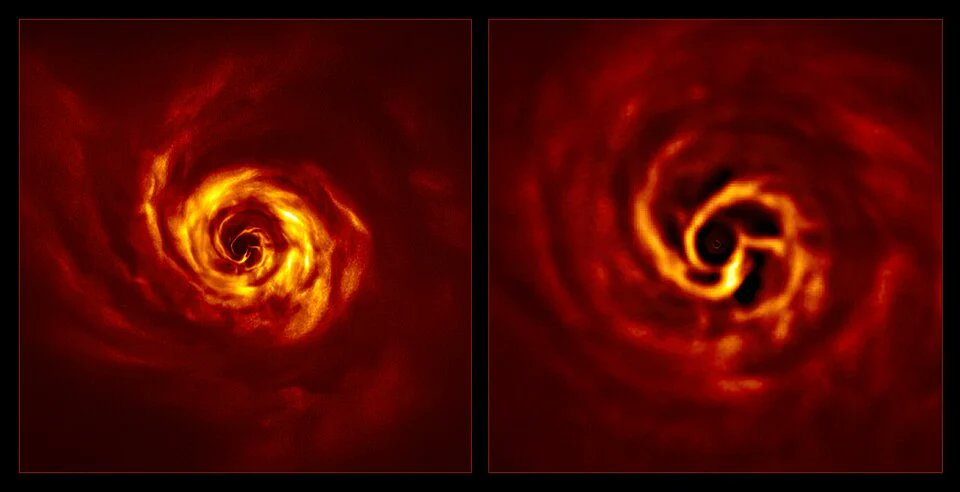
Astronomers have directly observed the rotation of a protoplanetary disk in real time for the first time, focusing on the young star AB Aurigae, a nearby system where planets are still forming inside a broad disk of gas and dust.
Protoplanetary disks are the raw material from which planetary systems emerge, but until now their motion had mostly been inferred through indirect methods or through gas observations.
In this case, researchers used the SPHERE instrument on the European Southern Observatory’s Very Large Telescope to track the movement of dust structures in the disk over several years, allowing them to see how the disk itself evolves and rotates.
The disk around AB Aurigae mostly follows the expected Keplerian motion: material closer to the star moves faster, while material farther away moves more slowly, as gravity predicts. However, the observations also revealed important deviations from this simple pattern, especially in the inner regions of the disk.
Some structures appear to move in ways that do not fully match standard theoretical models, suggesting that the disk is being disturbed by complex internal processes. One strong possibility is that forming giant planets are interacting gravitationally with the surrounding material, shaping spirals, shadows, clumps, and accretion zones as they grow.
This is especially interesting because AB Aurigae has already been considered one of the best laboratories for studying planet formation. Previous observations had identified spiral structures and possible protoplanet candidates, including AB Aurigae b, a massive object still embedded in the disk.
The new observations add a dynamic dimension to that picture: instead of seeing the disk as a static image, astronomers can now follow how its structures move over time. That makes it possible to test whether suspected planets are really responsible for the observed distortions.
The study also found rapidly moving shadows cast across the surface of the disk. These shadows may be produced by opaque dust clumps or by forming planetary bodies orbiting close to the star.
Their motion suggests that the inner disk is not a simple, flat, orderly structure, but a disturbed and evolving environment where several bodies or dense accumulations of material may be interacting at once.
In some regions, the disk appears to rotate more slowly than expected, which may indicate that the forming planets are not moving in the same plane as the main disk or may be following inclined or elliptical orbits.
The importance of this observation is that it gives us a more direct way to study planet formation as an active process. Instead of only identifying gaps, rings, or spirals and then inferring the presence of planets, we can now watch how those structures change with time.
This makes it easier to connect disk dynamics with the hidden objects that may be shaping them. The result shows that planetary nurseries are more complex than idealized models suggest, and that planets may form in environments that are tilted, unstable, shadowed, and dynamically disturbed.
👉 https://t.co/fjvrAlcnWA
La brecha de masas de los agujeros negros, confirmada: "Se esperaba que el espectro de masas de las fusiones de agujeros negros binarios mostrara una 'brecha de masas' por encima de las 45 masas solares, en consonancia con la física de las supernovas de inestabilidad de pares.
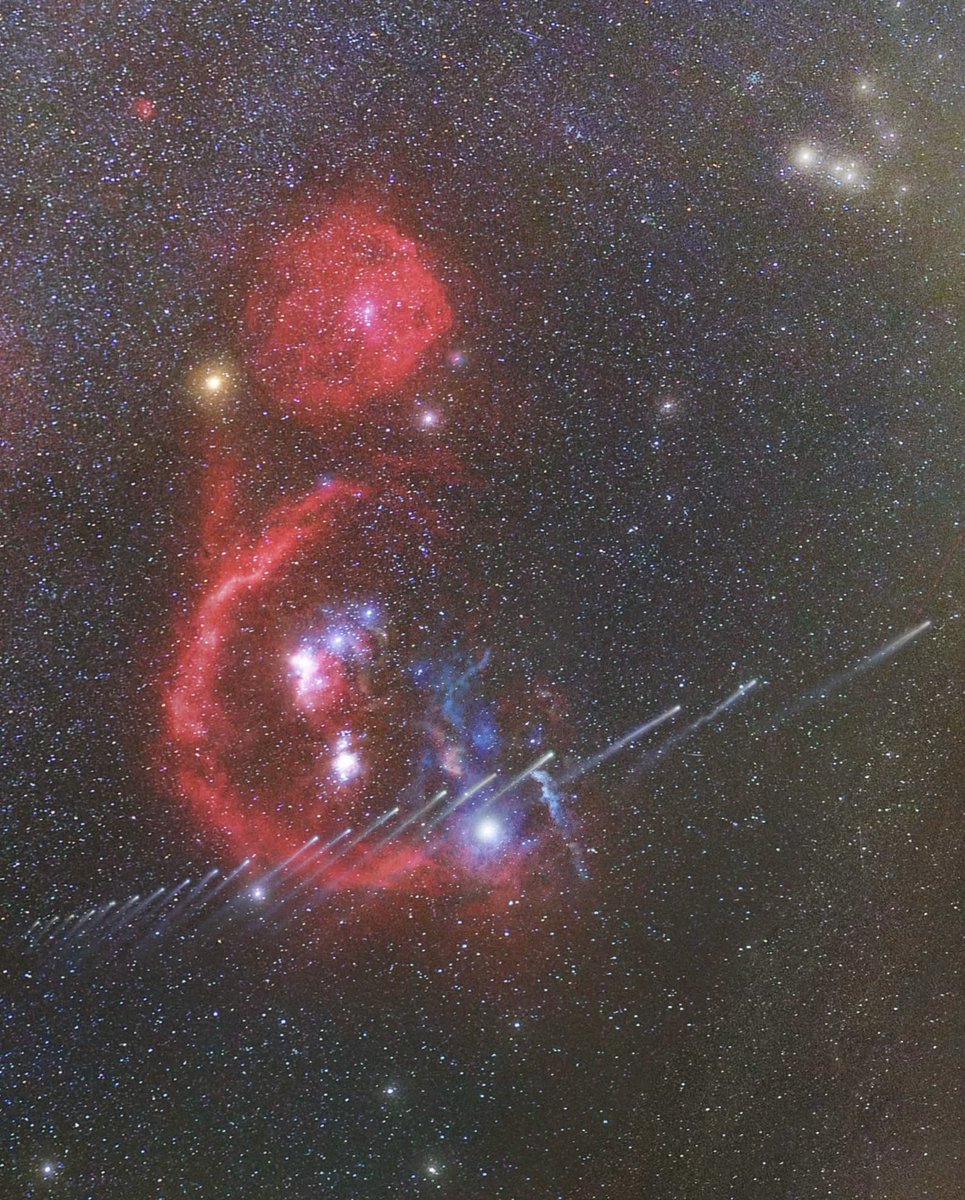
Aquesta espectacular imatge mostra el pas del cometa C/2025 R3 (PanSTARRS) davant d’una de les constel·lacions més emblemàtiques del cel: Orió.
📷 Jakub Kuřák i Martin Mašek, amb imatges captades entre l’1 i el 22 de maig de 2026 des de prop de Cerro Paranal, Xile
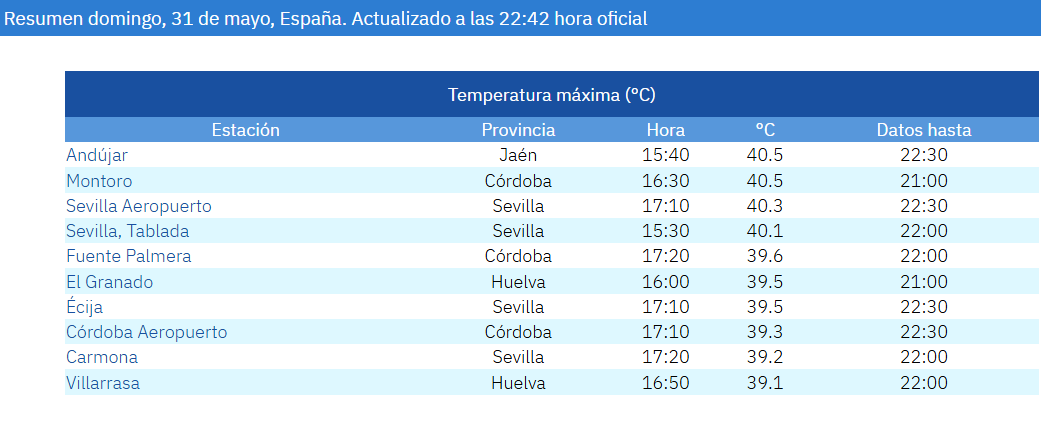
La primavera meteorológica se despide a lo bestia, con 4 estaciones superando 40ºC.
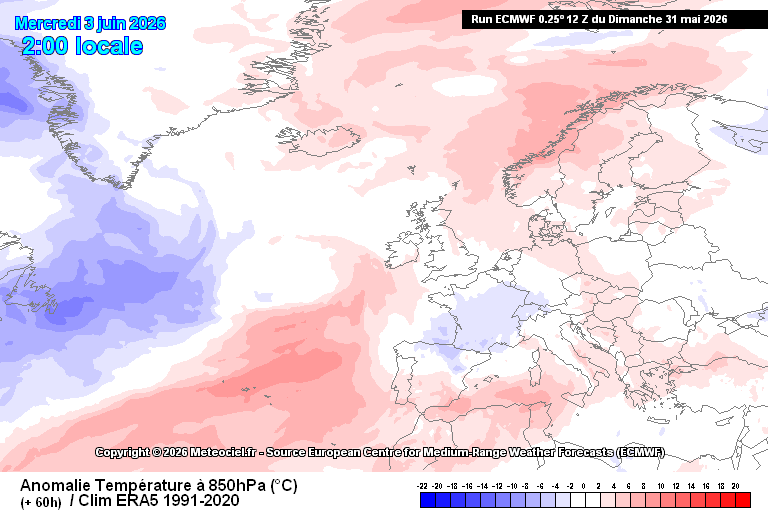
Este lunes empieza el verano climatológico y por suerte dará un respiro; tras 2 semanas propias de finales de julio tendremos una normalización térmica. Mapa de anomalías previstas el miércoles⬇️
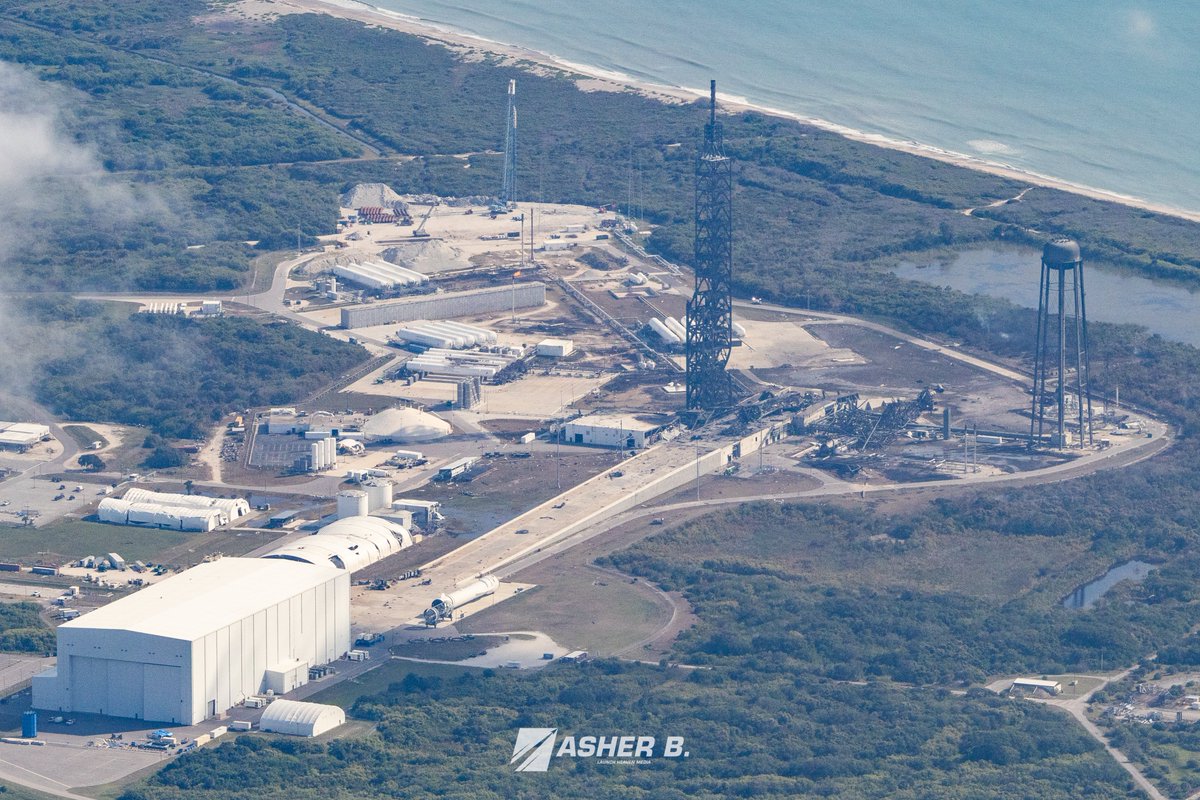
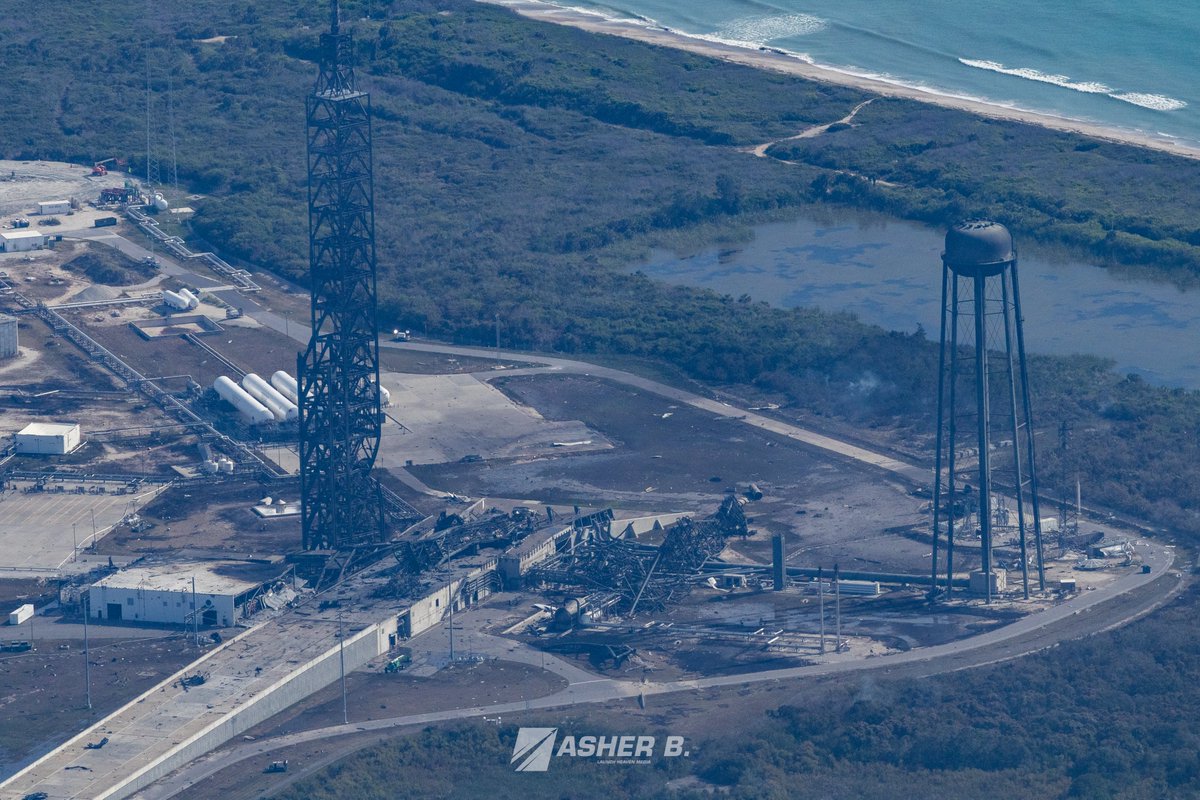
There's a lot to unpack with LC-36 since New Glenn's explosion last night, so here's a thread on everything I saw from the air this morning:
📸 - @LaunchHeavenX
First look at LC-36 from the air this morning after the explosion of New Glenn last night during a failed hotfire test.
Visible is the wreckage from the destroyed TE as well as the fallen lightning tower. More to come soon.
📸 - @LaunchHeavenX
All personnel are accounted for and safe. It’s too early to know the root cause but we’re already working to find it. Very rough day, but we’ll rebuild whatever needs rebuilding and get back to flying. It’s worth it.