.@NASA and @SpaceX are standing down from Wednesday's Dragon undocking opportunity from the International Space Station due to unfavorable weather conditions at the splashdown sites off the coast of California.
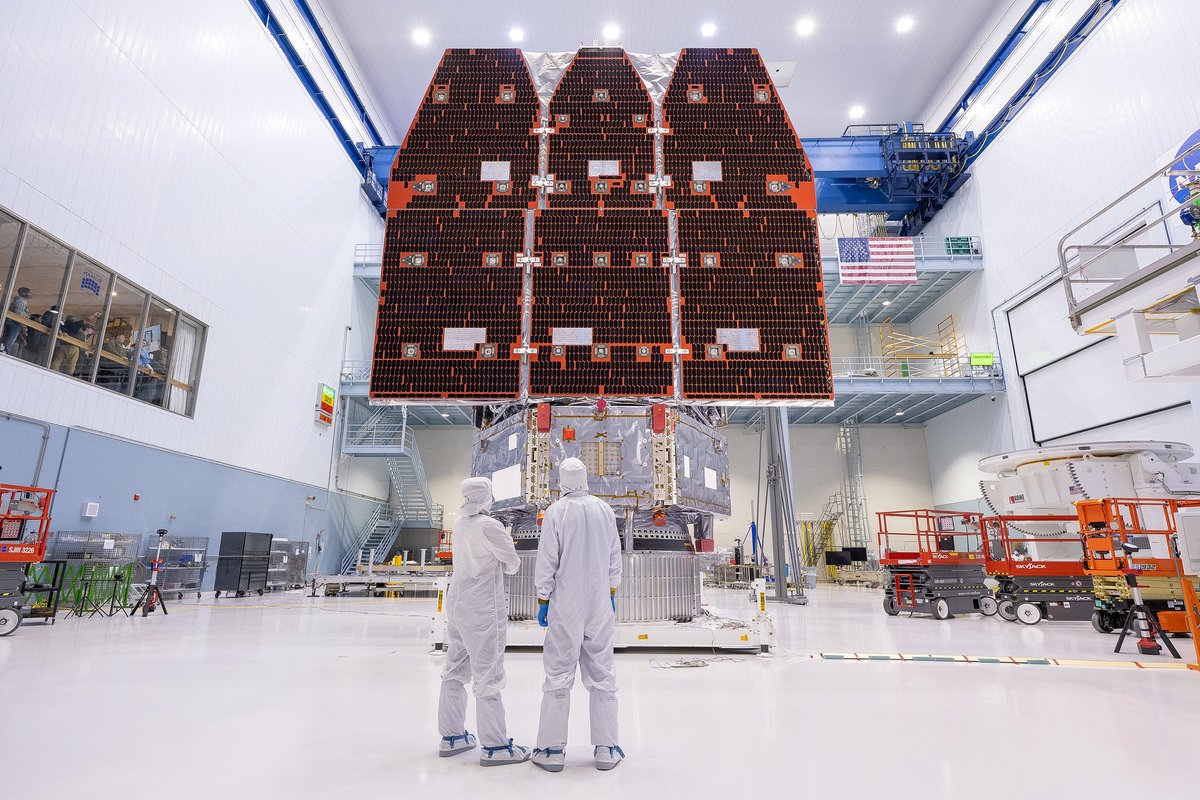
NASA's Roman Space Telescope shows its first images Dec. 7, 3:30 p.m. ET (20:30 UTC).
Why it matters: one Roman shot covers at least 100x the sky of a Hubble shot.
Photo: Roman at NASA Goddard, Nov 2025. NASA/Jolearra Tshiteya
#NASA#RomanSpaceTelescope#Space
ULA's first Vulcan findings: the booster underperformed right after liftoff, so staging came too low and too slow for orbit.
Centaur's RL10s ran fine but couldn't make up the gap. The solids looked nominal. FAA oversees the probe.
#Vulcan#ULA#AmazonLeo https://t.co/6riXqlOhK3
ULA's Vulcan is fueling for its first flight since February's booster anomaly.
Vulcan Leo 1: 40 Amazon Leo satellites, liftoff 12:11 p.m. ET (17:11 UTC). First of 38 Vulcans Amazon booked.
Twist: Blue Origin builds its BE-4 engines. Bezos engines, Bezos satellites. https://t.co/mYc9FpVDrM
At today's earliest opportunity, fueling officially begins for launch of the Vulcan Leo 1 mission. Tanking starts by loading of liquid oxygen into the Centaur Leo upper stage. https://t.co/jpuvt6PPKk
Update: ULA says Vulcan hit an anomaly about 10 minutes into flight and did not deliver the 40 Amazon Leo satellites to orbit.
Liftoff was 12:40 p.m. ET, after a hold recycled the count. Booster separation was confirmed; the cause isn't public yet.
https://t.co/LFHJWYAJ5b
Based on data received by our Launch Director, we confirm that the Vulcan vehicle launched from Space Launch Complex 41 suffered an anomaly 10 minutes into the flight and failed to deliver the Amazon mission to orbit.
Every flight generates data, and every flight teaches us something. Since the anomaly just occurred, we don’t have any specific data yet to understand what occurred today.
ULA exists to provide assured access to space for our nation and for the customers who depend on us. That purpose is why we take on some of the hardest missions in spaceflight, and why we hold ourselves to the standard of mission success. Today, we did not meet that standard.
We will work closely with our customer and other appropriate organizations to find the cause, determine the appropriate corrective action, and return to flight as quickly as possible.
ULA is committed to full transparency with our customers, and they will have visibility into the investigation process, which utilizes rigorous methodology and corrective action.
We will provide further updates when new information becomes available.
Yeah, I was going over the whole Starship heat shield earlier today. Overall, it looks great. The engines look great too. Ship 42 could probably be reflown with a few weeks of refurbishment.
However, many small fixes are needed to achieve immediate reusability (like an airplane), which requires zero expected refurbishment, apart from scheduled maintenance.
NASA's Voyager 1 hits one light-day from Earth Wednesday, 5:16 a.m. ET. No human-made object has gone farther.
It shot this Pale Blue Dot in 1990 from 6 billion km. Now it's 4x farther, and a command takes 24 hours to arrive.
Photo: NASA/JPL-Caltech
#Voyager1#NASA
SpaceX just released new 4K footage of Ship 42, the first Starship upper stage ever caught by the Mechazilla tower arms.
After ~22.5 hours in space, the landing burn took about 18 seconds: 3 engines, then 2, then 1. No legs, no retry.
#SpaceX#Starship
https://t.co/fyXiTV6ipo
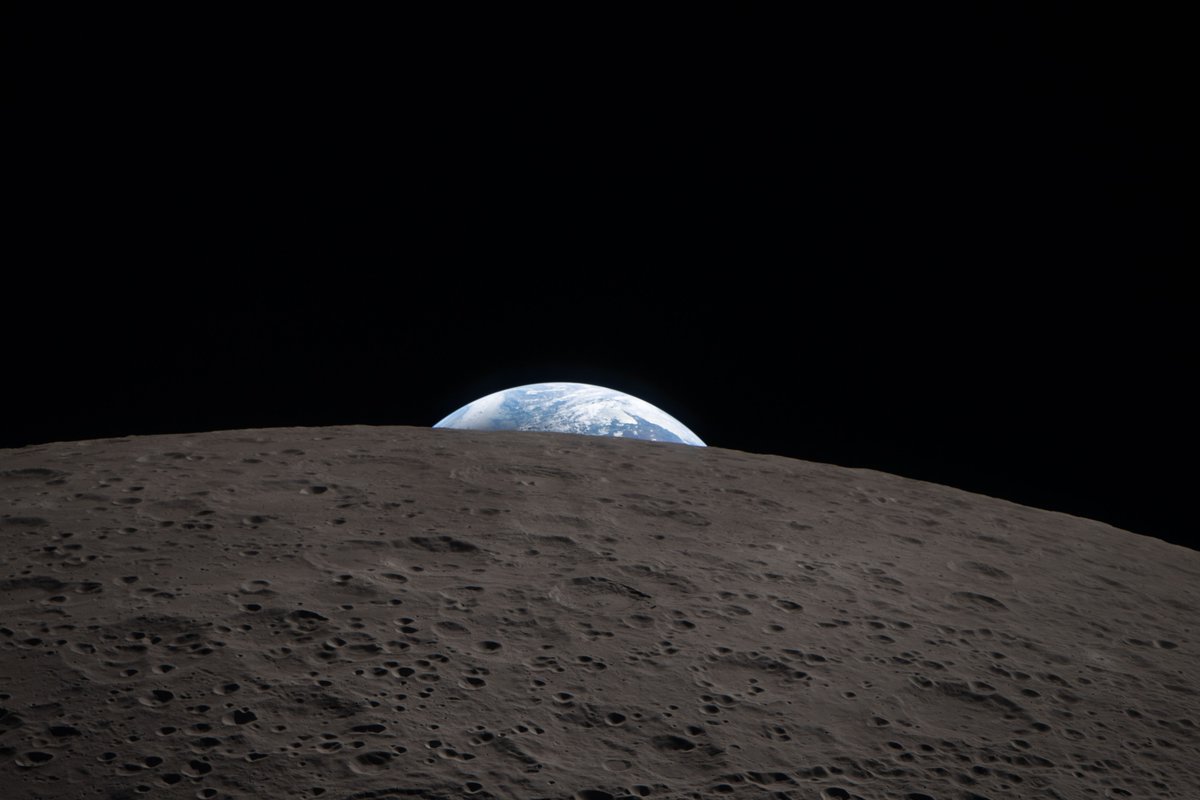
Earth has a second moon now: asteroid 2026 QQ8, a mini-moon maybe 1–2 m wide.
Why caught? Its orbit nearly copies ours (0.98-yr period, 0.5° tilt), so it drifts by slowly. Expected to leave around the new year.
Photo: Earthset, NASA/Artemis II
#MiniMoon#SecondMoon#Space