In September 1942, a single Japanese floatplane lifted off from a submarine off the coast of Oregon. In the cockpit sat Chief Warrant Officer Nobuo Fujita, carrying two 170-pound incendiary bombs and a 400-year-old samurai sword beside him in the cramped space.
His mission?
Drop the bombs over the forests of the Pacific Northwest, start a massive firestorm, and force the U.S. military to pull vital resources away from the Pacific theater.
Fujita released his bombs over Brookings, Oregon. But the mission failed. Recent rain had soaked the forest, and alert park rangers put out the small fires almost immediately. The war continued, and the strange, isolated attack slowly slipped into the margins of history.
Until 20 years later.
In 1962, a civic group in Brookings came up with an extraordinary idea. They found Fujita and invited him back as the guest of honor at their local festival.
The invitation caused national controversy and split the town. But the deepest conflict was inside Fujita himself. Deeply ashamed of what he had done during the war, Fujita accepted the invitation with a dark private promise. He packed his family’s ancient samurai sword in his luggage. Later, he admitted that if the Americans put him on trial for war crimes or publicly humiliated him, he planned to use the sword to commit seppuku, ritual suicide, right there.
But when he stepped off the plane, he was met not with hatred, but with handshakes, applause, and a town offering real forgiveness.
Overwhelmed by the mercy of the people he had once attacked, Fujita stepped to the podium and did something no one forgot. He knelt and gave the town his most treasured possession, his family’s 400-year-old samurai sword, as a lasting promise of peace.
For the rest of his life, Fujita helped fund student exchange programs between Japan and Oregon. He even returned to the exact place he had bombed and planted a redwood “peace tree.” When he died in 1997, Brookings named him an honorary citizen, and his daughter later returned to the forest to scatter some of his ashes on the land he had once tried to burn.
Today, that 400-year-old sword is displayed inside the Brookings Public Library, not as a trophy of war, but as a masterpiece of peace.
When the President of France visited the United States in April 1960, he asked the FBI to help him find a man.
The man he was looking for was an American citizen. He was sixty-four years old. He had been awarded fifteen French military decorations and — six months earlier, in a ceremony in Paris — had been made a Knight of the Légion d'honneur, the highest civilian honor France can give. The medal had been pinned to his chest by the President himself, who had publicly called him un véritable héros français. A true French hero.
The FBI located the man within a few days.
He was operating an elevator at Rockefeller Center in New York City.
The elevator operator's name was Eugene Bullard. He had been born in Columbus, Georgia, in 1895, the son of a man whose own father had been a slave.
He had run away from Columbus at the age of eleven, after watching a white mob nearly lynch his father.
He spent the next several years drifting through the American South. At sixteen, he stowed away on a German freighter at Norfolk, Virginia. He landed in Aberdeen, Scotland. From there he made his way to London, where he learned to box. By 1913, at eighteen, he was prizefighting in Paris.
When Germany invaded France in August 1914, Bullard was nineteen years old. He had no legal obligation to fight. He had no French citizenship.
He went to the recruiting office on October 19, 1914, and signed up for the French Foreign Legion.
He spent the next eighteen months as an infantryman in some of the worst fighting of the war — at the Somme, at Champagne, at Verdun. He was wounded three times. The third wound, on March 5, 1916, tore open his thigh and left him with permanent damage to his leg.
He was twenty years old. The doctors told him he would not return to the infantry.
He decided he wanted to fly.
In a Paris café in the spring of 1916, while he was recovering, Bullard mentioned to three white American friends that he was thinking of joining the French air service. A Mississippian named Jeff Dickson laughed.
Gene, Dickson said, you know damn well there aren't any Negroes in aviation.
Bullard answered: Sure do. That's why I want to get into it. There has to be a first to everything, and I'm going to be the first.
Dickson bet him two thousand dollars he would not make it.
Bullard took the bet. He earned his pilot's license on May 5, 1917. He won the bet.
He reported to the front in August 1917 and flew approximately twenty combat missions over the next three months in a SPAD VII. The fuselage was painted with a bleeding heart pierced by a knife and the French phrase Tout le Sang qui Coule est Rouge — All Blood that Flows is Red.
He carried, on every combat flight, a small capuchin monkey named Jimmy in the front of his flight jacket.
The French press began calling him L'Hirondelle Noire — the Black Swallow.
When the United States entered the war in 1917, Bullard immediately applied to transfer to the U.S. Army Air Service.
His application was rejected.
The U.S. Army Air Service had a policy, in 1917, of not accepting Black pilots. The other American pilots flying for France in his unit, all of them white, were transferred to the U.S. Air Service.
He was the only one who was not.
For the next twenty years, he was one of the most familiar faces in the Montmartre nightlife of Paris between the wars. He owned a nightclub called L'Escadrille. He spoke fluent French, English, and German. Hemingway drank there. Fitzgerald drank there. Langston Hughes drank there. Josephine Baker performed there. Louis Armstrong was a personal friend.
When Germany invaded Poland in 1939, Bullard was forty-four. His fluent German and his ownership of a nightclub frequented by German officers made him useful to the French Resistance. He became an intelligence agent — eavesdropping in his own bar on conversations between German officers who did not know he understood every word.
When France fell in June 1940, friends in the Resistance smuggled him across the Spanish border before the Gestapo could arrest him.
He came back to the United States for the first time in twenty-eight years.
He arrived in New York with thirty dollars in his pocket and a permanent limp.
He did not return to a hero's welcome. He returned to a country that had no idea who he was.
He worked at a perfume counter. He worked as a security guard. He worked at the Staten Island shipyards. By the late 1940s, he had taken the job that he would hold for most of the rest of his life.
He operated the elevator at Rockefeller Center.
He was wearing the elevator uniform on the day a producer from NBC came down from the studios upstairs to ask if he was the man Charles de Gaulle had been looking for.
A few weeks later, NBC sent a film crew to interview him in the lobby. The studios where NBC produced The Today Show were on the floors above. He had operated the elevator that took the network executives up to those studios every morning for nearly ten years. He had not been recognized as he did it.
He went back to operating the elevator the following Monday.
He died of stomach cancer on October 12, 1961, three days after his sixty-sixth birthday.
He was buried in the French War Veterans' section of Flushing Cemetery, in Queens, in the uniform of the French Foreign Legion. The casket was draped with the French flag.
In 1994 — thirty-three years after his death — the United States Air Force formally commissioned Eugene Jacques Bullard as a Second Lieutenant, posthumously.
It was the first commission the U.S. military had ever offered him.
He had been the first Black combat pilot in American history.
The French had been calling him a hero since 1917.
The Americans got around to it in 1994.
Final arrangements are now set for legendary girls basketball coach John Coffee.
His viewing is scheduled for Friday, June 5, 5-8pm at Rogers Funeral Home in New Lebanon, Ohio, located at 324 W. Main Street, New Lebanon OH 45345.
The funeral is scheduled for Saturday, June 6 at 10am also at Rogers, followed by a trip to the cemetery. Following the cemetery, there will be food available at a memorial gathering for the family, friends, players and coaches. That address is 9464 W 3rd Street, Dayton OH 45417. If you are not going to the cemetery you can go right to the house after the funeral.
Coach Coffee meant so much to so many people. Let’s all come together and celebrate the life of this great man. He definitely would want us to spend the day telling stories, catching up with former teammates and friends. This day is for John.
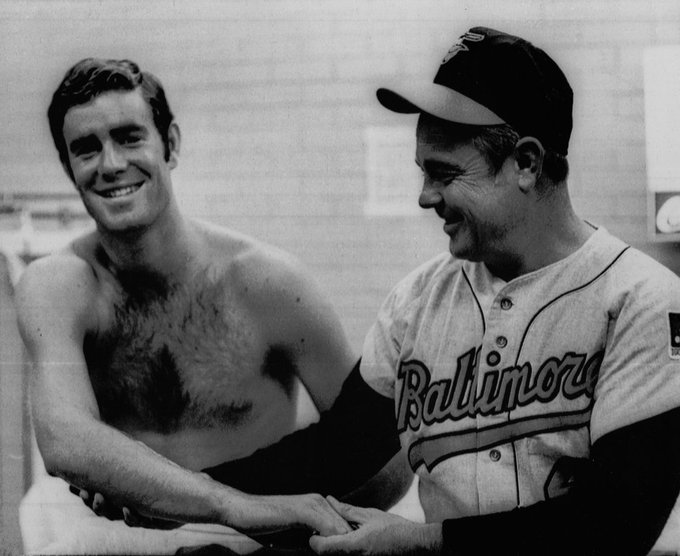
"Jim Palmer threw five innings in a spring training game, then began his outfield running program, back when pitchers would run laps on the warning track while the game continued.
With a young Mike Flanagan in the Orioles’ dugout, Earl Weaver called Flanagan over. “See that guy?” Weaver told Flanagan, pointing at Jim Palmer.
“Just do what he does and you’ll never have a problem playing in the big leagues.”
Earl Weaver’s Ten Laws of Baseball.
1. No one’s going to give a damn in July if you lost a game in March.
2. If you don’t make any promises to your players, you won’t have to break them.
3. The easiest way around the bases is with one swing of the bat.
4. Your most precious possessions on offense are your 27 outs.
5. If you play for one run, that’s all you’ll get.
6. Don’t play for one run unless you know that run will win a ballgame.
7. It’s easier to find four good starters than five.
8. The best place for a rookie pitcher is long relief.
9. The key step for an infielder is the first one—left or right—but before the ball is hit.
10. The job of arguing with the umpires belongs to the manager, because it won’t hurt the team if he gets kicked out of the game.
I believe in the power of prayer. Please join me in praying for Maddox. Dear Jesus, please heal him and help his family get through this difficult time 🙏✝️🙏
Last night Maddox Graser had two hits and helped his Wooster High School baseball team win 10 to 0.
He was perfectly fine.
By 8 pm he was throwing up at home. It got worse fast. He was rushed to the hospital in Wooster and then life flighted to the Pediatric ICU at Akron Children’s Hospital this morning.
Maddox is a sophomore. A second baseman. A teammate. A son.
Right now he has no brain activity.
From a baseball field celebrating a win to a pediatric ICU fighting for his life in less than twelve hours. His family never saw this coming. Nobody did.
His mom and dad are sitting in that hospital right now needing every prayer they can get.
If you believe in miracles please stop scrolling right now and say one for Maddox. His family is pleading for them.
Please share this post. The wider this reaches the more people are praying over this young man tonight.
Maddox Graser. Remember that name and lift it up.
"Ninety-four pitches in 1:53.
Adding two homers put me in exclusive territory as that had never been done.
My greatest game ever!"
Rick Wise.
"I was with a bunch of baseball wives at a baby shower in Cherry Hill.
The game was on a TV in the bedroom.
I went to watch my husband Rick pitch his innings and then returned to the party.
By the fifth inning, most of us were watching.
By the seventh, all of us were crowded in the small room.
After the exciting game, the girls all took me out for a celebratory drink at a nearby restaurant and announced to all the patrons that I was the wife of the winning pitcher.
When I returned to our apartment on Henry Ave. in Philadelphia, there were mountains of flowers, notes, and bottles of champagne.
The Phillies gave me a gold charm to commemorate the game.
Like Rick, that night is something I will forever remember."
Susan Wise.
Rick Wise hit two home runs in a game he threw a no hitter in.
Richie Ashburn and Rick Wise.
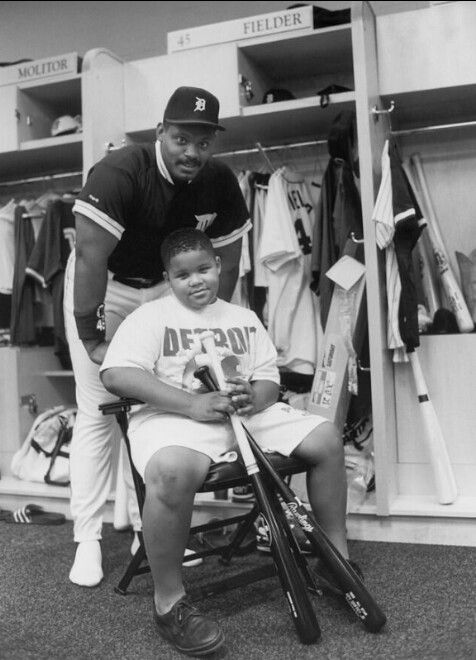
Cecil and Prince Fielder each finished with 319 major league home runs. They EACH:
Hit 49 HRs in the fourth inning.
Hit 29 HRs in the fifth inning.
Hit 18 HRs in the ninth inning.
Hit 97 HRs with two outs.
👍⚾️
Portal kids! YSU is calling and you may want to pick up 📞🤙🏻
Finished 2nd in our league with a trip to the championship as a young group, we are only a few pieces away from getting the 🏆
Come be apart of that! 🔥🐧
The MAC saw this incredible atmosphere & said “no thanks” 🤦🏻♂️
Battle of I-75 returns to midweek MACtion at the end of November for absolutely zero reason. Just a total and complete failure from the conference. What an absolute shame.
Been at ESPN a long time - this one was an all timer. Before social media, it was as viral as a story can be. I watched it on a tape in the news room. I couldn’t stop watching his teammates.
Ohio State vs. Michigan ranked #1 vs. #2 during the BCS area. Everything on the line with a rare 3:30 kickoff. Both teams delivering blows and then a true freshman Beanie Wells rips off a homerun.
Larry Legend"s last points..
One of the most beautiful moments in NBA history... The closing ceremony of the old Boston Garden in 1995...
Red Auerbach, Don Nelson, Jojo White, Sam Jones, Bob Cousy, Bill Russell, and Larry Bird making the final passes
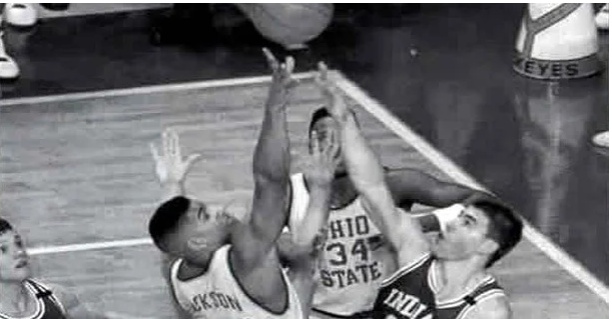
It was 35 years ago today when the great @jimjackson419 and #OhioState defeated Indiana 97-95 in double OT at St. John Arena ... here was our story from the 30th anniversary 5 years ago
https://t.co/d1stEzx8QO