This is a great tweet because the first half says Social Security is an “earned benefit” and then the second half insists that there ought to be no relationship between earnings and benefits.
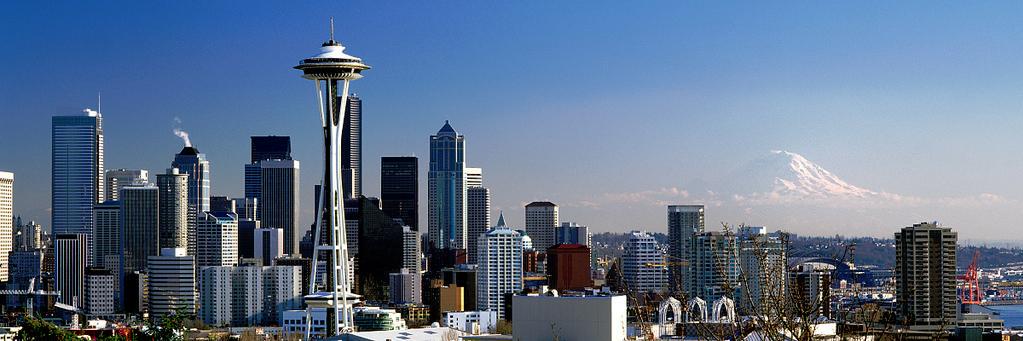
Seattle vs San Francisco. My scorecard.
Approval: Lurie 63-67%. Wilson 22%.
Office vacancy: SF 27.7%. Downtown Seattle 35.4%.
Unsheltered: SF down 22%. King County up 21%.
RVs: SF went from ~500 to 193. Seattle vetoed a permit program.
SF decided. Seattle can too.
“Proximal Origins” was fraudulent and also one of the most cited papers in the past five years in “science.”
It continues to do tremendous damage to academia and trust. It needs to be retracted.
Full text of article:
Jay Bhattacharya, head of the National Institutes of Health, has written to Nature Medicine journal demanding a “formal, independent investigation” into why a key scientific paper misled the world about the virus causing Covid, and concealed the contributions made by three senior scientists to commissioning, reviewing and editing the paper.
In a career as a science writer that spans more than four decades, I have never seen an alleged case of scientific malpractice as influential. Like many others I have called for the paper to be retracted. Twice, the editor of the journal, Joao Monteiro, has been sent letters from numerous leading scientists demanding an investigation or retraction of the misleading paper. He has ignored us.
I know the paper entitled “Proximal Origin of SARS-CoV-2” was misleading because I was among those misled. At the time I sat on the science and technology select committee of the House of Lords and we were conducting an inquiry to try to understand this new virus threatening all our lives. The possibility that it had been accidentally released from a laboratory, if true, would have significant implications for the public-health response: a virus marinaded in human tissues in a laboratory for weeks would be far more infectious than one newly arrived from bats.
Parliamentary colleagues were asking me what I thought. To my shame, I told them a lab leak could be ruled out. I did so based almost entirely on the authority of this one paper. That very phrase “ruled out” appeared in the press announcement of the paper from the institution where the lead author, Kristian Andersen, worked. The article itself left no room for doubt: “we do not believe that any type of laboratory based scenario is plausible… our analyses clearly show that SARS-CoV-2 is not a laboratory construct.”
That these words appeared in Nature Medicine gave them a stamp of authority, or so I believed. The paper was subsequently viewed millions of times and cited in thousands of academic papers. The journal and the authors of the paper therefore had a special responsibility not to allow themselves to be misled. Yet we now know that Proximal Origin’s arguments were flawed and released Slack messages and emails show several of its authors were expressing exactly the opposite opinion in private both before, during and after publication. They still thought a lab leak was “friggin likely”, in the words of Andersen.
Worse than all that, congressional investigations have uncovered records strongly indicating that three of the most senior medical scientists in the world, Francis Collins (Bhattacharya’s predecessor as head of the National Institutes of Health), Anthony Fauci (head of National Institute for Allergy and Infectious Diseases) and Jeremy Farrar (head of the Wellcome Trust) had not only seen the paper before publication, but – according to a House Select Subcommittee report – had prompted its authors to write it in the first place, had reviewed it and even suggested alterations in wording. Fauci referred to the paper from the White House podium, giving no hint of his own role in it.
These men were heads of the bodies that funded the scientists’ work, yet they were not listed as co authors or acknowledged in the paper, despite the journal’s stated policy that authors disclose any funder’s “involvement in the conceptualisation, design, data collection, analysis, and preparation of the paper”. Farrar even suggested a change of wording to strengthen its conclusion: from “unlikely” to “improbable”. Why was he not acknowledged? Robert Garry, one of the authors, wrote to his colleagues: “Jeremy has been an amazing leader – should be author.”
Ed Holmes, another author, replied: “I agree, and I offered, but he wants to remain independent.” As we wrote to the journal editor in 2024: “This omission of a significant role played by the head of a funding agency, allegedly to maintain his ‘independence’, represents a serious breach of publishing ethics that completely undermines the credibility of the journal and calls into question the motivation behind the paper.” Answer came there none.
It should infuriate the journal’s editor that the paper appears to have been commissioned, designed and intended to shut down all debate about a possible laboratory origin of the most destructive pandemic in a century despite going directly against its authors’ own opinions. For the sake of science’s integrity the journal must act on Dr Bhattacharya’s letter.
Look what just closed in Belltown.
First Light 1107, 1 bed, 1 bath, 548 sq ft.
June 2025: sold new $705,000
April 2026: listed $529,000
Sept 2026: closed $400,000
Brand-new tower.
14 months.
$305,000 less.
SCOOP: Last year I asked RFK Jr. about FOIA. He said he would create a searchable database of FOIA docs.
RFK's team spent a year creating that website: "RADICAL TRANSPARENCY DOT GOV"
So what happened? The White House, including failed FDA nominee Heidi Overton, spiked it. It may have unearthed damning docs about the first Trump administration.
@seattleiscrazy Left out of the accurate @TaxFoundation summary are the negative effects on philanthropy. A number of WA charities and NGOs will see substantial underperformance in donations in 2027, I suspect.
Melissa Santos and Hana Kim discuss the accounting error that may cost our state an estimated $654 Million dollars...
And Gov. Bob Ferguson and friends are not happy with the media covering this, with Santos saying;
"When asking about it, I got a sort of response that I'm sure went through the governor's office, it was very highly vetted. It was very short. They don't agree there will be this much of an impact. They don't agree with the state Senate staff estimate."
A week later and the normally vocal governor is acting quite shy about this one, especially after he just blamed Trump on socials for our state's budget woes.
@hanamkim | @MelissaSantos1 | @fox13seattle
'WA agency's accounting error could cost state millions: report'
A relaxation of zoning restrictions in Raleigh, North Carolina, led to a surge in construction, which reduced inflation-adjusted rents by 15% between 2022 and 2025.
Low-income renters benefited the most.
https://t.co/AA5HhdbeuI
💡 Do you run live events, teach or train people? I just released a Live Quiz feature for PollQR, which works over streaming or in-person.
You can now create and conduct a simple trivia contest, including AI assisted first drafts on any topic. (You tell it the topic and the audience level, and it'll draft questions and answers to get you started; you can modify from there.)
Question types include multiple choice and true/false. Participants join from any phone -- no app install required. High points are awarded for early and correct answers, and a leaderboard shows who is ahead in each round.
More here:
https://t.co/MoopQa92yC
@adamaoc@colorblindk1d I am answering the question posed by the OP, "Why are they all so obsessed with high speed rail?!?!"
You are answering a different question.
Just give us an income tax, and we'll fix the state's regressive tax code they said. The results aren't even final, and they're floating yet another tax. Beware: The big members of The WA Roundtable will endorse, because they'll have massive R&D write offs and will owe little to nothing.
Passenger rail (primarily Amtrak) receives FAR heavier subsidies relative to its size, revenue, and passenger volume than commercial air transport or passenger vehicles. The commercial air system is structured around a user-pays model via dedicated taxes and fees that cover the large majority of FAA and related costs. Amtrak is not; it requires substantial ongoing general-fund and dedicated appropriations that are large relative to the service provided.
...and it assumes a static model on high-earners, who are the most mobile. Via Grok:
The state’s projected figures (~$3.1–3.5 billion in the 2027–29 biennium and $8.3–9.4 billion in 2029–31, from roughly 25,000 households) are essentially static.
Indeed the original fiscal note explicitly assumed “affected taxpayers do not reduce taxable income.”
That is the opposite of how high earners actually behave.
Evidence of capital flight already underway
IRS migration data: Washington has been losing higher-income households on a net basis. Departing households report higher average AGI than arriving ones (roughly $10k–$16k more in recent years). The state loses higher earners to Texas, Florida, Tennessee, Arizona, Idaho, and Nevada while still gaining lower-income households from California and Oregon. Net AGI losses have been measured in the hundreds of millions in recent windows.
High-profile exits tied to prior tax changes: Fisher Investments moved its headquarters to Texas the day the capital gains tax was upheld. Jeff Bezos left for Florida (estimated savings of hundreds of millions on the capital gains tax alone). Howard Schultz announced his move to Florida the night the income-tax bill passed the House. Other founders and executives have cited the tax climate.
Employer and real-estate signals: Association of Washington Business surveys show taxes as the top reason employers are considering leaving. Real-estate agents report high-net-worth clients accelerating out-of-state moves or buying secondary homes in no-income-tax states. Millionaire renters in the Seattle area jumped sharply, consistent with a preference for mobility over roots.
Independent estimates of the behavioral response
Cristobal Young (Cornell), whose research is often cited by tax supporters, estimates a net loss of about 1.9% of Washington’s $1 million+ earners (~475 of ~25,000). That is not zero. A Washington Policy Center / Buckeye Institute analysis using a dynamic model puts the outflow higher (~575 high earners taking ~$1.76 billion in annual income) and finds the tax costs roughly $2–$2.50 in lost economic output for every $1 of revenue, with thousands of jobs and reduced business formation.
Even modest migration plus ordinary tax planning (timing of realizations, income shifting, domicile changes) can cut a large fraction of the projected revenue. Other states that raised top rates have seen high-earner collections come in more volatile and often lower than static forecasts.