The wealth gap isn't just about income.
It's about access to asset classes.
For decades, physical commodity ownership at scale has been available only to institutions, sovereign wealth funds, and ultra-high-net-worth individuals.
Minimum lot sizes. Custody costs. Geographic restrictions.
Every single barrier was infrastructural – not fundamental.
Fractional, on-chain ownership of physical commodities is the first time that infrastructure has been genuinely rebuilt from scratch for everyone.
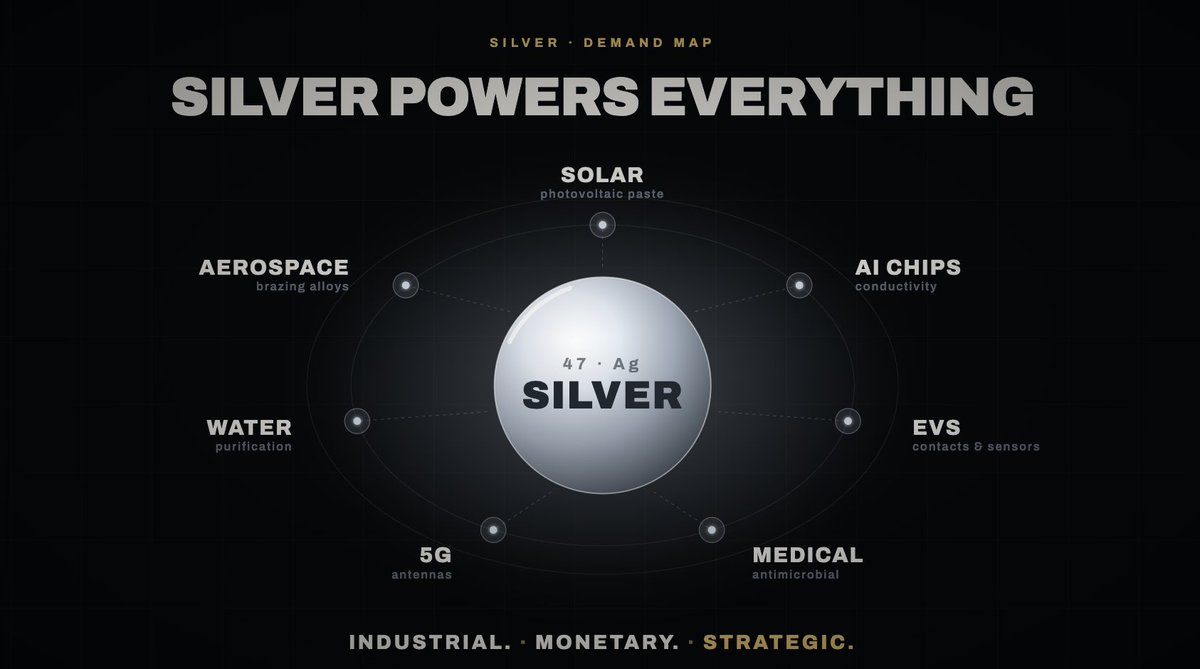
Silver is used in:
→ Solar panels
→ EV batteries
→ 5G infrastructure
→ AI semiconductors
→ Medical devices
→ Water purification
→ Aerospace components
It is simultaneously a monetary metal, an industrial input, and a critical technology material.
No other commodity sits at the intersection of that many structural trends.
Is silver the most underrated asset of this decade?
The custodian is the most important and least discussed part of any tokenized asset.
Who holds the physical commodity?
Where is it vaulted?
Is it audited – and by whom?
What happens if the platform shuts down?
Is the physical asset ring-fenced from the company's balance sheet?
These are the questions that separate serious tokenization infrastructure from everything else.
Always ask them.
If you had to store your wealth in a single asset class for the next 50 years and couldn't touch it, what would you choose?
Most serious answers end up somewhere in physical commodities.
There's a reason for that.
Tokenization is not crypto. This is the most important thing to understand about the RWA space right now.
Crypto is a native digital asset – it exists only on-chain.
A tokenized commodity is a physical asset – gold, silver, copper – that exists in the real world, held in a vault, audited independently, and represented on-chain as a digital certificate of ownership.
The blockchain is the infrastructure. The asset is still physical.
The mining industry has a problem nobody talks about enough.
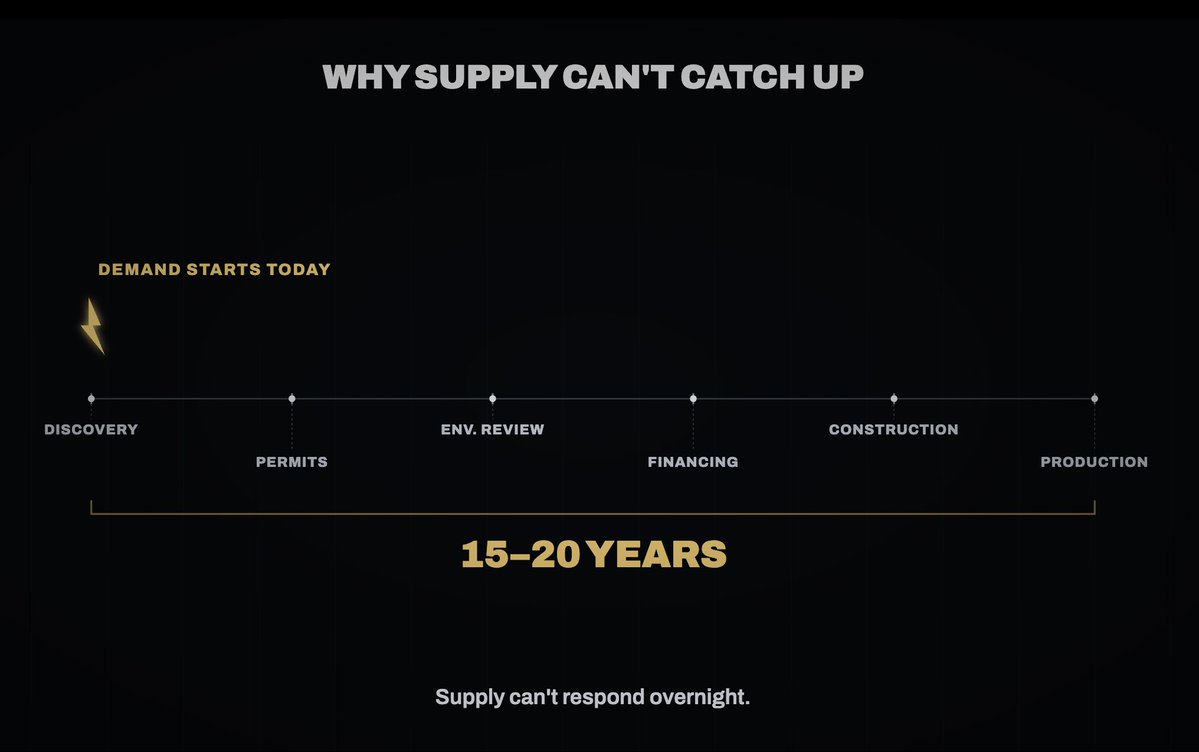
Discovering a copper deposit today means first production in 15 to 20 years – after permitting, environmental review, financing, construction, and commissioning.
Demand doesn't wait 15 years.
That structural lag between discovery and production is why commodity supply deficits are almost impossible to solve quickly once they start.
The market is pricing in the demand.
The supply response is a decade away.
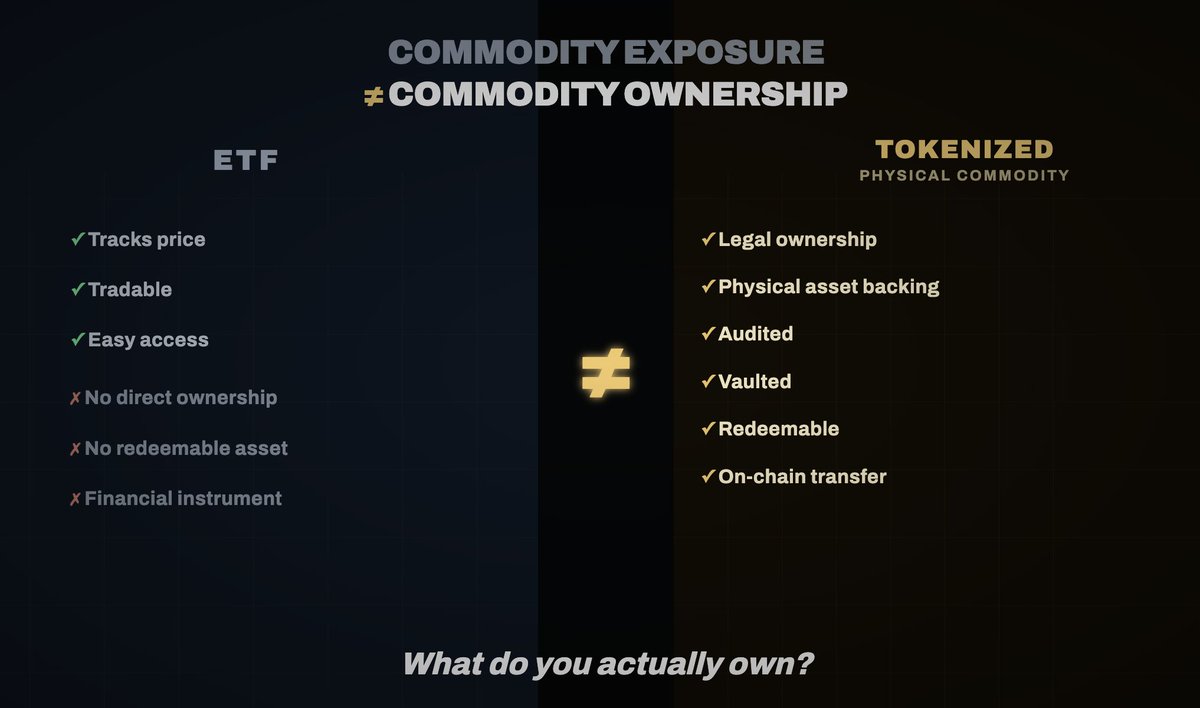
Here's something the traditional finance industry never figured out: Making someone feel like they own something is not the same as them owning it.
An ETF makes you feel like you own gold.
A futures contract makes you feel like you own copper.
A certificate makes you feel like you own silver.
None of them are the metal.
Tokenized physical commodities are.
What's the difference between owning an asset and owning exposure to it?
Most people think of commodities as a macro hedge.
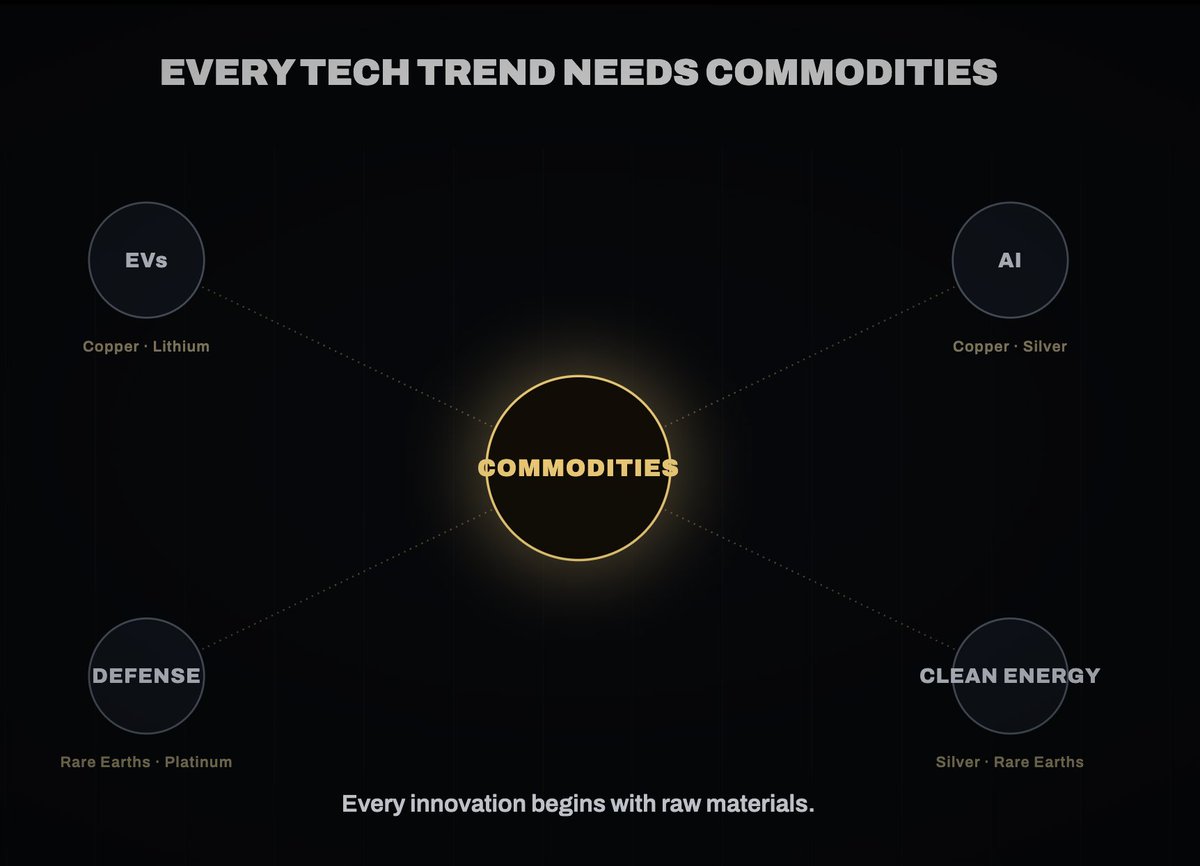
The smarter frame: Commodities are the raw material of every technology trend you're already bullish on.
Bullish on EVs? That's copper and lithium.
Bullish on AI infrastructure? That's copper and silver.
Bullish on clean energy? That's silver, platinum, and rare earths.
Bullish on defense? That's rare earths and platinum.
You're already bullish on commodities.
You just haven't positioned for it yet.
Physical commodities have outlived:
-> Every fiat currency ever created
-> Every empire that issued them
-> Every financial system built around them
Gold didn't survive 5,000 years because it was trendy.
It survived because it was useful, scarce, and nobody could print more of it.
That property doesn't change when you put it on a blockchain. It gets stronger.
Toto Finance has been selected into Lava Network's Energy Tokenization Sandbox, working with @Cardano_CF on real utility scale battery storage infra in Germany.
Joint effort with @lavanetxyz and Electric Blue, targeting a EUR 500M energy tokenization initiative.
From commodities to energy.
Real assets, real infra, real regulatory rigor.
The three hardest things about owning physical gold:
- Where do you store it safely
- How do you insure it properly
- How do you sell it quickly without losing on the spread
Tokenized gold solves all three.
Vaulted by regulated custodians. Insured. Tradeable in seconds on-chain.
Most people don't know this option exists yet.
Nobody talks about diamonds as an investment.
Here's why they should:
→ Finite supply – no new diamond mines of scale discovered in decades
→ Zero secondary market at retail level
→ Pricing controlled by a handful of players globally
→ No transparent benchmark price exists
Every single one of those problems is solved by tokenization.
The most illiquid luxury asset on earth becomes the most interesting when you add transparency and fractional ownership to it.
RWA Day just got more interesting.
Our Co-founder Steven Gaertner (@stevengae_06) joins @EasyMM_official on 30 July to talk about bringing real-world commodities on-chain.
Gold, silver, platinum, diamonds, copper, rare earths. Multi-trillion dollar markets, finally liquid.
Don't miss it. 👀
Hot take: ETFs didn't democratize commodity ownership. They democratized commodity price exposure.
There's a fundamental difference between the two – and most retail investors have never been told which one they actually have.
What do you think you own when you buy a gold ETF?
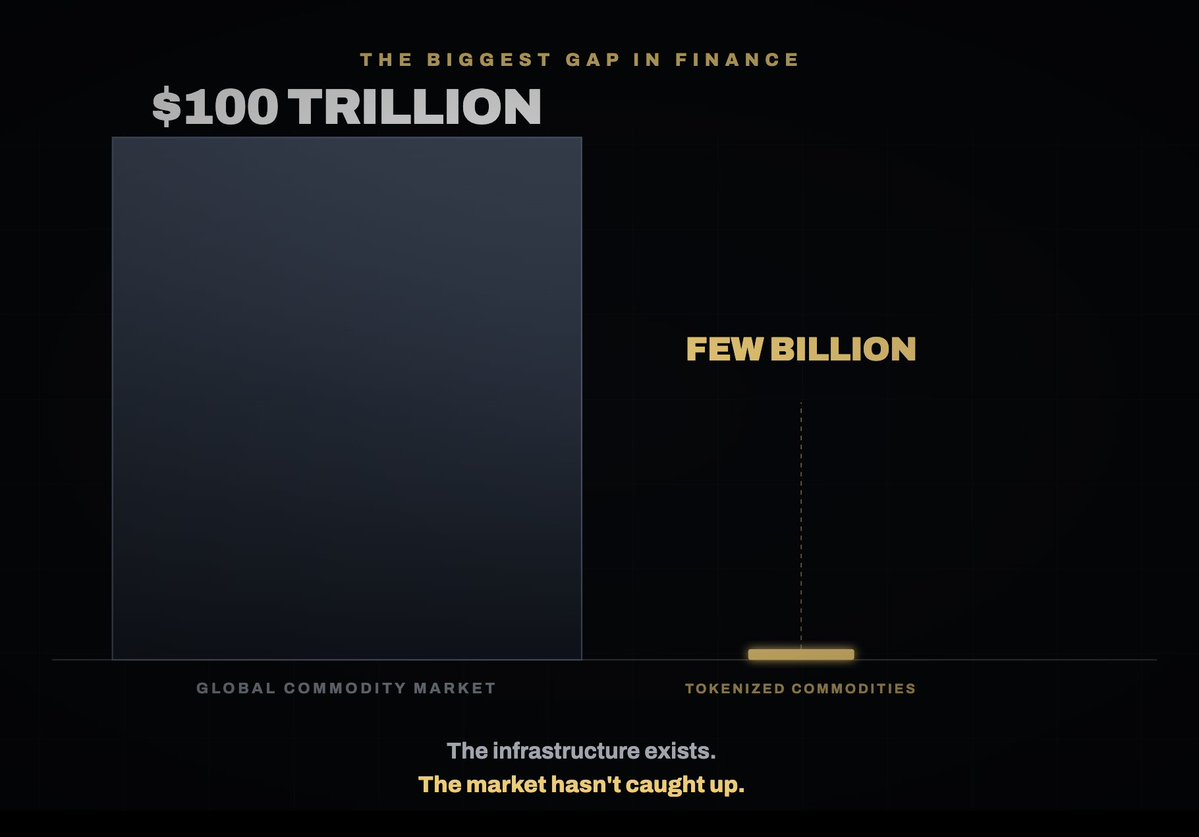
The commodity market is $100 trillion.
The tokenized commodity market is a few billion.
That's not a sign that tokenization doesn't work.
That's the largest gap between an asset class and its digital representation in financial history.
Gaps like that don't stay open forever.
When we started @TotoFinance , this is exactly the kind of milestone we were working toward.
Institution-grade tokenization of physical energy infrastructure, done right.
Thrilled to be selected for the @lavanetxyz x Electric Blue sandbox with the @Cardano_CF as our partner.
More soon 👀
Big news, and we couldn't be prouder to share it!
Toto Finance (@totofinance) has officially been accepted into the Energy Tokenization Sandbox, run by @lavanetxyz and Electric Blue.
Selected from a strong pool of applicants to help bring compliant, institution-grade tokenization to real utility-scale battery storage in Germany.
Real assets. Real infrastructure. Real regulatory rigor.
And we're not doing it alone. We're building this hand in hand with the @Cardano_CF as our technical partner, pairing our live tokenization platform with their enterprise engineering and fully verifiable, auditable infrastructure.
This is exactly the future we've been building toward: Physical energy infrastructure, brought on-chain in a way investors and regulators can trust.
Massive thanks to @lavanetxyz, Electric Blue, and the @Cardano_CF 🙌
Kickoff next week and we are just getting started 🚀
The custodian is the most underrated part of any asset.
In traditional finance, custody is invisible until it fails.
Lehman Brothers held client assets. FTX held client assets. Both failed. Both took client assets down with them.
When a physical commodity is vaulted, insured, independently audited, and represented on-chain with verifiable proof – the custodian stops being a point of failure.
It becomes a point of verification.
That shift – from trust to proof – is the most important structural change in how assets are held in a generation.
Everyone talks about diversification.
Very few people actually have it.
Stocks and bonds move together in a crisis – 2022 proved that definitively.
Real estate is illiquid, geography-dependent, and management-heavy.
Crypto is volatile by design.
Physical commodities – gold, silver, copper, platinum – have historically moved independently of equities, survived every currency regime in history, and held purchasing power across centuries.
Diversification isn't a portfolio spreadsheet.
It's owning things that behave differently when everything else breaks.
Most asset classes were invented by banks.
Stocks. Bonds. Derivatives. ETFs.
All designed by financial institutions, for financial institutions, with retail access bolted on as an afterthought.
Commodities predate all of it.
Gold was money before there were banks to hold it.
Copper was traded across continents before there were exchanges to price it.
Silver settled debts before there were courts to enforce them.
The oldest asset class on earth is getting its first real infrastructure upgrade in five thousand years.
That's worth paying attention to.
The best collateral in history has always been physical.
Land. Gold. Commodities.
Things that exist independent of any counterparty. Things that don't go to zero. Things that have intrinsic utility beyond their price.
DeFi is starting to figure this out.
The next phase of on-chain lending isn't built on volatile crypto assets as collateral.
It's built on tokenized physical commodities – gold, silver, platinum – assets with five thousand years of proven collateral value.
The infrastructure for that is being built right now.