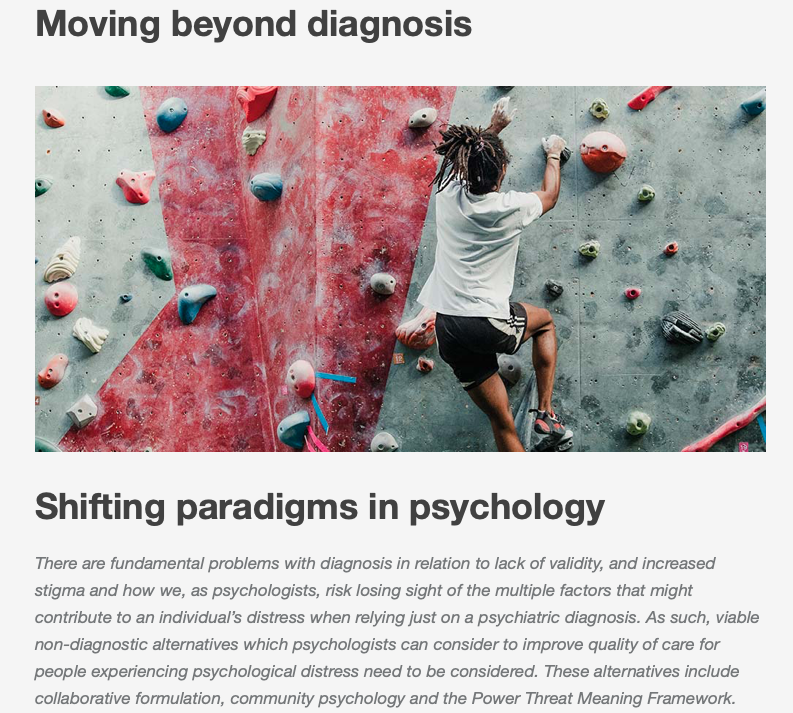
A timely publication of this article, which I co-wrote with Emma Agnew, considering how collaborative formulation, #PTMFramework and @CommPsychAus offer alternatives to the medical model of ‘mental illness’ https://t.co/GBZb8M04s7
Open Dialogue, need‐adapted mental health care, and implementation fidelity: A discussion paper https://t.co/7b4cljPKpV
#EarlyView of paper by Edward Waters, @BenHLOng, Kristof Mikes‐Liu, @AndreaMcClough1, Alan Rosen, @stevenmayers, Anna Sidis, Lisa Dawson + Niels Buus
@pricemj1 I would say be prepared, curious and willing to ask questions. You won’t be expected to know everything and most clinicians will appreciate a ‘fresh perspective’ on the service.
Long term need can suddenly get re-written as dependency when NHS reconfigurations hit, or when staff feel crumbly because of their own lack of resources and want to disconnect from pain. So important we locate the problem where it lies not project it onto patients to disavow.
Esketamine performed better statistically than placebo in only one out of three studies, reducing scores by a few additional depression points over large placebo effect. Yet approved by FDA. https://t.co/SeEaZ2LyWb
Great to read compelling, evidence-based arguments for a paradigm shift towards models of psychological Tx that focus on social determinants of health by @stevenmayers, @LissaKJohnson and others in latest edition of @AustPsych magazine.