Still can’t get my head around this!
£114 million.
That’s what Welsh Labour burned on a report for the cancelled M4 relief road.
Not a bridge.
Not a hospital.
Not a school.
A report.
To put that madness into perspective.
£114m could have delivered…
• 3,000+ nurses for a year.
• 20+ GP surgeries built or fully refurbished.
• Hundreds of miles of resurfaced roads across Wales.
• Dozens of new schools or major upgrades
• Real congestion relief on roads people actually use.
Instead, Welsh Labour produced paperwork… and then walked away.
Reckless, dangerous governance.
If a government can waste £114m on a report that never delivered anything, imagine what they’ll do with more power and more of your money.
Wales doesn’t have a funding problem.
It has a Welsh Labour problem.
Wales needs Reform.
There's a line in a democracy that, once crossed, changes everything: when elections cease to be an obligation and become a variable. That line has now been crossed in Britain, and it's the state's own elections watchdog saying so.
The Electoral Commission has been explicit: Labour's justification for delaying local elections is not legitimate. Not unwise. Not clumsy. Illegitimate. Extending mandates damages public confidence, undermines local legitimacy, and creates a clear conflict of interest by letting councils decide how long they can avoid voters. In any functioning democracy, that would end the matter. Here, the government presses on regardless.
That's the scandal. This is no longer a party political dispute or a row between Reform and Labour. The referee has intervened and said the game is being rigged, and the players have decided to ignore the whistle. When a government continues with election delays after being told by the independent authority charged with protecting electoral integrity that its reasoning does not hold, the issue stops being reform and becomes power protecting itself.
The language Labour uses is revealing. Elections are framed as an inconvenience. Voters are framed as an administrative burden. Democracy is reduced to a cost-saving exercise, something to be postponed if the spreadsheets look untidy or the reorganisation plans are mid-flow. Ministers speak of "capacity constraints" as if the right to vote is a luxury item that must wait until the filing cabinets are rearranged. In a democracy, administration exists to serve elections. Elections do not exist to suit administration.
The conflict of interest identified by the Electoral Commission should alarm anyone who still believes in democratic norms. Councils are being asked whether they would like to delay the moment they must answer to voters. That's not consultation. It's self-dealing. No serious system allows those in power to decide how long they may remain there without consent. Yet this is now presented as a "locally led approach," as though outsourcing democratic suspension makes it virtuous.
Worse still is the uncertainty. Candidates have been selected. Campaigns have begun. Money has been spent. And with months to go before polling day, the government is still dangling the possibility of cancellation. The watchdog describes this uncertainty as unprecedented. That word matters. Democracies rely on predictability. Once elections become provisional, subject to last-minute ministerial approval, the entire process is degraded.
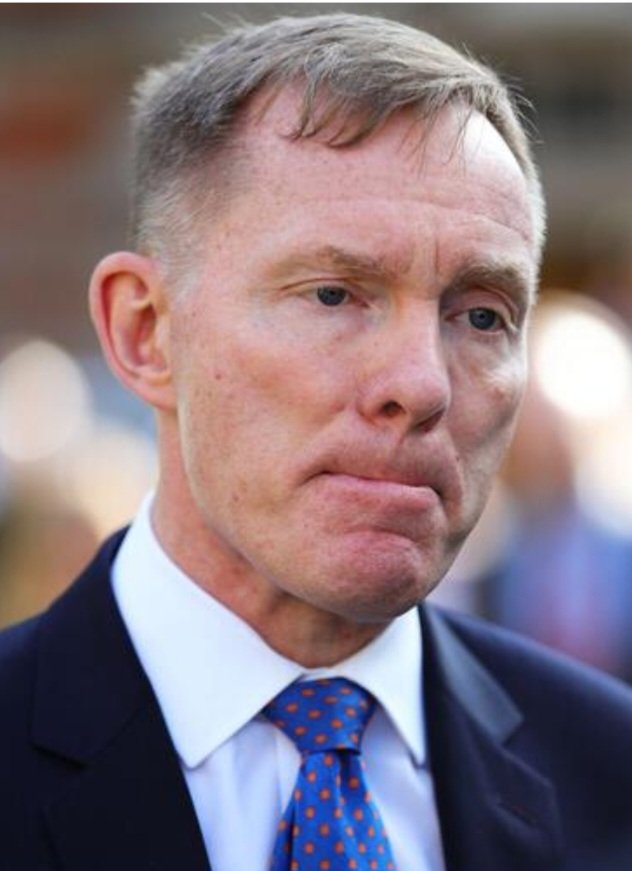
When challenged, ministers retreat into condescension. Chris Bryant waves away concerns as conspiracy and insists that "ordinary people" would think elections are "a bit daft." This is a familiar trick: speak for the public while denying them a voice. Redefine democratic rights as common-sense nuisances that sensible adults should stop fussing over. It's the rhetoric of managed democracy, where participation is tolerated only when it produces the correct outcome.
None of this is happening in isolation. Mayoral elections have already been postponed. Now council elections are being pushed back again. The pattern is clear. When the polls turn hostile, the timetable moves. When voters become unpredictable, the vote is delayed. Governments confident in their mandate do not need to buy time. They face the electorate and take their chances. Labour is not doing that because it knows what the numbers say.
The danger is not just that millions of people may be denied a vote next year. It's the precedent now being set. Once a government learns it can delay elections after the watchdog objects, after campaigns have begun and candidates are in place, the principle is broken. Elections become conditional. Democracy becomes something you are granted when those in power feel safe enough to allow it.
"Chris Bryant waves away concerns as conspiracy and insists that "ordinary people" would think elections are "a bit daft.""
Britain needs nuclear power. Our nuclear projects are the most expensive in the world and among the slowest. Regulators and industry are paralysed by risk aversion. This can change. For Britain to prosper, it must.
Earlier this year, the Prime Minister appointed me to lead a Taskforce to set out a path to getting affordable, fast nuclear power Britain.
Our final report today sets out 47 recommendations, among them:
- Creating a one-stop shop for nuclear approvals, to end the regulatory merry-go-round that delays projects at the moment.
- Simplifying environmental rules to avoid extreme outcomes like Hinkley Point C spending £700m on systems to protect one salmon every ten years, while enhancing nuclear's impact on nature.
- Limiting the ability of spurious legal challenges to delay nuclear projects, which adds huge cost and delay throughout the supply chain.
- Approving fleets of reactors, so that Britain’s nuclear industry can benefit from certainty and economies of scale.
- Directing regulators to factor in cost to their behaviour, and changing their culture to allow building cheaply, quickly and safely.
- Changing the culture of the nuclear industry to end gold-plating and focus on efficient, safe delivery.
If the government adopts our report in full, it will send a signal to investors that it is serious about pro-growth reform and taking on vested interests for the public good.
A thriving British nuclear industry producing abundant, affordable energy would be good for jobs, good for manufacturing, good for the climate, and good for the cost of living. And it could enable Britain to become an AI and technology superpower.
Britain can be a world leader in this new Industrial Revolution, but only if it has the energy to power it.
Our report is bold, but balanced. Our recommendations, taken together and properly implemented, will forge a clear path for stronger economic growth through improved productivity and innovation. This is a prize worth fighting for.
https://t.co/9wPTtkTDMU
Trump: "History has shown us that those who have relations with Israel have thrived, while those who have devoted resources and attention toward the destruction and even annihilation of Israel have languished. They haven't done well. Israel is not going anywhere."
Economic self-harm in action:
Total revenues from North Sea oil and gas fell to £4.5 billion in 2024-25, down from £6.1 billion the year before – a drop of £1.6 billion, or 27%.
As a result the much-touted windfall tax introduced in 2022 to raise additional revenue, extended by Labour, fell by £700 million (20%) over the same period.
If Labour sticks to its policy of no more North Sea development, the oil and gas sector will haemorrhage almost 1,000 jobs every month.
And production forecast to 2050 will be one billion barrels of oil equivalent less than it could be — a £50 billion hit to the UK economy.
@SkySportsBoxing Can remember meeting Buncey and Richie Woodall in the MGM Vegas for the Hatton V Pacquio fight. Both had loads of time for the fans and chatted to us for ages. Great memories. RIP Ricky.
@KemiBadenoch Labour are about to go one step further than the current moratorium and permanently ban fracking in the UK. What are you going to do to stop this?
@BGatesIsaPyscho "Until Valhalla" is a farewell phrase derived from Norse mythology, It is used primarily by military members as a sign of utmost respect for fallen comrades, symbolizing a promise to reunite in the afterlife after their duty and time on Earth are complete.
@sf2konrad@AlixPopham@AllBlacks@WorldRugby@DavidWalshST Apples and oranges. You can’t compare F1 and rugby. Rugby players didn’t know they were going to get CTE from consistent concussions in a sport where the governing body had insufficient rules and medical care around head shots.