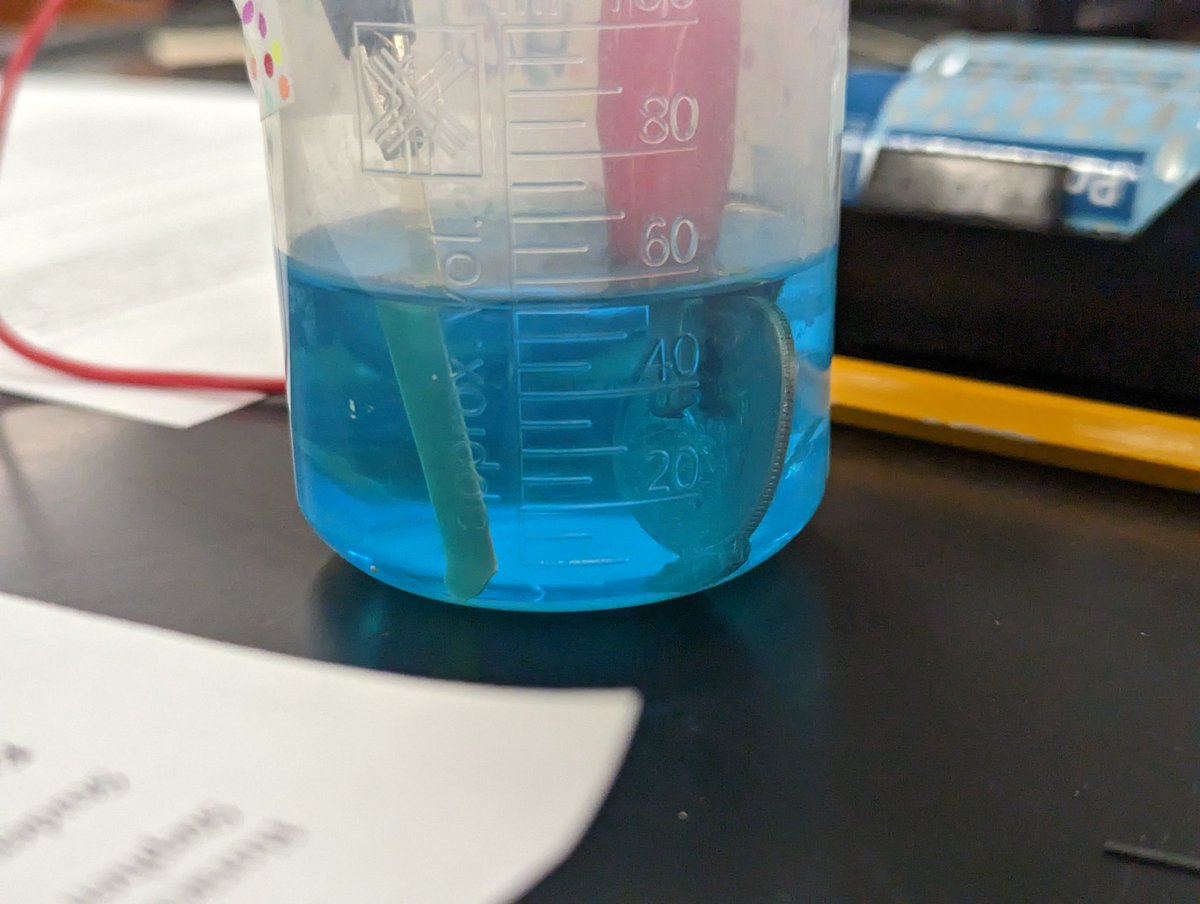
Another September in full swing! First year with just chemistry, and it's giving me the chance to really dig in to my goals of making learning more visible, building community, and fostering a growth mindset. Ss are taking to it wonderfully #wearechappaqua#iteachchem
@KatyDornbos@alfmateus@IBchemmilam@chem_talk You make a great point. Maybe this will have to be my plan moving forward. I usually do both words and diagrams, but maybe just a particle diagram approach is best.
@alfmateus@IBchemmilam@KatyDornbos@chem_talk Fair. I'm happy to have the discussion, for my better understanding and that of my students.
I'd offer that students do get something from classification and patterns though. Establishing the class and pattern helps inform us looking at new and similar situations.
@IBchemmilam@KatyDornbos@alfmateus@chem_talk Thanks for the links. Not disagreeing at all on isomerization, clearly chemical. I'm more trying to delineate dissolving solid sodium chloride and dissolving solid sucrose. Both seem to be separating particles in a crystal and solvating them, right?
@IBchemmilam@KatyDornbos@alfmateus@chem_talk Of course it's not black and white, but I frequently worry getting too complex too quickly is alienating to many students, so having a clear 'chemical' and 'physical' bin has been my practice
@IBchemmilam@KatyDornbos@alfmateus@chem_talk 2) How does dissolving sugar/covalents fit into this? Breaking hydrogen bonds to make other hydrogen bonds? I've usually called these attractions, despite the term.
Not trying to be contrarian, just wondering. Overall, categories seem to help students as they are first learning
@KatyDornbos@alfmateus@chem_talk I'll have to look into that. Maybe something to file into the 'the state standards and I don't see eye to eye' folder. NY calls it strictly physical
@KatyDornbos@chem_talk I like to think about it the other way around. The bond is the transfer, the attraction isn't a bond. This agrees with dissolving being a physical change; no bonds broken, no chemical reaction. Energy transfer though. The ion attraction operates like hydrogen bonds. Thoughts?
@alfmateus@KatyDornbos@chem_talk I struggle with this. If crystallization is ionic bonds being formed, shouldn't we consider dissolving a chemical change? But we don't
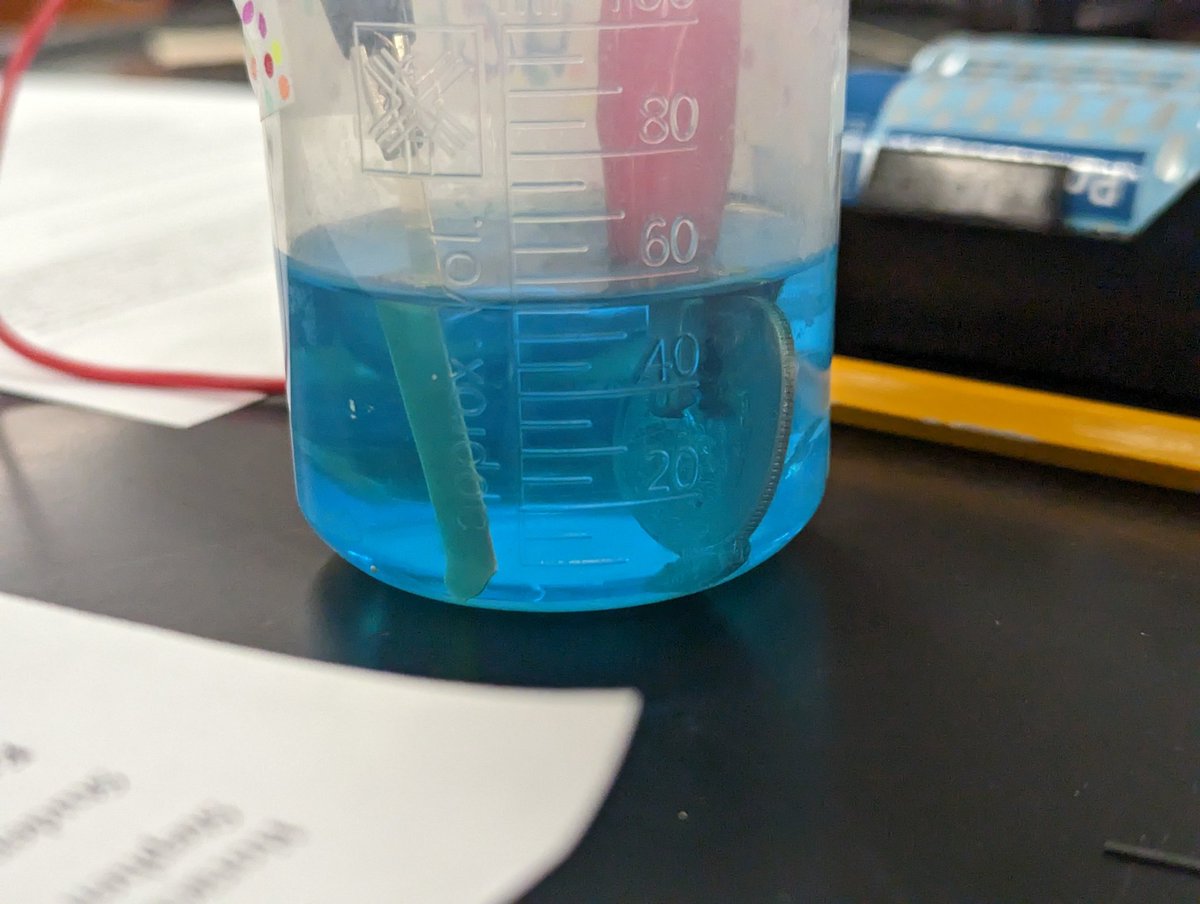
Tried something new in #chemlab this week: use a #chatGPT to give you a procedure. It almost definitely won't be exactly what you're looking for, but leads to a discussion and Ss modify the responses. "Can we do this?" rather than "Where do I start?"
#iteachchem#WeAreChappaqua