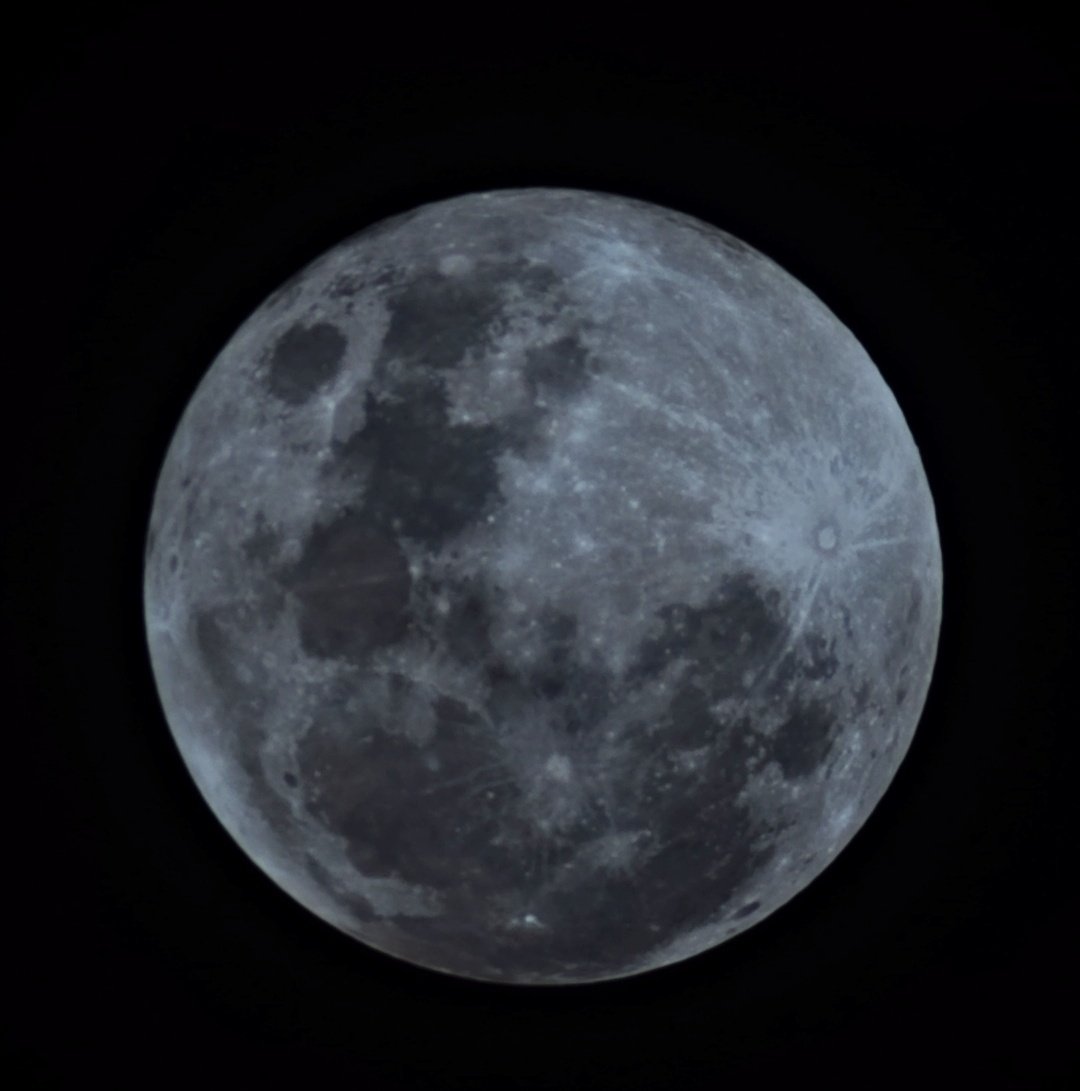
Strawberry Moon
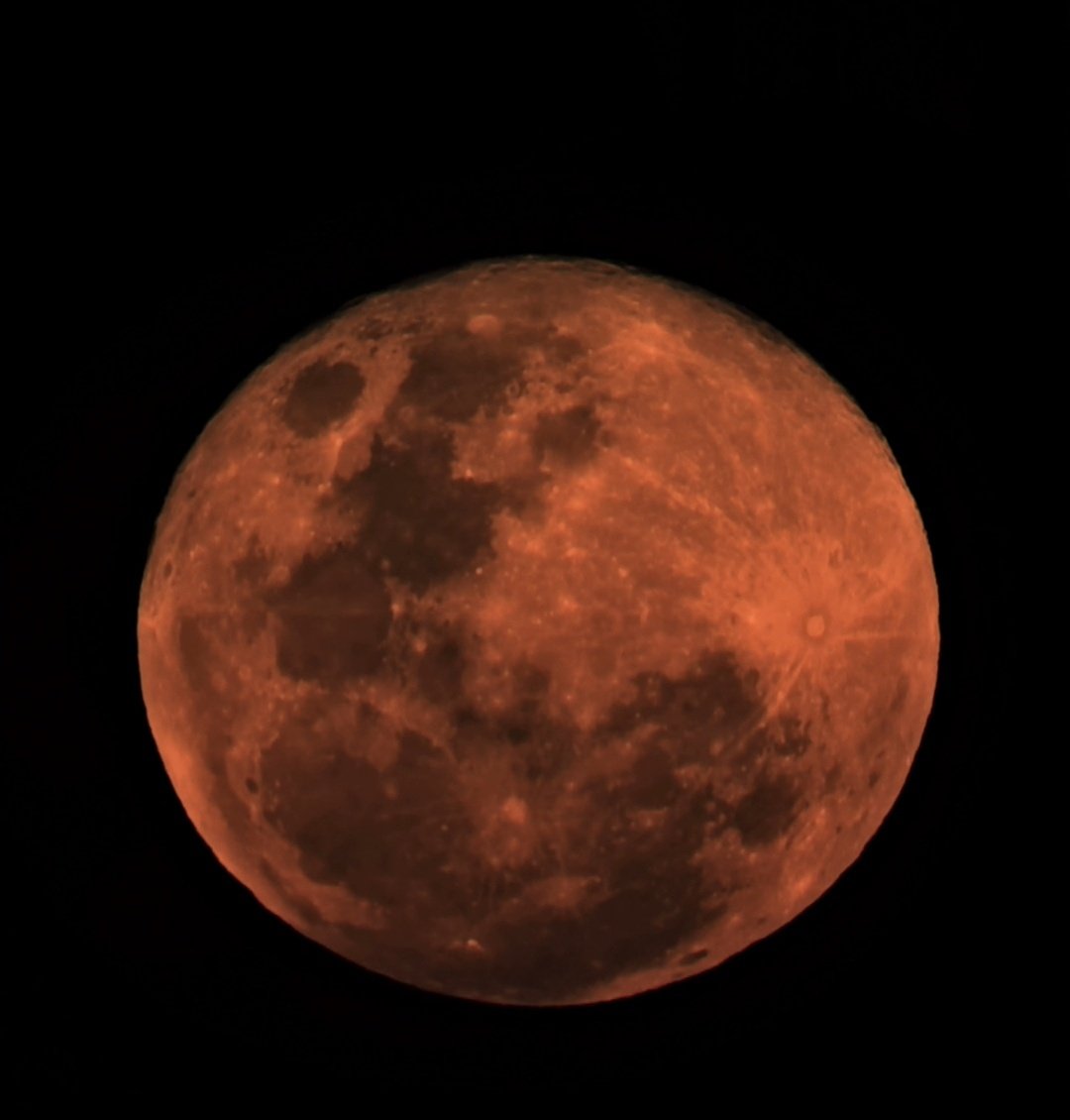
It's the last full moon of spring and the lowest full moon of the year in the Northern Hemisphere. It falls on June 30 making it the second full moon in June, which is rare event.
Details
Device:Seestar S30 Pro
#astrophotography_#seestars30pro#seestarofficial
M27/Dumbbell Nebula
This is a spectacular planetary nebula in the constellation Vulpecula. Located about 1,200 light-years away
It represents the final stage of a sunlike star
Details
Device:Seestar S50
Exposure Duration: 1hrs 4min
#astrophotography_#seestars50#seestarofficial
M92 /Other Great Cluster in Hercules
It is located in the constellation Hercules, It has no common nickname, though it is often called the "Other Great Cluster in Hercules.
Details
Device:Seestar S50
Exposure Duration: 53min
#astrophotography_#seestars50#seestarofficial
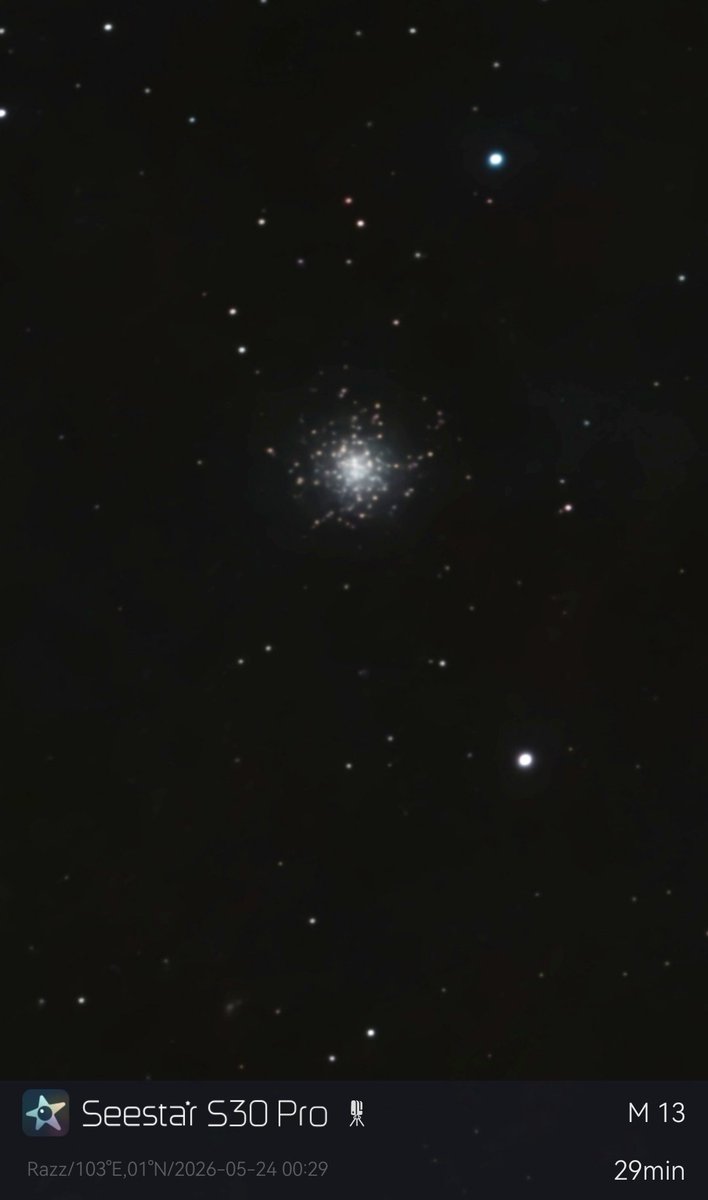
M 13/Great Hercules Cluster
It is a bright globular cluster located 22,200 to 25,000 light-years away in the constellation Hercules.
It is a massive "metropolis" of stars
Details
Device:Seestar S30 Pro
Exposure Duration: 29min
#astrophotography_#seestars30pro#seestarofficial
M5/NGC5904
A globular cluster in Serpens (the Serpent), about 24,500 light-years from Earth. Roughly 13 billion years old, making it one of the oldest globular clusters in the Milky Way. Diameter of about 165 light-years.Contains over 100,000 stars.
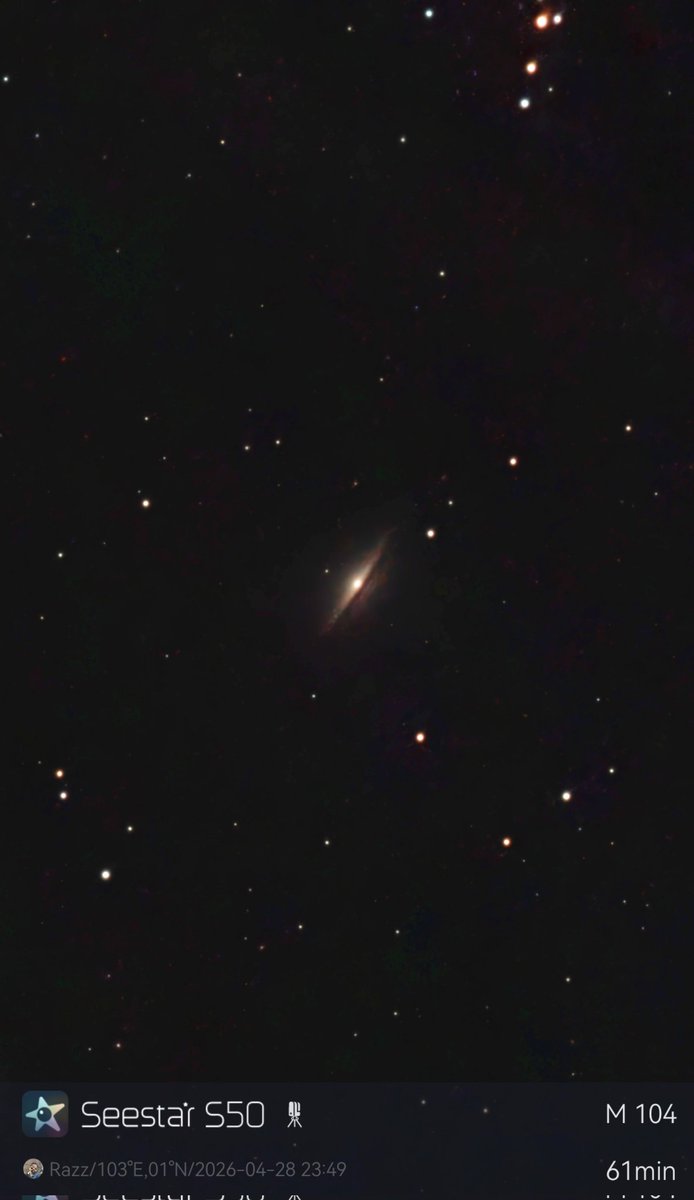
Sombrero Galaxy (M104) is a stunning celestial object located 28 to 31 million light-years away.Named for its resemblance to a Mexican hat, featuring a bright, bulbous central core (bulge) and a dark rim of dust lanes silhouetted against a flat disk.
The Crescent Nebula is a striking emission nebula located about 4,700 to 5,000 light-years away .It looks like a delicate, curved gas shell. Visually, it appears as a faint, arc-shaped "crescent".At its heart lies a rare, violent star named WR 136 (HD 192163)
2026 Fifth Full Moon (Flower Moon)is the first of two full Moons occurring in May 2026. .
The Moon will appear beautifully full to the naked eye for about a day before and after the exact peak.
Device:Seestar S30 Pro
#astrophotography_#seestars30pro#zwo
Running Chicken Nebula (C100/IC 2944)
The Running Chicken Nebula (IC 2944) is a star-forming region in the constellation Centaurus, about 5,900 to 6,500 light-years from Earth. It's an emission nebula, glowing red because its hydrogen gas is energized by hot young stars.
Pink Moon
2026 Fourth full moon (Pink Moon)The moon won't be pink—it looks bright gold or orange near the horizon due to atmospheric scattering, then turns silver-white as it rises .
Device:Seestar S30 Pro
#astrophotography_#seestars30pro#seestarofficial
Box /Rectangle Galaxy (C21/NGC4449)NGC 4449, The Box Galaxy, is a dwarf irregular galaxy located approximately 12.5 million light-years away in the constellation Canes Venatici.
Device:Seestar S50
Exposure Duration: 87min
#astrophotography_#seestars50#seestarofficial
Carina Nebula (C92/NGC3372)The Carina Nebula is a brilliant emission nebula located in the southern constellation of Carina . It is one of the largest and brightest nebulae in our sky.
Device:Seestar S50
#astrophotography_#seestars50#seestarofficial
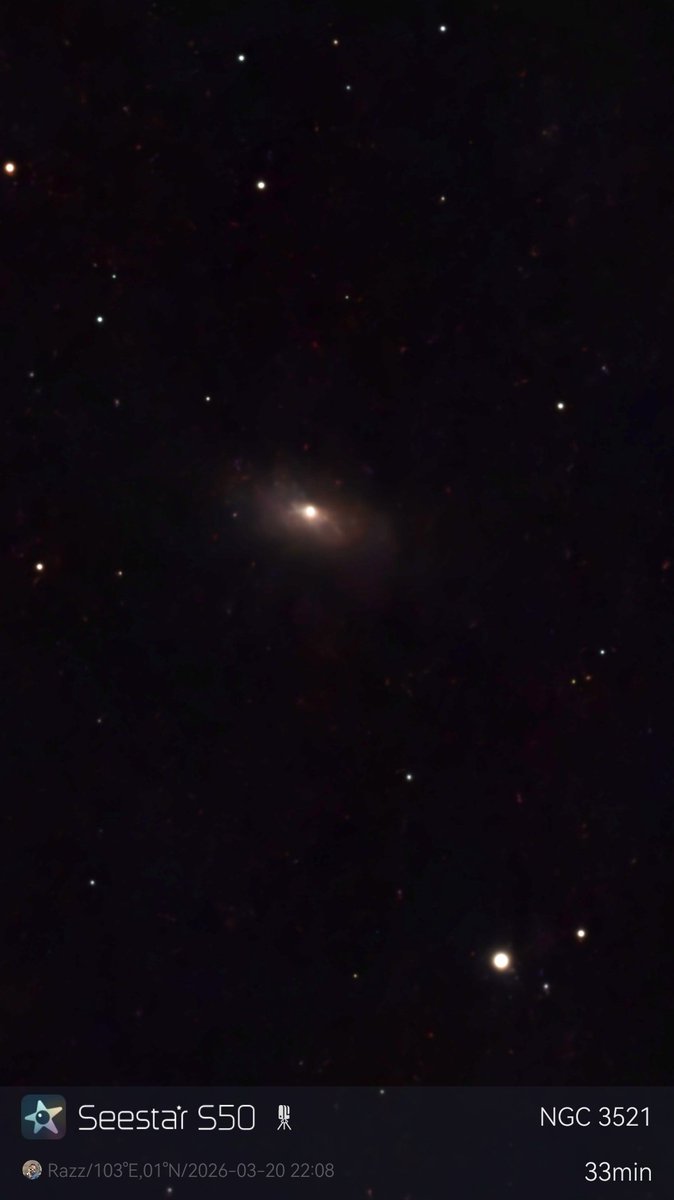
Bubble Galaxy (NGC3521)
NGC 3521 (nicknamed the Bubble Galaxy) is a striking flocculent spiral galaxy located about 26 to 40 million light-years away in the constellation Leo.
Details
Device:Seestar S50
Exposure Duration: 33min
#astrophotography_#seestars50#seestarofficial
Worm Moon
2026 third full moon
Device:Seestar S50
The Worm Moon is the traditional name for the full moon that occurs in March, signifying the time when the ground begins to thaw and earthworms start to emerge from the soil.
#astrophotography_#seestars50#seestarofficial
NGC 3293 is commonly known as The Gem Cluster.
The Gem Cluster bright open cluster located in the constellation Carina, approximately 8,000–8,400 light-years away
Device:Seestar S50
Exposure Duration: 73min (437x 10s)
#astrophotography_#seestars50#seestarofficial
C49 / Caldwell 49 (The Rosette Nebula)
Details: The Rosette Nebula a giant cosmic flower nursery.
It's a vast, beautiful cloud in space where stars are being born
Device:Seestar S50
Exposure Duration: 144min (860x 10s)
#astrophotography_#seestars50 #seestarofficial#Caldwell49