A small engineering company from Rajkot is quietly supplying mission-critical components to global giants like SLB, Weatherford and Halliburton.
Its order book has reached ₹3,033 Cr - nearly 6× its FY26 revenue.
So, what makes global OEMs trust this company with components where failure isn't an option?
Let's decode the business. 🧵👇
Policy support, better products, expanding charging infrastructure and lower running costs are bringing more buyers into the category , Leading to creation of niche Industry within matured 2-wheeler space .
With TVS , Bajaj , Ather and Hero moto corp among the major gainers of market share
Source: VAHAN retail registrations for June 2026. Figures may change marginally as registration data gets updated.
29 HIGH-QUALITY AUTO ANCILLARY STOCKS TO STUDY, TRACK & RESEARCH 📊📈
▪ Tenneco Clean Air
▪ Craftsman Automation
▪ Patil Automation
▪ Belrise Industries
▪ Talbros Automotive
▪ Gabriel India
▪ Shriram Pistons & Rings
▪ Minda Corporation
▪ Sansera Engineering
▪ Lumax Auto Technologies
▪ Banco Products (India)
▪ Pricol
▪ Fiem Industries
▪ SJS Enterprises
▪ LG Balakrishnan & Bros
▪ Sharda Motor Industries
▪ Jamna Auto Industries
▪ Sandhar Technologies
▪ NDR Auto Components
▪ Rico Auto Industries
▪ OBSC Perfection
▪ Divgi TorqTransfer Systems
▪ Frontier Springs
▪ Sona BLW Precision Forgings
▪ Kross
▪ Rolex Rings
▪ Jay Bharat Maruti
▪ Bharat Seats
▪ Uno Minda
India's auto ancillary sector is benefiting from premiumisation, EV adoption, localisation, rising exports, and increasing vehicle production. It remains one of the key long-term manufacturing themes in India
The companies mentioned above operate across various segments of the automotive value chain and are worth studying from both a fundamental and technical perspective.
DISCLAIMER
The above list is shared solely for educational, learning, research, and tracking purposes. It is not a buy, sell, or hold recommendation. Please do your own research before making any investment decisions.
A good place to hunt for ideas before the start of an earnings season is to look at insider trade activity
Below are the companies above 1000cr market cap, where promoters bought their own stock in Q1FY27 ⤵️
Data via https://t.co/HiKrYMMzl8
Electric vehicle (EV) theme + Battery Energy Storage System (BESS) theme = Strong demand for lithium ion batteries.
Everyone agrees on that line. Almost everyone then plays it by buying a cell maker. But a lithium-ion battery is a seven-stage chain from the mine to the scrapyard, and the crowded cell-assembly step is the thinnest-margin link in it. Here is the full chain, with the numbers, and where India's listed names actually sit.
🔹 Stage 1: raw materials and critical minerals.
India's weakest link. It imports about 82% of its lithium and 42% of its graphite, and bought ~18,200 tonnes of lithium compounds worth ~$1.2bn in 2025, roughly 68% from China. China refines about 58% of the world's lithium. The state response is the ₹34,300 cr National Critical Mineral Mission (to FY31) and KABIL, chasing ~50 overseas mines including lithium in Argentina. Listed touchpoints are thin and indirect: NMDC, GMDC, Hindustan Copper, Vedanta, plus GFL, backward-integrated into the fluorine chemistry (lithium fluoride, PF5) that feeds battery salts.
🔸 Stage 2: battery chemicals and active materials. The alpha layer.
Around 65 to 70% of a cell's cost lives here, and cathode alone is ~50%. The least crowded, highest-moat part of the chain, and almost nobody on Indian FinTwit watches it.
🔹 Cathode: Himadri (HSCL), LFP cathode plant targeted Q3FY27, scaling to 40,000 MTPA at ~₹1,125 cr; GFL also entering.
🔹 Anode: Himadri commissioned India's first anode plant in April 2026 (200 MTPA to start) on a decade of in-house R&D; PCBL on nano-silicon additives; GFL on natural graphite.
🔹 Electrolyte and lithium salts: Neogen, the cleanest pure play (first Indian firm with a global electrolyte licence from MU Ionic Solutions, a Mitsubishi-UBE JV; a Morita JV for LiPF6; ~₹1,795 cr build-out); GFL (LiPF6 commercially shipping since December 2025).
🔹 Binders: GFL (PVDF and PTFE).
Net read: Himadri straddles cathode and anode, Neogen owns the electrolyte focus, GFL is the most integrated platform (covering ~50 to 70% of an LFP cell's bill of materials) but battery was only ~₹33 cr of its FY26 revenue.
🔸 Stage 3: cell manufacturing. The crowded layer.
The names everyone already owns, on announced gigafactory plans: Reliance (40 GWh), Waaree (20 GWh, ₹1,003 cr raised in January 2026), Exide (6 GWh), Ola (5 GWh), Amara Raja (4 to 6 GWh). The catch: against a 50 GWh ACC PLI target, India had barely ~1.4 GWh of actual cell capacity installed, almost all from a single company. Still mostly capacity on slides, not cells in cars.
🔸Stage 4: the components India still imports. The quiet gap.
Separators and high-purity current-collector foils (aluminium on the cathode side, copper on the anode side) are still largely imported, with no strong listed pure play yet. A gap is both a risk and the next capex opportunity.
🔸 Stage 5: pack, BMS and thermal.
Cells become modules become packs, wrapped in a battery management system and thermal control. In India this mostly sits inside the OEMs and cell makers rather than as separate listed plays, so the value is captured at Stages 3 and 6.
🔸 Stage 6: the demand side.
India's EV penetration hit ~8.5% in FY26, on 2.5 million-plus EVs a year, with a stated 30%-by-2030 ambition.
🔹 EV OEMs: Tata Motors, M&M, Maruti (four-wheelers); Bajaj, TVS, Hero, Ola, Ather (two-wheelers).
🔹BESS and grid: India tendered 130+ GWh of storage in 2025 but had only ~1.8 GWh installed by March 2026. Offtake anchors are Adani (its Khavda site is the largest single-location battery outside China), NTPC, Tata Power and JSW Energy, with SECI as the PSU procurer. Power conversion systems and inverters stay a thin listed pocket.
🔸 Stage 7: recycling and second life. The closing loop.
India's formal Li-ion recycling processed only ~12,000 tonnes in 2025, about 8% of end-of-life volume, but NITI Aayog projects ~128 GWh of recyclable batteries by 2030. Listed plays:
Gravita India (FY26 revenue ₹4,265 cr, PAT ₹379 cr, commissioned a 6,000 MTPA Li-ion plant at Mundra), Pondy Oxides (FY26 revenue ₹2,939 cr, still lead-heavy), plus MSTC on scrap trading. Lohum, the formal Li-ion leader at ~70% share, is unlisted. Most of these are lead-and-metals recyclers expanding into Li-ion, not pure plays yet. The IEA expects large end-of-life lithium volumes only from the mid-2030s, so this is a slow-burn tier.
The contrarian read across the chain:
🔹 The cell (Stage 3) is the crowded, low-margin link everyone buys, and India has barely built it.
🔹 The chemicals (Stage 2) are the high-moat link almost nobody watches.
🔹 The minerals (Stage 1) and imported components (Stage 4) are India's structural weak points, which is exactly where the next policy and capex push will land.
🔹 Recycling (Stage 7) is real but early.
The honest bear case:
🔸 Most of the Stage 2 revenue is an FY27 to FY29 story; today it is capex and slow, binary customer-qualification risk.
🔸 The whole chain still leans on imports for minerals, cells and separators.
🔸 Chinese oversupply can crush prices at every layer.
🔸 LFP versus NMC, and now sodium-ion, can reshuffle which chemicals and minerals win.
The takeaway: do not buy "batteries." Decide which link you are actually buying, because the margins, moats and timelines differ wildly from the mine to the scrapyard. The crowd is at Stage 3. The moat is at Stage 2. The weak points the state is now paying to fix are Stages 1 and 4.
I get plenty wrong, so treat this as a starting point for your own work, not an answer.
✍️ Disclaimer: Educational purposes only, not a buy/sell recommendation
Finance Ministry panel to clear ₹1.25 lakh cr outlay for India Semiconductor Mission 2.0
Find the semiconductor value chain
Guess who Baji mar sakta 😀
#vismaya#semiconductor
Defence electronics built by Indian companies are not one single opportunity. Every electronic system has a different value chain, a different capability requirement, and a different moat.
Here is the break down the key layers of this ecosystem.
🔹 Layer 1: RF and transmit-receive modules
What it is: a transmit-receive module is the basic building block of an AESA radar. A single radar can hold hundreds to thousands of them. Each one takes the chip and turns it into a working unit that transmits and receives radar energy. This layer also covers the wider radio frequency and microwave front end.
Why it matters: an AESA radar is essentially a dense array of these modules. Getting the power, packaging and cooling right is what separates a radar that works from one that does not.
The moat: thirty-plus years of RF and microwave design, cleanroom manufacturing, and the DRDO and Ministry of Defence qualification wall. A new entrant cannot simply buy this; it has to be earned over years of programmes. That is why the same two names keep recurring.
🔸 Astra Microwave: the module and RF core inside QRSAM, the Uttam fire-control radar and the Su-30 EW upgrade. Operates multiple cleanrooms and India's first private near-field antenna test range
🔸 Centum Electronics: onboard computers, seeker and receiver electronics, and the power conditioning that feeds the T-R modules
🔹 Layer 2: Radar, EW, avionics and unmanned systems
What it is: the complete systems assembled from the layers below, the things that actually bolt onto an aircraft, ship or drone. Radars, jammer pods, cockpit avionics, software-defined radios and UAVs.
Why it matters: this is the layer the armed forces actually procure and the layer with the highest public visibility, which is why it attracts the most investor attention.
The moat: system design plus flight and field certification, which takes years, and embeddedness. Once a radar or EW suite is certified into a platform, ripping it out and re-qualifying a replacement is so costly that the incumbent effectively owns that slot for the platform's life.
🔸 Data Patterns: fire-control radars for MiG-29 and Su-30, EW jammer pods, glass-cockpit avionics and the BrahMos seeker. Radar alone is over 70% of revenue
🔸 Avantel: software-defined radios, SATCOM terminals and air-defence radar communications, built for DRDO and DEAL
🔸 ideaForge: surveillance UAVs and the onboard autonomy and electronics, supplied to the Indian Army
🔸 Bharat Electronics: the integrator that ties radars, EW and C4ISR into the finished platform
🔹 Layer 3: Electro-optics and sensors
What it is: the eyes of the system. Thermal and infrared imaging, sighting optics, and targeting optronics.
Why it matters: every missile seeker, night-vision device, targeting pod and surveillance platform depends on optics. It is a completely separate engineering discipline from radar and RF, so the radar names do not automatically win here.
The moat: precision optics manufacturing is genuinely scarce in India, and infrared optics most of all. Capacity, not just design, is the barrier.
🔸 Paras Defence: reportedly the only manufacturer producing infrared optics at large volume in India, plus optronics and electromagnetic pulse protection, with electro-optics orders from BEL and the CIWS programme
🔸 Apollo Micro Systems: electro-optic control units, fuzing systems, and underwater warfare electronics for mines and homing systems
🔹 Layer 4: Build, integrate and power
What it is: the contract manufacturing and qualified-supplier base that sits beneath the system houses. Cable harnesses, subsystem assembly, batteries, simulators and electronics manufacturing.
Why it matters: the system houses do not make every part themselves. They lean on a base of approved vendors to build and integrate, and that base scales with the whole sector.
The moat: lower intellectual property than the layers above, but stickier than it looks. Once a supplier holds MIL-grade qualification and approved-vendor status on a programme, the cost and time of re-qualifying someone else protects the incumbent.
🔸 DCX Systems: cable harnesses, RF subsystems and system integration for radar and EW builds
🔸 Cyient DLM and Kaynes Technology: defence-grade electronics manufacturing, with Kaynes also extending into chip packaging
🔸 Zen Technologies: anti-drone systems and combat training simulators
🔸 HBL Engineering: specialised defence batteries and electronics
🔹 Layer 5: The platforms that consume it all
What it is: the primes that integrate everything into a finished weapon system. Aircraft, missiles and warships.
Why it matters: they hold the largest order books and the most visible national programmes, which is why most investors start and stop here.
The moat: scale, manufacturing licences and multi-year order books. But the ceiling is set below them. A platform is only as capable as the electronics from the five layers above.
🔸 HAL for aircraft, Bharat Dynamics for missiles, MTAR for precision components, and the shipyards MDL, GRSE and Cochin Shipyard
The honest bear case:
The deeper you go, the thinner India gets. Layer 1, the actual chip, is still largely lab-scale and import-dependent. Revenue across these names is lumpy and milestone-driven, so a record year can be followed by a soft quarter. And after a multi-year run, much of this already trades at multiples that price in flawless execution.
The pattern worth watching: as indigenisation deepens, value migrates down the stack, from the integrator everyone owns to the module and chip layers almost nobody tracks.
✍️Disclaimer: Educational purposes only, not a buy/sell recommendation
A unique Semiconductor EUV business where one machine costs between $ 250-300Million, and has about 1,00,000+ parts in a single machine.
ASML Holdings Business analysis below
https://t.co/QM3rq1cs6f
Interesting insights when you read charts & transcripts together.
Arman: the industry has "moved beyond the most difficult phase" and entered a "stable and disciplined growth cycle," while flagging that the broader environment "is yet to fully normalize."
Satin: "By early 2026, the sector had passed its stress peak," citing CRIF High Mark data showing MFI originations up 25.8% QoQ in Q3 FY26.
Muthoot: "a major part of that stress is behind us... collections are improving, credit costs are moderating."
CreditAccess Grameen: used the tagline "tested by cycles, strengthened by purpose," explicitly framing FY26 as the trough-to-recovery year, with credit cost still coming in above guidance (6.74% vs. 5.5–6.0%) but trending down sharply quarter on quarter.
Spandana: reported its first profitable quarter (PAT of ~₹5–8 crore) after six consecutive loss-making quarters.
Northern Arc, as a diversified lender to the sector (not a pure-play MFI), echoed the same point from the funding side MFI book stabilizing, credit costs improving, CGFMU coverage rising.
https://t.co/2qc7dTWOCX
Disc: Not a Buy/Sell Recommendations.
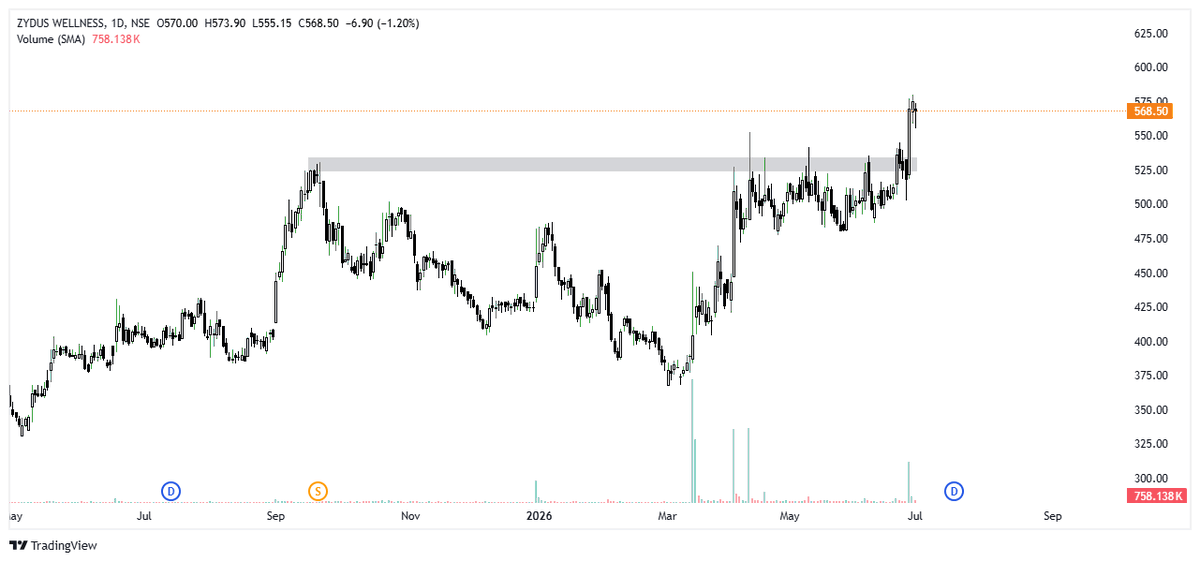
15 STOCKS NEAR BREAKOUT LEVELS TO STUDY PRICE ACTION & TRACK 🔥🔥🔥
The names and charts of all the stocks are mentioned in the thread below 🧵👇
▪ The charts shared are on Daily as well as Weekly time frames. Some setups are on the Daily chart, while others are on the Weekly chart.
DISCLAIMER
The stocks shared are for educational, learning, research, and tracking purposes only. They are not buy or sell recommendations. Please do your own research before making any investment decisions.
Second order thinking, in one example.
Q1: Who wins from rising AI demand? Nvidia, Samsung, SK Hynix, Micron. Obvious.
Q2: What happens next? Memory makers shift capacity to AI. DRAM and NAND for laptops nearly double in price. New devices get expensive.
So buyers move to refurbished. GNG Electronics, India's largest refurbisher, benefits.
P.S. Its a 12 pager report, sharing the first page for reference.
Timepass talk on Sunday
1. The Next Big AI/EV Bottleneck: Power Distribution
The Current Challenge (Legacy Tech): Traditional power architectures in data centers (48V/54V) and electric vehicles (400V) are hitting a hard limit of physics due to extreme power hunger. In EVs, this legacy architecture limits charging speeds and leaves drivers stuck at stations for 45+ minutes; in AI data centers, feeding dense, multi-megawatt GPU clusters at low voltages forces electric current to skyrocket to unsustainable levels.
The Physical Bottleneck (The Copper Problem): Trying to push massive amounts of power through low-voltage systems requires impossibly thick, heavy copper wiring to handle the electric current (I=P/V). In a vehicle, this adds immense weight that hurts range, while inside an NVIDIA Blackwell or upcoming Vera Rubin server rack, the massive copper bars (busbars) required would be so thick they would physically block crucial cooling airflow and crowd out the actual processors.
The 800V Solution (Why the Jump?): Stepping up to a generic 800V standard solves this bottleneck by turning the mathematical equation on its head: doubling or multiplying the voltage causes the required current to plummet. This allows both industries to shrink cable thickness and weight by roughly 45% to 60%, drastically slashing energy lost as pure heat ("I-squared-R" losses) and freeing up critical physical space.
Real-World Impact (EVs vs. Data Centers): The practical results of this shift redefine performance boundaries for both sectors. For an EV driver (e.g., Hyundai Ioniq 5 or Porsche Taycan), 800V enables ultra-fast charging from 10% to 80% in under 18 minutes; for an AI data center operator utilizing an NVIDIA-Vertiv "Kyber" architecture, it enables dense 100kW+ racks to run continuously with highly streamlined, efficient power conversions directly down to the chip.
The Future Outlook (A High-Voltage World): As 800V transitions from a premium feature into an open, cross-industry baseline, it creates a massive gold rush for power electronic suppliers (like Texas Instruments, STMicroelectronics, and Vishay) who can sell the exact same advanced Silicon Carbide (SiC) and Gallium Nitride (GaN) chips to both automakers and server manufacturers. Over the coming years, this high-voltage ecosystem will unlock a world where megawatt-scale AI computing factories and city-wide ultra-fast EV charging grids pull from the exact same underlying power playbook.
2. Anup Engineering
Incorporated in 1962, Anup is engaged in design and fabrication of process equipment which mainly includes heat exchangers, pressure vessels, centrifuges, columns/ towers and small reactors that find application in refineries, petrochemicals, chemicals, pharmaceuticals, fertilizers and other allied industries.
This is a well-known story, and many of you may have owned this stock in your portfolio a few years ago.
Over the last couple of years, however, the company has put in significant effort to diversify into newer product lines and business verticals. More importantly, those initiatives are now beginning to show encouraging results.
If they can scale these verticals well, Anup could be an interesting player in the years to come!
Technical Services: Has executed ~10 POs worth ₹4.5 Cr at a high ~40% EBITDA margin; it targets ₹200 Cr in 3 years, though its small current base limits FY27 expected contributions to <₹20-25 Cr.
Nuclear (Kaiga-5/6, NPCIL): The first order is currently under execution (margin undisclosed), representing a strategic entry point into the SMR and conventional nuclear sector.
Thermal Power (NTPC EPC): The company has bagged its first order (margin undisclosed), which is part of a larger 14 GW Indian thermal power pipeline highlighted by management.
Clean Energy Storage (European tech co.): Secured both initial and repeat orders with undisclosed margins; management highlighted this vertical's strong potential for generating recurring revenue.
Skid Packages (ADNOC, Middle East): Currently building its track record with a first order worth ₹30 Cr on a 12-month cycle; management expects to secure 4–5 more orders per year once delivered.
Air-Cooled Heat Exchangers: Secured its first export and air heater orders this week; it is a volume-driven, short-cycle business with a ~15% EBITDA, making it margin-dilutive compared to legacy levels (~21%+).
3. Samvardhana Motherson International
Vision 2030: The company reported FY26 gross revenue of $22.9 billion and has outlined an aspiration to reach $108 billion by 2030. Achieving this target will likely require a meaningful contribution from mergers and acquisitions (M&A), in addition to organic growth.
Consumer Electronics Scale-up: This segment achieved an extraordinary 7.5x revenue growth YoY in FY26, hitting EBITDA profitability. The company reached its targeted annualized production run-rate of 14 to 16 million units in Q4FY26 across its first two facilities, and its massive third facility (GF3) is on track for Q3FY27 commissioning to significantly multiply capacity.
Aerospace Momentum: Despite contributing only ~2% to the company's consolidated FY26 revenue, this segment accounts for nearly 20% of the order book. The aerospace division delivered a robust 40% YoY revenue growth, marking a ~10x top-line expansion over the last three years. Backed by two new upcoming facilities in India, its order book jumped more than 20% YoY to USD 1.6 billion, expanding into high-value metallic parts, sub-assemblies, and wire harnesses for business jets and rotary-wing programs.
Precision Metals and Modules: Driven heavily by the integration of Atsumitec and a core strategic focus on precision machining, this segment saw a stellar 2.7x revenue increase, rising from Rs. 1,942 crores in FY25 to Rs. 5,269 crores in FY26. The segment serves as a cross-industry growth anchor for automotive, aerospace, and future consumer electronics applications.
Targeted Emerging Market Expansions: Emerging markets remain the focal point of the company's organic growth strategy. Motherson currently has 16 greenfield and capacity expansion facilities at various stages of completion globally, spanning across wiring harnesses, vision systems, polymers, logistics, and lighting, with all 16 strategically located in emerging economies.
Strategic M&As and Joint Ventures: The company is aggressively scaling through highly integrated acquisitions and partnerships. Key near-term pipelines include the proposed acquisition of Nexans' automotive harness business and Yutaka Giken (deepening its relationship with Honda), alongside a new JV with Hellmann to elevate its logistics division from 3PL to high-margin 4PL capabilities.
Robust Order Book and Agnostic Program Launches: Motherson maintains an all-time high booked business of USD 96 billion. Within its core automotive divisions, growth is cushioned by being powertrain-agnostic, coupled with a massive upcoming launch pipeline, for instance, the Integrated Assemblies division expects program launches in FY27 to be 2x the volume of FY26.
4. Cemindia Projects
Cemindia Projects (formerly ITD Cementation) is a well-established Indian engineering and construction company with a rich legacy dating back to 1931. Now part of the Adani Group, the company is well-positioned to leverage the group's vast infrastructure ecosystem and project pipeline.
Record-Breaking Revenue: Cemindia crossed the ₹10,000 crore revenue milestone for the first time in its history, achieving total operating income of ₹10,061 crore in FY26 (a 9% YoY growth).
Explosive Order Book Expansion: The company experienced a phenomenal surge in order inflows, securing ₹19,000 crores in jobs throughout the year (compared to its historic baseline of ~₹7,000 crores), driving its total work-in-hand position to a record ₹29,000 crores. Aims to secure new orders worth ₹25,000 crore in FY27
Robust Profitability and Margins: Full-year FY26 EBITDA reached ₹1,199 crore (up 28% YoY) with an EBITDA margin of 11.9%, while Profit After Tax (PAT) expanded 60% YoY to ₹598 crore.
Expanding Data Center & Underground Footprint: Driven by strategic alignment with its promoter group, Cemindia successfully created a new dedicated data center division, already securing ~₹3,000 crores in project orders, while continuing dominance in high-barrier underground metro systems across Delhi, Pune, and Chennai.
Strong Future Pipelines and Revenue Guidance: Backed by an active project pipeline of ₹70,000 crores across roads, highways, and large-diameter tunnels, the management has guided for an aggressive top-line growth of 20% to 25% for the next few fiscal years.
5. Sheela Foam
Sheela Foam is India’s leading manufacturer of mattresses and foam-based home comfort products, best known for its flagship household brand Sleepwell.
To cement its leadership and create a pan-India footprint, the company executed a massive corporate consolidation by acquiring its primary rival, Kurlon Enterprise Limited, for ₹2,035–2,150 crore, integrating Kurlon's dominant South and East India network with Sleepwell's strong North and West presence. Alongside this, Sheela Foam diversified into the branded digital furniture space by acquiring a major stake in the online furniture rental platform, Furlenco.
Complementary and Adjacent Product Scaling: The company will aggressively expand into related home comfort categories, specifically establishing the Pillow segment as a standalone, dedicated category to scale up business beyond treating them as promotional freebies.
Deep Penetration in High-Growth Channels: Management is placing continued heavy focus on the fast-growing E-commerce and U2O (Unorganized to Organized / Small Town India) segments to actively capture market share from the traditional unorganized mattress sector.
Integrated Store Expansion: Following encouraging responses from its initial multi-brand format, the company plans to scale its integrated omnichannel retail footprint, which showcases Furlenco, Sleepwell, and Kurlon offerings under one roof, from over 40 stores to cross 100 integrated stores during the current year.
Synergy Realization from New Machinery: The realization of an incremental ₹40 crores in pending synergy benefits is expected to materialize as advanced, imported malleable fiber machinery finishes installation and scales up subsequent production.
Capacity Debottlenecking and Retail Capex: To support anticipated higher volume growth, the company has planned a capital expenditure budget of ₹125 crores to ₹150 crores earmarked for factory debottlenecking, maintenance, and the roll-out of new retail storefronts.
Mature Market Diversification: Internationally, Sheela Foam operates mature, stable foam manufacturing hubs through two key overseas subsidiaries: Joyce Foam Pty Ltd in Australia (where it holds a dominant ~40% market share in the branded mattress market with 5 facilities) and Interplasp S.L.U. in Spain, providing the group with solid geographic diversification across Europe and Oceania.
Balance Sheet Improving: Net debt was reduced by ₹156 crores during FY26, reflecting strong cash generation. The company plans to repay its Indian debt of ₹300 crores within the next 1.5 years using internal cash flows. The board recommended a dividend of 20%, the first time since the company's listing
Furlenco IPO Decision: With the furniture rental subsidiary, Furlenco, expanding towards a targeted ₹500 crore revenue run-rate, the group plans to evaluate and finalize its decision on a potential Initial Public Offering (IPO) timeline within 3 to 4 months. They posted ₹370 crores (a >60% YoY growth) and a PAT of ₹60 crores in FY26.
That's all for this edition. Have a great Sunday!
Disclaimer: None or buy or sell recommendations. This publicly available information is shared for learning and education purposes.
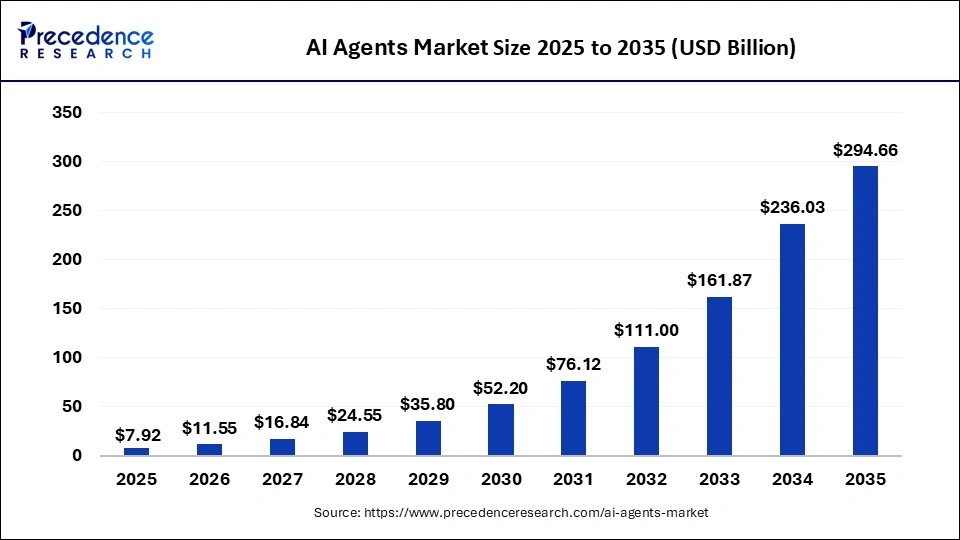
The agentic AI market is exploding.
New research projects the AI agent market will grow from just $8 billion today to nearly $300 billion annually by 2035.
But, as AI agents become more powerful, one major limitation remains: Memory.
Today's AI agents can reason, code, and write, but they still struggle to remember information across sessions and understand relationships between data.
A new category of infrastructure companies is now emerging to solve this problem.
The next race in AI may not just be building smarter models.
It may also be building AI that remembers.
Growing for a year is easy but growing for 10 years is rare. Here are 25 quality companies that have consistently delivered VERY STRONG sales & profit growth over the last decade !
Unimech and Engineering both look like aerospace precision manufacturing plays.
But under the hood, they are very different businesses.
Revenue mix, order book strength, customer stickiness, margins, capex cycle, and growth visibility - everything tells a different story.
Let’s break it down 👇