𝟵𝟱% 𝗼𝗳 𝘁𝗵𝗲 𝗽𝗮𝗻𝗲𝗲𝗿 𝗜𝗻𝗱𝗶𝗮 𝗲𝗮𝘁𝘀 𝗵𝗮𝘀 𝗻𝗼 𝗯𝗿𝗮𝗻𝗱 𝗼𝗻 𝗶𝘁. That’s a ₹𝟵𝟳,𝟰𝟬𝟬 𝗰𝗿𝗼𝗿𝗲 𝗺𝗮𝗿𝗸𝗲𝘁.
India eats ₹𝟮𝟲𝟳 𝗰𝗿𝗼𝗿𝗲 𝗼𝗳 𝗽𝗮𝗻𝗲𝗲𝗿 every single day. All the packaged paneer sold in a full year adds up to just 𝟭𝟴 𝗱𝗮𝘆𝘀 of that.
The other 𝟯𝟰𝟳 𝗱𝗮𝘆𝘀 𝗰𝗼𝗺𝗲 𝗹𝗼𝗼𝘀𝗲, from the local dairy.
Khoa is even more extreme.
India buys ₹𝟯𝟭𝟰 𝗰𝗿 of it a day, and a full year of branded khoa covers only 𝟴 𝗱𝗮𝘆𝘀.
Now look at the other end of the fridge.
Yogurt and whey are 𝟭𝟬𝟬% 𝗯𝗿𝗮𝗻𝗱𝗲𝗱. But India spends 𝟲𝘅 𝗺𝗼𝗿𝗲 𝗼𝗻 𝘄𝗵𝗲𝘆 𝗽𝗿𝗼𝘁𝗲𝗶𝗻 than on yogurt: ₹𝟵,𝟱𝟭𝟬 𝗰𝗿 𝘃𝘀 ₹𝟭,𝟱𝟮𝟬 𝗰𝗿. The gym beat the breakfast bowl.
𝗪𝗵𝗮𝘁 𝘁𝗵𝗲 𝗮𝘃𝗲𝗿𝗮𝗴𝗲 𝗜𝗻𝗱𝗶𝗮𝗻 𝘀𝗽𝗲𝗻𝗱𝘀 𝗶𝗻 𝗮 𝘆𝗲𝗮𝗿:
₹𝟳𝟴𝟱 on khoa
₹𝟲𝟲𝟳 on paneer
₹𝟲𝟱 on whey
₹𝟭𝟬 on yogurt
𝗧𝗵𝗲 𝗯𝗶𝗴𝗴𝗲𝘀𝘁 𝗺𝗮𝗿𝗸𝗲𝘁𝘀 𝗵𝗮𝘃𝗲 𝗻𝗼 𝗯𝗿𝗮𝗻𝗱𝘀. 𝗧𝗵𝗲 𝗳𝘂𝗹𝗹𝘆 𝗯𝗿𝗮𝗻𝗱𝗲𝗱 𝗼𝗻𝗲𝘀 𝗮𝗿𝗲 𝘀𝘁𝗶𝗹𝗹 𝘀𝗺𝗮𝗹𝗹.
𝗧𝗵𝗲 𝗽𝗿𝗶𝘇𝗲 𝗶𝘀 𝘁𝗵𝗲 𝗺𝗮𝗿𝗴𝗶𝗻.
On every ₹100 of liquid milk, a dairy keeps about ₹𝟳. On ₹100 of whey protein, about ₹𝟮𝟮.
On ₹100 of ice cream, about ₹𝟯𝟱.
𝗧𝗵𝗲 𝗺𝗶𝗹𝗸 𝗶𝘀 𝘁𝗵𝗲 𝘀𝗮𝗺𝗲.
Branded paneer is growing 𝟮𝟬% 𝗮 𝘆𝗲𝗮𝗿. Branded khoa is growing 𝟮𝟲%, 𝘁𝗵𝗲 𝗳𝗮𝘀𝘁𝗲𝘀𝘁 𝗶𝗻 𝗱𝗮𝗶𝗿𝘆.
Yogurt is growing 𝟭𝟳% and whey 𝟭𝟱%.
Which milk product or dairy brand has caught your eye lately, or which one do you think is doing well ?
Source : JM Financial
No Buy/Sell Recommendations
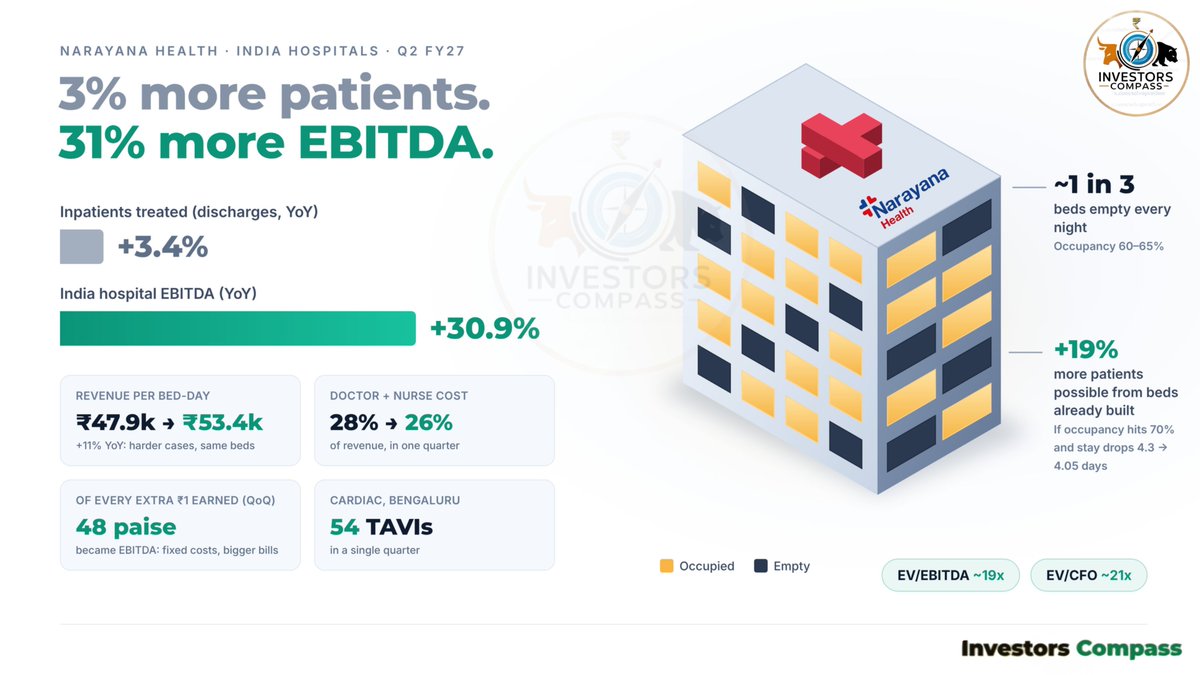
Every night, more than 1 in 3 beds in Narayana Hrudayalaya's India hospitals sits empty.
- Yet India EBITDA grew 31% in a year.
- Inpatients treated? Up just 3%.
Here's how.
The growth didn't come from more patients. It came from harder ones. Revenue per inpatient rose 9% and ICU bed-days rose 6%.
Its Bangalore heart institute did 54 TAVIs (replacing a damaged heart valve through a thin tube from the leg, without opening the chest) in a single quarter.
A TAVI and a routine admission use the same bed and roughly the same doctors and nurses.
The bill is not the same.
So costs barely moved. Doctor and nurse cost fell from 28% to 26% of revenue in one quarter, and 48 paise of every extra rupee turned into EBITDA.
Now go back to those empty beds.
Occupancy is 60-65%. Patients stay 4.3 days on average, and the target is 4.0-4.1. Close that gap and the same hospitals treat ~19% more patients, without building anything new.
Compare that with building fresh. Narayana's new 350 bed hospital in Kolkata will cost ₹900 Cr and open only in FY29.
The extra ~19% needs no new money. It's sitting in hospitals Narayana has already built and paid for.
Today Narayana Hrudayalaya trades at ~19x EV/EBITDA and ~21x EV/CFO.
NH today's share price pays for what the full beds earn. The extra patients those empty beds could bring in aren't in the price yet.
But there may be a reason. Narayana's UK hospitals make just 7 paise of operating profit on every ₹1 of revenue, and they carry ₹1,711 Cr of debt.
So which is it: is the market missing the empty beds, or is it worried about the UK ?
No Buy/Sell Recommendation
#StocksInFocus #StocksToWatch #NH
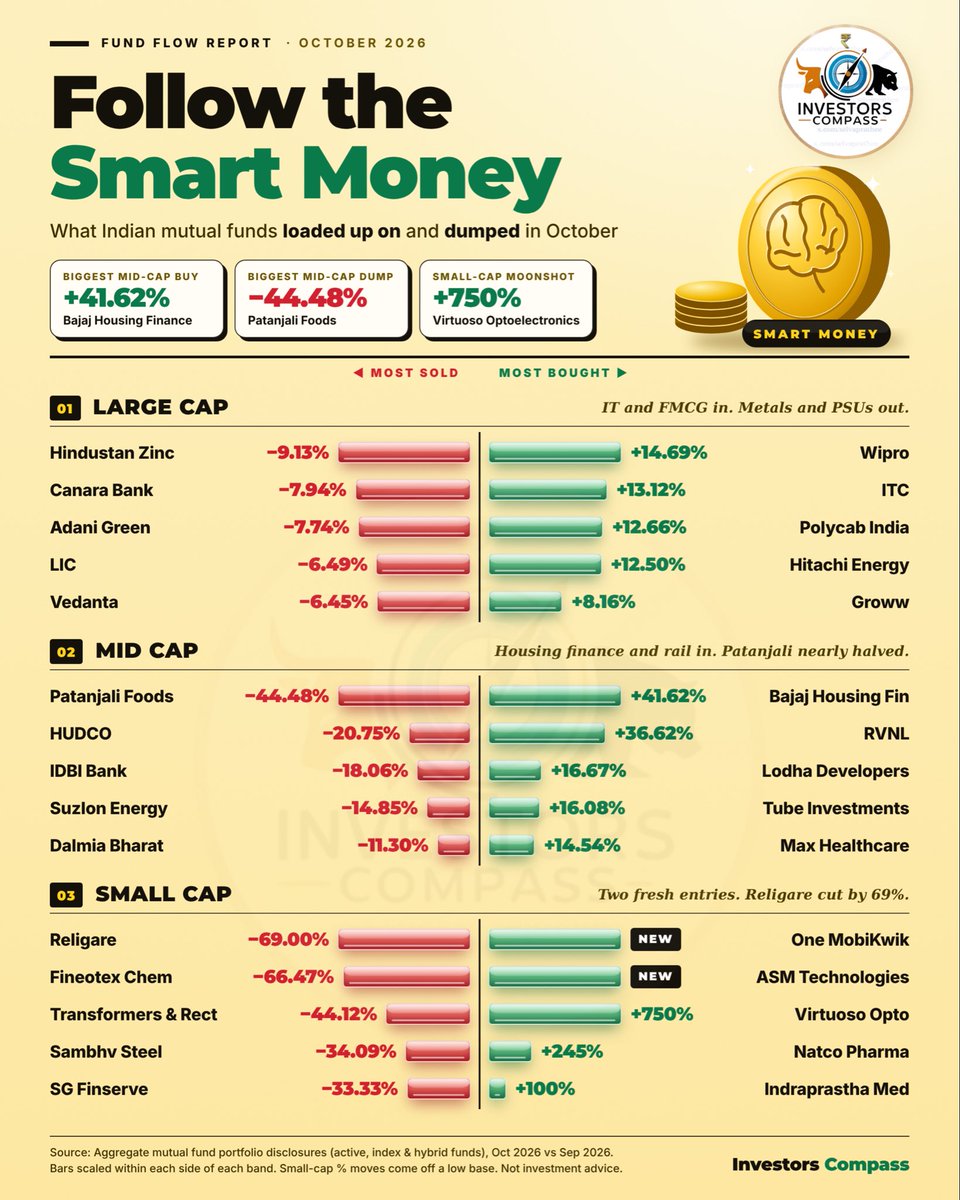
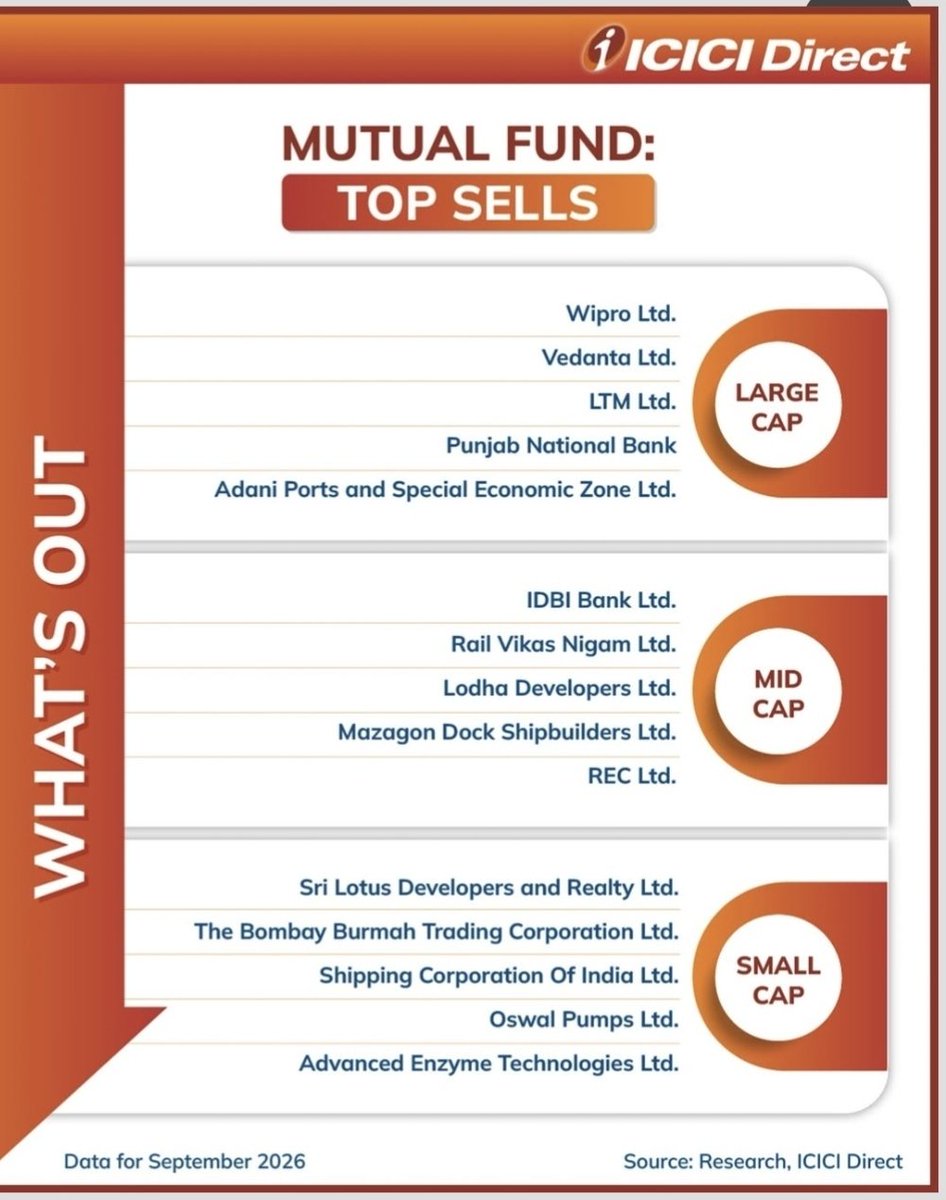
Small cap funds made 𝟬.𝟳% in October. Large cap funds made 𝟵.𝟴%.
Fund managers were moving money too. Here’s what they bought and dumped.
𝗧𝗵𝗲𝘆 𝘀𝘄𝗮𝗽𝗽𝗲𝗱 𝗺𝗲𝘁𝗮𝗹𝘀 𝗳𝗼𝗿 𝗰𝗮𝘀𝗵 𝗳𝗹𝗼𝘄𝘀.
𝗪𝗶𝗽𝗿𝗼 +𝟭𝟰.𝟳%, 𝗜𝗧𝗖 +𝟭𝟯.𝟭% in.
Hindustan Zinc -9.1%, Vedanta -6.5% out.
𝗧𝗵𝗲𝘆 𝘀𝘁𝗮𝘆𝗲𝗱 𝗶𝗻 𝗽𝗼𝘄𝗲𝗿, 𝗯𝘂𝘁 𝗺𝗼𝘃𝗲𝗱 𝘁𝗼 𝘁𝗵𝗲 𝗴𝗿𝗶𝗱. 𝗣𝗼𝗹𝘆𝗰𝗮𝗯 +𝟭𝟮.𝟳%, 𝗛𝗶𝘁𝗮𝗰𝗵𝗶 𝗘𝗻𝗲𝗿𝗴𝘆 +𝟭𝟮.𝟱% in. Suzlon -14.9%, Adani Green -7.7% out.
𝗧𝗵𝗲𝘆 𝗽𝗶𝗰𝗸𝗲𝗱 𝗮 𝗽𝗿𝗶𝘃𝗮𝘁𝗲 𝗵𝗼𝘂𝘀𝗶𝗻𝗴 𝗹𝗲𝗻𝗱𝗲𝗿 𝗼𝘃𝗲𝗿 𝗮 𝗴𝗼𝘃𝗲𝗿𝗻𝗺𝗲𝗻𝘁 𝗼𝗻𝗲.
𝗕𝗮𝗷𝗮𝗷 𝗛𝗼𝘂𝘀𝗶𝗻𝗴 𝗙𝗶𝗻𝗮𝗻𝗰𝗲 +𝟰𝟭.𝟲%.
HUDCO -20.8%.
And they cut 𝗣𝗮𝘁𝗮𝗻𝗷𝗮𝗹𝗶 𝗙𝗼𝗼𝗱𝘀, an edible oil business at heart, by 𝟰𝟰.𝟱%.
𝗡𝗼𝘄 𝗹𝗼𝗼𝗸 𝗮𝘁 𝘁𝗵𝗲 𝗽𝗮𝘁𝘁𝗲𝗿𝗻.
Every add is a business whose 𝗻𝗲𝘅𝘁 𝗳𝗲𝘄 𝗾𝘂𝗮𝗿𝘁𝗲𝗿𝘀 𝘆𝗼𝘂 𝗰𝗮𝗻 𝗿𝗼𝘂𝗴𝗵𝗹𝘆 𝗲𝘀𝘁𝗶𝗺𝗮𝘁𝗲.
Every cut depends on something 𝗼𝘂𝘁𝘀𝗶𝗱𝗲 𝘁𝗵𝗲 𝗰𝗼𝗺𝗽𝗮𝗻𝘆’𝘀 𝗰𝗼𝗻𝘁𝗿𝗼𝗹: a metal price, an oil price, a project timeline, a government decision.
𝗥𝗲𝘁𝗮𝗶𝗹 𝗰𝗵𝗮𝘀𝗲𝘀 𝘄𝗵𝗮𝘁’𝘀 𝗺𝗼𝘃𝗶𝗻𝗴. 𝗙𝘂𝗻𝗱𝘀 𝗽𝗮𝘆 𝗳𝗼𝗿 𝘄𝗵𝗮𝘁 𝘁𝗵𝗲𝘆 𝗰𝗮𝗻 𝗳𝗼𝗿𝗲𝗰𝗮𝘀𝘁.
(% = change in mutual fund holdings vs September)
No Buy/Sell Recommendation
Kaynes and Syrma faced the same chip shortage this quarter.
- One paid 37% of its operating profit as interest. The other paid 8.5%.
- The difference wasn't orders. It was who paid for the chips.
Lead times for certain electronic components have stretched to 36-42 weeks, so every EMS company is hoarding parts. Someone has to finance that stockpile: your suppliers, or your bank.
Supplier credit for every ₹100 of chips on the shelf:
- Dixon ₹277
- Syrma ₹159
- Avalon ₹56
- Kaynes ₹52
A year ago, Kaynes was at ₹97. Its supplier credit shrank. The banks stepped in.
And banks charge.
Interest as a share of operating profit:
- Kaynes 8.2% → 37.4%
- Syrma 12.3% → 8.5%
Now look at Kaynes's balance sheet over one year:
- Cash ₹1,050 cr → ₹107 cr
- Borrowings ₹1,130 cr → ₹1,810 cr
- Interest ₹13 cr → ₹39 cr a quarter
- Working capital 87 → 169 days
Pre-tax profit fell ₹83 cr. Interest alone took ₹25 cr of it.
Syrma did the reverse. It added ₹517 cr of chips in six months, and its suppliers added ₹545 cr of credit. It ended with net cash and positive cash flow.
Same shortage. Same business. Opposite outcome.
In a shortage, the moat isn't the order book. It's who's willing to fund your inventory.
Check payables before you check orders.
No Buy/Sell Recommendations
#StocksInFocus #StocksToWatch #Kaynes #Syrma
𝗧𝗵𝗮𝘁 𝗮𝗻𝘁𝗶-𝗶𝘁𝗰𝗵 𝗰𝗿𝗲𝗮𝗺 𝗶𝗻 𝘆𝗼𝘂𝗿 𝗰𝗮𝗯𝗶𝗻𝗲𝘁 𝗽𝗿𝗼𝗯𝗮𝗯𝗹𝘆 𝘀𝘁𝗮𝗿𝘁𝗲𝗱 𝗮𝘀 𝘀𝗼𝘆𝗯𝗲𝗮𝗻 𝗼𝗶𝗹.
The active ingredient, hydrocortisone, begins as sterols left over from refining soybean oil. They go into a fermenter, microbes turn them into steroid building blocks, and chemistry finishes the API.
Few companies can run both the 𝗯𝗶𝗼𝗹𝗼𝗴𝘆 and the 𝗰𝗵𝗲𝗺𝗶𝘀𝘁𝗿𝘆 at GMP scale, with US and EU regulators signing off.
𝗦𝘆𝗺𝗯𝗶𝗼𝘁𝗲𝗰 spent 20 years building that chain. It now has a 𝟱𝟳% 𝗮𝘃𝗲𝗿𝗮𝗴𝗲 𝗴𝗹𝗼𝗯𝗮𝗹 𝘃𝗼𝗹𝘂𝗺𝗲 𝘀𝗵𝗮𝗿𝗲 in its top 5 steroid APIs. All of its top 5 customers have stayed 𝟭𝟬+ 𝘆𝗲𝗮𝗿𝘀, because switching an API supplier in the US or EU means 𝟯-𝟱 𝘆𝗲𝗮𝗿𝘀 of refiling and revalidation.
Q2: 𝗔𝗣𝗜 𝗿𝗲𝘃𝗲𝗻𝘂𝗲 +𝟭𝟲%, 𝗔𝗣𝗜 𝗘𝗕𝗜𝗧𝗗𝗔 +𝟮𝟭% 𝘁𝗼 ₹𝟳𝟭 𝗖𝗿, 𝗰𝗼𝗿𝗲 𝗥𝗢𝗖𝗘 𝟯𝟬%.
𝗕𝘂𝘁 𝘁𝗵𝗲 𝗿𝗲𝗮𝗹 𝗮𝘀𝘀𝗲𝘁 𝗶𝘀𝗻’𝘁 𝘁𝗵𝗲 𝘀𝘁𝗲𝗿𝗼𝗶𝗱 𝗯𝘂𝘀𝗶𝗻𝗲𝘀𝘀. 𝗜𝘁’𝘀 𝘁𝗵𝗲 𝗳𝗲𝗿𝗺𝗲𝗻𝘁𝗲𝗿𝘀.
The same skill is now being sold to others: 𝗶𝗻𝘀𝘂𝗹𝗶𝗻, 𝘃𝗲𝗴𝗮𝗻 𝘃𝗶𝘁𝗮𝗺𝗶𝗻 𝗗𝟯 and 𝗮𝗹𝘁-𝗽𝗿𝗼𝘁𝗲𝗶𝗻𝘀 for foreign clients on 𝟭𝟬 𝘆𝗲𝗮𝗿 𝘁𝗮𝗸𝗲-𝗼𝗿-𝗽𝗮𝘆 𝗰𝗼𝗻𝘁𝗿𝗮𝗰𝘁𝘀.
The bill shows up first. In Q2 the new businesses cost ₹𝟯𝟭 𝗖𝗿 𝗼𝗳 𝗼𝗽𝗲𝘅 plus ₹𝟭𝟮 𝗖𝗿 𝗼𝗳 𝗱𝗲𝗽𝗿𝗲𝗰𝗶𝗮𝘁𝗶𝗼𝗻, with no commercial revenue yet. A ₹𝟱𝟯 𝗖𝗿 𝗺𝗶𝗹𝗲𝘀𝘁𝗼𝗻𝗲 covered it. Without it, 𝗘𝗕𝗜𝗧𝗗𝗔 𝗳𝗲𝗹𝗹 𝟮𝟮%, from ₹𝟱𝟭 𝗖𝗿 𝘁𝗼 ₹𝟰𝟬 𝗖𝗿.
At 𝟴𝟯𝘅 𝗣/𝗘, you’re not buying a steroid company. 𝗬𝗼𝘂’𝗿𝗲 𝗯𝘂𝘆𝗶𝗻𝗴 𝗮 𝗯𝗲𝘁 𝘁𝗵𝗮𝘁 𝗮 𝗳𝗲𝗿𝗺𝗲𝗻𝘁𝗲𝗿 𝗶𝘀 𝗮 𝗳𝗲𝗿𝗺𝗲𝗻𝘁𝗲𝗿.
𝗪𝗵𝗲𝗻 𝗮 𝗰𝗼𝗺𝗽𝗮𝗻𝘆 𝗲𝘅𝗽𝗮𝗻𝗱𝘀, 𝗮𝘀𝗸 𝗼𝗻𝗲 𝗾𝘂𝗲𝘀𝘁𝗶𝗼𝗻: 𝗶𝘀 𝘁𝗵𝗲 𝗻𝗲𝘄 𝗯𝘂𝘀𝗶𝗻𝗲𝘀𝘀 𝘂𝘀𝗶𝗻𝗴 𝘁𝗵𝗲 𝗼𝗹𝗱 𝗺𝗼𝗮𝘁, 𝗼𝗿 𝗷𝘂𝘀𝘁 𝘁𝗵𝗲 𝗼𝗹𝗱 𝗰𝗮𝘀𝗵?
No Buy/Sell Recommendation
I was down with 𝗰𝗼𝗹𝗱 𝗮𝗻𝗱 𝗳𝗲𝘃𝗲𝗿 𝗳𝗼𝗿 𝘁𝘄𝗼 𝘄𝗲𝗲𝗸𝘀. Before Covid, a cold was gone for me in 𝟱 𝘁𝗼 𝟳 𝗱𝗮𝘆𝘀.
I thought it was just for few, 𝗜𝘁 𝗶𝘀𝗻’𝘁.
ICMR’s serosurvey found 𝟲𝟳.𝟲% 𝗼𝗳 𝗜𝗻𝗱𝗶𝗮𝗻𝘀 had Covid antibodies by mid-2021. That’s 𝟵𝟬 𝗰𝗿+ 𝗽𝗲𝗼𝗽𝗹𝗲, against 𝟰.𝟱 𝗰𝗿 on record. And a Lancet study found people who had Covid got 𝟰𝟲% 𝗺𝗼𝗿𝗲 𝗿𝗲𝘀𝗽𝗶𝗿𝗮𝘁𝗼𝗿𝘆 𝗶𝗻𝗳𝗲𝗰𝘁𝗶𝗼𝗻𝘀 in the year after.
So more people coughing for longer should be great for pharma. 𝗜𝘁 𝗶𝘀𝗻’𝘁 𝘁𝗵𝗮𝘁 𝘀𝗶𝗺𝗽𝗹𝗲.
Since June, 𝗰𝗼𝘂𝗴𝗵 𝘀𝘆𝗿𝘂𝗽𝘀 𝗻𝗲𝗲𝗱 𝗮 𝗽𝗿𝗲𝘀𝗰𝗿𝗶𝗽𝘁𝗶𝗼𝗻. Kotak expects the ₹𝟱,𝟳𝟬𝟬 𝗰𝗿 𝗰𝗼𝘂𝗴𝗵 𝗮𝗻𝗱 𝗰𝗼𝗹𝗱 𝗹𝗶𝗾𝘂𝗶𝗱 𝗺𝗮𝗿𝗸𝗲𝘁 to shrink and consolidate into the 𝘁𝗼𝗽 𝗯𝗿𝗮𝗻𝗱𝘀. Glenmark’s 𝗔𝘀𝗰𝗼𝗿𝗶𝗹 is the biggest of them.
Antibiotics are no shelter either. Alembic’s 𝗔𝘇𝗶𝘁𝗵𝗿𝗮𝗹, the biggest azithromycin brand, keeps 𝗹𝗼𝘀𝗶𝗻𝗴 𝘃𝗼𝗹𝘂𝗺𝗲, and 𝗼𝘃𝗲𝗿 𝟯𝟬% of a common pneumonia bacterium here already 𝗿𝗲𝘀𝗶𝘀𝘁𝘀 𝗮𝘇𝗶𝘁𝗵𝗿𝗼𝗺𝘆𝗰𝗶𝗻.
𝗔 𝗰𝗼𝘂𝗴𝗵 𝗹𝗮𝘀𝘁𝘀 𝘁𝘄𝗼 𝘄𝗲𝗲𝗸𝘀. 𝗔𝘀𝘁𝗵𝗺𝗮 𝗹𝗮𝘀𝘁𝘀 𝗮 𝗹𝗶𝗳𝗲𝘁𝗶𝗺𝗲.
When illness rises, 𝗼𝘄𝗻 𝘁𝗵𝗲 𝗿𝗲𝗽𝗲𝗮𝘁 𝗽𝗿𝗲𝘀𝗰𝗿𝗶𝗽𝘁𝗶𝗼𝗻, 𝗻𝗼𝘁 𝘁𝗵𝗲 𝘀𝗲𝗮𝘀𝗼𝗻𝗮𝗹 𝗼𝗻𝗲.
Not a Buy/Sell reco
𝗛𝗼𝘄 𝗹𝗼𝗻𝗴 𝗱𝗼𝗲𝘀 𝘆𝗼𝘂𝗿 𝗰𝗼𝗹𝗱 𝗹𝗮𝘀𝘁 𝗻𝗼𝘄 ?
Piramal Pharma | Business Decoded #4
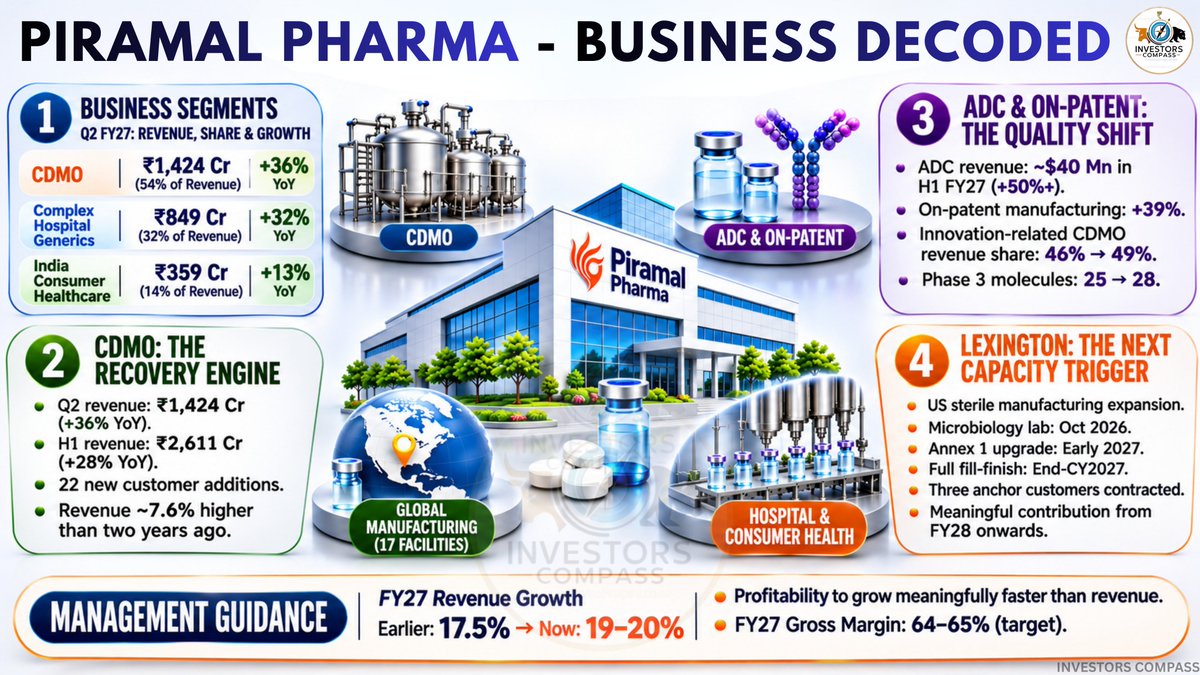
For 𝟭𝟬 𝘆𝗲𝗮𝗿𝘀, the market treated Piramal’s US plants as a mistake. 𝗧𝗵𝗶𝘀 𝗾𝘂𝗮𝗿𝘁𝗲𝗿 𝘁𝗵𝗲𝘆 𝘀𝘁𝗮𝗿𝘁𝗲𝗱 𝗽𝗮𝘆𝗶𝗻𝗴 𝗯𝗮𝗰𝗸.
Between 2015 and 2020 Piramal bought small plants in the US: Lexington for sterile injectables, Riverview for high potency drugs, Sellersville for tablets. Each was bought cheap, and each was 𝘁𝗼𝗼 𝘀𝗺𝗮𝗹𝗹 𝘁𝗼 𝗰𝗼𝘃𝗲𝗿 𝗶𝘁𝘀 𝗼𝘄𝗻 𝗳𝗶𝘅𝗲𝗱 𝗰𝗼𝘀𝘁𝘀.
Then biotech funding dried up. Empty plants plus fixed costs meant losses. FY26 ended with a 𝗻𝗲𝘁 𝗹𝗼𝘀𝘀 𝗼𝗳 ₹𝟯𝟮𝟲 𝗰𝗿𝗼𝗿𝗲.
On the Q2 call the CEO said something rare. Asked if he would rebuild the same footprint, he said the lesson was “𝗳𝗲𝘄𝗲𝗿 𝗹𝗮𝗿𝗴𝗲𝗿” 𝘀𝗶𝘁𝗲𝘀. Small plants take years to reach scale, and a downturn stretches that time.
But look at what happened next.
𝗢𝗿𝗱𝗲𝗿𝘀 𝗶𝗻 𝗡𝗼𝗿𝘁𝗵 𝗔𝗺𝗲𝗿𝗶𝗰𝗮 𝘄𝗲𝗻𝘁 𝘂𝗽, 𝗿𝗲𝘃𝗲𝗻𝘂𝗲 𝘄𝗲𝗻𝘁 𝘂𝗽, 𝗮𝗻𝗱 𝗳𝗶𝘅𝗲𝗱 𝗰𝗼𝘀𝘁𝘀 𝗱𝗶𝗱 𝗻𝗼𝘁.
Revenue grew by about ₹𝟱𝟳𝟬 𝗰𝗿𝗼𝗿𝗲 𝗬𝗼𝗬 and EBITDA grew by about ₹𝟭𝟲𝟬 𝗰𝗿𝗼𝗿𝗲. Roughly 𝟮𝟴 𝗽𝗮𝗶𝘀𝗲 𝗼𝗳 𝗲𝘃𝗲𝗿𝘆 𝗻𝗲𝘄 𝗿𝘂𝗽𝗲𝗲 𝗯𝗲𝗰𝗮𝗺𝗲 𝗘𝗕𝗜𝗧𝗗𝗔.
It is like a gym that pays rent whether 10 or 100 people walk in. The first 50 members cover the rent. Everyone after that is profit.
One more thing sits in the background.
These US and UK subsidiaries carry about $𝟱𝟴𝟬 𝗺𝗶𝗹𝗹𝗶𝗼𝗻 𝗼𝗳 𝗽𝗮𝘀𝘁 𝗹𝗼𝘀𝘀𝗲𝘀. Once they turn profitable, those losses could cut the tax bill, subject to tax rules.
Today the company pays ₹𝟳𝟳 𝗰𝗿𝗼𝗿𝗲 𝗼𝗳 𝘁𝗮𝘅 𝗼𝗻 ₹𝟴𝟮 𝗰𝗿𝗼𝗿𝗲 𝗼𝗳 𝗽𝗿𝗼𝗳𝗶𝘁.
𝗧𝗵𝗲 𝗽𝗹𝗮𝗻𝘁𝘀 𝗻𝗼𝗯𝗼𝗱𝘆 𝘄𝗮𝗻𝘁𝗲𝗱 𝗮𝗿𝗲 𝗻𝗼𝘄 𝘁𝗵𝗲 𝗿𝗲𝗮𝘀𝗼𝗻 𝗽𝗿𝗼𝗳𝗶𝘁𝘀 𝗰𝗮𝗻 𝗴𝗿𝗼𝘄 𝗳𝗮𝘀𝘁𝗲𝗿 𝘁𝗵𝗮𝗻 𝘀𝗮𝗹𝗲𝘀.
No Buy/Sell recommendation
#StocksInFcous #StocksToWatch #ppl #pplpharma
Lumax Ind - revenue +33%, but EBITDA margin slipped from 9% to 8.2%.
The real gold in the concall was wallet share guidance in next 2 to 3 years:
- Maruti (head + tail lamps): 25-30% to 35-40%
- Honda 2W tail lamps: <20% to 50%
- Toyota front lighting: new business, to 15-20%
- 𝗩𝗪/𝗦𝗸𝗼𝗱𝗮 (tail lamps): 30% to 70%
Order book: ₹2,580 cr with ~60% expected to enter production in FY28.
𝗠𝗮𝗿𝗴𝗶𝗻 𝗴𝘂𝗶𝗱𝗮𝗻𝗰𝗲: Management expects 10.5-11% EBITDA margin in H2 FY27, aided by raw-material cost recoveries and operating leverage.
- Revenue growth here doesn't depend on only auto volumes.
- It’s also driven by wallet share gains with India's biggest OEMs, already in the order book.
No Buy/Sell Recommendation
#StocksInFocus #StocksToWatch
💍 Discover the top 5 Jewellery Stocks leading the market by FY26 revenue!
These companies are shining bright
1️⃣ Titan Company (Large-cap)
2️⃣ Kalyan Jewellers (Mid-cap)
3️⃣ Thangamayil Jewellery (Small-cap)
4️⃣ Sky Gold & Diamonds (Small-cap)
5️⃣ D.P. Abhushan (Small-cap)
Which one are you most bullish on?
🚫 No Recommendation.
𝗛𝗙𝗖𝗟 | 𝗠𝗗 𝗠𝗮𝗵𝗲𝗻𝗱𝗿𝗮 𝗡𝗮𝗵𝗮𝘁𝗮'𝘀 𝗧𝗩 𝗜𝗻𝘁𝗲𝗿𝘃𝗶𝗲𝘄 - 𝗞𝗲𝘆 𝗧𝗮𝗸𝗲𝗮𝘄𝗮𝘆𝘀
𝗙𝗬𝟮𝟳 𝗴𝗿𝗼𝘄𝘁𝗵 𝗼𝘂𝘁𝗹𝗼𝗼𝗸 𝘀𝗵𝗮𝗿𝗽𝗹𝘆 𝘂𝗽𝗴𝗿𝗮𝗱𝗲𝗱:
- Management initially expected 20% revenue growth but now forecasts 𝗮𝘁 𝗹𝗲𝗮𝘀𝘁 𝟴𝟬%, translating to approximately ₹9,000 Cr.
- The key reason is stronger than anticipated 𝗼𝗽𝘁𝗶𝗰𝗮𝗹 𝗳𝗶𝗯𝗿𝗲 𝗲𝘅𝗽𝗼𝗿𝘁 𝗱𝗲𝗺𝗮𝗻𝗱, driven primarily by global data centre expansion.
𝗖𝗮𝗻 𝗛𝗙𝗖𝗟 𝗰𝗿𝗼𝘀𝘀 ₹𝟭𝟬,𝟬𝟬𝟬 𝗖𝗿 𝗶𝗻 𝗙𝗬𝟮𝟳?
- Management did not rule it out but deliberately avoided committing to that number.
- 𝟵,𝟬𝟬𝟬 𝗖𝗿 𝗶𝘀 𝘁𝗵𝗲 𝗰𝘂𝗿𝗿𝗲𝗻𝘁 𝗳𝗼𝗿𝗲𝗰𝗮𝘀𝘁; ₹10,000 Cr is possible only if the present demand and execution momentum continues.
𝗗𝗲𝗳𝗲𝗻𝗰𝗲 𝗿𝗲𝘃𝗲𝗻𝘂𝗲 𝗰𝗼𝘂𝗹𝗱 𝘀𝗰𝗮𝗹𝗲 𝗻𝗲𝗮𝗿𝗹𝘆 𝟰𝘅:
- Management maintained its earlier 𝗙𝗬𝟮𝟳 𝗲𝘅𝗽𝗲𝗰𝘁𝗮𝘁𝗶𝗼𝗻 𝗼𝗳 ₹𝟱𝟬𝟬-𝟲𝟬𝟬 𝗖𝗿, despite the anchor questioning the pace of execution. - More importantly, management is forecasting 𝗮𝗿𝗼𝘂𝗻𝗱 ₹𝟮,𝟬𝟬𝟬 𝗖𝗿 𝗶𝗻 𝗙𝗬𝟮𝟴, implying a substantial acceleration in defence deliveries.
𝗙𝗬𝟮𝟴 𝗴𝗿𝗼𝘄𝘁𝗵 𝗺𝗮𝘆 𝗿𝗲𝗺𝗮𝗶𝗻 𝘀𝘁𝗿𝗼𝗻𝗴:
- Even after the projected 80% growth in FY27, management believes another 𝟮𝟬-𝟮𝟱% 𝗴𝗿𝗼𝘄𝘁𝗵 is achievable in FY28.
- The confidence comes from the 𝗻𝗲𝗮𝗿𝗹𝘆 ₹𝟮𝟵,𝟬𝟬𝟬 𝗖𝗿 𝗼𝗿𝗱𝗲𝗿 𝗯𝗼𝗼𝗸 and strong order pipeline.
- However, this is an estimate rather than official FY28 guidance.
𝗖𝗮𝗽𝗮𝗰𝗶𝘁𝘆 𝗶𝘀 𝗻𝗼𝘁 𝘁𝗵𝗲 𝗶𝗺𝗺𝗲𝗱𝗶𝗮𝘁𝗲 𝗰𝗼𝗻𝘀𝘁𝗿𝗮𝗶𝗻𝘁:
- Management stated that sufficient capacity has already been added to meet the current year's expected demand.
- Further capacity additions are happening every month to ensure that increasing export orders can be delivered within customers' required timelines.
𝗪𝗵𝘆 ₹𝟭,𝟮𝟬𝟬 𝗖𝗿 𝗼𝗻 𝗽𝗿𝗲𝗳𝗼𝗿𝗺 𝗺𝗮𝗻𝘂𝗳𝗮𝗰𝘁𝘂𝗿𝗶𝗻𝗴?
- Of the ₹1,800 Cr expansion investment discussed, ₹1,200 Cr is earmarked for manufacturing optical fibre preforms, the basic input used to produce fibre.
- This is a 𝗯𝗮𝗰𝗸𝘄𝗮𝗿𝗱-𝗶𝗻𝘁𝗲𝗴𝗿𝗮𝘁𝗶𝗼𝗻 𝗺𝗼𝘃𝗲 that could improve raw-material control and support larger-scale production. Management did not quantify the potential margin benefit.
𝗖𝗮𝘀𝗵 𝗳𝗹𝗼𝘄𝘀 𝘃𝘀 𝗰𝗮𝗽𝗲𝘅:
-Management described cash flows as healthy, supported by export revenues.
- But strong demand also requires continuous investment in manufacturing capacity.
- Therefore, 𝗿𝗲𝘃𝗲𝗻𝘂𝗲 𝗴𝗿𝗼𝘄𝘁𝗵 𝗺𝗮𝘆 𝗻𝗼𝘁 𝗶𝗺𝗺𝗲𝗱𝗶𝗮𝘁𝗲𝗹𝘆 𝘁𝗿𝗮𝗻𝘀𝗹𝗮𝘁𝗲 𝗶𝗻𝘁𝗼 𝗲𝗾𝘂𝗶𝘃𝗮𝗹𝗲𝗻𝘁 𝗳𝗿𝗲𝗲 𝗰𝗮𝘀𝗵 𝗳𝗹𝗼𝘄.
No Buy/Sell Recommendation
#HFCL #StocksToWatch #StocksInFocus
Source: CNBC-TV18
https://t.co/6gJdknW6Gl
𝗠𝗘𝗧𝗔: 𝗙𝗿𝗼𝗺 𝗙𝗮𝗰𝗲𝗯𝗼𝗼𝗸 𝘁𝗼 𝗠𝘂𝘀𝗲 | 𝗕𝗲𝗿𝗻𝘀𝘁𝗲𝗶𝗻 𝗥𝗲𝘀𝗲𝗮𝗿𝗰𝗵
Meta's AI bet is finally showing early signs of consumer traction.
▪️𝗠𝘂𝘀𝗲 hit #1 on the US App Store within 10 days of launch, overtaking ChatGPT.
▪️𝗨𝗦 𝗱𝗮𝗶𝗹𝘆 𝘂𝘀𝗲𝗿𝘀 ~𝟮.𝟱𝗠 | 16 mins/day vs ChatGPT's 19 mins.
▪️𝗥𝗲𝘁𝗲𝗻𝘁𝗶𝗼𝗻 is tracking ahead of ChatGPT's early curve.
▪️𝗢𝘁𝗵𝗲𝗿 𝗥𝗲𝘃. crossed $1B quarterly, growing 73% YoY.
𝗕𝘂𝘁 𝗵𝗲𝗿𝗲'𝘀 𝘁𝗵𝗲 𝗰𝗮𝘁𝗰𝗵.
Bernstein estimates 𝗙𝗬𝟮𝟳 𝗖𝗮𝗽𝗘𝘅 𝗼𝗳 $𝟮𝟯𝟬.𝟱𝗕 and 𝗻𝗲𝗴𝗮𝘁𝗶𝘃𝗲 𝗙𝗖𝗙 𝗼𝗳 $𝟱𝟵.𝟳𝗕.
𝗧𝗵𝗲 𝗿𝗲𝗮𝗹 𝗾𝘂𝗲𝘀𝘁𝗶𝗼𝗻: Can Meta turn AI adoption into meaningful cash returns before spending overwhelms cash generation ?
𝗠𝗲𝘁𝗮 𝗵𝗮𝘀 𝘀𝗵𝗼𝘄𝗻 𝗶𝘁 𝗰𝗮𝗻 𝗮𝘁𝘁𝗿𝗮𝗰𝘁 𝗔𝗜 𝘂𝘀𝗲𝗿𝘀. 𝗡𝗼𝘄 𝗶𝘁 𝗺𝘂𝘀𝘁 𝗽𝗿𝗼𝘃𝗲 𝗶𝘁 𝗰𝗮𝗻 𝗺𝗼𝗻𝗲𝘁𝗶𝘇𝗲 𝘁𝗵𝗲𝗺.
No Buy/Sell Recommendation
Source: Bernstein Research
#StocksInFocus #StocksToWatch
#Meta #Muse $META
𝗘𝟮𝗘 𝗡𝗲𝘁𝘄𝗼𝗿𝗸𝘀 | 𝗤𝟮 𝗙𝗬𝟮𝟳 - 𝗕𝗲𝘆𝗼𝗻𝗱 𝘁𝗵𝗲 𝗡𝘂𝗺𝗯𝗲𝗿𝘀
The numbers are good. But the bigger question is:
𝗜𝘀 𝗘𝟮𝗘 𝗯𝘂𝗶𝗹𝗱𝗶𝗻𝗴 𝗮 𝗚𝗣𝗨 𝗿𝗲𝗻𝘁𝗮𝗹 𝗯𝘂𝘀𝗶𝗻𝗲𝘀𝘀 𝗼𝗿 𝗮 𝗹𝗼𝗻𝗴-𝘁𝗲𝗿𝗺 𝗔𝗜 𝗽𝗹𝗮𝘁𝗳𝗼𝗿𝗺?
A few interesting connections from the earnings call.
𝟭. 𝗦𝗮𝗺𝗲 𝗚𝗣𝗨𝘀. 𝗗𝗶𝗳𝗳𝗲𝗿𝗲𝗻𝘁 𝗥𝗲𝘃𝗲𝗻𝘂𝗲 𝗤𝘂𝗮𝗹𝗶𝘁𝘆.
- The nearly 𝗥𝘀 𝟭,𝟬𝟬𝟬 𝗖𝗿 sovereign AI deal runs until 𝗝𝘂𝗻𝗲 𝟮𝟬𝟮𝟵.
- Interesting part? This isn't entirely new capacity. 𝗘𝘅𝗶𝘀𝘁𝗶𝗻𝗴 𝗕𝟮𝟬𝟬 𝗚𝗣𝗨𝘀 moved from pay as you go to a multi-year contract.
𝗦𝗮𝗺𝗲 𝗮𝘀𝘀𝗲𝘁𝘀 → 𝗕𝗲𝘁𝘁𝗲𝗿 𝗿𝗲𝘃𝗲𝗻𝘂𝗲 𝘃𝗶𝘀𝗶𝗯𝗶𝗹𝗶𝘁𝘆.
- But how much of this contract is already reflected in quarterly revenue? Management hasn't quantified it.
𝟮. 𝗧𝗵𝗲 𝗡𝗲𝘅𝘁 𝗚𝗿𝗼𝘄𝘁𝗵 𝗟𝗲𝗴 𝗜𝘀 𝗖𝗮𝗽𝗮𝗰𝗶𝘁𝘆.
- Another 𝟭,𝟬𝟮𝟰 𝗕𝟮𝟬𝟬 𝗚𝗣𝗨𝘀 expected to go live in Q3 FY27.
- Existing capacity is driving current earnings. The next batch offers 𝗶𝗻𝗰𝗿𝗲𝗺𝗲𝗻𝘁𝗮𝗹 𝗿𝗲𝘃𝗲𝗻𝘂𝗲 𝗽𝗼𝘁𝗲𝗻𝘁𝗶𝗮𝗹.
- But deployment alone doesn't create profits.
𝗗𝗲𝗽𝗹𝗼𝘆𝗺𝗲𝗻𝘁 → 𝗨𝘁𝗶𝗹𝗶𝘀𝗮𝘁𝗶𝗼𝗻 → 𝗥𝗲𝗮𝗹𝗶𝘀𝗮𝘁𝗶𝗼𝗻 → 𝗖𝗮𝘀𝗵 𝗥𝗲𝗰𝗼𝘃𝗲𝗿𝘆.
- That's the sequence to track.
𝟯. 𝗧𝗵𝗲 𝗥𝗲𝗮𝗹 𝗔𝗺𝗯𝗶𝘁𝗶𝗼𝗻 𝗜𝘀𝗻'𝘁 𝗦𝗲𝗹𝗹𝗶𝗻𝗴 𝗠𝗼𝗿𝗲 𝗚𝗣𝗨 𝗛𝗼𝘂𝗿𝘀.
- Management is investing in 𝗧𝗶𝗿 + 𝗝𝗮𝗿𝘃𝗶𝘀, building software layers for AI training, inference and agentic workloads.
- Even some GPU capacity is being reserved for internal product development.
Why does this matter?
- 𝗚𝗣𝗨 𝗿𝗲𝗻𝘁𝗮𝗹 𝗲𝗮𝗿𝗻𝗶𝗻𝗴𝘀 depend heavily on hardware utilisation and pricing.
- 𝗣𝗹𝗮𝘁𝗳𝗼𝗿𝗺 𝗲𝗰𝗼𝗻𝗼𝗺𝗶𝗰𝘀 could eventually depend more on customer adoption, software differentiation and retention.
- But independent platform monetisation is 𝗻𝗼𝘁 𝘆𝗲𝘁 𝗽𝗿𝗼𝘃𝗲𝗻.
𝟰. 𝗧𝗵𝗲 𝟳𝟲.𝟲% 𝗠𝗮𝗿𝗴𝗶𝗻 𝗡𝗲𝗲𝗱𝘀 𝗖𝗼𝗻𝘁𝗲𝘅𝘁.
- Management expects 𝟳𝟬%+ 𝗘𝗕𝗜𝗧𝗗𝗔 𝗺𝗮𝗿𝗴𝗶𝗻𝘀 over the medium term.
- Yet Q2 EBITDA of 𝗥𝘀 𝟭𝟳𝟭.𝟱 𝗖𝗿 translated into PAT of 𝗥𝘀 𝟳𝟮.𝟳 𝗖𝗿.
- Why the gap matters: GPUs are expensive, depreciating assets. Financing and recurring hardware investment also affect shareholder returns.
𝗛𝗶𝗴𝗵 𝗘𝗕𝗜𝗧𝗗𝗔 ≠ 𝗛𝗶𝗴𝗵 𝗙𝗿𝗲𝗲 𝗖𝗮𝘀𝗵 𝗙𝗹𝗼𝘄.
𝟱. 𝗧𝗵𝗲 𝗠𝗶𝘀𝘀𝗶𝗻𝗴 𝗣𝗶𝗲𝗰𝗲 𝗜𝘀 𝗩𝗶𝘀𝗶𝗯𝗶𝗹𝗶𝘁𝘆.
- Management hasn't provided:
• 𝗙𝗼𝗿𝘄𝗮𝗿𝗱 𝗠𝗥𝗥 targets.
• 𝗖𝗼𝗻𝘁𝗿𝗮𝗰𝘁𝗲𝗱 𝗿𝗲𝘃𝗲𝗻𝘂𝗲 share.
• 𝗜𝗻𝗳𝗲𝗿𝗲𝗻𝗰𝗲 𝗿𝗲𝘃𝗲𝗻𝘂𝗲 contribution.
• 𝗙𝗬𝟮𝟴–𝟮𝟵 𝗚𝗣𝗨 𝗲𝘅𝗽𝗮𝗻𝘀𝗶𝗼𝗻 roadmap.
So while historical execution is impressive, 𝗳𝘂𝘁𝘂𝗿𝗲 𝗰𝗮𝘀𝗵-𝗳𝗹𝗼𝘄 𝘃𝗶𝘀𝗶𝗯𝗶𝗹𝗶𝘁𝘆 remains harder to establish, like previous quarters.
E2E potentially has 𝘁𝘄𝗼 𝗝-𝗖𝘂𝗿𝘃𝗲𝘀.
𝗙𝗶𝗿𝘀𝘁: 𝗜𝗻𝗳𝗿𝗮𝘀𝘁𝗿𝘂𝗰𝘁𝘂𝗿𝗲 𝗝-𝗖𝘂𝗿𝘃𝗲 - Already visible in revenue growth and operating leverage as GPU capacity gets monetised.
𝗦𝗲𝗰𝗼𝗻𝗱: 𝗣𝗹𝗮𝘁𝗳𝗼𝗿𝗺 𝗝-𝗖𝘂𝗿𝘃𝗲 - Still developing. Tir and Jarvis must prove that software adoption can create durable economics beyond renting hardware.
Lets Keeping Tracking
No Buy/Sell Recommendation
#StocksInFocus #StocksToWatch #E2E
Evaluating Mid Cap Funds? 📈
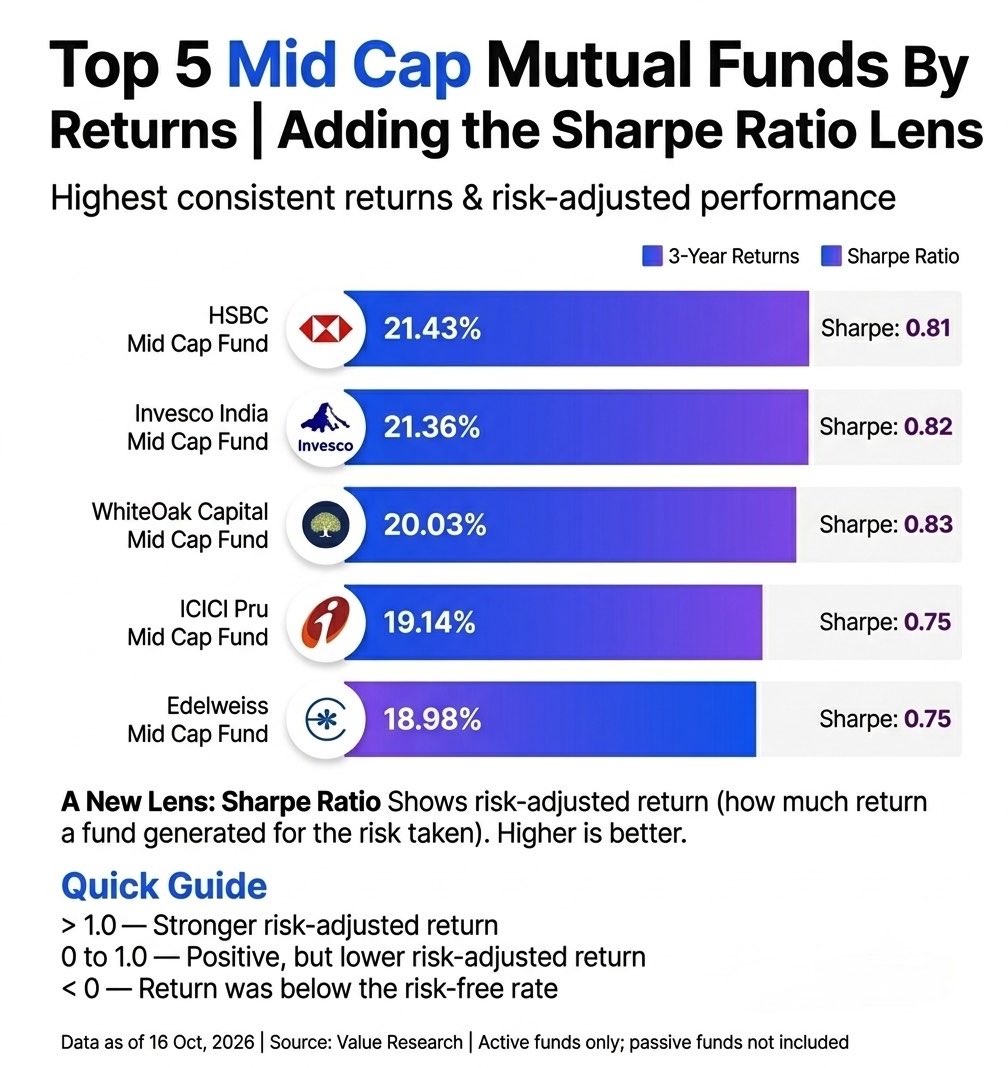
Past returns are eye-catching, but don't ignore risk! Check out the top 5 funds by 3-year returns AND their corresponding Sharpe Ratios. A higher ratio indicates a better return for the risk taken. 👓⚖️
Featured funds:
1️⃣ HSBC Mid Cap Fund
2️⃣ Invesco India Mid Cap Fund
3️⃣ WhiteOak Capital Mid Cap Fund
4️⃣ ICICI Pru Mid Cap Fund
5️⃣ Edelweiss Mid Cap Fund
Data as of October 16, 2026. Source: Value Research.
🚫 No Recommendation.
#MutualFunds #MidCap #Investing #SharpeRatio
PC JEWELLER (PCJ) | +60% IN JUST 40 DAYS! 🚀
#PCJ#sabarisec
The transformational journey is gaining momentum, and I believe the bigger story is still unfolding!
From financial distress to becoming completely bank debt-free, PC Jeweller is witnessing a remarkable turnaround.
✅ Debt-free balance sheet
✅ Q2 FY27 revenue growth of 28% YoY
✅ Significant interest cost savings ahead
✅ Improving profitability and operating momentum
✅ Stronger foundation for sustainable expansion
The next phase could be driven by earnings growth, improved cash flows and a potential valuation re-rating.
This is why I continue to emphasise Quality + Growth + Value, backed by conviction and patience.
The 60% rally is impressive, but the real transformation will be measured by sustained earnings and cash-flow growth. 👍