In the Kitab al-Tajalliyyat Ibn Arabi warns of the humiliation of that moment. Read this way, the "much good" that passes you by is knowledge of God in a form you refused to recognise.
This is one of the best-known passages in the Fusus al-Hikam, and it's usually read as evidence of Ibn Arabi's pluralism. Gregory Lipton read it the other way, as a claim that only Muhammad and his heir take in every belief.
"Beware of delimiting yourself by a specific belief and disbelieving all else, for much good will pass you by – in fact, the knowledge of the affair itself will pass you by..."
The hadith of transformation in Sahih Muslims goes states that on the Day of Resurrection God comes to people in a form they don't recognise, and they deny Him, until He takes a form they know and they acknowledge Him.
"...So, be in yourself the primordial matter of all forms of beliefs since God, the Most High, is too wide and great to be restricted by one belief over another.
— Ibn ʿArabī, Fuṣūṣ al-Ḥikam, quoted in Faris Abdel-hadi, Ibn ʿArabī's Religious Pluralism: Levels of Inclusivity
"Beware of delimiting yourself by a specific belief and disbelieving all else, for much good will pass you by – in fact, the knowledge of the affair itself will pass you by..."
Is the water dirty, or is it the bowl? I brought up an image usually attributed to Rumi, a well of clean water, and everyone coming to it with their own dirty bowl.
#Rumi#IbnArabi#Sufism#Spirituality#Philosophy
While editing this conversation, I was reminded of a famous couplet by Kabir Das:
Kabira kuan ek hai, pani bhare anek
Bhande hi mein bhed hai, pani sab mein ek
The well is one, and many draw from it.
The difference is only in the vessels; the water in all of them is one.
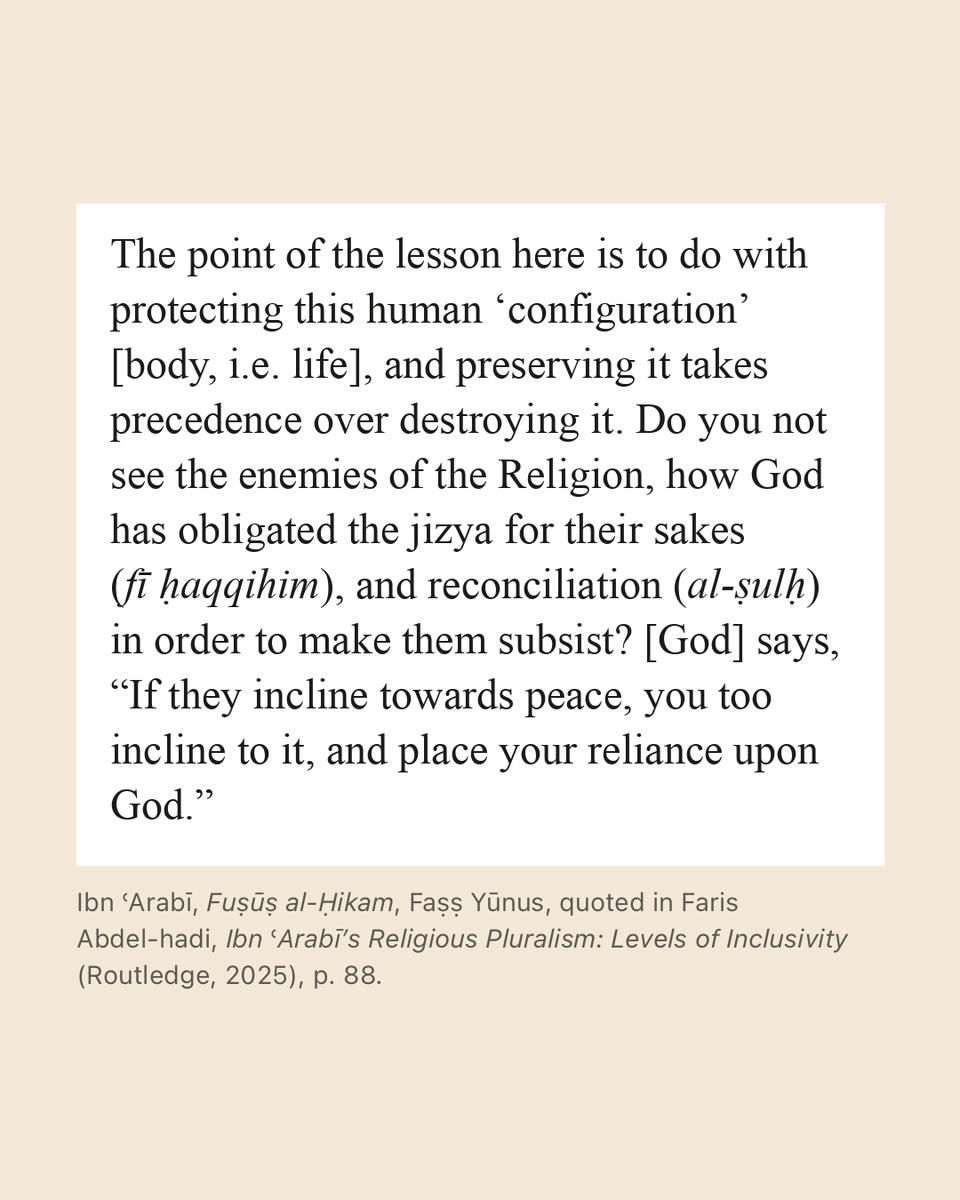
The jizya verse comes from Surat al-Tawba, the one sura that doesn't open with the basmala, a chapter about broken treaties and war. Even so, Ibn Arabi says that an intelligent reader "will know of the 'mercy enfolded' within this sura".
Dr Faris puts this passage at the centre of his reading of the jizya, because Ibn Arabi ends it with the verse on inclining to peace and the verse of the jizya, and then asks: "Is this not all so that He might make them subsist?"
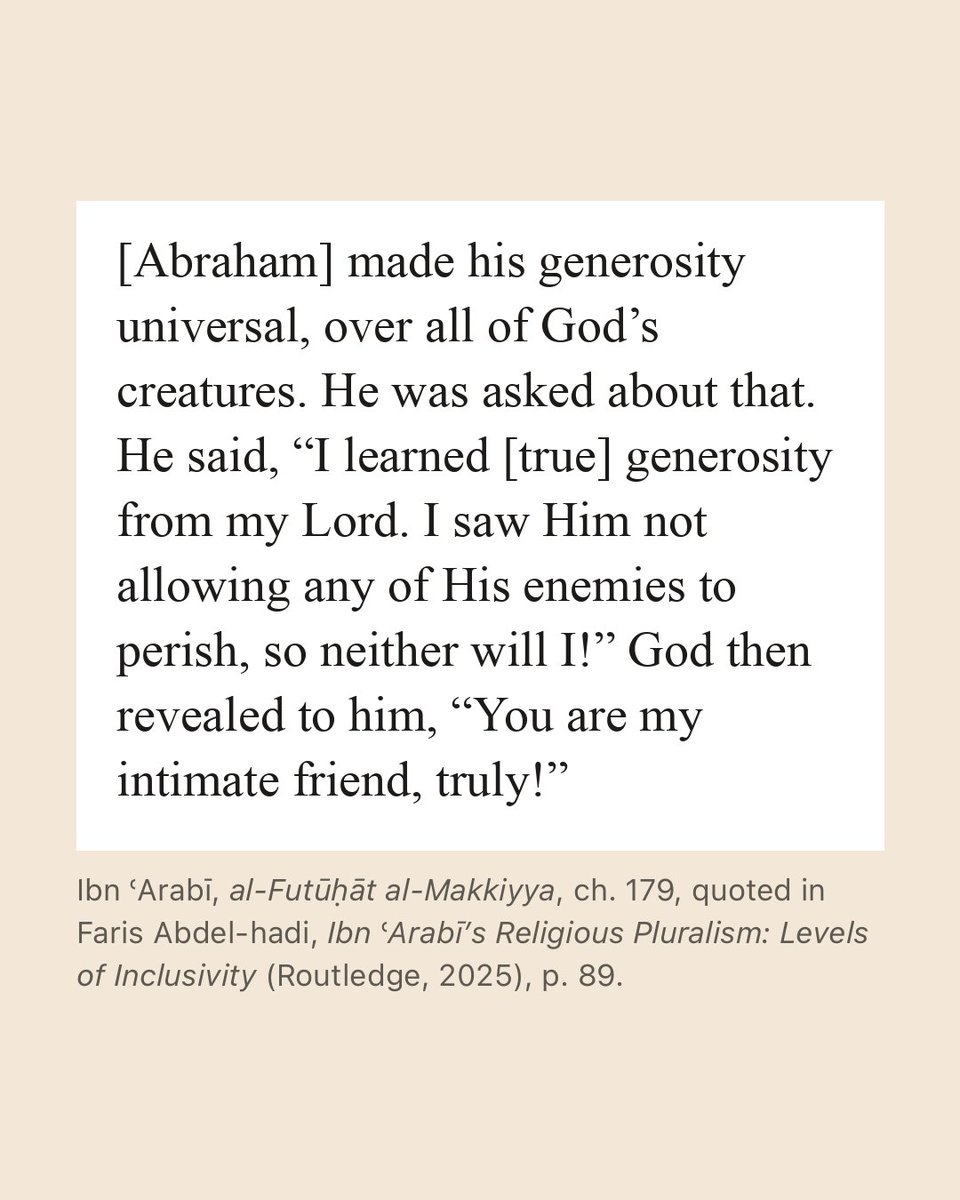
This comes from the chapter of the Futuhat on khulla, intimate friendship, the station named after Abraham. God had rebuked Abraham for refusing to feed an idolater whom He Himself had fed for more than seventy years, and this is what Abraham did afterwards.
Then Ibn Arabi speaks for himself. Whoever treats creation this way will find it an easy path, "for I have entered it and tasted it. I have not seen an easier nor a finer road." And where you can't help someone outwardly, he says, pray for them inwardly.