EMIT measures what we emit. New paper by Thorpe et al: Attribution of individual methane and carbon dioxide emission sources using EMIT observations from space https://t.co/v2TmmA9nuc
When you thought algae are just chilling in the ocean, no, sometimes they decide to throw a Greenland Ice Sheet pool party! @CGerleinSafdi shows that you can see their party lights: https://t.co/bEw6SpcI1m
Explore the world of ocean fluorescence! Kelly Luis paper showcases the significant advantage of #TROPOMI over #MODIS, offering nearly double the spatiotemporal fluorescence data. https://t.co/VvGjVC2eLD
@tomaspueyo Fun fact about the Salton Sea: Excessive algae growth promoted by nutrient intake from agricultural runoff and river discharge causes extremely strong red fluorescence signals that can be observed from space (https://t.co/aTsYHpmEst). It's like a light bulb.
We are looking for a pre- or postdoc researcher to join our group at the @UPV, in Valencia, Spain. The researcher will work on methods to detect and monitor methane emissions from space. DM me or [email protected] if you are interested!
I am excited to share my work with @stoitonic@chr_fronge on temporally upscaling #SIF and the impact of #radiation, #topography, and #ClearSkyBias. These factors can be significant and not be overlooked as satellites measure #SIF with different overpass times and resolutions.
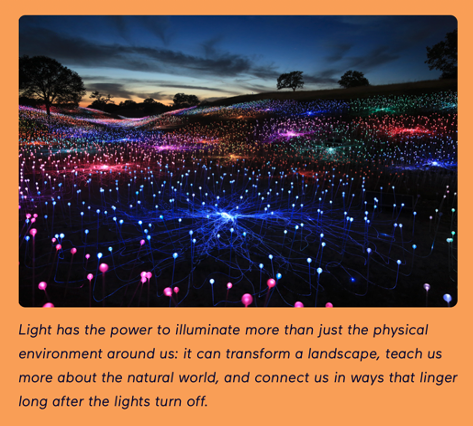
here's a fun essay from writer @camonthecoast on the power of light, plants and technology - featuring one of our favorite optical signals: fluorescence 🙂
Can 58,800 small lights help us see what’s right in front of us? https://t.co/khU3fVeKbI
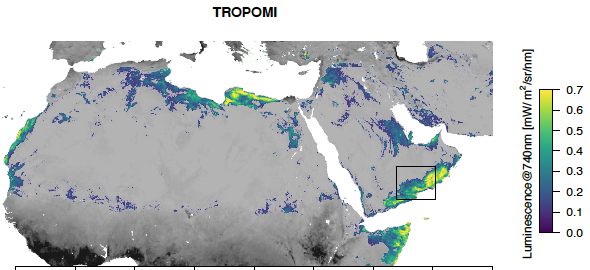
About 10% of all barren areas on Earth are weakly luminescent, and some not so weakly, according to a new study in AGU's Geophysical Research Letters. The researchers came to this conclusion by looking at several years of data from satellites.
https://t.co/lBFkJ8kVa7 #AGUpubs