1/2 Four years after the landmark UN assessment of #humanrights in the Uyghur Region, state-imposed #Uyghurforcedlabour hasn’t stopped. We're calling on @UNHumanRights@volker_turk to publicly report on the human rights situation in the Uyghur Region.
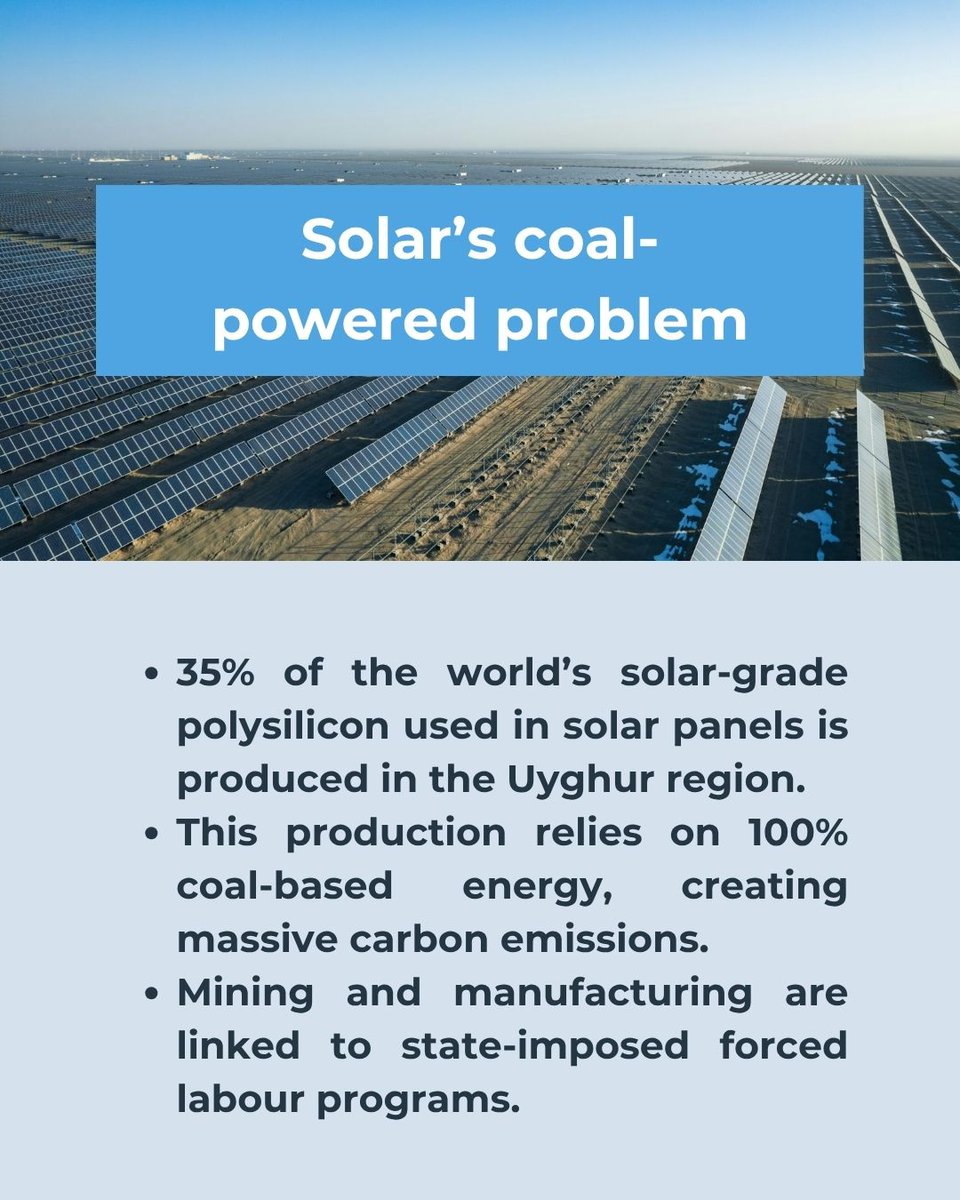
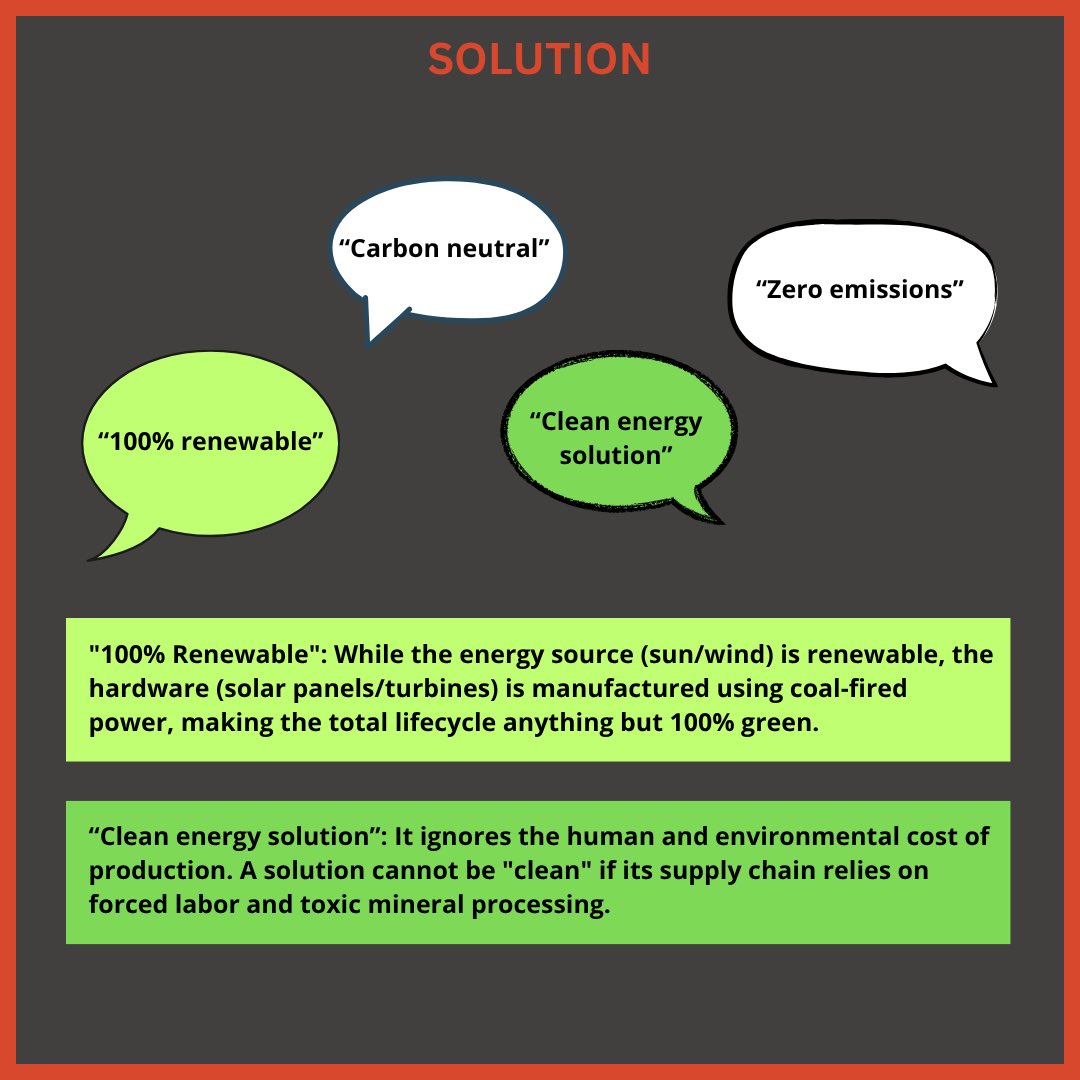
A reminder to speak up about #Uyghurforcedlabour this #ClimateWeekNYC. Too many industries rely on forced labour products: solar panels, electric vehicles & fashion. Companies seeking to transition to clean energy MUST also address any exposure to Uyghur forced labour.
A reminder to speak up about #Uyghurforcedlabour this #ClimateWeekNYC. Too many industries rely on forced labour products: solar panels, electric vehicles & fashion. Companies seeking to transition to clean energy MUST also address any exposure to Uyghur forced labour.
2/2 @UNHumanRights@volker_turk must:
- Publicly report on the human rights situation in the Uyghur Region
- Follow up on the status of the 2022 recommendation to the Chinese government
- Press the Chinese government to end state-imposed forced labour and other abuses
1/2 Four years after the landmark UN assessment of #humanrights in the Uyghur Region, state-imposed #Uyghurforcedlabour hasn’t stopped. We're calling on @UNHumanRights@volker_turk to publicly report on the human rights situation in the Uyghur Region.
2/2 @UNHumanRights@volker_turk must:
- Publicly report on the human rights situation in the Uyghur Region
- Follow up on the status of the 2022 recommendation to the Chinese government
- Press the Chinese government to end state-imposed forced labour and other abuses
1/2 Four years after the landmark UN assessment of #humanrights in the Uyghur Region, state-imposed #Uyghurforcedlabour hasn’t stopped. We're calling on @UNHumanRights@volker_turk to publicly report on the human rights situation in the Uyghur Region.
The ONLY way brands and retailers can address exposure to Uyghur forced labour is to fully exit the Uyghur Region and cut ties with all suppliers linked to the region. Govts must also adopt and enforce strong import bans so there is NO market for forced labour goods.
Here’s the problem: cotton from the Uyghur Region is banned under the Uyghur Forced Labor Prevention Act BUT companies are still selling & profiting from products tainted with forced labour cotton.
@popmartglobal@amazon@eBay@SHEIN_Official@AliExpress_EN must act NOW.
Labubu dolls may be cute BUT their supply chains are not. NYT found that clothing from 16/20 tested Labubu dolls from @POPMARTGlobal@amazon@eBay@SHEIN_Official@AliExpress_EN contained cottton made from the Uyghur Region.
https://t.co/4PzsB04pFW
The ONLY way brands and retailers can address exposure to Uyghur forced labour is to fully exit the Uyghur Region and cut ties with all suppliers linked to the region. Govts must also adopt and enforce strong import bans so there is NO market for forced labour goods.
Labubu dolls may be cute BUT their supply chains are not. NYT found that clothing from 16/20 tested Labubu dolls from @POPMARTGlobal@amazon@eBay@SHEIN_Official@AliExpress_EN contained cottton made from the Uyghur Region.
https://t.co/4PzsB04pFW
Here’s the problem: cotton from the Uyghur Region is banned under the Uyghur Forced Labor Prevention Act BUT companies are still selling & profiting from products tainted with forced labour cotton.
@popmartglobal@amazon@eBay@SHEIN_Official@AliExpress_EN must act NOW.
The answers are in! Check how well you did in the quiz!
Send a message to companies to fully map their mineral supply chains and completely disengage from the Uyghur Region.
Tell policymakers to enforce strong import bans so there is NO market for goods made with forced labour.
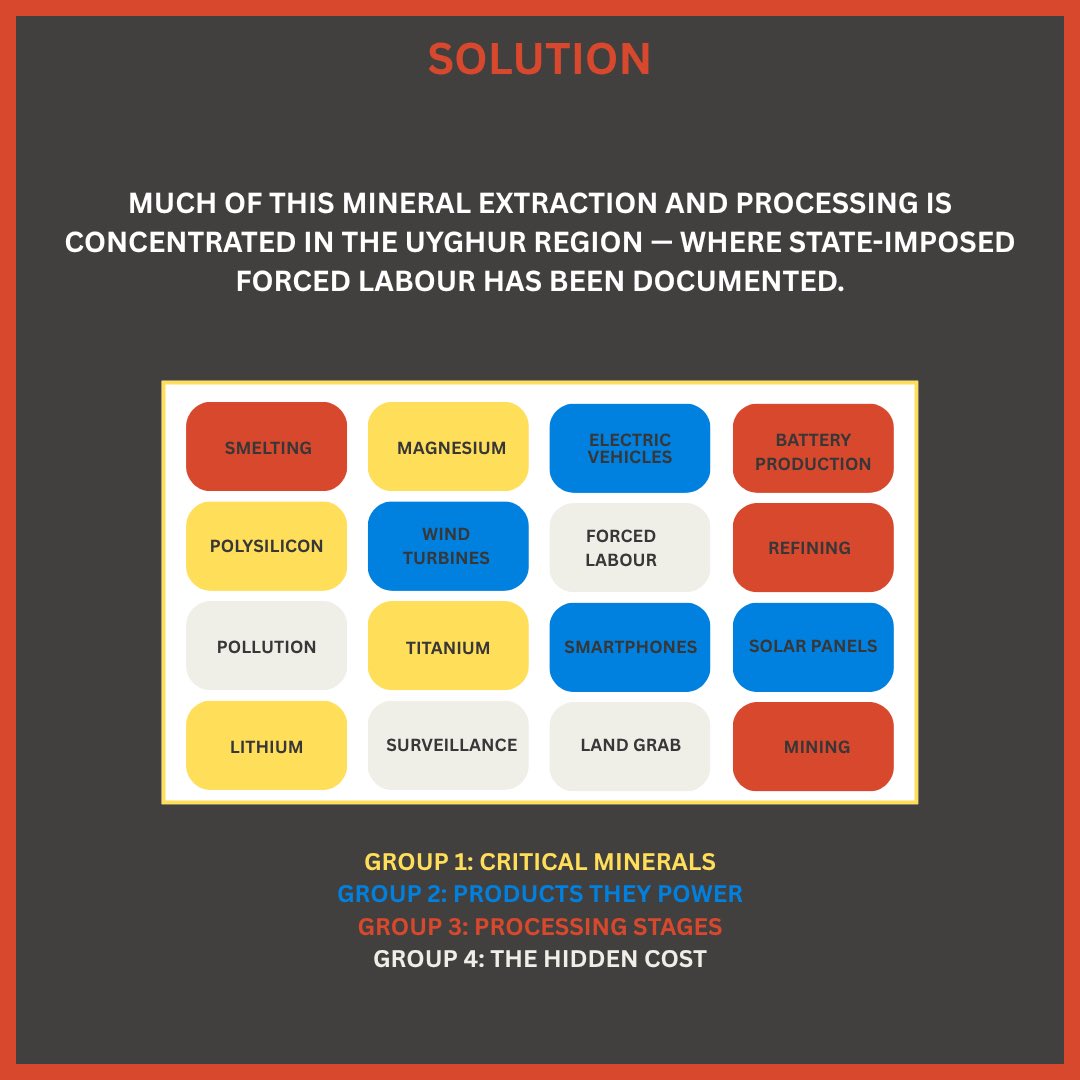
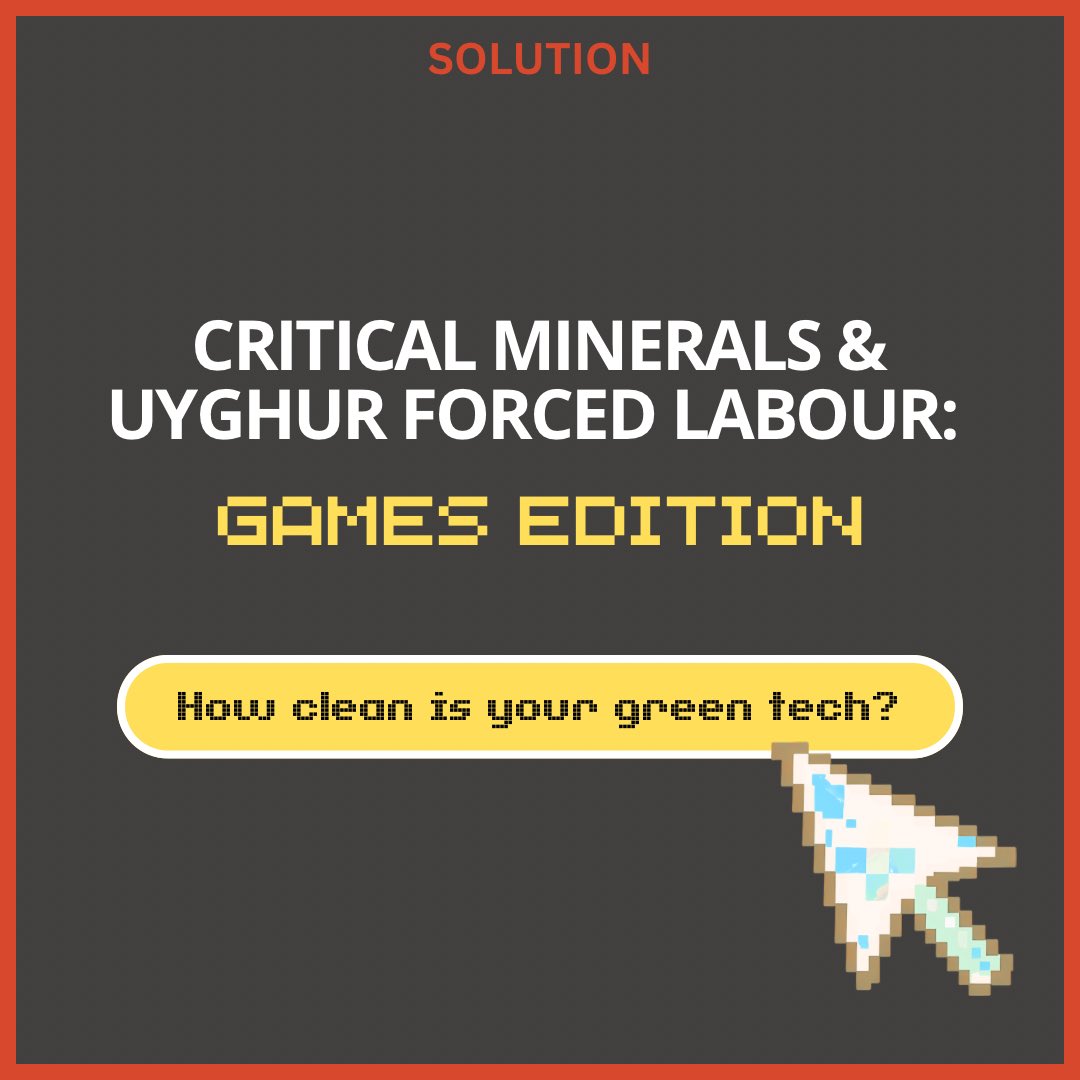
It’s game time – but the stakes are real. Today’s puzzles aren’t about words – they’re about critical minerals powering our everyday tech.
Play our games. Test your knowledge. And check back in 48 hours for the answers and actions you can take.
Pt. 3: Companies must fully map their mineral supply chains and completely disengage from the Uyghur Region.
Governments must enforce strong import bans so there is NO market for goods made with forced labour.
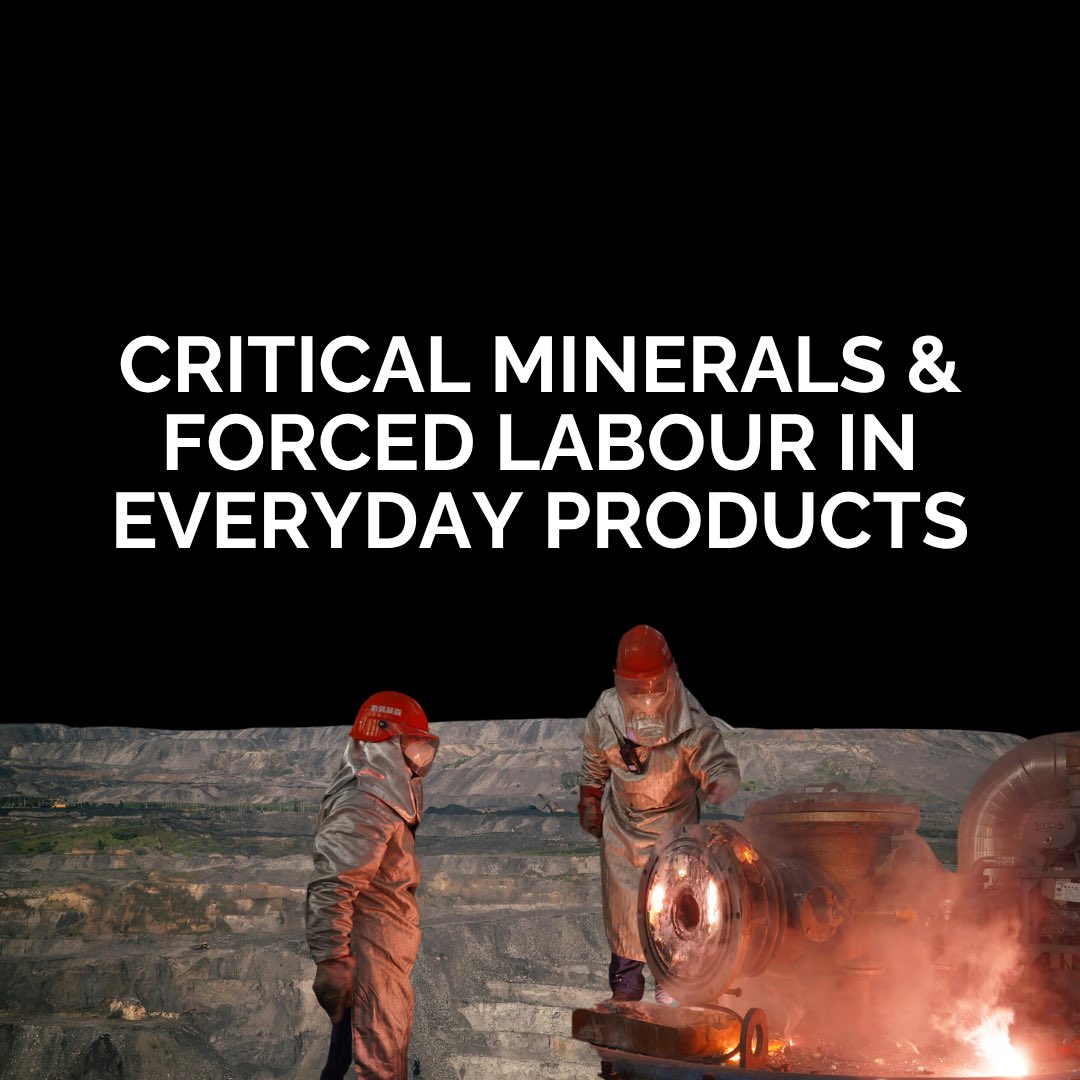
Pt. 2: Major producers continue to rely on forced labour transfer programmes to power these supply chains. At the same time, mineral processing in the region is heavily coal-dependent.
A “green transition” built on forced labour and coal is not sustainable. It’s exploitation.
Pt. 1: From quartzite and polysilicon for solar panels to lithium for EV batteries, and from titanium and beryllium in aerospace to magnesium, large parts of these supply chains are concentrated in the Uyghur Region, where state-imposed forced labour is STILL happening.
Pt. 3: Companies must fully map their mineral supply chains and completely disengage from the Uyghur Region.
Governments must enforce strong import bans so there is NO market for goods made with forced labour.
Pt. 2: Major producers continue to rely on forced labour transfer programmes to power these supply chains. At the same time, mineral processing in the region is heavily coal-dependent.
A “green transition” built on forced labour and coal is not sustainable. It’s exploitation.
Pt. 1: From quartzite and polysilicon for solar panels to lithium for EV batteries, and from titanium and beryllium in aerospace to magnesium, large parts of these supply chains are concentrated in the Uyghur Region, where state-imposed forced labour is STILL happening.