- Close bunker tarps before storms arrive, utilise silos until rain stops harvest, then transfer grain into the bunker after the storm has passed.
Construction guides, capacity tables and bunker calculators, all in one place: https://t.co/LRAJSyR5am
Thanks @thegrdc#storedgrain
Key points:
- Consider weather conditions before attempting tarp movements
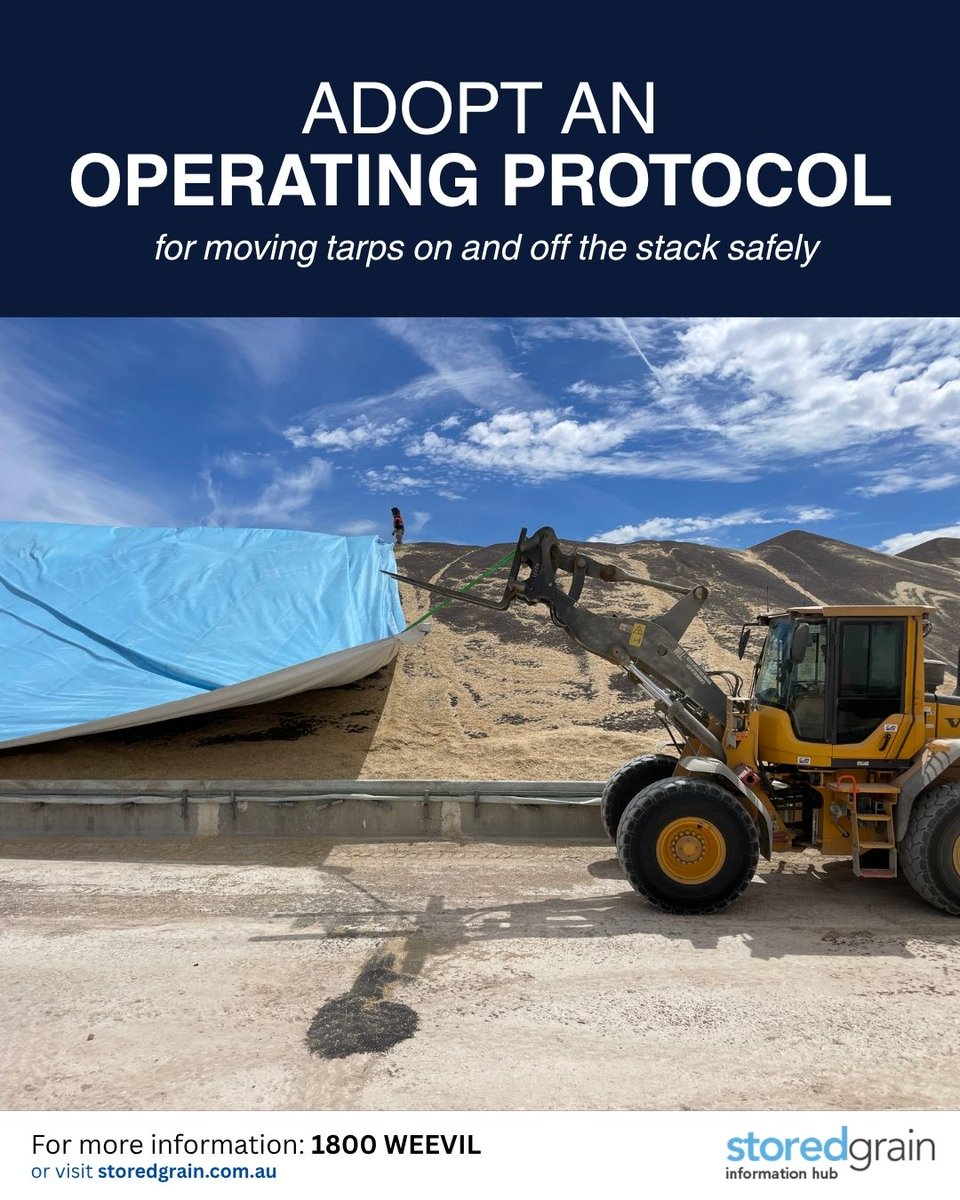
- Use loaders wherever possible
- Ensure everyone has line of sight or radio communication
Considering temporary storage this year - read about other growers' experiences and advice in the Kondinin Group research report on Ground Level Grain Storage.
Read more below.
One NSW grower keeps shrinkage under 1% by always running a ground tarp. Another put wheels on his loader bucket, so it stops cutting the sheet on outloading, and he sweeps the grain back into the stack every few trucks.
- Fill evenly to aid runoff and avoid pockets of air under the tarp.
- Adopt an operating protocol for moving tarps on and off the stack safely.
Video link here: https://t.co/LRAJSyRCZU
Thanks @thegrdc#storedgrain
Key points:
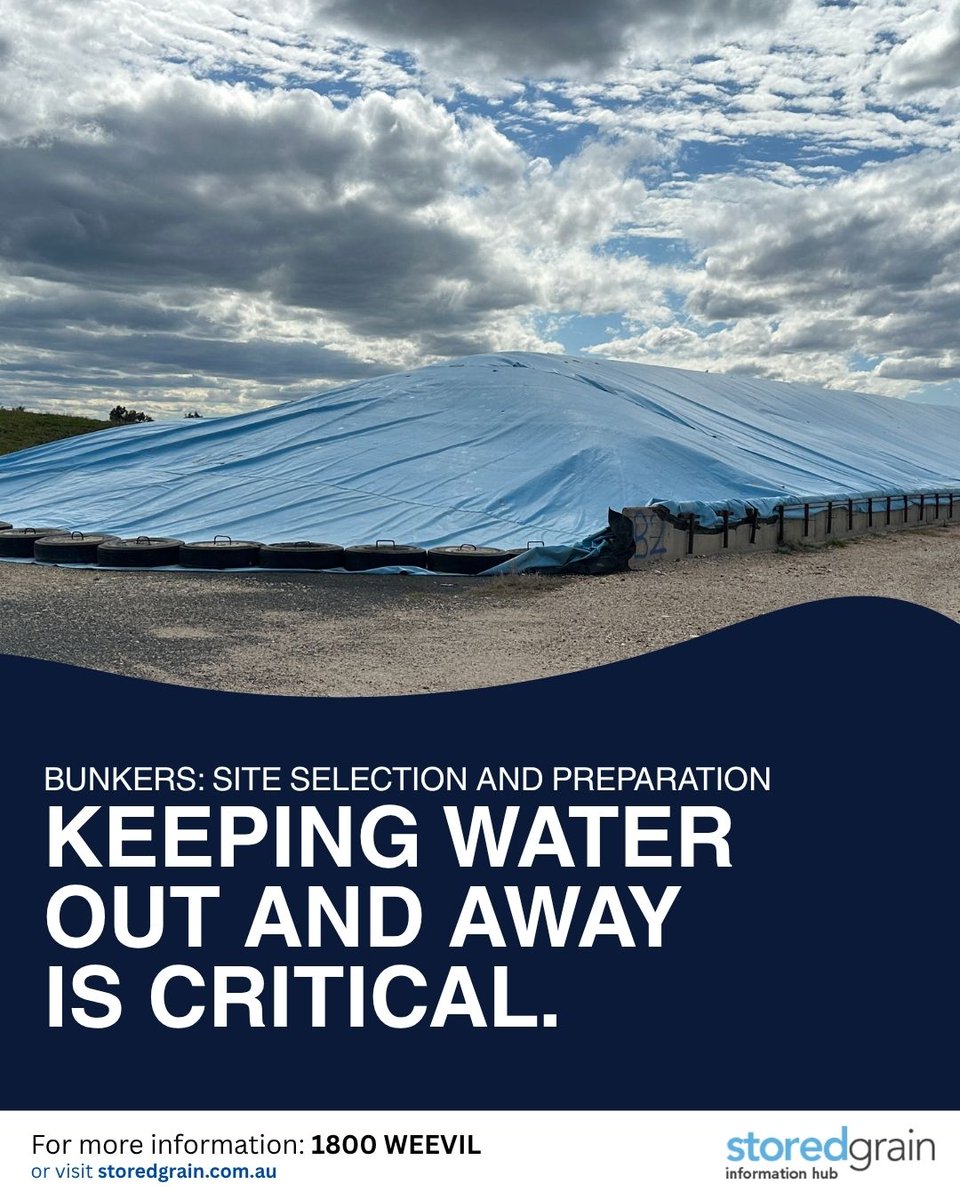
- Site selection and preparation
– keeping water out and away is critical.
- Plan bunker dimensions to match tarp size and allow for bunker inloading equipment.
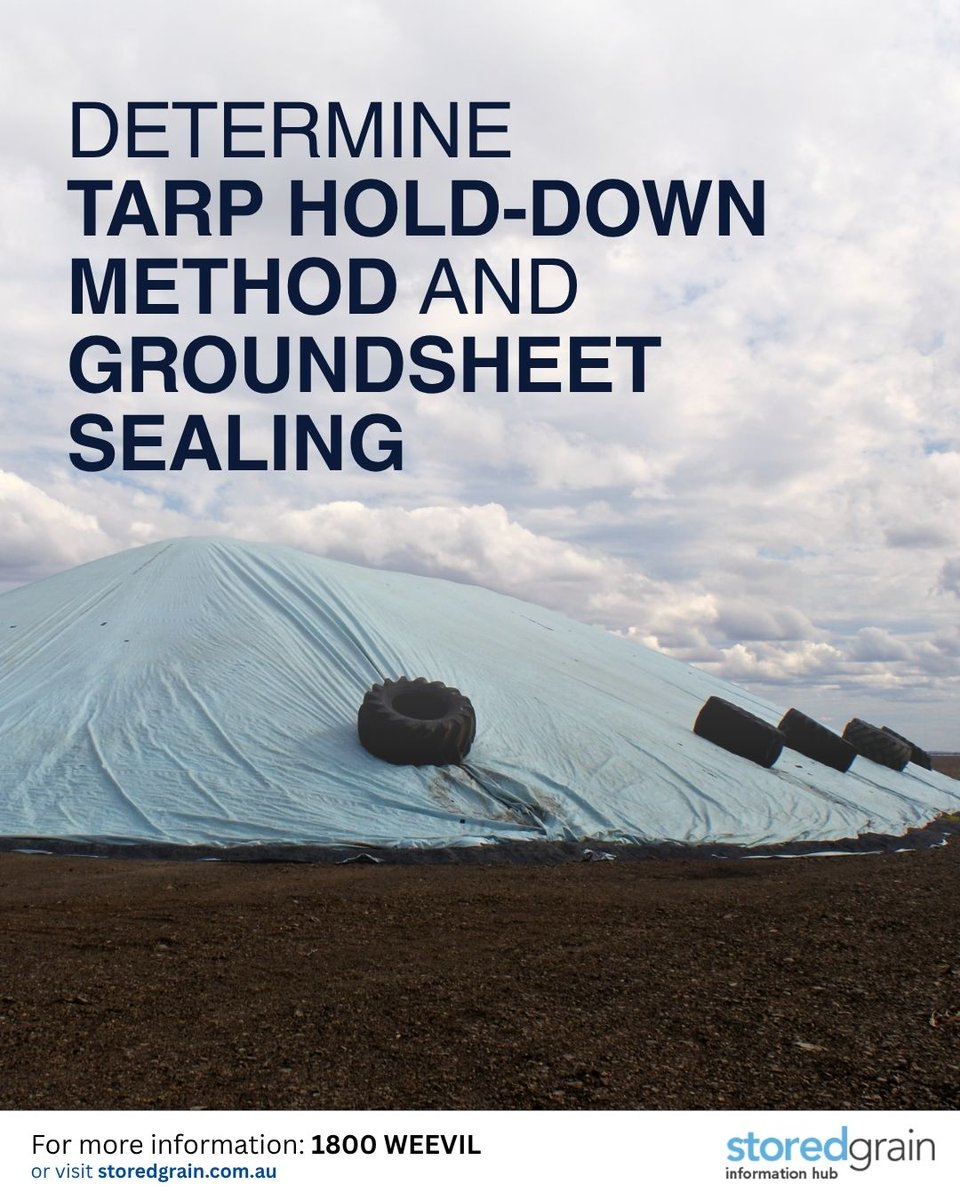
- Determine tarp hold-down method and groundsheet sealing.
Using bunkers for the first time?
Extend the bunker pad well beyond the size of the grain stack, so that water continues flowing away from it. Preventing water ingress and having solid ground for heavy equipment to operate in any weather are key.
Diatomaceous earth (DE) is one of the simplest ways to ensure storages and equipment are free of insects before harvest.
Apply to cone and flat bottom silos, grain sheds and inside harvesters and grain handling equipment.
Not every storage treatment works the same way. 🌾
Diatomaceous earth (DE) controls insects physically. It breaks down their protective outer coating, causing them to dehydrate. Lime doesn't offer anywhere near the same level of efficacy.
Lime may look similar but does not do the same job as diatomaceous earth (DE) for disinfesting empty storages of grain pests.
Chris explains why DE outperforms lime as a structural treatment — full explainer, link in comments.
Thanks @theGRDC
🎧 Alex Conway’s pathway into agriculture has taken him from programming aeration controllers as a kid to working across grain storage technology, engineering and extension.
In the latest GRDC In Conversation episode, hosted by @humans_of_ag, Alex reflects on harvesting across Australia and Canada, his fascination with grain storage systems and his work helping growers better manage risk and protect grain quality.
Today, he balances his role at Control Unlimited with GRDC’s Grain Storage Extension team.
🔗 https://t.co/y5aFH6T6bf
#GRDCInConversation #HumansOfAgriculture #GrainStorage