Yann LeCun says LLMs are strongest in domains where language itself is the substrate of reasoning, like math and code
They can solve problems, prove theorems, and write programs — but they are not creative mathematicians, software architects, or computer scientists
"their role is to help humans build"
London has incredible talent & entrepreneurial spirit. Thrilled to deepen @GoogleDeepMind’s roots here with our spectacular new building Platform 37 - a nod to AlphaGo’s legendary Move 37. It’s a tribute to Science & AI, and an inspirational space for our next big breakthroughs!
Fun fact.
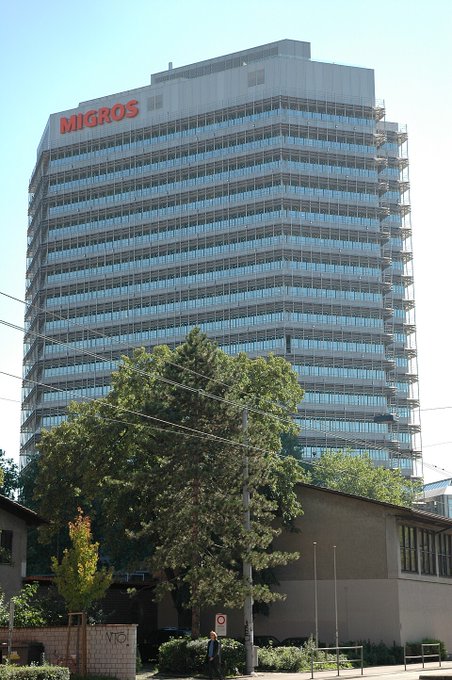
The Switzerlands largest supermarket, Migros, doesn’t sell alcohol or tobacco in stores, pays no dividends, caps profits by lowering prices if earnings exceeds 5%, is a cooperative with 2M+ members, and donates 1% of revenue to social projects, purely out of the founders moral philosophy.
To Dethrone the King, Build a Different Kingdom
I’ve seen a lot of talk on the timeline lately about “Kingmakers.”
Who gets chosen. Who gets access. Who gets liquidity. Who gets blessed by the right people, the right exchanges, the right foundations, or the right influencers.
And while that conversation matters, I think it misses something even more important:
Habit is one of the most expensive moats in the world.
I spent years as CEO of a large B2C organization, and one thing became painfully obvious: getting people to change their habits is brutally difficult and unbelievably expensive.
People do not abandon familiar habits just because something claims to be better or cheaper.
How many people have used iPhone for years and still never seriously consider Android? How many Android users abhor Apple like it personally wronged their family? Most people are not just choosing a phone. They are choosing muscle memory and comfort. It's the reason why phone loyalty is well over 80%.
The same thing happens everywhere.
People keep using the same bank they complain about.
The same airline they hate.
The same social platform they think is toxic.
The same exchange.
The same launchpad.
Not because they love it.
Because switching is friction.
Crypto tries to solve this with airdrops. “Come use our thing and we’ll pay you.” Sometimes it works short term, but often it just attracts mercenaries, distorts real product-market fit, and wrecks the tokenomics forever before the product ever had a chance to stand on its own.
This is why the trenches still use Pump Fun even though almost no one actually likes it.
It is familiar. It is liquid. It is where the gamblers are. It is where the launches are. It is where attention already lives.
Hyperliquid will remain king because they were the first DEX to truly "go big fast" and capture user loyalty at scale.
Binance will remain the dominant CEX because even as dislike grows across the broader crypto community, liquidity, familiarity, habit, and infrastructure are incredibly hard to displace.
The real question for builders is not, “How do we become the next king?”
The real question is:
How do you compete in a landscape where unseating an incumbent is incredibly difficult?
And I think the answer is simple.
You do not win by raising your hand and shouting “me too!”
You do not win by copying the incumbent with slightly better branding, slightly lower fees, slightly different talking points, or a slightly louder founder.
You win by building something dramatically different.
You win by solving a problem the incumbent cannot solve, will not solve, or is too comfortable to even see.
That is where the next wave of real builders will separate themselves.
Because moving forward, crypto does not need another copy of the thing we already have.
It needs products that are meaningfully different enough to make people break their habits.
And breaking habits is expensive.
So you better make the reason undeniable.
🫡 From the depths —
The White Whale 🐋
@Forbes Nadler attended Harvard University where he studied mathematics. He was also a visiting scholar at the Federal Reserve during PhD studies. In 2016 Nadler received a PhD with a doctoral thesis on the pricing mechanisms of credit derivatives.
Daniel Nadler cofounded OpenEvidence in 2022 to use AI to help doctors make sense of the voluminous amount of medical research.
OpenEvidence has reached a valuation of $12 billion after an early 2026 funding round. Nadler owns nearly 60% of the company.
See where he lands on the 2026 #ForbesBillionaires list: https://t.co/JYn52gRk2z (Photo: Mauricio Candela for Forbes)
@WhiteWhaleLabs The fact that no one can seize my assets is the biggest appeal to me and its bordeless usage.
With btc, no physical space is needed for storage.
Bitcoin was clearly invented with payments in mind.
Anyone who has actually read the white paper or Satoshi’s writings can see that. Peer-to-peer electronic cash was the stated vision. A way to transact without relying on trusted third parties.
And many loyal Bitcoiners still want this to be the "use case".
They are missing an important truth.
The market is allowed to find a better use case than the inventor originally imagined.
That doesn’t make Bitcoin a failure. It makes Bitcoin one of the greatest examples in history of a product escaping its original framing.
Bubble Wrap was originally invented as wallpaper.
Play-Doh was originally a wallpaper cleaner.
Post-it Notes came from an adhesive that was considered too weak to be useful.
The microwave oven came from radar research.
Some of the most successful inventions in history did not become massive because they stuck to the original vision.
They became massive because the market discovered the use case it actually valued most.
With Bitcoin, the market looked at peer-to-peer payments and said:
“Cool. But a scarce, decentralized, seizure-resistant store of value in a world drowning in monetary debasement? That’s what we want.”
Bitcoin did not lose its purpose.
The market simply better defined it.
Payments may still matter to some.
But the dominant use case today for BTC is obvious:
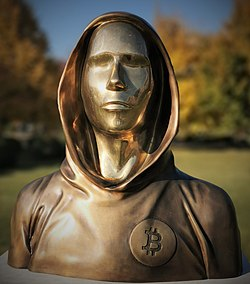
Bitcoin is digital scarcity.
Bitcoin is monetary insurance.
Bitcoin is the asset you own because you no longer trust the people holding the money printer.
That is not a betrayal of Satoshi’s vision.
That is the market doing what markets will always do:
Finding the highest-value use case and dragging the invention there whether it was the original vision or not.
🫡 From the depths —
The White Whale 🐋
🚨 SATOSHI MAY NOT NEED TO MOVE HIS BITCOIN TO PROTECT IT FROM QUANTUM ATTACKS
A new proposal called PACTs could let old Bitcoin wallets prove ownership without waking up publicly.
Instead of moving coins, PACTs would let holders privately timestamp proof that they control the keys.
If Bitcoin later freezes vulnerable addresses, those holders could use STARK proof to recover access.
This could be huge for old wallets, including Satoshi’s estimated 1.1M $BTC, valued at $84B.
But if Satoshi is truly gone, no proof can be made, and his coins remain at risk.
The story of the man who almost accidentally spoiled the US Army plan to eliminate Osama Bin Laden with a tweet, 15 years ago Today.
With a couple of software projects on the go, Sohaib Athar was making the most of the late-night calm to get some work done.
As his wife and son slept, he heard the whir and chop of rotor blades above the two-story house where they lived. Strange, he thought, for an aircraft to be flying so low over a residential area at this hour. He checked the time: it was well past midnight.
Abbottabad, a former colonial garrison town nestled in the green hills of northern Pakistan, is a small city known for its trees, parks and the country’s top military academy.
Athar and his family moved there in 2009 to get away from the heat, grime and occasional terrorist attacks in Lahore, a traffic-clogged metropolis on the plains of Punjab.
And he didn’t know it then, but with that one sentence, he had become the first person to report on a blockbuster news story that would grip the world.
Actually, AI already saves lives.
In several countries, mammograms are examined by AI and radiologists. Reliability is improved.
In the EU, every car sold must be equipped with Automatic Emergency Braking Systems. That's AI. They reduce frontal collisions by 40%.
Modern MRI machines are equipped with AI technology that reduces the time of imaging by 4x or more. You can now get a full-body MRI in 40 minutes for about $1000. Reduced time -> reduced cost -> more/earlier detection.
And that's not counting the progress in medicine enabled by modern AI, including Nobel Prize-winning protein structure prediction.