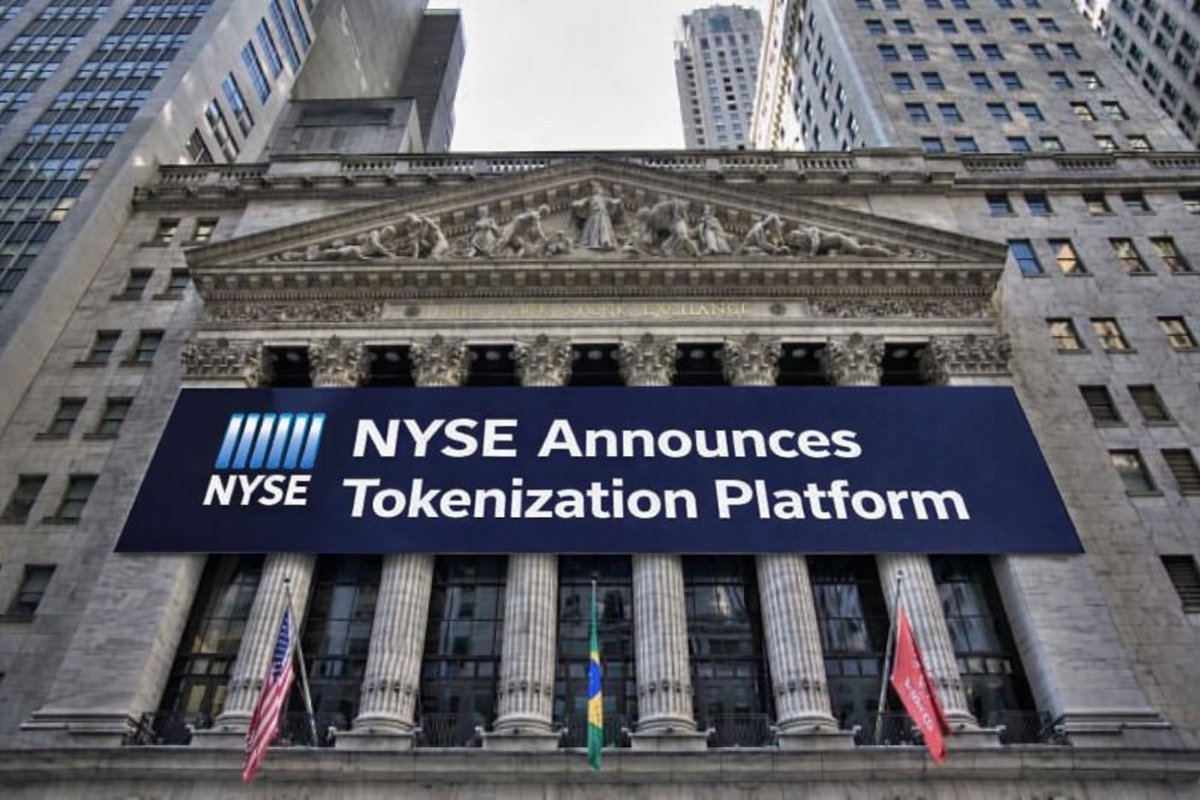
24/7 markets don’t just extend trading hours.
They break assumptions about:
• liquidity rest periods
• volatility containment
• who gets access when others are offline
On-chain settlement turns time into a design choice — not a rule.
🚨 BREAKING: NYSE announces new tokenization platform.
Here's what they're building:
A completely new trading venue with:
• 24/7 operations (no market hours)
• Instant settlement (not T+1)
• Stablecoin-based funding (not bank wires)
• "Tokens natively issued as digital securities"
Not retrofitting the existing exchange.
Not adding blockchain to the back office.
An entirely new venue.
---
Think about what this means:
NYSE will run two exchanges.
The old one: 9:30-4:00 EST, T+1 settlement, bank wires.
The new one: 24/7, instant settlement, stablecoin rails.
They're not choosing between traditional and digital.
They're operating both in parallel.
---
How does this compare to others?
Everyone else is building infrastructure to tokenize existing assets:
• DTCC tokenizes existing custodied securities
• State Street tokenizes MMFs and ETFs
• Nasdaq amends rules for tokenized trading alongside traditional
NYSE is building a new way to bring equities on-chain AND the venue to trade them.
This puts them in competition with Figure's OPEN and Superstate.
Native digital issuance. Native digital trading.
---
Tokenized stocks enable a world where:
• Settlement happens on-chain
• Custody lives in wallets, not DTCC
• Trading never stops
• Capital formation happens in stablecoins
The question for every institution:
Are you digitizing your existing business or building the business that replaces it?
NYSE just answered: both.
---
#fintech #tokenization #infrastructure #digitalassets #stablecoins
𝐄𝐯𝐞𝐧𝐭 𝐑𝐞𝐜𝐨𝐫𝐝 · 𝟐𝟎𝟐𝟔-𝟎𝟏-𝟏𝟗
-𝐖𝐡𝐚𝐭 𝐡𝐚𝐩𝐩𝐞𝐧𝐞𝐝:
The New York Stock Exchange announced plans to launch 24/7 U.S. stock trading via a new on-chain, tokenized exchange.
-𝐖𝐡𝐲 𝐢𝐭 𝐦𝐚𝐭𝐭𝐞𝐫𝐬:
Market hours are not just a convenience — they are a control mechanism for liquidity, volatility, and participation. Moving equities toward continuous, on-chain settlement challenges long-standing assumptions about when markets operate and who gets access outside traditional windows.
-𝐌𝐚𝐫𝐤𝐞𝐭 𝐜𝐨𝐧𝐭𝐞𝐱𝐭:
• Short term: Reframing expectations around market accessibility and liquidity flow.
• Long term: Further convergence between traditional market infrastructure and on-chain systems.
This is not a feature launch.
It’s a shift in market operating assumptions.
Volatility clusters when multiple assumptions are tested at once.
Data, policy, liquidity, and narrative don’t move independently —
they collide.
Markets don’t remember calm weeks.
They remember collision points.
𝐄𝐯𝐞𝐧𝐭 𝐑𝐞𝐜𝐨𝐫𝐝 · 𝟐𝟎𝟐𝟔-𝟎𝟏-𝟏𝟗
𝐖𝐡𝐚𝐭’𝐬 𝐚𝐡𝐞𝐚𝐝:
The upcoming week concentrates multiple macro and liquidity events across major economies:
• Monday: China GDP release
• Tuesday: Federal Reserve liquidity injection(~$8.3B)
• Wednesday: U.S. presidential economic speech
• Thursday: Federal Reserve liquidity injection(~$6.9B)
• Friday: Japan interest rate decision
𝐖𝐡𝐲 𝐢𝐭 𝐦𝐚𝐭𝐭𝐞𝐫𝐬:
When policy signals, liquidity actions, and macro data cluster tightly in time,
markets tend to reprice assumptions rapidly rather than move gradually.
𝐌𝐚𝐫𝐤𝐞𝐭 𝐜𝐨𝐧𝐭𝐞𝐱𝐭:
• Short term: Elevated volatility driven by overlapping narratives.
• Long term: These weeks often define reference points for the next macro phase.
𝐄𝐯𝐞𝐧𝐭 𝐑𝐞𝐜𝐨𝐫𝐝 · 𝟐𝟎𝟐𝟔-𝟎𝟏-𝟏𝟔
-𝐖𝐡𝐚𝐭 𝐡𝐚𝐩𝐩𝐞𝐧𝐞𝐝:
Brian Armstrong, CEO of Coinbase, stated that traditional banks are attempting to suppress competition under the proposed Crypto CLARITY Act.
-𝐖𝐡𝐲 𝐢𝐭 𝐦𝐚𝐭𝐭𝐞𝐫𝐬:
Market structure debates are no longer confined to regulators and lawmakers.
Incumbent financial institutions and crypto-native platforms are now openly contesting who gets to define the rules.
-𝐌𝐚𝐫𝐤𝐞𝐭 𝐜𝐨𝐧𝐭𝐞𝐱𝐭:
• Short term: Heightened narrative conflict around regulatory intent and competitive fairness.
• Long term: Structural tension between legacy finance and crypto infrastructure is becoming explicit.
𝐄𝐯𝐞𝐧𝐭 𝐑𝐞𝐜𝐨𝐫𝐝 · 𝟐𝟎𝟐𝟔-𝟎𝟏-𝟏𝟓
-𝐖𝐡𝐚𝐭 𝐡𝐚𝐩𝐩𝐞𝐧𝐞𝐝:
The U.S. Treasury injected approximately $2 billion into the market.
-𝐖𝐡𝐲 𝐢𝐭 𝐦𝐚𝐭𝐭𝐞𝐫𝐬:
Liquidity injections signal short-term stabilization intent, but also reflect underlying stress within the financial system.
-𝐌𝐚𝐫𝐤𝐞𝐭 𝐜𝐨𝐧𝐭𝐞𝐱𝐭:
• Short term: Improved liquidity conditions and risk-on sentiment.
• Long term: Reinforces expectations of policy responsiveness during volatility.
𝐓𝐡𝐢𝐬 𝐢𝐬 𝐧𝐨𝐭 𝐚 𝐫𝐚𝐥𝐥𝐲 𝐜𝐚𝐥𝐥. 𝐈𝐭’𝐬 𝐚 𝐥𝐢𝐪𝐮𝐢𝐝𝐢𝐭𝐲 𝐞𝐯𝐞𝐧𝐭 𝐨𝐧 𝐫𝐞𝐜𝐨𝐫𝐝.