Just weeks after the ART was signed, the Trump administration launched a Section 301 probe into Indonesia, shattering illusions of a privileged alliance. This "transactional" approach has already triggered a pivot, with President Prabowo flying to Moscow for a five-hour marathon talk with President Vladimir Putin to secure energy supplies. In the shifting sands of 2026, Indonesia is learning the hard way that a trade agreement is only as good as the trust behind it.
https://t.co/JIAd0cDW3v
#Geopolitics #Trump2026 #PrabowoPutin #EnergySecurity #IndonesiaRussia #TradePolicy
By terminating the 2001 maritime agreement (MoU 44) to appease nationalist voters, Thailand's Anutin administration handed Cambodia the ultimate legal weapon. Phnom Penh has officially triggered "Compulsory Conciliation" under UNCLOS, moving their long-standing border dispute completely out of Bangkok's hands and into a UN framework.
https://t.co/S1iQytDXdP
#SoutheastAsia #UNCLOS #InternationalLaw #PublicPolicy #Diplomacy #Thailand #Cambodia #Geopolitics2026
Perpres No 27/2026 slashes and caps platform commission fees at a maximum of 8%, forcing tech giants like Gojek and Grab to yield 92% of gross fare revenues back to their drivers. While this directly targets the layered deductions and subscription fees that have long squeezed workers, major structural implementation gaps remain. Without redefining the legal status of the gig workforce, basic employee rights like minimum wage, paid leave and holiday allowances remain out of reach.
https://t.co/MWJQR5Z6j8
While neighbours push toward unified, high-octane economic engines like Indonesia's Danantara, Malaysia’s Khazanah and Singapore’s Temasek, Brunei remains a strategic holdout. The Brunei Investment Agency (BIA) deploys capital globally as a pure external yield vehicle, completely detached from the domestic agencies struggling to bankroll the country's post-oil future. With 75% of the budget still tethered to hydrocarbons and crude production down significantly from its peak, this rigid wall between foreign investing and domestic industrial transformation is becoming a costly luxury.
https://t.co/4wPb14pBs7
#SovereignWealth #Brunei #Macroeconomics #ASEAN #EnergyTransition #PublicPolicy #Finance2026
As Indonesia invites Japan and China to finance its giant sea wall, the project's core mission is shifting. While Japan focuses on long-term planning, China brings rapid, state-backed construction capacity bundled with commercial real estate options. This geopolitical bidding war feeds a bias toward capital-intensive megaprojects, while cost-effective alternatives – like a 500 kilometres mangrove green belt that supports local fishing economies – are marginalised because they generate fewer investment assets.
https://t.co/9xMd3ODnSX
#BlueCarbon #Geopolitics #InfrastructureFinance #JavaCoast #MangroveRestoration #Sustainability
When we talk about online vitriol, we focus heavily on the psychological toll. But the economic consequences are quietly stalling professional mobility. As Farah Mursyieda and Adhura Farouk point out, when online prejudice leaks into hiring decisions or tenant screening, it interferes with normal market processes. Hiring based on bias rather than skill destroys productivity and costs businesses high-value talent. It is a lose-lose framework that drags the whole economy down.
https://t.co/7B9yWzHo7s
#LaborEconomics #WorkplaceCulture #MarketDistortion #DiversityAndInclusion #CorporateGovernance #PublicPolicy
As Thai defense planners debate using domestic CSOs to replace international observers in the peace talks, local civil society faces a tightening vice. Prominent human rights defenders and organisations like The Patani and CAP find themselves facing criminal charges simply for using the term “Bangsa Patani”. When the state treats its own local monitors as security threats and weaponises information operations (IO), a sustainable political solution becomes impossible.
https://t.co/8QH4QceWsb
A recent conversation with a frustrated Grab driver in KL highlighted the paradox of modern Muslim-majority societies. Why is our "Islamness" so visible in our malls and schools, yet so absent in our public conduct? From the 1MDB fallout to netizen rudeness, the author explores why Muhammad Abduh’s century-old observation – seeing "Islam but no Muslims" in the West – still stings today.
https://t.co/r6KZx27ElD
#Integrity #SocialJustice #Islamicate #Reflections #KualaLumpur #Jakarta
Percakapan baru-baru ini dengan seorang sopir Grab frustrasi di Kuala Lumpur menyoroti paradoks masyarakat mayoritas Muslim modern. Mengapa "keislaman" kita begitu terlihat di mal dan sekolah, namun begitu luput dalam perilaku publik? Dari dampak skandal 1MDB hingga kekasaran netizen, mari kita telusuri mengapa observasi Muhammad Abduh seabad lalu – yang “melihat Islam walaupun tak ada Muslim di Barat” – masih terasa relevan hingga hari ini.
https://t.co/6dS8Po7KFH
#Integritas #KeadilanSosial #Islamicate #Reflections #KualaLumpur #Jakarta
Is Indonesia’s sovereignty becoming a transactional chip? 🇮🇩✈️
In April 2026, news of a classified overflight agreement with the US sent shockwaves through Jakarta. By potentially replacing "security clearance" with "mere notification", Indonesia risks surrendering its right to assess foreign military transits on its own terms. As Keoni Marzuki explores, the cost of "Major Defence Partnership" status might be higher than Indonesia is willing to pay.
https://t.co/trgP4bajDl
#IndonesianForeignPolicy #Prabowo #Sovereignty #Geopolitics2026 #DefenseCooperation #USIndonesia
Is "weak governance" actually a deliberate strategy? 🇮🇩🌳
In Lung Anai, East Kalimantan, coal mines sit just 700 metres from homes. While the community has shown brilliant resilience – turning into award-winning chocolate producers – they are trapped by a "governance logic" that prioritises extractive industry over local survival. Muhammad Maulidan’s research shows that the state is not failing to solve adaptation barriers; it is actively creating them.
https://t.co/EtJmnRSmYG
#EastKalimantan #ClimateAdaptation #DayakKenyah #Nusantara #IKN #EnvironmentalJustice
Can you solve a 20-year insurgency by cutting the budget? 🇹🇭🛡️
Prime Minister Anutin’s 2026 policy to empower local Defence Volunteers (DVs) aims to reduce military spending, but BRN has responded with fire. By putting lightly armed civilians in the crosshairs, Bangkok is ending a decades-old "understanding" on the ground. With 30 bombings already in early 2026, the strategy of "outsourcing" security is facing a violent reality check.
https://t.co/q2HDLxQnR9
#DeepSouth #ThailandPolitics #Anutin #BorderSecurity #BRN #ConflictResolution
Is Dili becoming a city for its visitors or its people? 🇹🇱🏗️
As Timor-Leste ramps up infrastructure projects ahead of its 2026 ASEAN milestones, the capital is undergoing a radical transformation. While better roads and connectivity are essential for economic growth, they are coming at a steep social cost. With over 1,300 households affected by evictions, a question arises: can we build a modern capital without destroying the social fabric of its most vulnerable communities?
https://t.co/9eAKeqgWRN
#TimorLeste #UrbanDevelopment #Infrastructure #Dili2026 #HumanRights #ASEAN
Can a nation’s biggest asset also be its fastest route to failure? 🇹🇱⛽
In 2026, Timor-Leste finds itself in a "sovereign equity trap". After buying out Shell and ConocoPhillips to own 56% of the Greater Sunrise project, the state now bears the brunt of the risk. With no independent balance sheet, every cost overrun will be drained from the very Petroleum Fund the project is meant to save. As Arman Sidhu argues, Dili’s insistence on "total sovereignty" may be the very thing that accelerates its fiscal depletion.
https://t.co/mGXUGrH7rt
#TimorLeste #Geopolitics #EnergyMarkets #ASEAN2026 #GreaterSunrise #Woodside
Is the "aura of invincibility" fading? 🇮🇷🛡️
The 2026 conflict in Iran suggests that preventing defeat is, in itself, a victory. By enduring illegal warfare and sanctions through a "resistance economy", Tehran has not only survived but reshaped the global balance of power. As the US and Israeli military take a dent, the Persian Gulf is reassessing its dependencies.
https://t.co/I70hfLedcK
#Iran2026 #Geopolitics #WestAsia #StrategicEndurance #GlobalPowerShift
Do we know our rights, or just our fears? 📚⚖️
While many Malaysian Chinese youths can identify which parties "defend" their race, many struggle to explain how the Parliament works. Violet Lee argues that the marginalisation of Civic Education (PSK) has left a void filled by family anecdotes and "affective" trauma. To move beyond race-based politics, we need policy competence, not just "unity" slogans.
https://t.co/ltSVCm0Wys
#CivicEducation #MalaysiaPolitics #SocialCohesion #PublicPolicy #2026Outlook
The Ministry of Culture wants to purge colonial bias. Yet the word "Indonesia" is Greek/British, and "Nusantara" was a Majapahit term for conquered vassals. Every name for this nation inherits a legacy of conquest. True historical liberation requires a holistic record, not a "positive" state-approved edit.
https://t.co/bbK2lEL8dZ
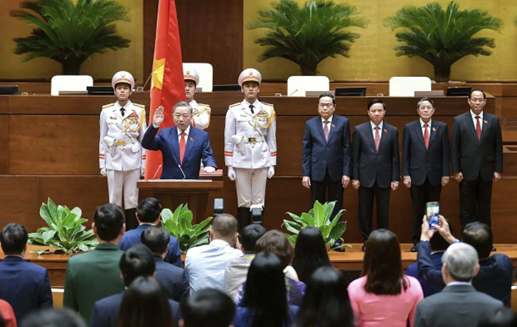
A New Era for Hanoi: The Rise of Personalist Rule. 🇻🇳🏛️
For decades, Vietnam’s political stability rested on "collective leadership". As of April 2026, that era is over. By securing the State Presidency alongside his role as General Secretary, To Lam has moved toward a "Xi Jinping-style" consolidation. While this could speed up economic decision-making, it shifts Vietnam into a "new normal" of personalist power.
#Vietnam2026 #ToLam #CPV #Geopolitics #SEAsiaPolitics #Governance
https://t.co/0UpempjaMj
Can the "bamboo" survive a 2026 gale? 🇹🇭
For decades, Thailand stayed neutral by staying quiet. But with the Strait of Hormuz closing and 77,000 Thai citizens working in West Asian war zones, "not our problem" is no longer an option. Dr Arthit Thongin warns that Thailand's 38-day fuel reserve makes it structurally vulnerable. Neutrality must now be "re-engineered" or the bamboo will finally snap.
#Thailand #Geopolitics2026 #EnergySecurity #ForeignPolicy #ASEAN
https://t.co/mRDm8t1Db0
With ASEAN's Five-Point Consensus stalled, Bangkok is taking the reins. Prime Minister Anutin Charnvirakul and the Bhumjaithai Party are recalibrating from "reactive" to "active", eyeing a role as a peace mediator for the Myanmar turmoil. But with 3.5 million displaced and cyber-scam centres lining the border, the stakes for Thai security have never been higher.
#Myanmar2026 #ThailandForeignPolicy #Bhumjaithai #ASEAN #Geopolitics
https://t.co/MVy77bqb3k