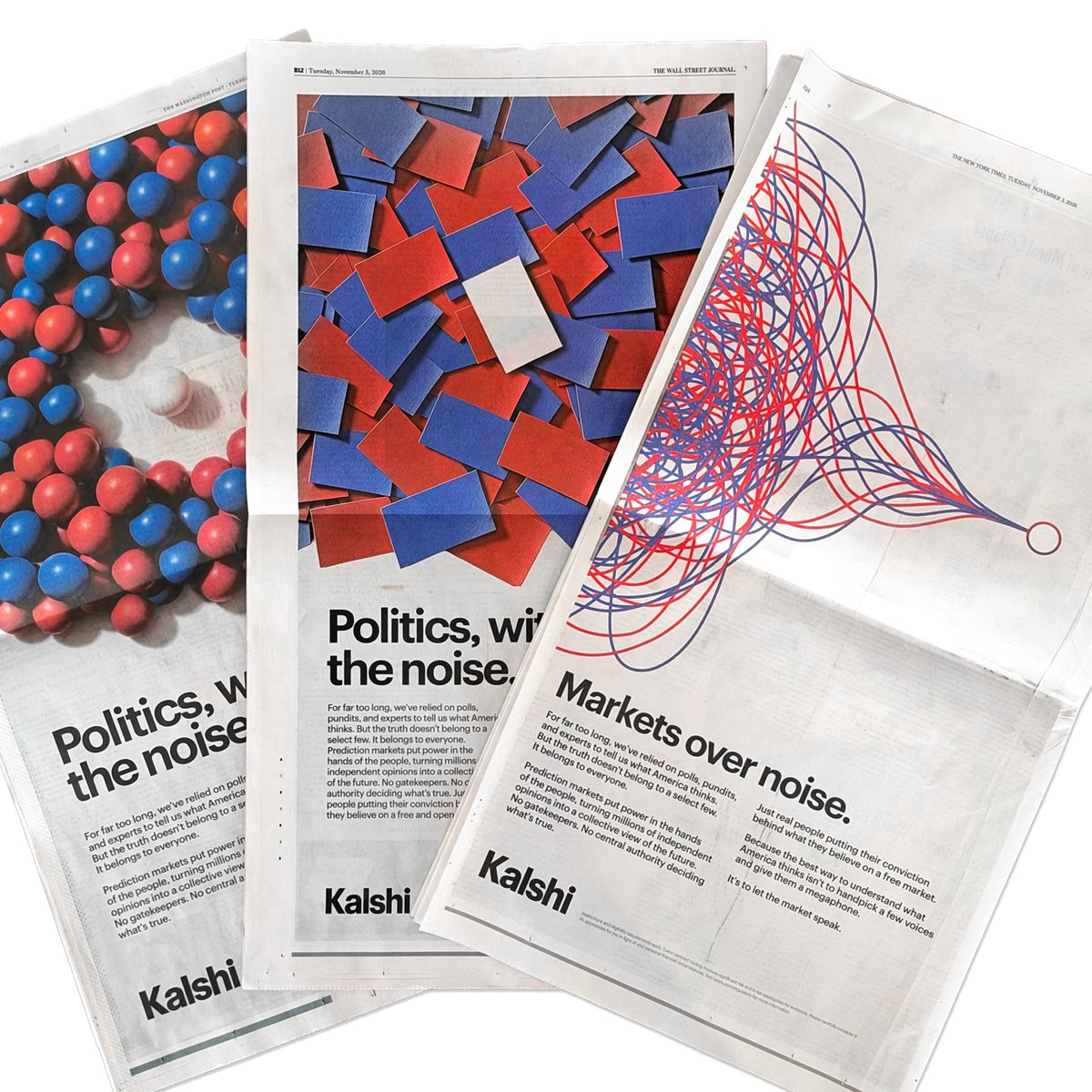
Markets over noise.
For far too long, we’ve relied on polls, pundits, and experts to tell us what America thinks.
But the truth doesn’t belong to a select few.
It belongs to everyone.
Prediction markets put power in the hands of the people, turning millions of independent opinions into a collective view of the future.
No gatekeepers. No central authority deciding what’s true.
Just real people putting their conviction behind what they believe on a free market.
Because the best way to understand what America thinks isn’t to handpick a few voices and give them a megaphone.
It’s to let the market speak.
In the past 24 hours the Kalshi CEO has received felony charges from Utah's casino mafia attorney general, admitted on national television he hooked up with his cofounder and now today he announces he has raised at $40 billion
This guy might be the goat
Thank you for having me @CBSLosAngeles to speak about prediction market hedging!
Many speculate (or "bet", as you call it) on prediction markets, just like they do on any derivatives market. But the exchange structure harnesses that speculation for price discovery and enables risk management for individuals and businesses, big or small.
Over time, prediction markets will let people manage exposure to most things outside of our control. We're in the early innings of that. Incredibly excited to be part of building that future.
Introducing “My Ballot” to the Kalshi Midterms Hub, with nonpartisan election data from Ballotpedia.
All of the information you need to vote, stay informed, and track the real-time market movements in one place.
James Talarico has a 63% chance to beat Ken Paxton in the Texas Senate race, according to Kalshi traders.
But what percentage of Texas Senate traders are buying Yes on Talarico?
• All Americans: 46%
• Texans: 42%
• Non-Texas: 48%
Kalshi is strengthening anti-harassment policies to act against those who target athletes with abusive or threatening behavior tied to trading.
We are partnering with Signify Group, the global leader in online safety, to protect athletes and coaches from online abuse and threats.
https://t.co/oOmiLqXmRp
Mountain Bike San Francisco offers bike tours and rentals in Northern California.
Mark Baeder, the founder, has been leading private rides, full-day adventures, and corporate events for over 14 years in the Bay Area.
With El Niño underway, Northern California could see high monthly rainfall throughout the wet season, especially in November and December.
To protect himself against lower bookings for his business, Mark decided to hedge this risk on Kalshi by taking a $1K position on heavy rain in Napa from November 2026 through March 2027.
If El Niño doesn't produce heavy rains, his mountain bike business will continue to thrive and serve the community.
If El Niño does produce heavy rains, his mountain bike business can expect lower bookings, but his Kalshi position can help cover the difference.
Either way, Mark has protected his business against a rainy season.
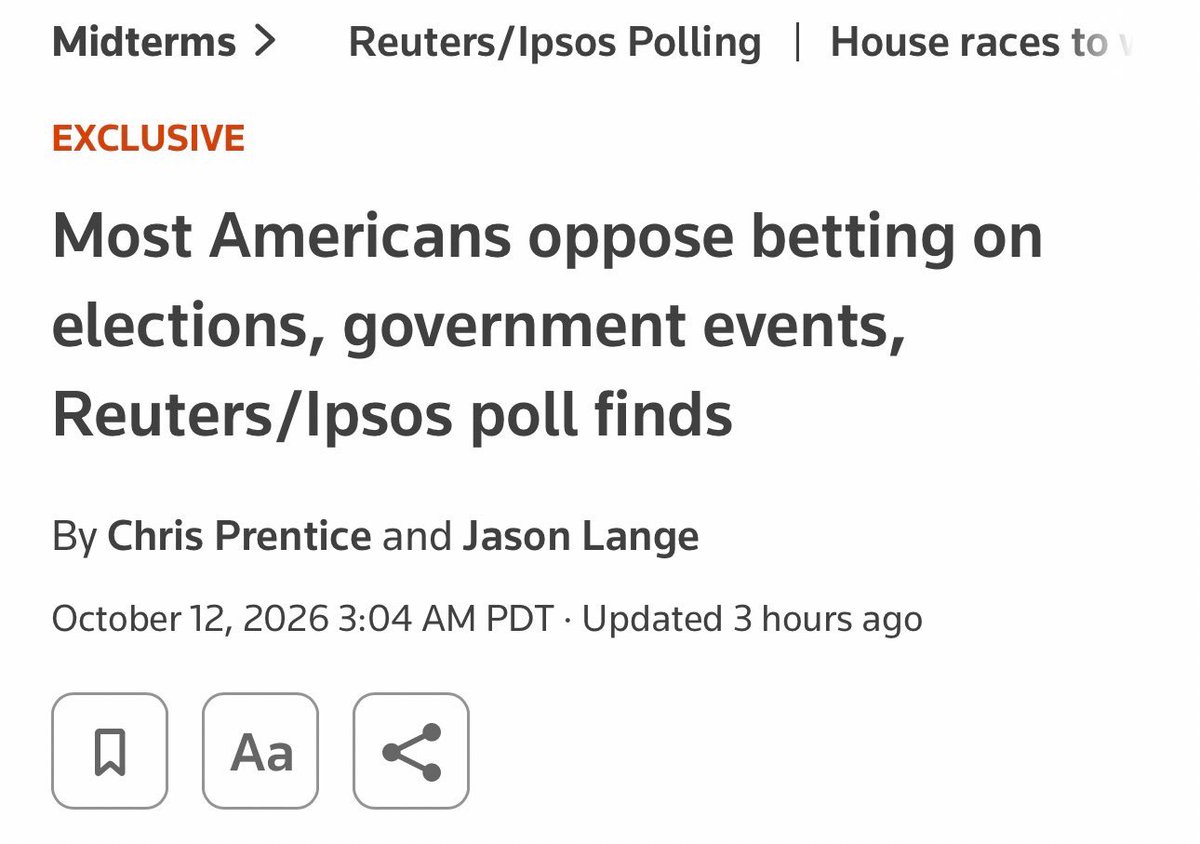
This article is why no one trusts the mainstream media, Reuters included.
Here’s a perfect example of how they rig the narrative BEFORE even asking the first question.
Start by barely explaining what prediction markets actually are, and then frame the entire discussion around war and gambling.
Ask loaded questions designed to make people view prediction markets negatively before they even understand how they work.
That’s how you manufacture a narrative.
Source: https://t.co/dpOhAqyGhK
How to make a poll say what you want:
Barely explain what prediction markets are.
“Do you like war?”
“Do you like betting on war?”
“These markets are gambling. Do you support gambling?”
“Prediction markets are horrible. Do you support prediction markets?”
Gather and publish the results.
Make sure to call it an unbiased poll.
Another episode of the agenda-driven journalism series. 🤡
https://t.co/27dMz0JK08
"Doug Lorch appears unassuming - a retired IBM programmer with a gray beard, glasses, and a duck Facebook avatar, living quietly in Santa Barbara and driving a red Miata.
Doug has no special expertise in international affairs, but he has a healthy curiosity about what's happening. He reads the New York Times. He can find Kazakhstan on a map. So he volunteered for the Good Judgment Project. Once a day, for an hour or so, his dining room table became his forecasting center, where he opened his laptop, read the news, and tried to anticipate the fate of the world."
- Philip E. Tetlock and Dan Gardner, Superforecasting: The Art and Science of Prediction