Selling cash-secured puts on platform stocks is one of the cleanest strategies in retail options.
Most people run it by hand. Spreadsheet, vibes, a mental note about IV.
I built https://t.co/PhnSfN8BLM to run it systematically. Thread on what it does and why. 🧵
If you think the Taiwan Semiconductor Manufacturing Company Limited (TSMC), which controls fabrication of over 90% of the world’s advanced computer chips, would provide Jensen Huang and Nvidia advanced chips if they thought he was a national security concern involving China, then you are simply a MORON.
These chips are literally Taiwan’s defense shield against Chinese invasion because they are too valuable to the US and the rest of the world.
If TSMC CEO CC Wei felt Jensen was untrustworthy, he would’ve cut off chip allocation a LOOOOONG time ago.
Put on your damn thinking caps, sheeple.
Ok… I haven't been very active over the past few days. Kids have been sick, and work has kept me busy.
But I managed to find some time to put this together.
In my opinion, we're witnessing one of the BIGGEST DISCONNECTS between price and fundamentals I've seen in the market.
Some context first: looking back, I should have taken more profits before this correction started.
This is my personal research and opinion, not financial advice.
So, let's begin:
AI is now a matter of national security. Technology investment has accounted for somewhere between a third and half of US GDP growth this year, depending on how you measure it.
The US cannot afford to fall behind China in this race.
And we're potentially witnessing the biggest industrial transformation in modern history. In my personal opinion everyone knows that and can see that.
Most investors understand the long-term significance. But understanding the opportunity doesn't make the volatility any easier to stomach.
For context my model is built on 2.7 million data points and tracks back the past +70 years.
Right now the market mood is obviously fearful.
Selling pressure is concentrated precisely where the growth is: AI, semiconductors and high-beta technology.
But here's where things get interesting.
The underlying businesses haven't rolled over.
Earnings are still growing. AI spending is still increasing. Even the slowdown analysts anticipate next year implies substantial growth.
The trade is breaking down, but underlying thesis is still very much intact.
And valuations tell an interesting story. $QQQ, technology and beta trades well below earnings. The disconnect here is impressively insane imo.
To be clear, cheaper doesn't necessarily mean cheap. But the valuation picture is very different from what the headline price action might suggest.
The economy isn't breaking either.
My macro model currently reads Goldilocks:
- An economic expansion now 67 months old.
- Growth remains strong and is accelerating.
- None of my five recession indicators are signalling a recession.
Yet the bond market is pricing in something closer to a growth scare: falling yields and widening credit spreads. Another disconnect worth watching.
Under the surface, this looks more like a rotation than a broad market collapse.
The equal-weight S&P 500 is only around 4% below its highs, roughly half the decline in the headline index.
The selling has been disproportionately concentrated in the largest names.
Capital has rotated towards healthcare and consumer staples, and that rotation is becoming stretched.
Even small caps have held up against large caps this month.
There is, however, one significant headwind: interest rates.
Real yields remain close to their highest levels in 20 years. That's a serious obstacle for businesses whose valuations depend heavily on future growth.
So why do I believe a return to risk-on conditions is increasingly plausible in 2027?
A few things stand out in my data:
1. My risk-phase model reconstructs risk-on and risk-off transitions week by week, going back to 1990. 9 of the 12 indexes I track currently have risk-on as the next phase in their historical sequence. For the Nasdaq 100, risk-on followed comparable periods within a year roughly 80% of the time.
2. Inflation swaps are pricing US inflation back towards 2% by late 2027. If that materialises, the interest-rate headwind could begin to ease.
3. Historically, market readings resembling today's have occurred closer to market bottoms than market tops.
4. Semiconductors remain the laggard. They're still in a risk-off phase, and historically, they have tended to take a few months longer to turn.
None of this is a forecast. It's historical precedent, not a guarantee.
So, ehat does this mean for me as a long-term investors?
I don't think the most important question is whether next week is green or red.
It's whether earnings growth and AI infrastructure spending will still be intact in 2027.
Right now, my data suggests they will be.
But there are two things keeping me humble:
- Fund managers are still heavily positioned long Nasdaq futures. The market hasn't experienced a complete positioning washout.
- My breadth model has also flagged a warning over the past three months. The internal market picture is far from clean.
If AI earnings expectations begin rolling over, hyperscaler spending starts declining, or credit spreads continue widening into genuine financial stress, the AI thesis needs to be reassessed.
Until then, I see a market where prices are falling faster than the underlying fundamentals are deteriorating.
And that is the disconnect imo right now.
-BP
Not financial advice.
$QQQ $SPY $IREN $NBIS $COHR $MU $NVDA $CIFR $SIVE $AAOI $RKLB $ASTS $HIMS $ONDS $SPCX $LITE
Peter Lynch said to know what you own and why you own it. Easy advice when $NVDA is ripping. A hell of a lot harder on a Friday at $125 when you don’t know if Jensen is coming back.
I bought my first shares in 2016. I’ve spent a decade studying this company, from the data center floor all the way up to the Nemotron models. I held. I added on the dips. But these last two weeks forced me to answer the same question CNBC asked me on air: What happens to NVIDIA without Jensen?
My answer was pretty blunt. He’s the lifeblood of this company. Customers plan multibillion-dollar data centers around the roadmap he lays out. Engineers who’ve spent their careers working for him have to deliver on it. If you think you can swap out the guy who built those relationships over 33 years and leave every assumption in your spreadsheet untouched, good luck with that.
So yes, if Jensen was out for good, the investment story changed for me. That’s why I pushed the Stand With Jensen petition, went on CNBC and wrote directly to NVIDIA’s board members. I wanted him back, and I told them exactly why.
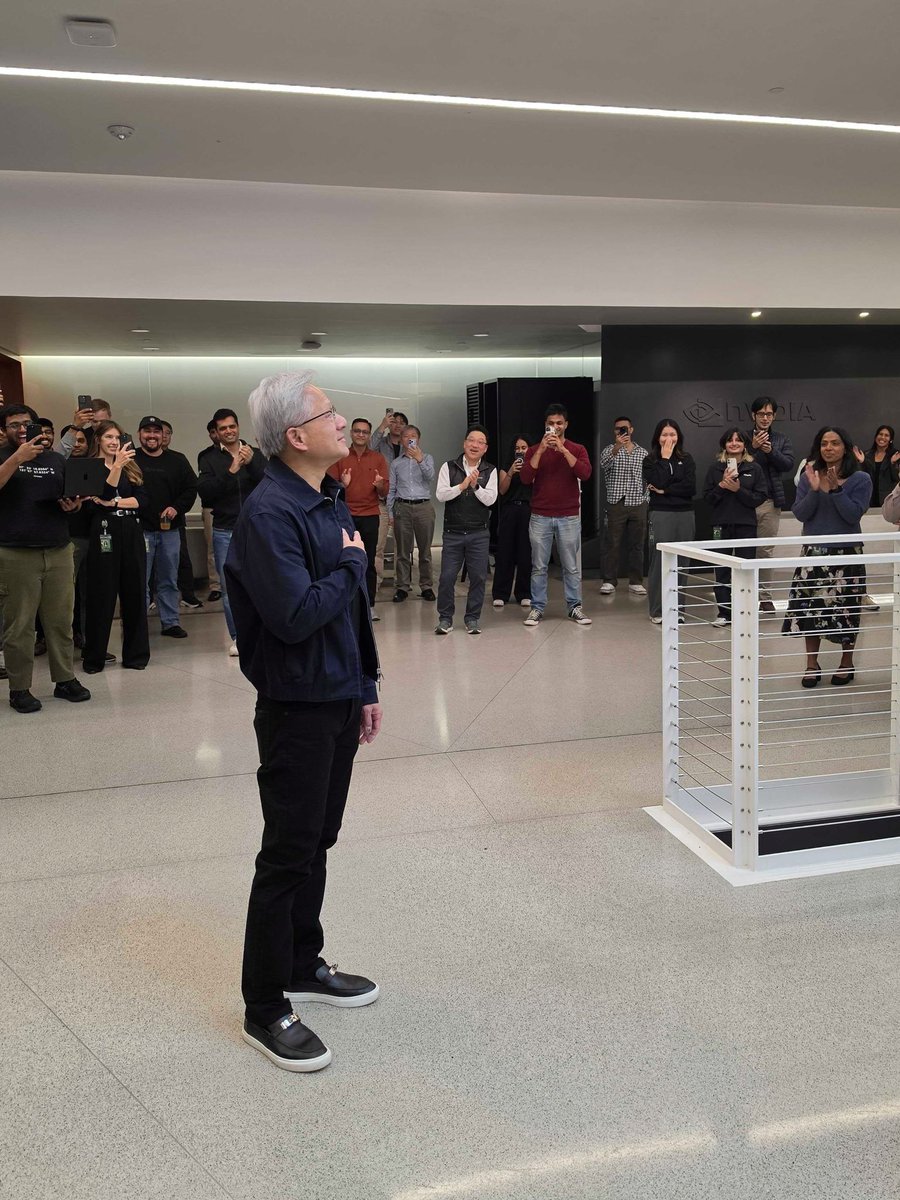
Then I watched him walk back into NVIDIA. His employees were cheering. He thanked them for a second chance and told them he’d be a better CEO the second time around. After 33 years, the guy still thinks he can get better. That’s the Jensen I bet on.
Last week I was on CNBC being asked what NVIDIA looks like without him. Next week I’ll be at GTC DC hearing from Jensen himself about what he’s building next.
I fought for his comeback. Here we are. See you in DC, Jensen.
Say what you want about Elon Musk but the way he stood by Jensen these past few weeks genuinely made me respect him a lot more.
He didn't need a board vote to tell him what to think.
BREAKING: Jensen Huang releases a statement after being reinstated as CEO of Nvidia, $NVDA:
Full statement:
"I am honored to return to NVIDIA and lead one of the most consequential technology companies in the world at the beginning of a new industrial revolution. I take this responsibility with the greatest humility and renewed commitment. I want to thank the NVIDIA Board for its confidence and deliberation through this process. I am especially grateful to Harvey Jones for his leadership as Chair, and to Colette Kress and our executive staff for leading NVIDIA during this period. I am also deeply thankful to our employees, shareholders, leaders across the industry and partners around the world for their extraordinary support. Above all, I am grateful for the love and support of my family. I can’t wait to get back to work."
Jensen has been reinstated as CEO with immediate effect.
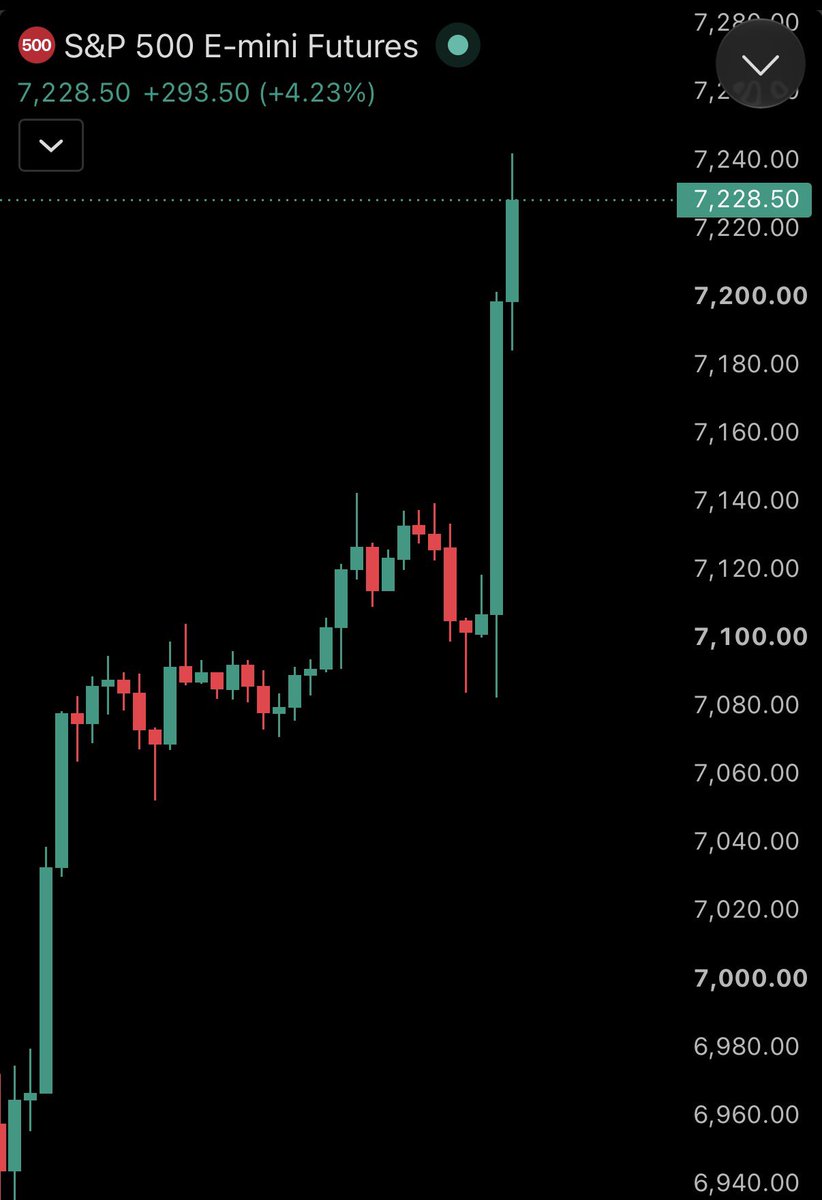
BREAKING: Nvidia stock, $NVDA, surges over +28% after the company reinstates Jensen Huang as CEO, effectively immediately.
The stock has now added +$820 billion in market cap today on the news.
Jensen Huang is officially back.
Gerstner: The Nvidia board may have jumped the gun and fired Jensen without doing a proper investigation!
Brad Gerstner is the founder, chairman, and CEO of Altimeter Capital and major investor in Nvidia. Gerstner practiced securities law at Ice Miller LLP and served as Deputy Secretary of State of Indiana.
Gerstner asserts that the board acted with a rushed, hasty judgment by pressuring Nvidia's CEO to resign without fully establishing whether any national security laws were actually violated (1:12-1:40). He argues that the board had a fiduciary obligation to shareholders to take the time necessary to gather all facts before taking such a drastic step (1:33-1:38).
Furthermore, Gerstner points out that while the Department of Justice has been investigating the situation for 14 months, no charges have been brought against the company or its leadership (6:35-6:47). He warns that if no wrongdoing is proven, the board faces significant accountability to shareholders for failing to conduct a deliberate investigation (1:46-2:27).
Clear this is a runaway board which have failed their fiduciary duty to both shareholders and to the company itself.
Bring Jensen back or fire the board.
I believe the @nvidia board is not acting in the best interest of shareholders nor in a manner consistent with their fiduciary duties.
What we know is that the board fired Jensen or forced his resignation for violating company policy and/or in response to the accusation of an affair with a spy.
They did so without careful consideration of the impact on the company, its customers, its shareholders or other stakeholders.
They rushed to judgment without the benefit of careful due diligence or even with a basic understanding of the facts.
How do we know this?
We know this by how quickly Jensen was fired and how little was known at the time of his firing.
It takes time to convene a board meeting. There was time, maybe, for one Zoom.
And this is a decision that should have been made by a board sitting in person and carefully deliberating the facts once they are known.
And they should have slept on the decision and met again the day after to discuss the facts, the risks and the other implications of their decision.
The timing and lack of information did not allow for careful board deliberation.
While boards can fire a CEO for an inappropriate relationship with a subordinate, it should not be an automatic decision. That is why we have boards comprised of humans and not agents.
A board should consider whether or not such a relationship was consensual or whether it was an abuse of power dynamics. And a board has to consider what the impact of the firing is on all stakeholders.
If I were in this board, I would not have rushed to judgment based on articles in the media. I would have made sure the board had all of the facts so it could make a careful and informed decision.
Boards of Delaware companies have a duty of care which means they must make informed, prudent and good faith decisions. This clearly did not happen here.
What law firm is advising this board?
Or is the board even taken good legal advice?
It doesn’t look like it.
And now the board is compounding its failures by insisting that there is no possibility for Jensen’s return as CEO.
Why is it in the best interest of the company to foreclose the possibility of Jensen’s return and to do so before all of the facts are known? This is yet another breach of their duty of care.
Furthermore, the board has launched an investigation whose scope is unknown. Investigations can be extremely damaging to a company and should be carefully targeted to address whatever facts need to be known rather than be overly broad in scope.
In short, this looks like a series of major governance failures by directors that panicked due to headlines in the media. They likely felt compelled to do something because they were afraid of looking bad in the media, not because it was the right thing for them company.
They couldn’t stand the heat.
The board’s conduct here is shocking for a company of this scale and importance to our country and the world at large, particularly at this moment in history.
What happens when you remove the Asian in charge of making all the Asian deals - 关系 starts breaking down and now you have a loanshark paying O$P$ on your front door!
One does not simply replace decades of guanxi and baijiu.
Jensen was setting his kids up as successors bc these relationships pass by blood. Americans see nepotism and poor governance but the Asians know it’s the only way to prevent alpha decay.
Most of these East Asian companies in the global supply chain are run on relationships just like Nvidia. If Jensen calls the CEOs today and says “they ousted me”, they will immediately nuke all deliveries, contract or not. I would be very surprised if they haven’t already called to offer.
Nvidia board has zero East Asians who understand this. They will make the wrong decision and are gonna get fucked navigating this.
You are leaving out key details; Jensen with 3.5% gets to put in 2 of his choosing. 15% calls a special meeting, and I think that’s an easy threshold to cross.
With a minority of the board on his side, 2 new addition and an upcoming special meeting to vote out the incumbent holdouts; retail with more than 30% voting power had disproportionate power.