A third of British twelve year olds now need a brace. Dig up a thousand skulls from before agriculture and you will struggle to find a crooked tooth in the lot of them.
Same species. Same genes. Straight arches, full sets, wisdom teeth sitting where they belong with room to spare.
Ours arrive sideways and get cut out in our twenties, because there is nowhere left for them to go.
Weston Price chaired the research section of the American Dental Association for fourteen years. In the 1930s he stopped drilling and went looking for people who had never needed him.
Fourteen isolated groups. The Swiss Alps, the Outer Hebrides, Kenya, Peru, the Torres Strait.
Broad palates. Straight teeth. Faces that had room in them.
Then he found their relatives further down the valley, living on white flour, sugar and tinned goods.
Narrow faces. Crowded mouths. Jaws that had not come out the same shape.
Same villages. Same bloodlines. One thing had changed, and it was the food.
The jaw is a bone. Bone grows to meet the load put on it, and chewing is the load.
The window is roughly two to twelve, while the palate is still widening and the arch is still being laid out.
By the teens the seam across the roof of the mouth has knitted shut. Before that, an orthodontist widens a palate with a screw. After it, a surgeon does it with a saw.
So the shape of a face for the next eighty years is settled in primary school, by whatever somebody puts on the plate.
And that is exactly the age at which a parent is told to stop worrying about it.
Let them be children. They will grow out of it. It is far too early to be thinking about their diet.
So it is the beige tray, the yoghurt tube, the cereal bar, the smoothie. Around two thirds of what a British child now eats is ultra-processed.
Nothing on that list requires a jaw. The hardest thing in the lunchbox is a crisp.
The teeth still arrive on schedule. The room does not.
And the palate is the floor of the nose, so when it narrows the airway narrows with it.
The face that turns up in a paediatric sleep clinic is that exact face. High arched palate, narrow upper jaw, crowded teeth, mouth hanging open.
Those children do not present as tired. They present as fidgety, distracted and behind, and plenty are assessed for ADHD before anybody thinks to look inside their mouth.
Then the bill arrives in instalments. Extractions, braces, a retainer for life, a sleep referral if it went far enough.
Not one parent in that queue did a single thing wrong. They followed the advice to the letter, from people with a product on the shelf and no interest in a jaw.
Price published the lot in 1939 and the profession filed him under crank.
Ninety years on we are still straightening the teeth and still refusing to ask why they stopped fitting.
A child gets one go at building a face, and nobody mentions it has a closing date.
California’s Central Valley has lost more than 90 percent of the four million acres of wetlands that once supported an estimated 40 million wintering waterfowl, drained over a century of agricultural expansion since the Gold Rush. The birds still fly the same route every year, along the Pacific Flyway from the Arctic to the tip of South America. The land they used to rest on mostly isn’t there anymore.
The Nature Conservancy’s answer, born out of a punishing 2014 drought, was to stop trying to buy wetlands back permanently and start renting them instead. BirdReturns runs as a reverse auction, rice farmers who already flood their fields every winter to decompose leftover crop stubble bid on how much they’d need to be paid to flood earlier in the fall or drain later in spring, timed to exactly when migrating birds pass through rather than when the farm’s own schedule happens to align. TNC’s chief economist described the original idea bluntly, wondering if you could actually rent a wetland and whether farmers would show up to a strange auction for flooding their own land on a schedule.
They did. What started as 10,000 acres across 40 farms in the pilot year has grown into more than 60,000 acres across over 100 farms, generating over 2 million dollars in direct payments, and the birds respond to it measurably, published research shows shorebirds flock to these fields in greater numbers and diversity than to ordinary farmland nearby. The flooding also breaks down leftover vegetation and returns nutrients to the soil the farmer needed anyway, which means the birds are getting free labor out of a system built to serve someone else’s balance sheet.
I want to show you the chart that destroys 50 years of dietary advice.
Hong Kong has the highest per capita meat consumption on earth. 695 grams per day. Over one and a half pounds of meat. Every day.
Hong Kong also has the longest life expectancy on earth. 84.3 years.
Most meat. Longest life.
If meat caused heart disease, obesity, and cancer, this chart would not exist. The country eating the most of the food you were told to fear is outliving every country on the planet.
Private equity firms bought 500 hospitals. Death rates in their emergency rooms went up 13%. They fired 12% of the staff. Then they paid themselves billions in dividends.
A Harvard study just confirmed what doctors already knew: people are dying so investors can hit quarterly targets.
Exactly what happens. A PE firm buys a hospital using debt. The debt gets placed on the hospital's balance sheet, not the firm's. Now the hospital owes hundreds of millions it never borrowed. To service that debt, the hospital cuts costs. Costs mean nurses.
The numbers from the Harvard/University of Chicago study are horrifying. After PE acquisition, emergency department salary spending dropped 18.2%. ICU salary spending dropped 15.9%. Hospital-wide employees were cut 11.6%. Emergency department deaths rose 13%, seven additional deaths per 10,000 visits.
A separate study found patients undergoing surgery at PE-acquired hospitals had 17% higher odds of dying within 90 days.
Steward Health Care, owned by Cerberus Capital, filed bankruptcy with $9 billion in debt after closing hospitals across Massachusetts. The CEO lived on a $40 million yacht while emergency rooms went dark. Eight hospitals serving 2 million people nearly disappeared because a PE fund extracted more cash than the system could survive.
The private equity industry has poured over $1 trillion into healthcare. They operate a quarter of ERs nationwide. This isn't going away.
The investing angle nobody talks about.
Non-PE hospital operators like HCA Healthcare (HCA) and Tenet (THC) are the direct beneficiaries. Every time a PE hospital closes or deteriorates, patients flow to the nearest competitor. HCA has returned 1,200% since 2011. Patient volume from PE closures is a structural tailwind nobody's pricing in.
Medical staffing firms (AMN Healthcare, Cross Country) charge premium rates specifically because PE hospitals cut staff. The staffing shortage IS the business model for these companies.
The disruption play: outpatient surgical centers (SCA Health, now part of UnitedHealth) are pulling profitable procedures out of hospitals entirely. PE-owned hospitals lose their highest-margin surgeries to outpatient, and the death spiral accelerates.
Pull up tradevision and monitor healthcare M&A alerts, hospital closure filings, and patient volume migration data. When a PE-owned hospital announces "restructuring," the patient volume shift to competitors like HCA starts within 30 days. That 30-day window is when the competitor's earnings revisions haven't updated yet. Free to try.
(a private equity firm bought your local hospital. borrowed $500 million in the hospital's name. fired 12% of the nurses. emergency room deaths rose 13%. then they paid themselves dividends. nobody went to prison. they're currently buying another hospital.)
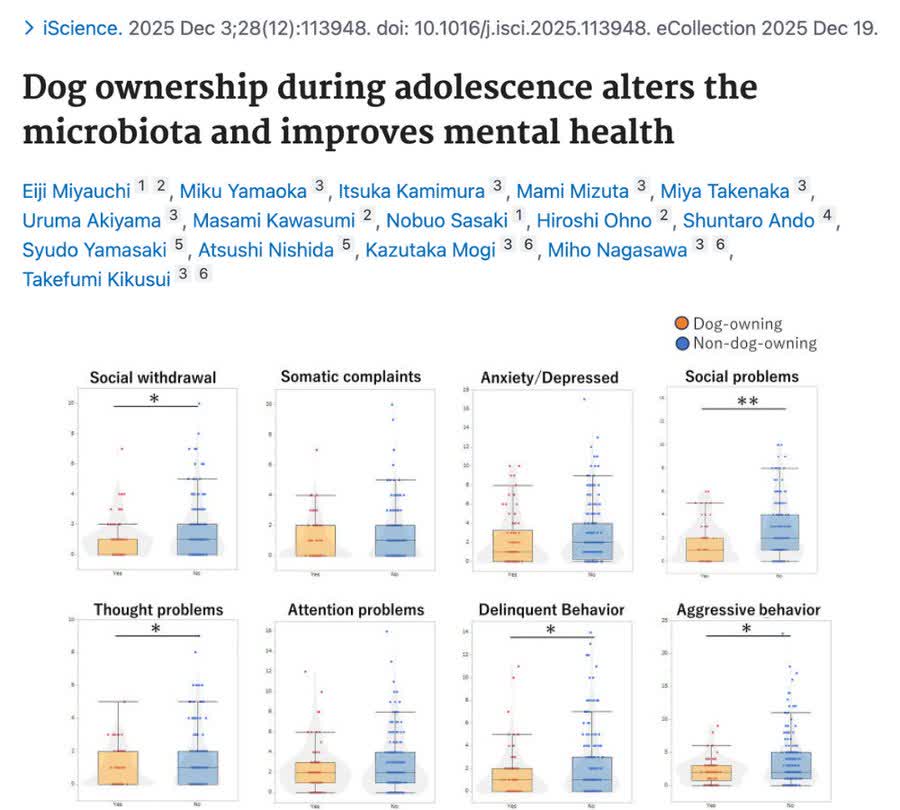
Is it ok to let your kids kiss the dog?
A new study found that teenagers who live with dogs show better mental health and fewer social difficulties.
In a group of 343 teens, dog owners scored better across five behavioral measures: less social withdrawal, fewer social problems, fewer thought disturbances, and lower rates of delinquent and aggressive behavior.
The unexpected factor? Microbes.
Teens with dogs had distinct saliva microbiome patterns. When researchers transferred those microbes to mice, the mice became more socially engaged — suggesting that dogs may influence the microbiome in ways that enhance sociability.
https://t.co/IAEpyNpN1K
Robert F Kennedy Jr - "We shouldn't be talking about Glyphosate, we should be talking about Roundup"
"If you read all of these documents that we've gotten [and] see all the sneaky stuff they do.... "
KENNEDY - "Even in their most private emails to each other.. they're talking about how nobodies ever tested this and we know that the formulation is much, much more toxic than Glyphosate ... [it's made to] slip through the bark of the plant [and] those same chemicals also enable that molecule to penetrate the blood brain barrier".
Please don't be afraid to watch and listen to things that may challenge your current thinking and understanding of things. Healthy debate and challenging experts is an important function in a free society.
The graph they built on a lie. The iconic 'climate' graph that's undermining industrial capitalism and taking our freedom...and it's 100 percent garbage. @TomANelson@Martin_Durkin
🔥A Ketogenic Diet Saved My Life from Inflammatory Bowel Disease (Full Video)
There was a time when I was critically ill with inflammatory bowel disease. It took everything from me: my physical health, my happiness, my social life, my career prospects, my romantic life.
Out of desperation, I tried a ketogenic diet—and within a week, everything changed. My symptoms stopped, inflammation markers dropped, and follow-up testing showed no active disease.
In today’s video, I get personal and scientific.
I investigate what may have happened inside me biologically. This isn’t a promise or a prescription. It’s a personal story, grounded in real data, that explores the tension between lived biology and what medicine has—or hasn’t—caught up to yet.
Biology doesn’t wait for peer review.
Chapters:
0:00 – How a Ketogenic Diet Put My Inflammatory Bowel Disease into Remission
1:36 – Human Trial: Keto Rapidly Reshapes the Gut Microbiome
3:20 – Ketosis Suppresses Gut Inflammation and TH17 Immune Cells
4:35 – Fecal Transplants Prove the Ketogenic Microbiome Is Causal
6:50 – When Evidence-Based Medicine Lags Behind Biology
8:37 – Real Patient Remissions from a Ketogenic IBD Case Series
9:14 – Biology Doesn’t Wait for Peer Review — Stay Curious
#keto #ketogenicdiet #guthealth #IBD #crohnsdisease #ulcerativecolitis #microbiome
Breast milk contains approximately 50-55% calories from fat, 35-40% from lactose (milk sugar), and 5-10% from protein.
That lactose percentage sounds like it would kick babies out of ketosis. Except babies remain in ketosis despite consuming significant sugar.
How?
Galactose metabolism is different from glucose metabolism. Lactose breaks down into glucose and galactose. The glucose component is minimal. The galactose component bypasses many of the insulin-response pathways that glucose triggers.
Galactose converts to glucose in the liver but the conversion is slow and regulated. It doesn't spike blood sugar the way dietary glucose does. This prevents the insulin surge that would shut down ketone production.
The high fat content provides substrate for ketone production. Babies are born with limited glycogen stores - their muscles contain minimal stored glucose. When you combine high fat intake with limited glycogen storage capacity, the body defaults to producing ketones for brain fuel.
Newborn babies have ketone levels 3-5x higher than adults. This isn't pathological. This is the designed metabolic state. The brain is growing at maximum rate, needs tremendous energy, and ketones provide cleaner more efficient fuel than glucose.
The evolutionary logic is perfect. Babies need maximum brain development during the first year. Brain tissue requires fat for structure - myelin sheaths, cell membranes, neurotransmitter production. Breast milk provides 50%+ calories from fat. Babies stay in ketosis burning fat for energy while using dietary fat for building brain tissue.
This is why babies on breast milk develop faster cognitively than formula-fed babies. Breast milk maintains ketosis, ketones provide optimal brain fuel, brain development accelerates.
Modern formula attempts to replicate breast milk macros but fails to maintain ketosis. Formula fat sources are often seed oils - inflammatory and oxidatively unstable. Formula sugar sources are different - corn syrup, lactose from cow's milk processed differently. The result is babies get kicked out of ketosis, burn glucose instead, and develop suboptimally.
The long-term health outcomes support this. Breastfed babies have higher IQ scores, better immune function, lower obesity rates, lower diabetes risk. The difference persists into adulthood.
This isn't just antibodies and bonding. This is metabolic programming. Babies designed to run on ketones and fat, fed ketogenic milk, develop optimal brain structure. Babies forced onto glucose metabolism through formula develop suboptimally.
Then at 6-12 months, parents introduce solid foods following pediatrician advice. Rice cereal, mashed banana, oatmeal - pure carbohydrates. Baby gets kicked out of ketosis permanently, switches to glucose metabolism, and the metabolic damage begins.
The advice is backwards. Babies should stay in ketosis as long as possible during brain development. Introduction of solids should be fatty meats, egg yolks, fish - foods that maintain ketosis, not carbohydrates that force glucose dependence.
Traditional cultures understood this without biochemistry. Inuit babies were introduced to pre-chewed seal fat and fish. Maasai babies got animal blood mixed with milk. Plains Indian babies got bone marrow and organ meats.
All of these maintain ketosis. None of these create glucose dependence.
Modern pediatric nutrition recommends rice cereal as first food. Rice is pure glucose. Baby goes from ketogenic breast milk to glucose bomb and parents wonder why colic, rashes, and behavioral issues appear.
Your baby's brain is 60% fat. Breast milk is 50% fat and maintains ketosis. This is the biological baseline. Every deviation from this creates suboptimal development.
The fact that babies naturally stay in ketosis despite lactose proves ketosis is the human metabolic default, not an extreme adaptation. We're designed to burn fat and produce ketones. The high-carb diet is the deviation, not ketosis.
In 2008, evolutionary anthropologist Katie Hinde began studying breast milk from rhesus macaque mothers. What started as a routine study turned into a groundbreaking discovery. She found that mothers raising sons produced milk richer in fat and protein, while those raising daughters had different nutrient balances. This led Katie to a radical conclusion: milk is not just nutrition—it’s information.
Her research revealed that milk shapes behavior, not just growth. For instance, first-time mothers produced milk with higher levels of cortisol, influencing their babies to grow faster but also become more anxious. Katie also discovered that milk changes based on the baby’s immune needs. When a baby is sick, the mother’s milk quickly adapts by producing more white blood cells and targeted antibodies.
Katie’s work, which challenged the scientific consensus, was largely ignored. She launched a blog, Mammals Suck Milk, to spark discussions, and her findings, including that every mother’s milk is unique, gained widespread attention. In 2017, she took her research to a TED stage, and in 2020, her work was featured in Netflix’s Babies. Today, as a professor at Arizona State University, Katie continues to revolutionize our understanding of infant development and lactation.
Katie Hinde didn’t just study milk—she uncovered a living, responsive communication system, revealing that nourishment is intelligence. Her discovery shows that sometimes the biggest revolutions begin by listening to what others ignore.
RFK Jr. says Lyme disease has made the woods dangerous for everyone.
“I spend a lot of my life in the woods, and that experience has now become hazardous across this country”
“I remember one day in 1987 when I stood in my bathtub and picked 29 ticks off myself.”
“That was typical in Bedford.”
“The MAHA movement is trying to get children to be active, to get them to go outside, to get them to experience nature, not only because that's gonna benefit them physically, but also the spiritual connection that we get to God.”
“We’ve got to figure out a way to make it safe for children to go back in the woods again.”
Flu shots are a COMPLETE FAILURE — they increase your risk of dementia (+38%), Alzheimer's (+50%), AND the flu (+27%).
The single LARGEST vaccine–dementia study ever conducted (n=13.3 million) finds common vaccines dose-dependently increase risk of dementia and Alzheimer's for a FULL DECADE.
A major Cleveland Clinic study (n=53,402) found −27% flu shot effectiveness during 2024–25 flu season.
Very similar analysis to the one I did 30+ years ago at EPA as part of EPA's first climate change policy shop. With pollution, you always have to do a lifecycle analysis
The push for EVs and electric stoves is a tell - the current obsession w climate change isn't meant to save the planet, but rather rob it.
None of the changes being pushed or adopted make any sort of cost/benefit sense -- except for the corporations and their lobbyists.
SPEAKING WITH ANDREW HUBERMAN AT EUDEMONIA SUMMIT, PART 2.
Last year I had the opportunity to ask @hubermanlab a question regarding the conversation he had with @DrJackKruse on the @tetranow podcast.
This year at @EudemoniaSummit I was able to ask Andrew a second question.
Since last year, Andrew has had @RogerSeheult on the podcast and most recently Dr. Glen Jeffery, a physician and researcher whose work I have been following and sharing.
The @hubermanlab podcast episode with Dr. Glen Jeffery has already been recorded so stay tuned for that.
In the meantime, Huberman highlights some important studies Dr. Jeffery has done and the impacts his research has in the video below.
"I believe that we are in the midst of one of the greatest crimes in human history.
We have a product being injected into children 70+ times over the course of their development that’s never been tested against a proper saline placebo.
Over the course of that time period (1970 – 2025), chronic illness in this country has gone from 10% of children having one or more chronic conditions to now more than 50% of children having one or more chronic conditions.
Secretary Kennedy in the hearing that was last week said — the latest data from the CDC says that 76% of Americans now have one or more chronic conditions.
And I believe that lots of these chronic conditions stem from iatrogenic injury.
We have 3 million children with autism. Back in 1970 the rate was so low that it was essentially zero.
I’m outraged by that and I think every person in this room should be outraged by that.
I don’t know how to say it anymore clearly that we need to change course in this country.
And I’m terribly disappointed by the medical profession. In the social sciences, there’s this term called epistemic capture, which is when the entire knowledge production process becomes captured by one industry (Big Pharma). And that’s what’s happened with science and medicine.
And so I think we need to change course. And I think the people who have covered up the autism epidemic and the epidemics of iatrogenic injury should be held to account for their actions."