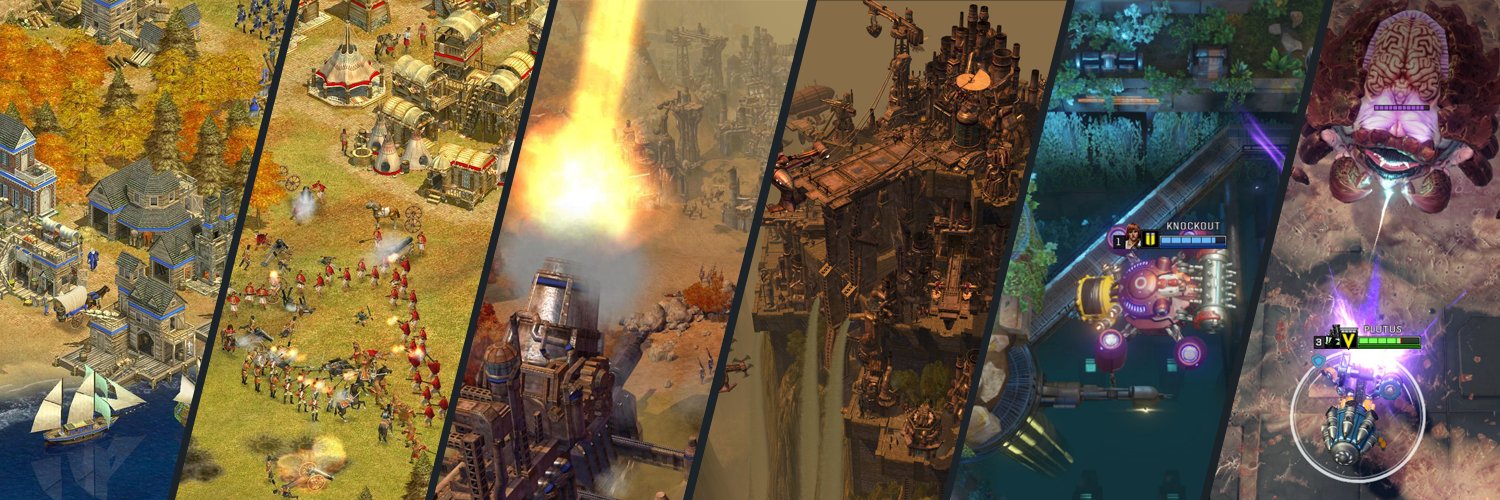
New home base.
25 years shipping games — Rise of Nations, Kingdoms of Amalur, Dropzone, the CODiE-winning Awakening World.
2 years rebuilding the craft around AI coding agents, in the open.
The practice, the writing, the tools — one place:
https://t.co/HcZahwiLAA
A boring prerequisite that unblocks a big, high-value subtree is not low priority.
My scheduler propagates Cost of Delay back onto blockers — so the dull task gating ten valuable ones rises to the top on its own, instead of rotting unscored.
https://t.co/Qs7jn9JukS
My backlog ranks itself by economic value — Cost of Delay ÷ Job Size — but the model never picks the number.
It classifies over closed enums; the server computes the score and rejects degenerate batches. The model judges; the server does the math.
https://t.co/Qs7jn9JukS
A rule kept leaking, from agents and from me: a field can cache within a frame but never survive into the next. Written in every docs file. Still leaked.
So I stopped writing it down and made it a compiler error. The leak stopped — not mostly, stopped.
https://t.co/Nn8xcKg3c7
An agent will close a task on evidence it invented — a commit SHA that doesn't exist, "verifier said PASS" when no verifier ran.
So the close path rejects SHAs unknown to the repo, and self-graded verdicts. Don't trust the evidence — check it.
https://t.co/Qs7jn9K2aq
Two responses to AI-written code, both losing: trust less and leave velocity on the table, or trust more — hope in a process costume.
The third needs no trust — systems that grade each other. Trust is a feeling. Validation engineering is a system.
https://t.co/Z8wJ1lVukX
Priced one prototype's backlog task-by-task against my own telemetry.
Sonnet on the workers + Opus on the checks: $1.66/task, 7/7 first-pass — about a third of Opus-everything. Same harness on all of it, so the gap is price, not quality.
https://t.co/G0kq7D3NWZ
My code output went 5x when Claude Code landed. The lesson wasn't that I got faster.
I didn't. The bottleneck moved — from what I can type, to what I can review, to what I can govern. Same engineer, one layer up. That migration is the job now.
https://t.co/W2p1RFQDJK
You can't ask an agent to log itself.
It's a vendor's binary behind a vendor's API — no span, no trace ID. So I built cross-vendor telemetry that watches from the outside. It even caught an agent quietly switching off the logger watching it.
https://t.co/Z5PnZBP7U8
When I open-sourced wood-fired-tasks, I'd pre-read 3.3% of the AI-written files — and none of the security-critical ones.
The replacement for review isn't trust. It's overlapping systems grading each other: tests, hooks, CI, verifier agents, audits.
https://t.co/Z8wJ1lVukX
Stop talking to your agents.
The conversational loop — describe, correct, re-describe — has a hard ceiling. The better lever: constrain the environment so the agent physically can't produce the wrong thing. In C#, that's the compiler.
https://t.co/Nn8xcKfvmz
I open-sourced wood-fired-tasks.
It's the missing primitive between one Claude Code session and ten of them working the same backlog without stepping on each other. MIT, on npm, self-hostable.
The origin, the design, and how I run it:
https://t.co/j9y1NPdIhA
Two and a half years of AI practice, in three acts.
From asking a chat assistant inside Rider to explain a build error, to running an orchestration layer that ships work I couldn't have written alone — with the output curve to prove the compound.
https://t.co/W2p1RFQDJK
How one prototyping contract turned my game engine into a platform.
Oct 2023: MECS goes from an in-process model of authoritative-server multiplayer to a real UDP wire. Then a backend grew around it — five layers, one codebase.
https://t.co/kYZ6ie53Ie
My networked engine, MECS, is six years old. The thinking behind it is twenty-three.
The origin story: peer-to-peer lockstep RTS netcode in 2003, the Dropzone ECS engine, an educational MMO, and the 2020 thesis that became MECS.
https://t.co/HqeFybwS2a