Here is the oxidative stability of common cooking fats, from most stable to least.
Coconut oil: 2
Beef tallow: 5
Olive oil: 13
Lard: 15
Canola oil: 40
Sunflower oil: 41
Corn oil: 57
Soybean oil: 65
Higher number means more unstable. More unstable means more oxidative damage to your cell membranes. More oxidative damage means more dysfunction.
The fats at the top of that list: the ones scoring 2, 5, 15, are the ones we were told to avoid.
The fats at the bottom: 40, 57, 65, are the ones we were told to replace them with.
The most chemically stable fats in existence are the ones that raised every civilisation that ever existed.
The most chemically unstable fats in existence are the ones on the heart-healthy aisle.
This is not ambiguous. It is a table.
Someone looked at this table and made the wrong choice.
Then put it in dietary guidelines.
Avoid cycling, walking and running on main roads or roads with heavy traffic. If there is no safe place outdoors, run on a treadmill or cycle on an exercise bike.
If is important to exercise for good health; but being alive is more important💔
@Abhirajputfit Sir,
Does all the chicken eggs ( large ie 50g to 60g ) contain 6 to 7 gm of protein ?
Is it possible to lab test eggs for protein content ?
Did anyone lab tested eggs for protein recently ?
Telling people with severe #depression to exercise because exercise is good for recovery from depression is fine. But clearly people giving out such advice have not experienced severe depression. Severe depression brings with it physical disability and complete lack of muscular strength.
One needs to first walk before one can run. Similarly, exercise is possible only when depressive symptoms reduce a bit.
That said, if you have depression of any level of severity, if you can just move a little, please do try to do that. If not, you're not a failure - if you survived today, that's enough. And then, tomorrow is another day! 🌸💫
Men who can handle stress, business, gym and life but can’t make their own breakfast aren’t “alpha”.
If hunger makes you call your mom,wife, sister or house help that’s not love or culture that’s dependence.
If you can wake up, check your phone, argue online and plan your day then you can boil eggs and cut fruits.
Stop troubling the women in your house for basic food.
I genuinely feel sorry for people who say
“Bro our grandparents ate Indian food, no protein, ghee, roti, chawal and lived 90–100 years.
Add the full sentence next time.
They also:
- Walked 10–15 km daily without calling it cardio
- Had no Swiggy, Zomato, midnight snacks or weekend binge culture
- Slept on time
- Had lower population stress, lower pollution, lower noise, lower cortisol
- Didn’t stare at a glowing screen 8–10 hours a day
- Didn’t sit on for 12 hours and call it desk job lifestyle
And most importantly:
They didn’t eat ghee on top of ultra processed junk and then blame genetics.
Bro, face reality.
You’re eating ghee
- sitting all day
- sleeping 5 hours
- scrolling till 2 AM
- stressed about money, body and validation
- breathing polluted air
- moving less than your grandfather did before breakfast
Stop romanticising the past to justify your present laziness.
and no amount of “but Indian food” will save modern body living an ancient lie.
Common Nutrient Deficiencies in People with Obesity & Diabetes
These deficiencies are frequent, under-diagnosed, and clinically relevant because insulin resistance, chronic inflammation, poor absorption, and restrictive dieting all play a role.
1️⃣ Vitamin D
Very common in obesity (fat-soluble → gets sequestered in adipose tissue)
Lower levels linked to:
↑ insulin resistance
↑ inflammation
Poor glycaemic control
Deficiency is associated with higher risk of T2DM and metabolic syndrome
Correction improves insulin sensitivity modestly but meaningfully when deficient.
2️⃣ Vitamin B12
Common in people with diabetes, especially on metformin
Low B12 can cause:
Fatigue, brain fog
Peripheral neuropathy (often mistaken as “diabetic neuropathy”)
Anaemia
Long-term metformin users should be screened regularly.
3️⃣ Protein (Functional Protein Deficiency)
Not always low intake often poor quality, poor distribution, or poor absorption
Leads to:
Sarcopenic obesity (fat gain + muscle loss)
Slower metabolism
Poor glucose disposal
Increased hunger and cravings
Adequate protein is essential for insulin sensitivity and remission strategies.
4️⃣ Iron
Chronic inflammation → impaired iron utilisation (functional iron deficiency)
More common in:
Women
Vegetarians
People with obesity-related inflammation
Symptoms:
Fatigue
Poor exercise tolerance
Hair loss
Ferritin can be misleading interpret with CRP.
5️⃣ Magnesium
One of the most overlooked deficiencies
Low magnesium is associated with:
Insulin resistance
Poor fasting glucose control
Muscle cramps, poor sleep
High urinary loss in diabetes worsens deficiency
Higher magnesium intake is linked to lower diabetes risk.
6️⃣ Zinc
Important for:
Insulin synthesis and storage
Immune function
Deficiency linked with:
Poor glycaemic control
Delayed wound healing
7️⃣ Omega-3 Fatty Acids
Diets high in refined oils + low fish intake → imbalance
Low omega-3 status contributes to:
Chronic inflammation
Dyslipidaemia (↑ TGs)
Fatty Liver
Improving omega-3 intake supports cardiometabolic health.
8️⃣ Folate (Vitamin B9)
Common in refined-carb–heavy diets
Low folate:
Worsens insulin resistance
Elevates homocysteine → ↑ cardiovascular risk
Obesity and diabetes are not just excess-calorie states they are often states of hidden malnutrition.
Scans don’t make you healthy
▶️A whole-body scan won’t prevent stroke, heart attack, or dementia.
Lifestyle will.
▶️I see anxious people with normal scans and:
• 5–6 hours sleep
• No exercise
• Junk food
• Long sitting hours
Scans detect disease after it begins.
Lifestyle prevents disease before it starts.
Eat better. Move daily. Sleep well.
That’s real preventive medicine.
Dr Sudhir Kumar
@hyderabaddoctor
If you use magnesium bisglycinate (also known as magnesium glycinate) supplement,
it's important to pay attention to the elemental magnesium content.
When selecting a magnesium glycinate supplement, the elemental magnesium percentage should ideally not exceed about 15%, as higher levels often indicate the addition of a buffer like magnesium oxide.
Atomic weight of Mg ≈ 24.3 g/mol.
Magnesium bisglycinate = Mg²⁺ + 2 glycinates (glycine loses a proton in chelation).
Glycine = 75.07 g/mol, but glycinate ≈ 74.06 g/mol.
2 glycinates ≈ 148.12 g/mol.
Add Mg ≈ 24.3 g/mol.
Total ≈ 172.42 g/mol.
% elemental Mg in pure magnesium bisglycinate: ≈ 14.1%.
That's why glycinate is typically around 14% Mg by mass (though some hydrated forms may be slightly lower).
So why do some brands claim 20–22% Mg?
Because they often buffer it with magnesium oxide (MgO).
MgO ≈ 40.3 g/mol, Mg ≈ 24.3 g/mol = ≈60.3% Mg by weight.
If you blend approx. 17% MgO with glycinate, the overall % Mg jumps from 14% to roughly 22%.
Sounds good? Not really.
MgO has poor bioavailability (often around 4% absorption) compared to only magnesium glycinate (higher, typically 20-40%) and may cause digestive issues
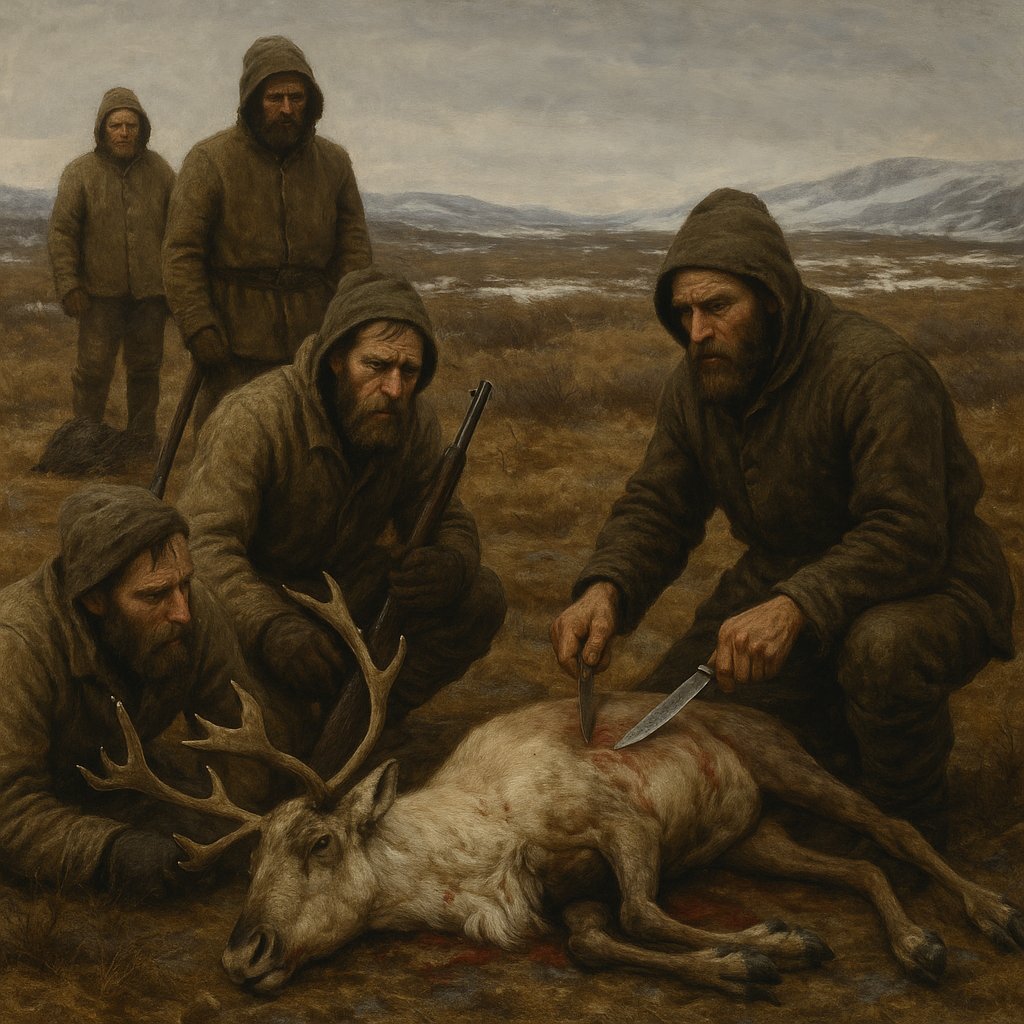
1856, Canadian Arctic. A British expedition led by Francis Leopold McClintock is searching for Franklin's lost ships. They're running low on supplies. They shoot a caribou. The men are starving.
They examine the carcass and make a decision that baffles the historians who later read their journals: they leave most of it behind.
Not because they can't carry it. Because it's too lean.
This is spring caribou. The animal has burned through its fat reserves surviving the Arctic winter. What remains is almost pure protein. The hunters take the tongue, crack open a few bones for what little marrow is there, and abandon the rest. Several hundred pounds of meat left for the wolves.
The ship's doctor records this in his journal with confusion. Men are on short rations and they're leaving food behind. It doesn't make sense to him. But it makes perfect sense to the Inuit guides traveling with them. They tell him what they've known for thousands of years: lean meat will kill you faster than no meat at all.
The explorers have unknowingly encountered the metabolic reality that European medicine won't formally document for another 50 years: protein poisoning. Your liver can only process about 200-300 grams of protein daily. Beyond that, the ammonia from protein metabolism builds up faster than your body can convert it to urea and excrete it. You get nausea, diarrhea, hyperammonemia. In extreme cases, death.
The Inuit call lean caribou "starvation food." You can eat until your stomach hurts and you'll still waste away. The fat is what keeps you alive. Without it, the protein becomes toxic. The body desperately needs the calories from fat to process the protein you're eating. It's not optional biochemistry. It's survival.
Three weeks later, the expedition shoots another caribou. This one is autumn-fat, thick with the reserves it's built up eating all summer. The men take everything. They render the fat carefully. They roast the meat. They crack every bone for marrow. Nothing is wasted. The difference in the animal's condition means the difference between food and poison.
The doctor notes that the men's health improves dramatically after the fat caribou. Their energy returns. Their mood lifts. They can work longer hours. He attributes this to finally getting adequate food. He's half right. They're getting adequate fat. The protein is just along for the ride.
McClintock's expedition survives and returns to England. The doctor's journal is published. The parts about abandoning lean caribou are read as interesting cultural notes about Inuit superstition. No one considers that maybe the Inuit are right and European nutritional understanding is catastrophically wrong.
Your modern nutritionist tells you to choose lean cuts and trim visible fat. Your ancestors would have recognized that advice as a death sentence. They knew what your nutritionist apparently doesn't: fat is fuel. Protein without fat is poison.
This isn't a preference. It's biochemistry that's been tested by survival for millions of years.
'Eggoz Nutrition' Under Scanner
Are eggs safe for consumption?
If a company claims to be 100% antibiotic- and chemical-free, even a minute amount of AOZ is concerning. They must explain how 0.73 was found in their eggs...: @hyderabaddoctor tells @anchoramitaw.
Men.
Women.
Elders.
Youth.
Everyone needs to hear this :
If you’re above 15 and still can’t cook simple food, you’re not busy or helpless you’re just outsourcing adulthood.
Simple food isn’t hard:
- Omelette
- Toasted bread
- Heat dal
- Boil rice
- Chop a salad
- Boil eggs / soya / sauté paneer
All of this takes 25–30 minutes, this isn’t a skill gap.
-Stop blaming patriarchy.
-Stop blaming gender roles.
-Stop blaming your childhood.
-Stop blaming your schedule.
It’s 2025.
Every tool exists to make cooking effortless, if you still depend on someone else for every meal then learn to cook.
Cutting sugar is only step 1.
ICMR guidelines are clear: refined carbs behave like sugar inside the body. So here’s WHAT TO EAT for Prevention of Diabetes/Obesity 👇
🔹 Millets (ragi, jowar, bajra, foxtail) – ICMR recommends replacing refined cereals with low–moderate GI whole grains for better post-meal control.
🔹 Whole pulses (chana, rajma, whole green moong) – High fibre + protein → slower glucose absorption.
🔹 Hand-pounded/semi-polished rice – Less glycemic load than polished rice, as advised in NIN dietary guidelines.
🔹 Non-starchy vegetables – ICMR recommends high fibre intake to blunt carb digestion and lower insulin demand.
🔹 Eggs, paneer, curd, chicken, fish, tofu – Protein slows gastric emptying and reduces post-prandial glucose rise.
🔹 Unsweetened curd & buttermilk – Fermented foods improve glycemic response and gut health.
🔹 Nuts & seeds – Healthy fats + fibre → reduced glycemic impact.
🔹 Whole fruits (NOT juices) – ICMR: consume fruits in whole form only due to fibre content and lower glycemic load.
🔹 Ghee (in moderation) – Traditional fat that slows carb absorption, lowering glucose peak.
Real-world protocol that transformed dozens of my clients (and me):
4–8 whole eggs/day is the sweet spot for 90 % of active adults on low-carb/keto/animal-based
Eat until you naturally don’t want more → true self-regulation
Add 10–20 g extra butter or tallow to the pan → skyrockets leucine delivery & absorption by another ~25 % (2018 study)
Post-workout: 6 whole eggs + 1–2 tbsp grass-fed butter beats 40 g whey for muscle protein synthesis in trained men
Cholesterol panic is 1980s mythology.
2020 Dietary Guidelines & British Heart Foundation already dropped the egg limits
here's how it starts.
you read somewhere that walnuts are good for your brain. so you start eating a few after lunch.
then you add almonds to your breakfast because protein, right?
then someone tells you about flaxseeds, so now you're sprinkling those on everything.
then chia seeds become the new thing, so those go in your smoothie.
and slowly, without even noticing, you've added 500-600 extra calories to your day. all from "superfoods."
meanwhile, you're wondering why you're not seeing results even though you're eating clean because nobody told you that healthy foods still have calories and calories still matter.
i see this pattern constantly. people treat nuts like they're nutritional freebies. like eating more of them can only help.
but your body doesn't work that way. it doesn't care about the source. surplus is surplus.
and the worst part? once you convince yourself something is a superfood, you stop being honest about portions.
that handful becomes two. then three. then you're just eating straight from the bag while watching tv.
so here's what you do. measure it. actually see what 20 grams of almonds looks like. it's way less than you think.
and if you can't control yourself around them, keep them out of the house. simple as that.
Fenugreek seeds have 23g protein/100g, more than salmon.
But here’s the truth : no one eats 100g fenugreek seeds and fenugreek was never meant to be a protein source.
It’s a metabolic intervention, not a macro food.
Let’s decode the real science 🧵 👇
Walking 20,000 steps burns approximately 600 calories.
A single Starbucks frappuccino is 500 calories.
You just walked 4 hours to undo one coffee drink.
It's bad business.
Weight loss isn't about activity. It's about conquering hunger.
Carnivore solves hunger. You eat until satisfied. Natural satiety kicks in. You stop eating because you meet your energy needs. You naturally move more to use up the excess energy. You're in a deficit without effort.
Step counting solves nothing if you're still eating like you're trying to gain weight.
Fix the input. The output takes care of itself.
Top 5 reasons people fail on carnivore:
1. Too little fat - They eat lean protein thinking it's "cleaner," get rabbit starvation symptoms, quit
2. Too much liver - Overdose on vitamin A, feel like death, blame the diet
3. Too much salt - Chronically thirsty, water retention, headaches, erratic heart beats, think carnivore is broken
4. Too much fasting - Combine carnivore with OMAD before adaptation, crash hard, give up
5. Too little fat - Yes, I'm listing it twice because 80% of failures are from fearing fat
Carnivore works best when you eat fatty meat to failure and stop trying to optimise or speed up the process.
Let the body self-regulate. Things get a whole lot easier.