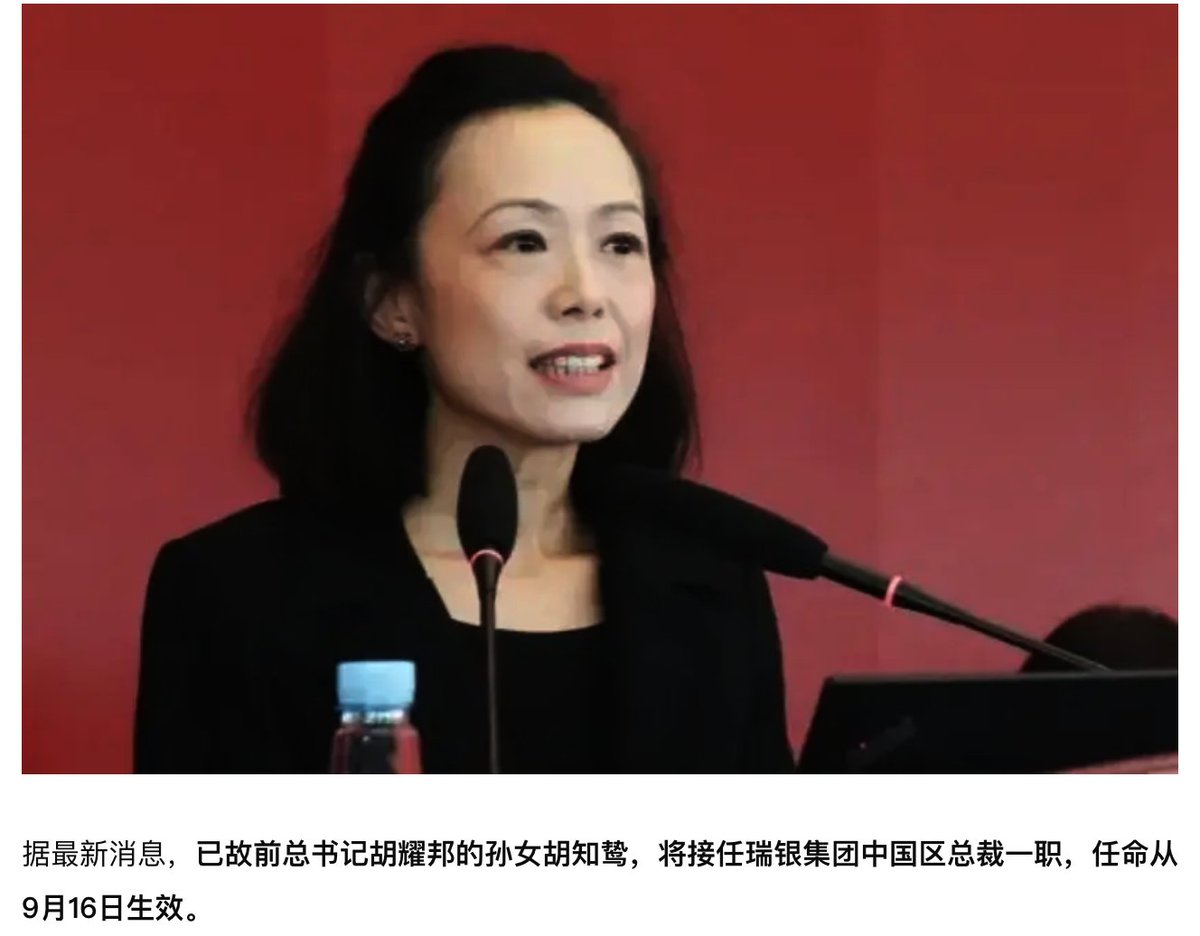
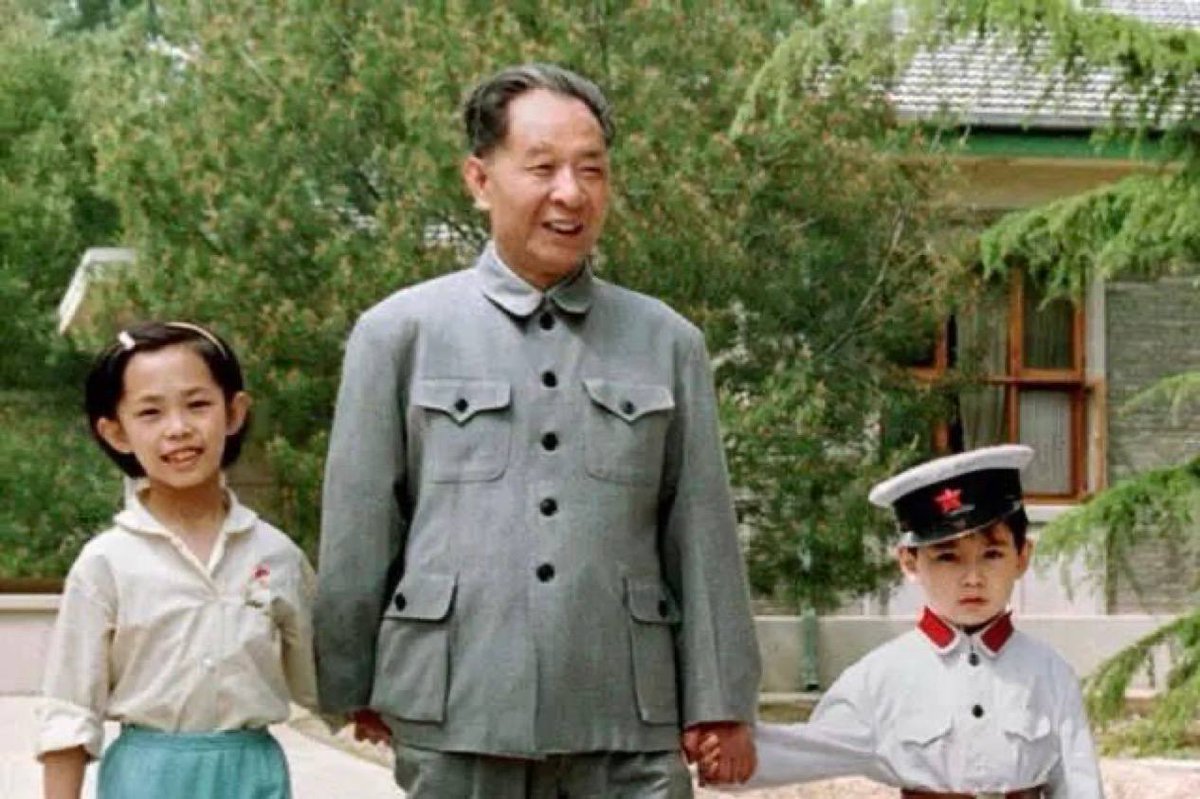
“Why Does Wall Street Trust the Chinese Princelings? Starting with Hu Yaobang’s Grandchildren”.In 2025, two seemingly quiet but deeply significant personnel changes occurred in international finance: Hu Yaobang’s grandson, Hu Jiguang, was appointed Vice Chairman of Morgan Stanley China, while his granddaughter, Hu Zhizhi, became President of UBS China and Chair of Global Investment Banking for the region.
These two individuals from one of the Chinese Communist Party’s most symbolically powerful families now hold top positions in Wall Street’s most prominent institutions. On the surface, these are career successes for the "princeling" class. In truth, they represent a new phase of deep trust and tight integration between China’s elite political capital and the Western financial system. They are not reformers within the system, but intermediaries of a fusion between power and capital.
In China’s financial world, rules have never been the top priority—background is. In Wall Street’s world, it is not investment philosophy that matters most, but controllability and predictable returns. When these two logics intersect, those who are direct beneficiaries of CCP power and hold Ivy League educations and transnational resumes are naturally seen by Wall Street as the safest channels for capital and buffers for systemic risk.
Their princeling status has become a “golden passport” to global financial power.
This identity is not only a financial asset—it has become a strategic bargaining chip in today’s geopolitical game. This year, the CCP continues to face increasing scrutiny from Western governments over sensitive student visas, military-linked research programs, and cross-border capital flows. Several princeling children with U.S. passports or residency permits have come under investigation or restriction.
In response, Beijing has not retaliated aggressively. Instead, it has quietly offered "transactional concessions"—such as rare earth exports, critical minerals, and agricultural import deals—in exchange for exemptions and loopholes specifically benefiting the princeling class. This isn’t national negotiation; it’s privileged deal-making for a ruling elite.
Whether ordinary Chinese citizens can go abroad, whether businesses can raise capital, or whether graduates can find jobs—these things are negotiable. But the dollar accounts, citizenship status, and international access of the princeling families remain untouchable. They are the regime’s true core interests.
The CCP elite understands this well: livelihoods can collapse, propaganda can be rewritten—but the global circulation of elite capital must never be interrupted. This “elite above nation” logic is now central to how red capital governs domestically and bargains internationally. The state is no longer the people’s—it is a vehicle for perpetuating the global interests of a privileged few.
The rise of the Hu family’s grandchildren is not an isolated case, but a snapshot of the princelings’ full-spectrum infiltration of the international financial system. Jiang Zhicheng (grandson of Jiang Zemin) once worked at Goldman Sachs and later founded Boyu Capital, overseeing investments in Alibaba and ByteDance. Zhu Yunlai (son of Zhu Rongji) led China International Capital Corporation through major IPOs. Wen Ruchun (daughter of Wen Jiabao) held a top role at Credit Suisse Asia. Feng Shaodong (son-in-law of Wu Bangguo) helped Merrill Lynch secure ICBC’s IPO and later founded his own fund. Chen Xiaodan (granddaughter of Chen Yun) built a career at Morgan Stanley.
These princelings, through financial posts, fund management, and cross-border collaboration, have constructed a “global network of red capital”—a system that transforms political privilege into international financial power.
This network doesn’t operate on competition. It is devouring the rules of Wall Street from within. The CCP has embedded its family interests into the global financial infrastructure via IPOs, M&A deals, ratings influence, and fundraising. It uses the language of the market to disguise the logic of power. Its strategic goals are threefold:
1. Legitimacy Packaging – Dressing authoritarianism in “reform and opening up” language to fabricate a market economy image.
2. Global Positioning – Using strategic investments in ports, power grids, minerals, and data centers to convert capital into geopolitical leverage.
3. System Substitution – Promoting the internationalization of the renminbi, launching yuan-based settlement zones and financial institutions, in order to challenge the U.S.-led financial order.
And throughout all this, the princelings are the key executors. They are not self-made entrepreneurs but extensions of the political structure itself, cloaked in capital.
What we must be alert to is not only how the CCP uses global capital to expand its reach, but how red capital is now threatening the very foundations of the global financial order—including Wall Street’s own interests. This kind of capital resists transparency, shirks accountability, and defies market norms—yet demands that global finance absorb its political risk.
What red capital brings is not fair economic competition, but systemic erosion. Through princeling intermediaries, it distorts pricing power, manipulates credit ratings, and bends investment logic—slowly turning global markets into grey zones governed by political loyalty and closed speech.
For Wall Street, this alignment was never “infiltration”—it was a conscious partnership. It was about accessing approvals, winning deals, and managing risk. And the princelings were the ideal “channel capital.” But as red capital grows bolder, those once-seen-as-safe intermediaries are now undermining the very rules they were meant to navigate.
This seemingly soft convergence is, in truth, a bloodless financial coup: the fusion of power and capital has created a new order—one that strips away the core of institutional democracy: accountability, transparency, and public oversight—replacing it with an unregulated, unbounded oligarchy.
The Hu family’s rise is no longer the legacy of reform. It is the modernization of control. They have repackaged “revolutionary legitimacy” into “cross-border professionalism,” embedding authoritarian governance into the veins of global finance. Under the shell of neoliberalism, the logic of dictatorship is quietly extended.
When the global elite chooses to ignore these structural shifts—when they overlook the CCP’s ambition to devour the world order and focus only on growth and returns—they are digging the grave of their own systems.
The CCP no longer needs to impose its ideology on the world. It merely needs to offer returns—and use red capital to reverse-colonize global financial networks. The princelings no longer need to shout slogans. A well-polished pitch deck is enough to execute a silent downgrade of institutional norms.
This is the true picture of the CCP’s global red capital strategy: quietly rewriting the rules, hollowing out democratic institutions, and ultimately turning capitalism into a vessel for authoritarian consolidation.
To prevent this capital-power nexus from dictating the future of global order, there is only one path forward: the CCP must be completely removed from the world’s political stage. Only then can the financial system return to rules, responsibility, and fairness. Only then can the world—and China—reclaim the dignity that humanity deserves.