Merging science and fiction to reimagine life on Earth
🌬️ Current: Guggenheim Bilbao °° Diriyah Biennial °° Frac Île-de-France |||| Upcoming: Venice Biennale
🌿Feliz por la oportunidad de representar a mi país en @la_Biennale
Qué honor trabajar junto a la curadora Manuela Moscoso y al Colectivo Tawna
Y, gracias a la determinación institucional del MAAC para que de manera inédita Ecuador tenga Pabellón propio en la Bienal de Venecia
What we call "natural" and "artificial" seem indistinguishable from one another—they are part of a planetary whole. Precisely, ‘Umbre’ is a work sparked by the impossible question:
“What is (or isn’t) nature?”
Searching for alternatives to the rigid categories that tend to neatly divide our reality into animal, plant, and mineral "kingdoms", I noticed that the very notion of a compartmentalized planet split in this manner is illusory and misleading, even when those categories have been updated by incorporating, in more recent times, for example, the fungi realm.
With this in mind, the visual elements in ‘Umbre’ remain profoundly ambiguous, as if on the verge of becoming recognizable yet persistently refusing to do so, instead revealing themselves as elusive and alien.
>>> We’re delighted to announce that ‘Umbre’ is part of my solo show at Livia Benavides gallery in Lima, currently on view (I genuinely hope you can visit if you’re in town!)
Umbre, 2025
Sculpture. SLA resin and matte automotive paint
280 x 23 x 23 cm (110 x 9 x 9 inches)
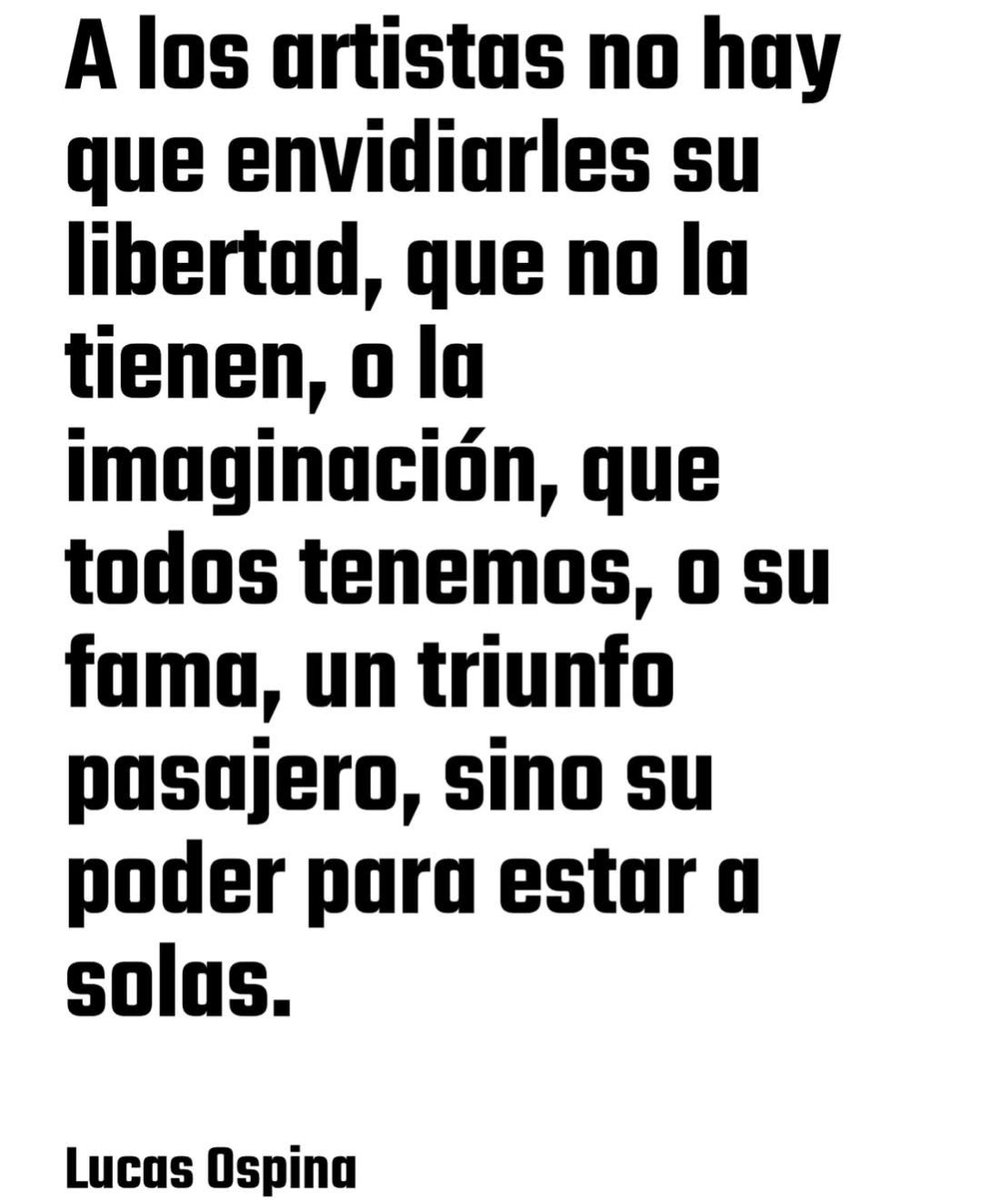
"Artists should not be envied for their freedom, which they do not have, or their imagination, which we all possess, or their fame, a fleeting triumph, but rather for their power to be alone."
— Lucas Ospina
“Sky Excavation” is an artwork made by faithfully recreating the soil composition of planet Venus, then firing it in a ceramic oven, and displaying it on an astronomical mount programmed to endlessly follow that same planet.
It was quite a journey to make this thing🪄
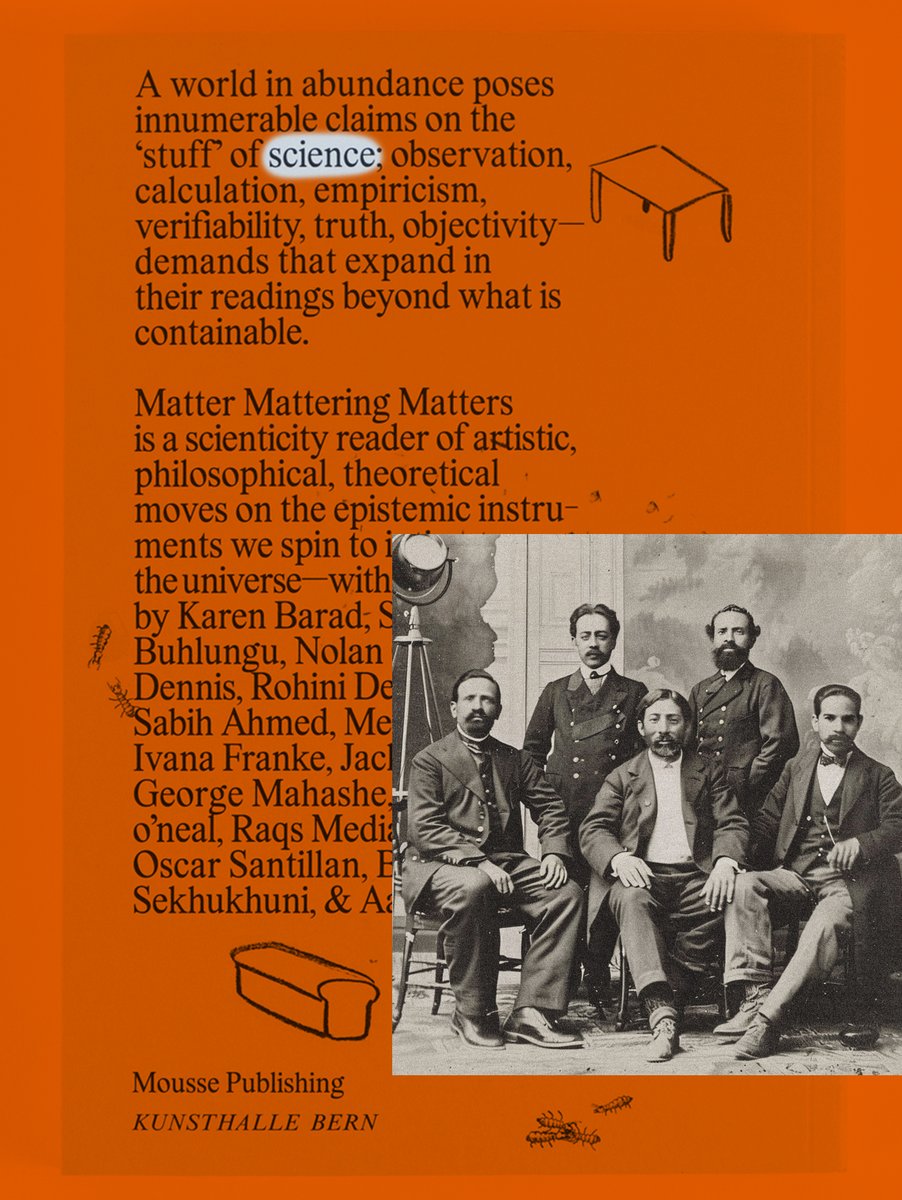
Excited to share that this fascinating publication is out!
Matter Mattering Matters, published by Mousse and Kunsthalle Bern, will be officially launched this Saturday, March 29 at 3 PM at 📍Kunstinstituut Melly in Rotterdam.
This book invites us to reconsider how we see, measure, and engage with the universe. It features contributions from Karen Barad, Raqs Media Collective, myself, and many other curious minds.
I’ll be speaking at the event about my contribution, titled “The Light of the Sun Minus a Firefly”, which explores the story of the first Latin American astronomical expedition in modern times—a forgotten yet captivating history from 1874.
Hope to see some of you there!
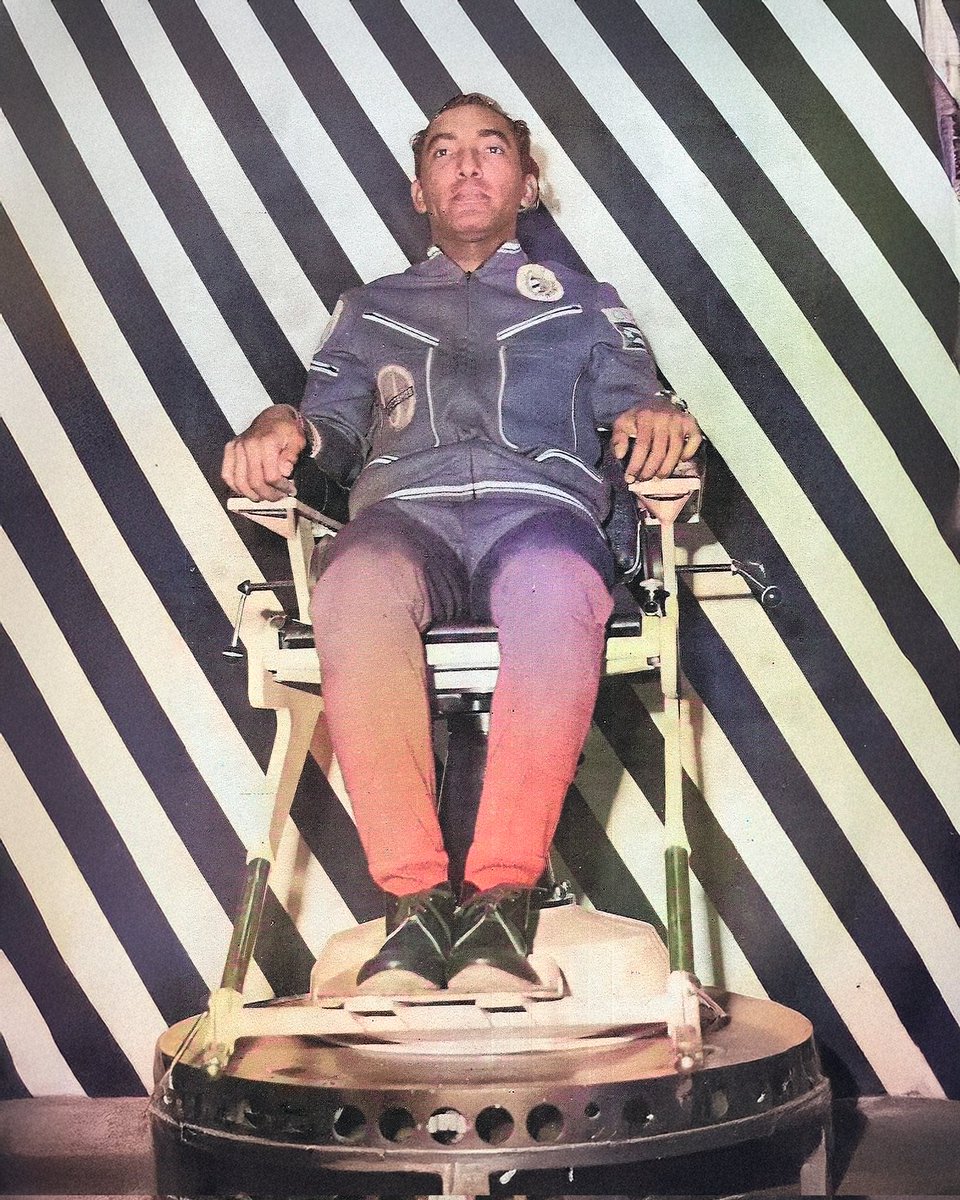
Arnaldo Tamayo left Earth’s atmosphere aboard a Soviet spacecraft on a cloudy day in 1980.
He became the first Latin American and also the first Afro-descendant astronaut ever to participate in a space mission.
During the week spent in orbit Tamayo circled the planet 124 times
Richard Sutton, father of Reinforcement Learning, just gave a great talk where he said "decentralized collaboration is the source of all human flourishing and the source of all that's good in the world." And if you're in favor of this, "the enemy" are the people calling for "centralized control" of both "people and AI."
Centralized control of AI is the same as calls for centralized control of people. Control of AI chips and who can download what and what AI's goals are allowed to be, is the same as calls to limit free speech, and dictating who can trade with who, and who you can collaborate with, and what you are allowed to think.
Authoritarians are the parasites of any system. They are the selfish cheaters who try to stack the benefits for themselves and their little tribe and they cause nothing but pain and misery for themselves and others.
Trade, art, economics, community come from individual agents/people pursuing their own individual goals and choosing to work together. That is the light in the world.
The darkness is the control freaks and the parasitic cheaters who try to stack the deck in their favor. Their worldview is one of darkness, of us versus them, and their fundamental belief is most people are evil and can't be trusted.
Make no mistake, calls to restrict AI, to align AI, to create kill switches in chips, and to limit access to chips, and to embedded surveillance trackers in chips, are the same as calls to limit speech, and control where you go, and who you can work with and do business with. And these calls only ever come from the parasites of a system, the people who poison a healthy working system and who periodically pop up to set back the great and powerful and inevitable surge of human progress pressing forward endlessly and forever.
(Link to talk in comments)
Gracias por esta secuencia de hechos y datos, Fernando.
Pregunta, de esas 74 billeteras, cuántas pueden linkeadas a Hyden? Y sobre cuántas ignoramos sus operadores?
La parte de responsabilidad de Hyden ya lo conocemos por confesión propia. Al final, lo realmente importante es saber quiénes más participaron en esta operación.
A no ser que alguien sepa qué billeteras estarían linkeadas a gente del círculo de Milei (de ser el caso), la data on-chain que recolectes nunca va a dar como resultado esa conclusión, muy plausible por cierto, que Milei and friends son beneficiarios del atraco.
Qué es lo que queda? The good old-fashioned reconocer las acciones de las personas y las consecuencias que derivan de las mismas.
Personalmente no me interesa hacerle psicoanálisis a Milei, solo puedo fijarme en el hecho objetivo de su promoción, y del timing de la misma. Esa parte creo que se refleja bastante bien en los datos que nos compartes
Es fascinante ver cómo el gobierno yanqui se va tornando en una versión occidental del poder ejecutivo exacerbado de China.
La hipótesis del decoupling inevitable, que gente como Tiel promulga hace ya bastante tiempo, parece haberse filtrado decididamente en la casa blanca.
Coincido, tener la agudeza de saber cómo pivotear entre esos dos grandes poderes geopolíticos (y en algo Europa, de momento sin mapa propio) parece ser la estrategia para países de Latinoamérica.
A couple of decades ago went to dinner with a friend who was a billionaire (less common then). I ordered as per my custom "the second cheapest Chardonnay." He interrupted me & told the waiter: "I am too rich to drink the 2nd cheapest. Give us the cheapest."
Opening today in #Madrid💥
'Monumental Shadows' is a group show curated by #RolandoCarmona
The exhibition includes my large weaving 'A Thousand Years of Nonlinear History,' which has been lent for the occasion by the #AlainServais Collection
This piece was created by combining threads from weavings spanning the last millennium, originating from various centuries and places around the world. The oldest one dates back to the 11th century AD.
> Thanks to #Copperfield Gallery for their support
#weaving #archaeology #contemporaryart #antimundo
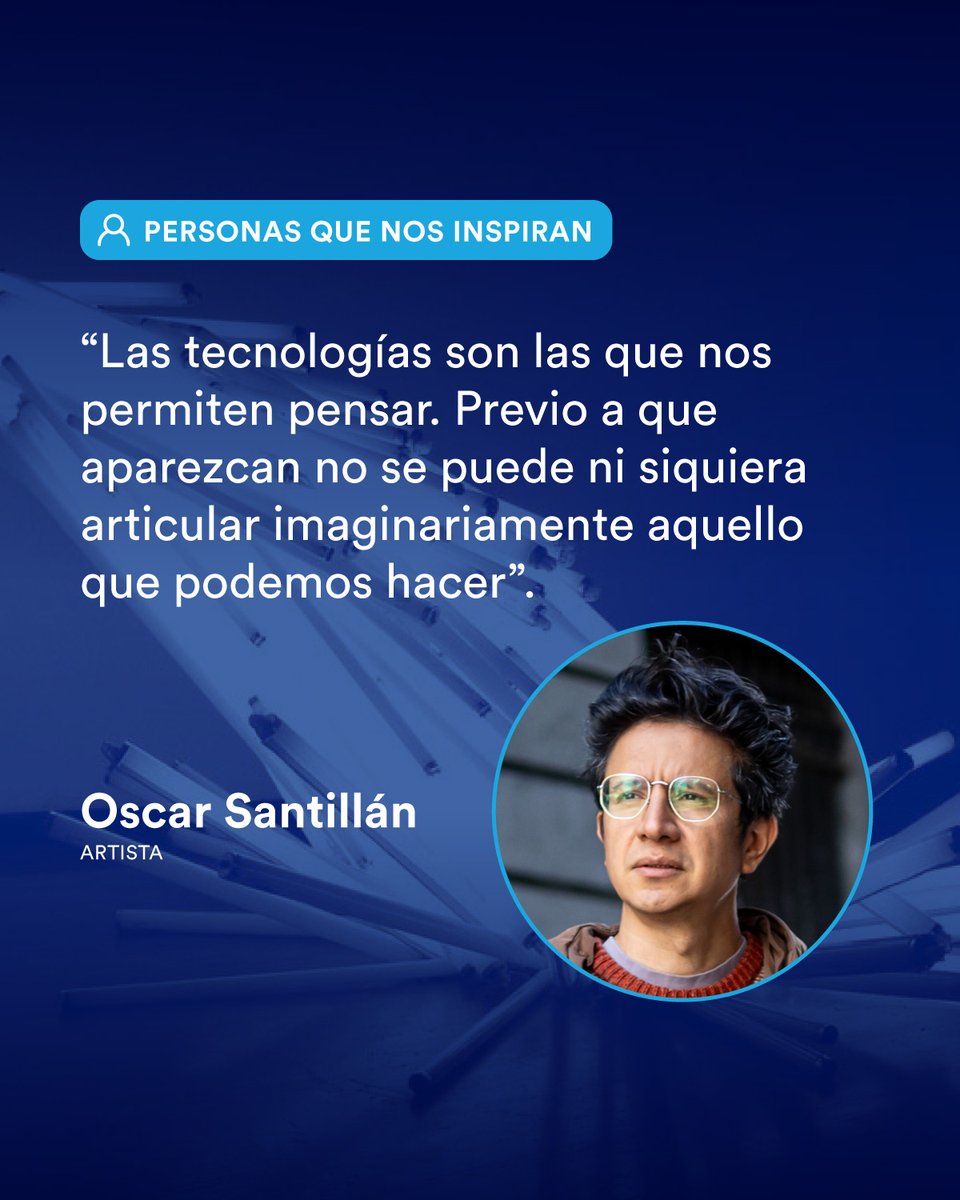
El artista y fundador de @studioantimundo Oscar Santillán nos propone reflexionar sobre el rol de las #tecnologías en nuestra forma de imaginar y crear 💡.
Oscar dictó la clase magistral abierta “La Máquina Virtual Interespecies” en #PresenteContinuo 2024, el programa de #arte, #ciencia y tecnología que impulsamos junto a @FundWilliams y con la colaboración de @CCEBA y @FundAndreani.
¿Vos qué opinás?
#AI is a new form of 'cognitive infrastructure' that Latin American countries are struggling to understand and create.
How to think about it?
Artificial intelligence in the 21st century is what electricity was in the 19th and 20th centuries. AI’s destiny — just like what happened with electricity or our mobile phone signals — is to be omnipresent, to filter into our lives so ubiquitously that we don’t even think about it anymore; it will simply be there.
A few weeks ago, the “Latin American Artificial Intelligence Index,” prepared by CEPAL and CENIA, was published. In short, the state of the region is dismal, though countries like Chile, Brazil, and Uruguay stand out a bit compared to their neighbors. In any case, my country, Ecuador — currently in the midst of a presidential campaign devoid of inspiring visions — is even below the regional average.
The disconnection between the worlds of politics and technology is long-standing in the region. The former is often a mix of lawyer’s jargon, technocratic nothingness, and social justice demagogy, while the latter is often neglected in the public arena due to a common mentality that assumes that we, people from #LatinAmerica, are destined simply to be adopters rather than tech producers. For this reason, I must admit that the recent presidential debate in Ecuador, which offered only scant references to such utterly vital topics — like the technological and scientific development of the country — filled me with frustration.
For instance, without any basic understanding of what they’re saying, the candidates promised everything from building a nuclear reactor (which would take a decade to construct and cost a massive 5% of the country’s GDP) to sprinkling imaginary doses of AI on any problem they don’t know how to solve, as can be seen in their TikTok videos.
My friends, if we don’t “get our act together” (and do it now!) to create and implement an “AI Strategy” both at the national and regional levels, we will face ongoing “cognitive blackouts” that we will pay for with more poverty and despair.
Let me explain what I mean by “cognitive blackouts.”
First, let’s take a step back to clarify what AI actually is: AI is a new kind of infrastructure that we can call “cognitive infrastructure.” More precisely, it’s a system capable of performing certain tasks at a level equal to or, in some cases, surpassing human intelligence. It does this by making very complex predictions based on patterns it finds within large amounts of data. In other words, its analytical and predictive power depends not only on its processing capacity and the model’s architecture but also on the quality and quantity of the data it’s trained with.
Understanding this basic fact shows us that we can’t simply “plug in” artificial intelligence to a problem and call it done. Instead, we must do considerable work to set up the conditions for such systems to function properly. And if we do this well, it will open promising pathways for our country — opportunities that current political discourse cannot even imagine.
In the coming months and years, we will see the accelerated adoption of this technology. It is crucial that Latin American countries — no matter their current limitations — decide to participate in this epic transformation not only as consumers but also in strategic production roles. Failing to do so decisively will pose a future threat that is difficult to predict today. This is because once all aspects of our daily lives are radically enhanced with AI — including our healthcare and judicial systems — a deficient cognitive infrastructure could cost hundreds or even thousands of lives, or it could lead to innocent people being convicted. This hypothetical cognitive blackout would be a tragedy.
It’s clear that the vast majority of countries cannot aspire to produce chips (unless someone can conjure the miracle of getting #Nvidia to move part of its operations to this part of the planet). However, at this very moment, there are indeed many other opportunities, such as customizing AI applications. This scenario is emerging because adoption is in full growth mode, entry barriers are becoming relatively lower as hardware prices democratize at a rapid pace — consider Nvidia’s Project DIGITS, the AI training supercomputer, which will cost only $3,000 instead of the $100 million it cost to train ChatGPT — and new language models (LLMs), such as China’s #DeepSeek-R1, have increased their efficiency in surprising ways. In other words, running this model requires far less computing power than previous, similar models.
So, AI is a new form of cognitive #infrastructure that we — whether we like it or not — will need if we want a future defined by our potential, rather than by the same bleak story we too often tell ourselves in the region, that long series of misfortunes in which we find ourselves stuck today. If there is such a thing as “hopeful urgency,” that is what I aspire to; I believe our countries need other kinds of stories (not about political heroes or martyrs), other visions (that spark our curiosity about the unknown), and other sensibilities (honest and empathetic). I suspect that precisely because of the violence and poverty plaguing our society, many of us have an immense thirst for a version of hope that truly looks nothing like the past.
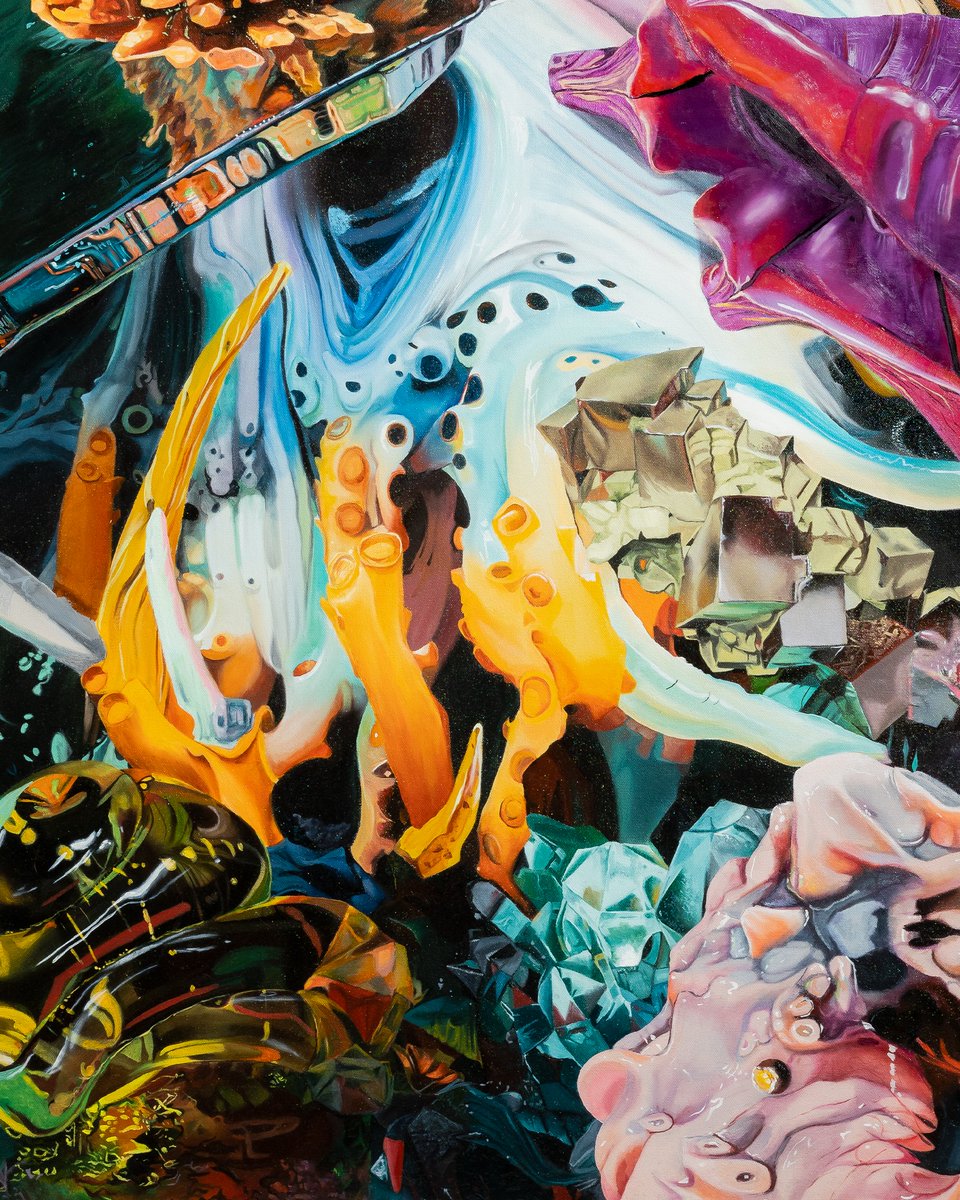
Pleased to share that my large drawing 'PARADOXA' has been acquired by Teylers Museum
This natural history museum holds a rare collection of artifacts, fossils, and minerals—an ideal home for these mutant forms that merge biological, mineral, and artificial elements
One of my works currently on view at the exhibition "Ghosts of Futures Past" at @GarageRotterdam
Antimundo 00U
Oil paint on canvas. 120x85cm
2023
The images in the #Antimundo reimagine the ‘natural’ by understanding it as continuum from artificial to biological to mineral.
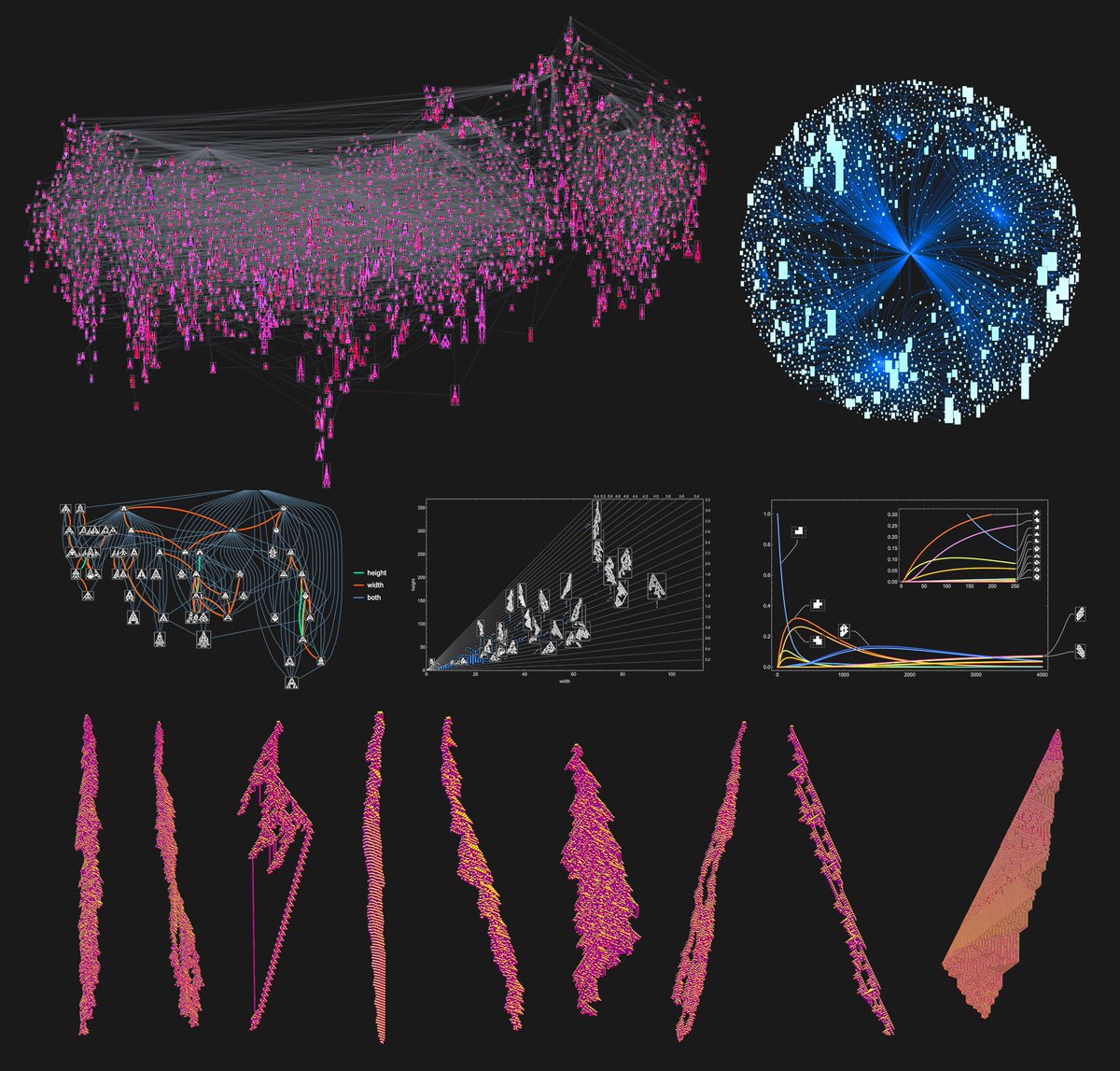
Biological evolution is a fundamentally computational phenomenon! Just posted lots of new results (and surprises) from my minimal model of adaptive evolution...
https://t.co/RO1cFbLwvI
Their breakthrough was realizing:
We don't program AI, we grow it (@ch402).
Like biology evolving complex systems:
• We create the scaffold
• We create the light
• But the system grows itself
This led to a shocking discovery: