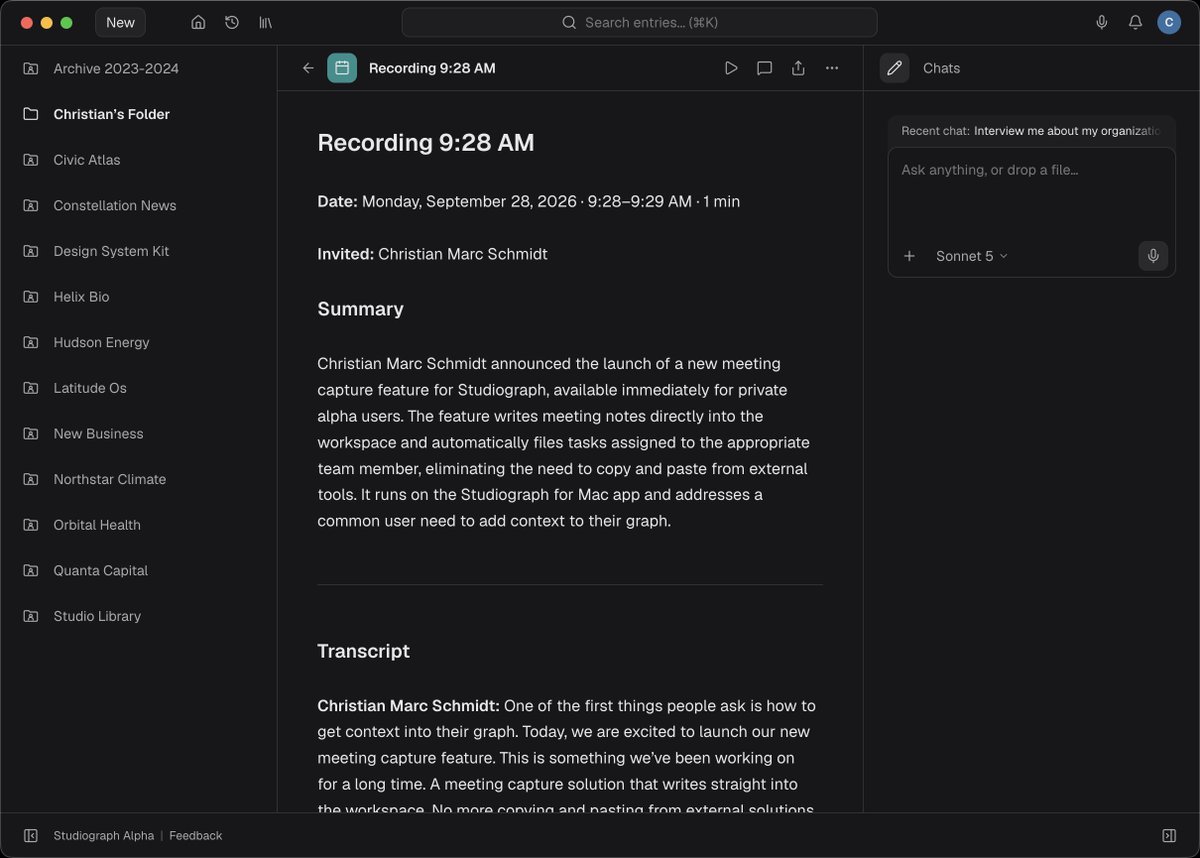
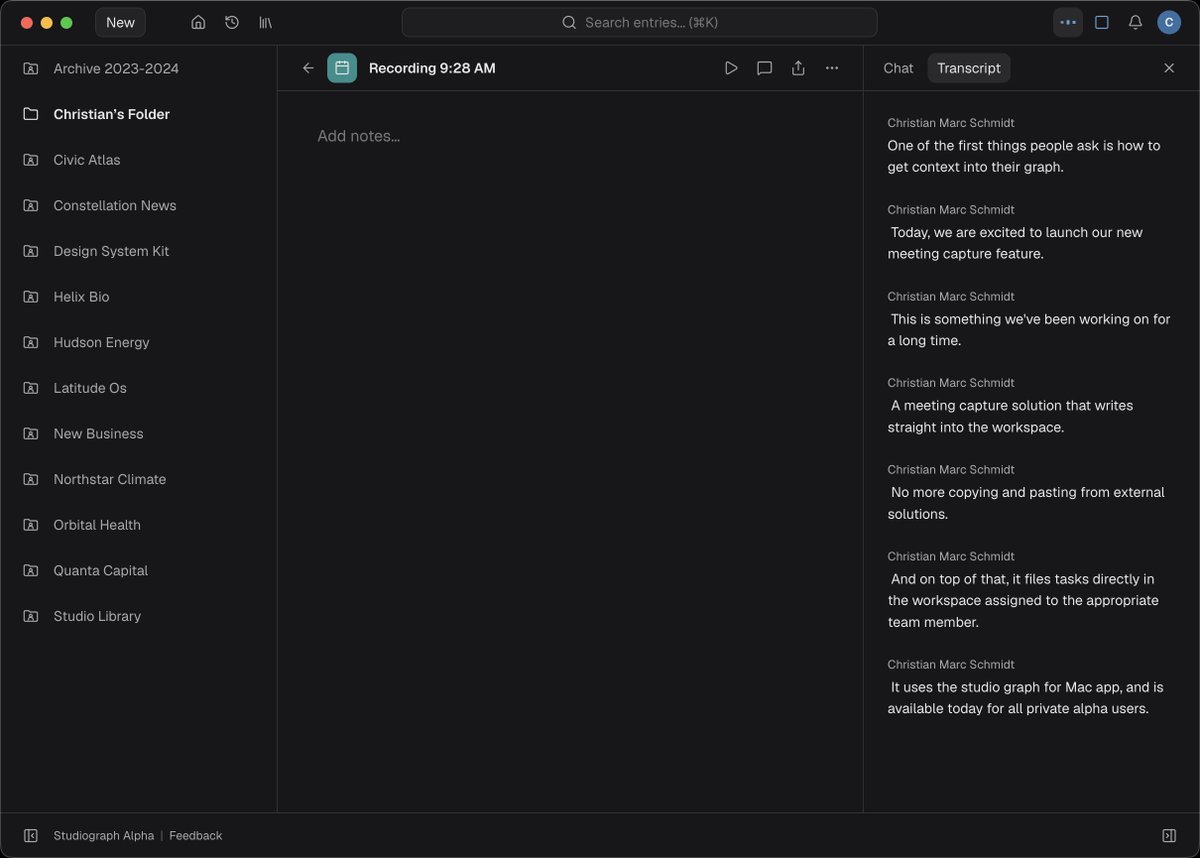
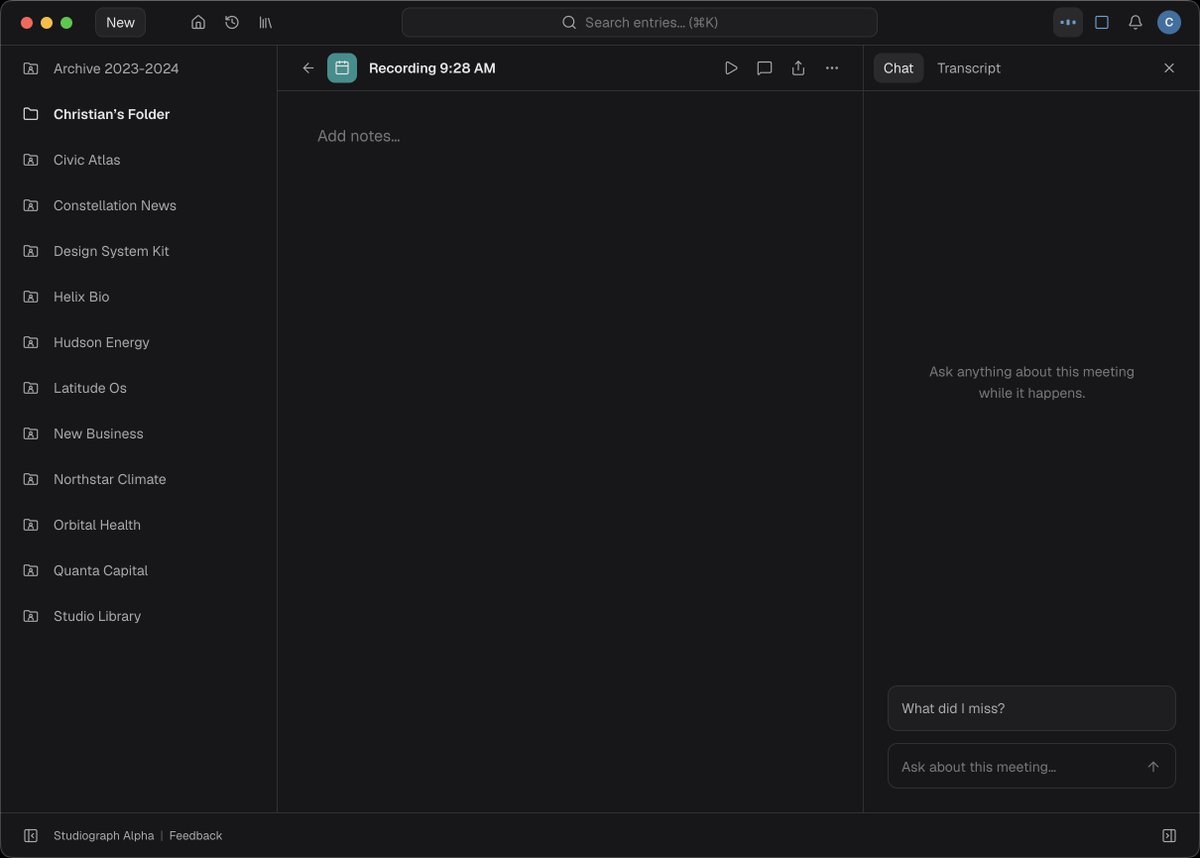
Meeting Capture files a call on the project it is about, with the people, organizations, and tasks it mentions linked. Ask questions in the meeting chat while the call is still going. macOS only.
Work arrives by email and calendar invite. Inbox, in Studiograph, turns it into tasks and records on the right project, person, and organization, and suggests deals. Nobody needs to copy and paste. Request alpha access: https://t.co/rTM76rRXpU
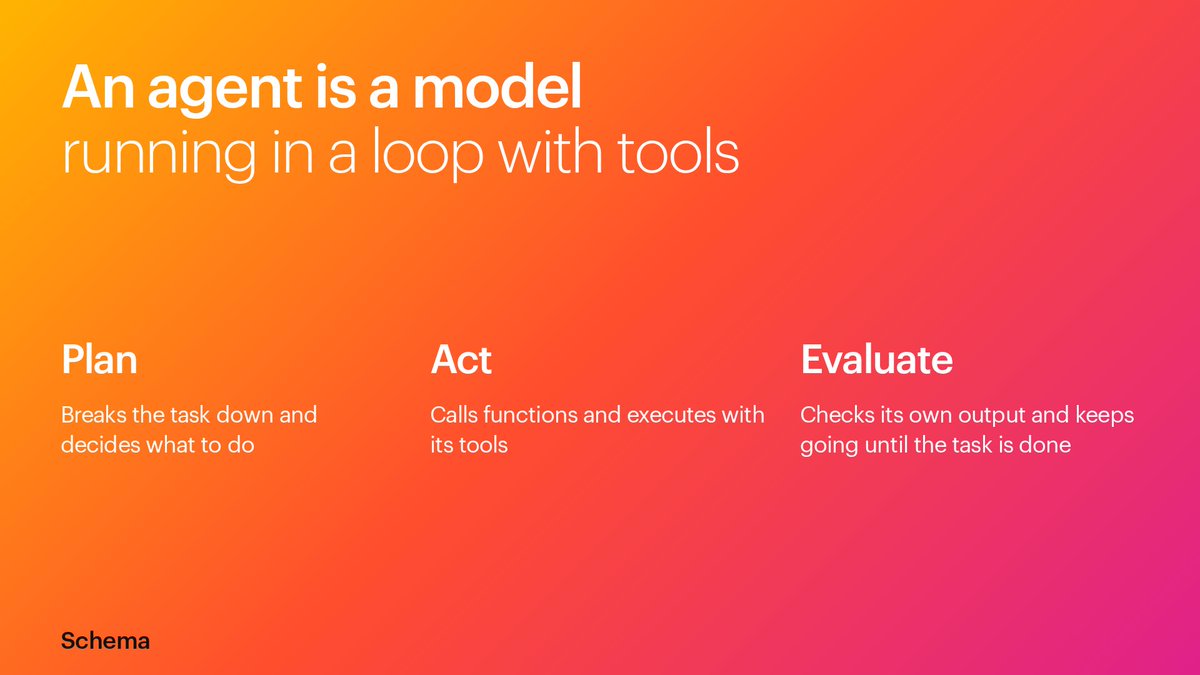
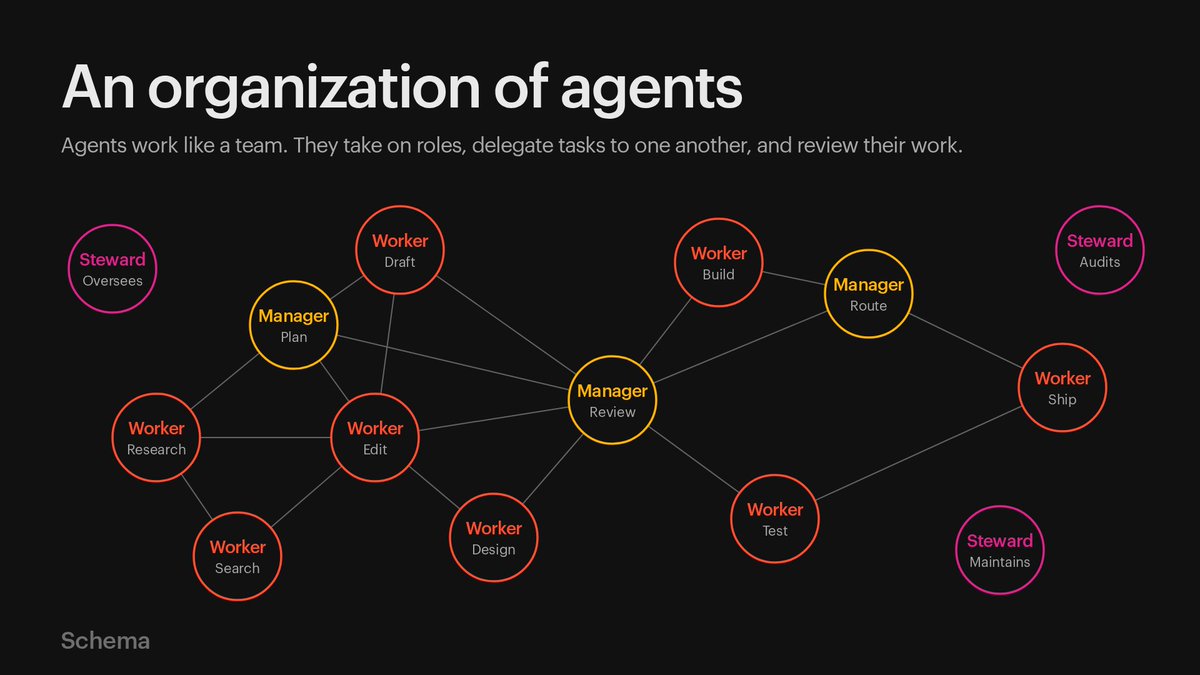
An agent is a model running in a loop with tools. It plans, acts, and checks its own output until the task is done. It is only as good as the organization it works in.
Meeting Capture, a new feature in Studiograph, writes what happens in a call straight into your workspace, turning it into the people, organizations, and tasks it's about. You can also ask it questions live from the meeting chat.
I often describe Studiograph as Obsidian plus Claude Code, for teams.
For years my Obsidian vault held everything about my business in one place. When Claude Code came along, that vault became the agent's memory. It read all of it, wrote back into it, and started producing proposals, designs, and prototypes that got better as the vault grew.
Then I tried to give the same setup to my team, and it fell apart. Multiple vaults mean multiple truths. Whose notes are these? Where does output go? Who is allowed to change what?
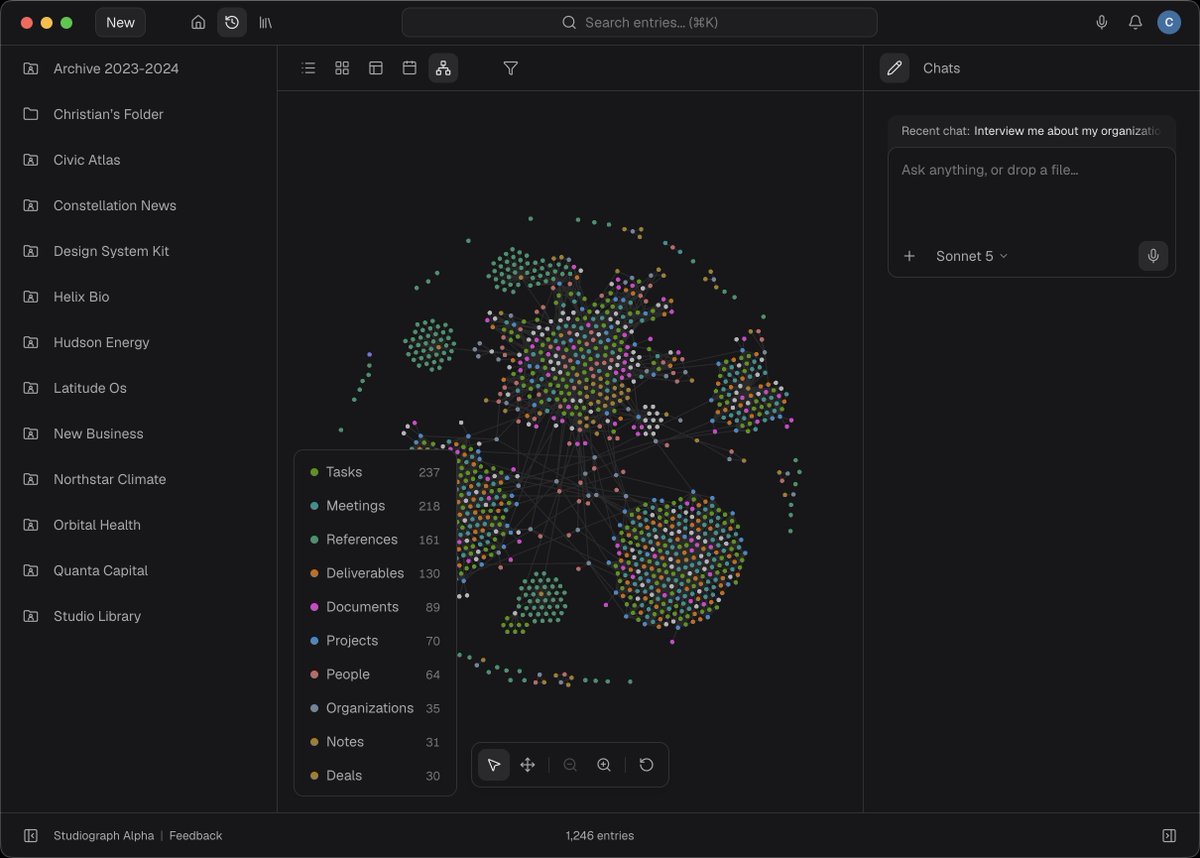
Studiograph is what we built to answer those questions. One source of truth, in plain files, portable to any model. Plus permissions, a stable schema, and real-time collaboration.
Decks, mockups, prototypes, meetings, and tasks stay in the graph instead of scattering across tools, with a fleet of agents working inside the same boundaries as people.
Multiplayer AI is the conversation right now. We got there by needing it, and it feels like the start of how creative teams will work.
Alpha access is open: https://t.co/9hnTsut7QY
Most creative tools are built for one kind of object: a canvas, a document, a table.
Projects don’t stay in one shape. They move from conversation to brief to data to deck.
Studiograph keeps those pieces connected in one workspace your team owns.
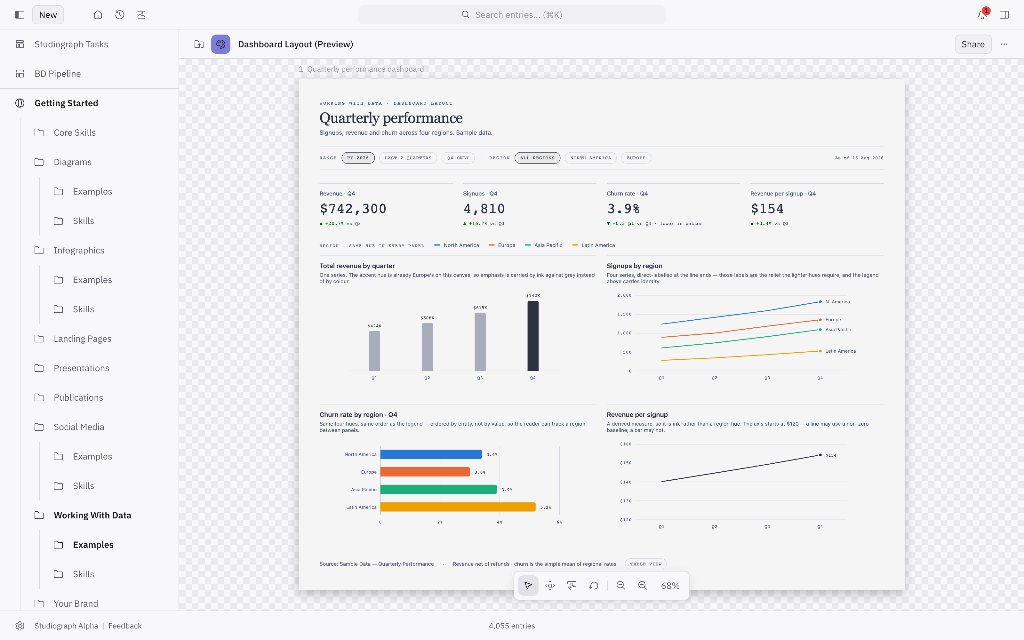
Charts live in the same workspace as the decks and briefs.
This is a quarterly performance dashboard. Sample data, four regions, sitting next to Presentations and Publications in the graph.
When the numbers live with the rest of the work, you stop hunting a separate BI tab for the last Q.
Presentation templates in Studiograph are skills.
You define structure, type, palette, and layout. The agent pulls from your business context and builds the deck to match, with transitions, interactivity, and a shareable link.
When slide production isn't the bottleneck, you spend the time on content and messaging.
Templates adapted from open-source work by Rui Zhang (zarazhangrui/beautiful-html-templates, MIT).
Grove is another starter presentation skill.
Type, color, layout, and spacing live in a short document. The agent reads it and builds the deck to that house style.
Same Getting Started deck as yesterday. Different skin.
Presentation templates in Studiograph are skills.
Each one is a short document: type, color, layout, spacing. The agent loads it and builds the deck to match.
This is Signal, one of the starter set, opened in the editor. Same onboarding deck, different skin, on demand.
Longform lives in the same workspace as the decks and charts.
This is the Tufte essay template that ships in Getting Started. Essays sit next to the briefs and decisions they came from, so the writing stays attached to the work.