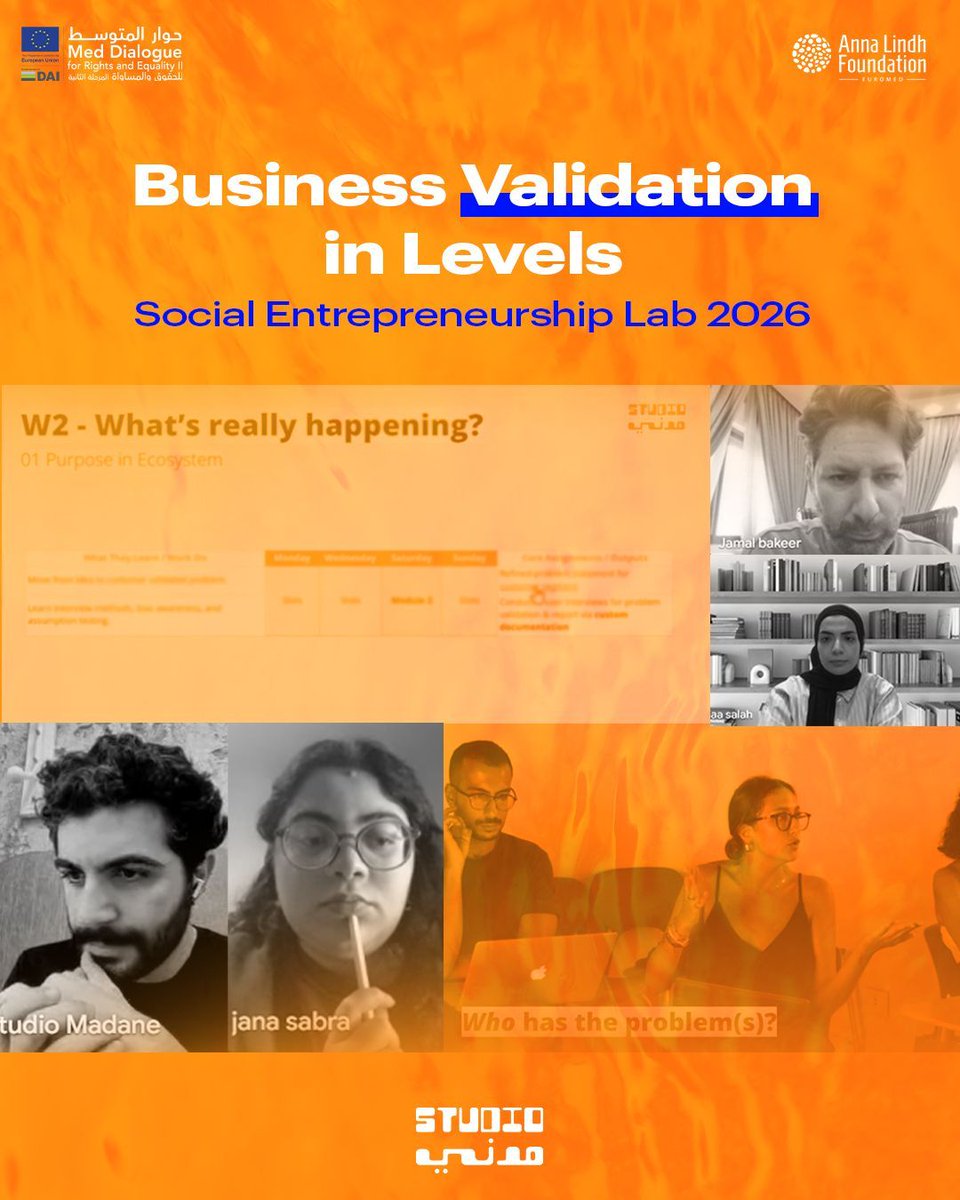
What came out of this themed incubator for creative and impact-driven ventures.
Using contemporary tools and ways of thinking, fellows developed ideas into tangible outputs, enabling them to build business value from creativity in a rapidly shifting landscape.
We've launched the IAAC Global Summer School 2026 in Dubai! Applications are still open for students, grads, and specialists in architecture, design, and related disciplines. Join 'Post-Occupancy Architecture: Interspecies Futures!'
The Social Entrepreneurship Lab was a shared space of fellows, mentors, and experts. Different perspectives came together to question, reflect, and shape what each person takes forward into their work.
What we’re learning #4: Designing the venture as a system
Fellows used an input → activity → output → outcome → impact model to design their MVP.
Seeing the business as a functional organism, where each part contributes to a regenerative flow within its ecosystem.
Module 5: Optimizing profit & impact together?
Intention meets financial reality here.
In this module, fellows explored monetization templates and built their first 12-month projections, testing how their ventures translate into revenue and whether the model can hold over time.
Our Social Entrepreneurship Lab Fellow, Jana Sabra, emphasizes the transformation of the preconceived notions she carried about her social enterprise into a stress-tested Unique Value Proposition!
After exploring a range of tools in the Social Entrepreneurship Lab, our fellow Lamiaa Salah reflects on the clarity and depth she achieved through hands-on engagement with the Theory of Change framework.
As a changemaker, Social Entrepreneurship Lab Fellow Jana Sabra reflects on a significant mindset shift during the program. Her experience of breaking free from the constraints of the traditional NGO mindset is now shaping the evolution of her business.
Module 4: MVP development
Instead of jumping straight into building, fellows focused on the structure.
This module introduced the input-output model to design a minimum viable offer, clarifying what goes in, what comes out, and how the venture begins to function as an organism.
After getting involved in the Job to be Done for identified Customer Personas, and quantifying the attainable market, the cofounder of SheHub reflects on the results of her study!
Module 3: Creativity creates competitive value
A clear problem doesn’t automatically translate to something people choose. In this module, fellows worked on turning validated insights into a defined value proposition, clarifying who it is for and what makes it meaningful to them.
What we’re learning #2: Thinking in levels
Fellows explored the Robert Dilts Logical Levels to align personal drivers with venture direction.
Connecting purpose, identity, and values to how the business takes shape.
Key question: What part of me is this venture coming from?
Lamiaa Salah shares her initial AHA! moments from the Social Entrepreneurship Lab 2026. She emphasizes the importance of Ecosystemic Thinking and Systems Thinking as essential skills in business development today.
Module 2: Most founders avoid real-life engagement for problem verification
Fellows refined problem statements, learned interview methods, and examined bias, then engaged directly with users to capture real insights on what is actually happening for the people they aim to serve.
Jamal Bakeer shares his initial AHA! moments from the Social Entrepreneurship Lab 2026. He's bringing the 'levelling' and 'filtering' tools shared with him, in addition to ecosystem mapping, to his business in the CCI.
Module 1: Most founders don’t start here
Before products or growth, we asked: why build at all? Fellows connected lived experience to a clear venture direction, then mapped the wider system, problem, actors, and environment, shaping their ideas.
Jana Sabra shares her initial AHA! moments from the Social Entrepreneurship Lab 2026. She emphasizes how central stakeholder mapping and analysis are to the early stages of business development.