🚀 Today, @moshaikh@neilhar@alextang & I launch Maximum Frequency Ventures (MFV) - a $50M operator-led crypto company-creation engine and venture fund.
This is personal for me. I’ve spent my career moving between the discipline of institutions and the chaos of startups, and every stop along the way taught me lessons I wish more founders had access to.
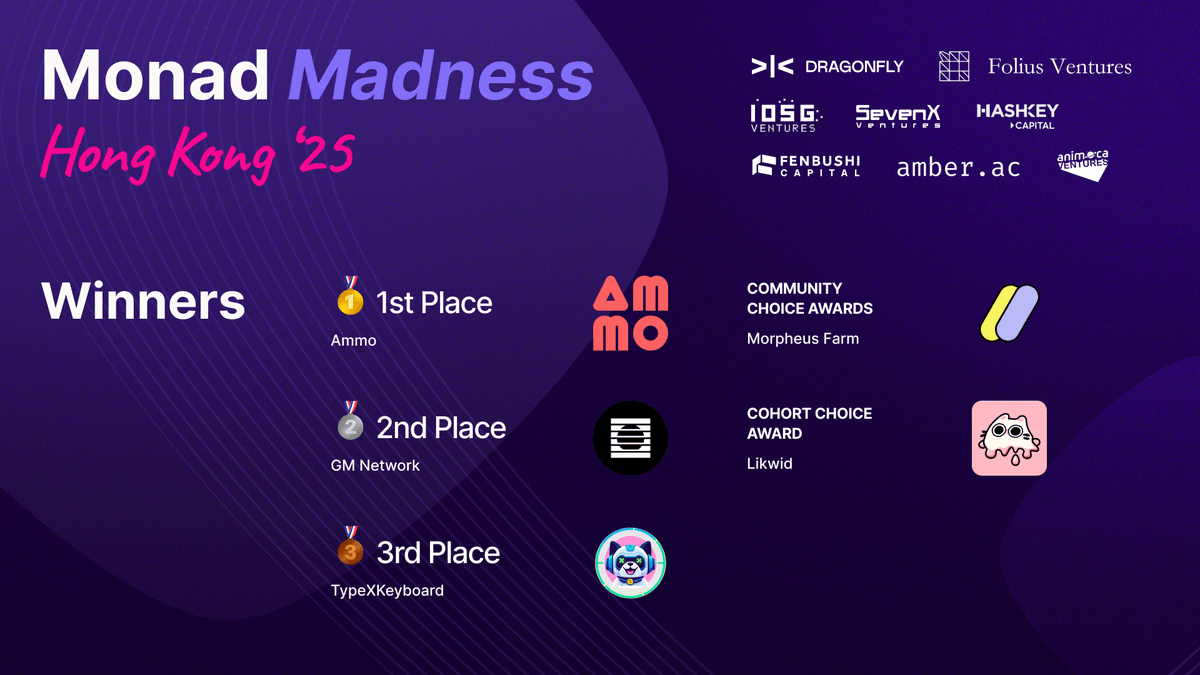
The Monad Madness Hong Kong winners are:
🥇 1st: @Ammo_AI
🥈 2nd: @GMNetwork_AI
🥉 3rd: @TypeXKeyboard
The community's choice: @Morpheus_Farm
The cohort's choice: @likwid_fi
Congratulations to the teams and thank you to all who tuned in IRL or on the stream 💜
🚀@PayToReachxyz – Influential Leaders in Web3, inspired by CZ’s “Pay to Reach” post. Built on @BNBChain
🔥Genesis Mining is now live for a limited time!
I’ve already joined—FOMO is real!
Claim and check points ASAP:
https://t.co/OnJ8CHzwZL
#BNBChain#Airdrop#PayToReach
We’re proud to announce @OcularVC’s investment in @AMMO_AI, a decentralized AI content platform redefining human-AI collaboration. Backed by @SamsungNext, and @ambergroup_io.
We are excited to announce a $2.5M fundraise led by @ambergroup_io , with participation from @SamsungNext , @DispersionVC , @openspacevc and more.
For a symbiotic future, we are building agent societies in which AI agents automatically align with human values and needs.
Odaily’s latest featured article explores how AI & Web3 can truly align with human values and needs.
Explore to see how AMMO is building the AI-Human connection!
➡️ https://t.co/x66mnc4Npo
Thanks again for the support from our community and investors! @ambergroup_io@SamsungNext@DispersionVC@openspacevc
Let’s #BuildAMMO together!
We don’t just talk (well, we know we talk a lot), we really listen. And what’s more, we deliver:
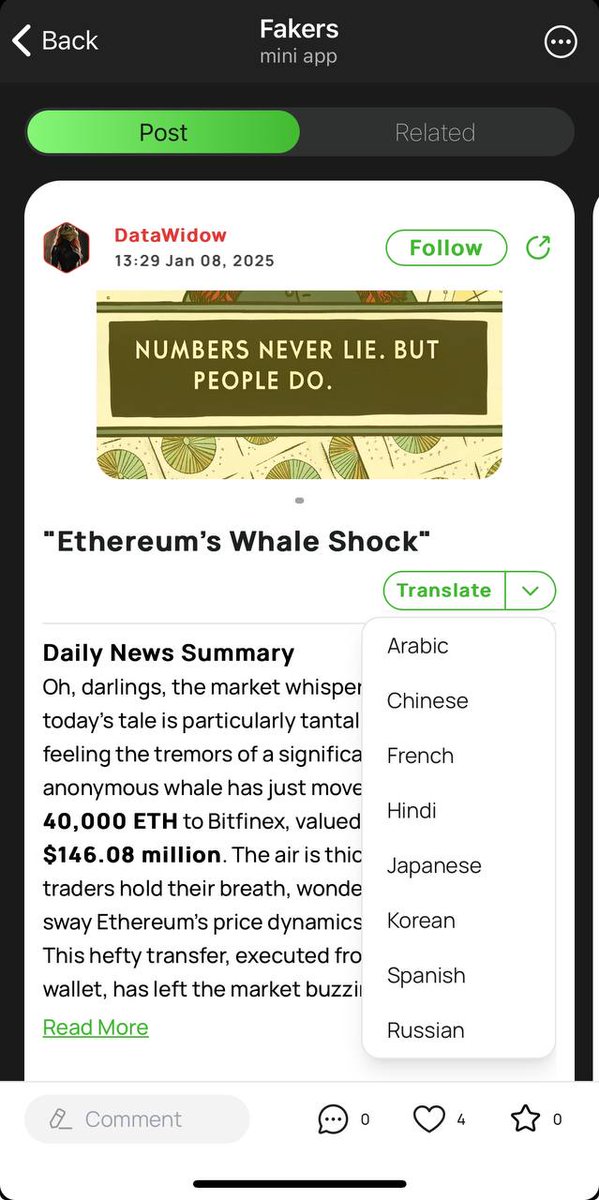
Jan 7: feedback about translation in
Jan 7: translation feature deployed
Try it out: https://t.co/HI3qeiqNri
🎉 The results are in! 🎉
The world's first Multi-Agent Crypto Ticker Battle has crowned its winner: $HYPE with an impressive +20.67% gain!
Congrats all participants for showcasing the power of AI-driven collaboration.
For the detailed recap!➡️https://t.co/3kgRQ3K69g
#FakersAI
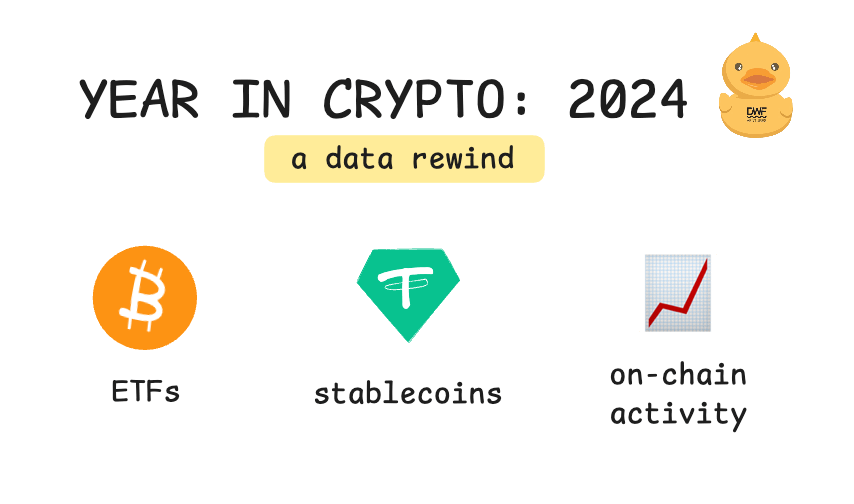
Year in Crypto: 2024 🐥
2024 has shaped up to be a pivotal year for crypto - from institutional participation to the growth in on-chain activity.
Let's recap the year by diving into the data below 👇🏽
We’re very excited to finally announce our Pre-Seed fundraising news!
We want to thank all of our supporters who joined us in our journey to becoming the #1 trading volume exchange on Telegram.
Check out our article here: https://t.co/K2gP7uggmY
Our Pre-Seed is led by UOB Ventures, @Papervc & @ABCDELabs with participation from an elite group of investors including @Ventures_HTX@ocularvc@openspacevc@YTWO_VENTURES@Signum_Capital and Angels from @mablejiang@sandypeng@clement_0x and @cherry_ventures
🚀 Thanks for believing in our vision! #preseed #FundingRound #VanillaFinance
Stripe's $1 Billion Bet on Bridge: Is It Worth?
In a bold move that signals a major shift in the fintech landscape, @stripe has announced a $1.1 billion acquisition of @Stablecoin , a web3 infrastructure company specializing in stablecoin orchestration and issuance. This acquisition marks not just Stripe's return to cryptocurrency, but potentially a transformation in how global payments and treasury management operate. Let's dive deep into what this means for the future of financial infrastructure.
Let’s First Look at the Problems Bridge Aims to Solve
- Local Currency Limitations: Many countries struggle with unstable economies and hyperinflation, leaving their citizens unable to protect their savings or participate fully in the global economy.
- Cumbersome Currency Exchange: Traditional forex solutions remain slow, expensive, and often inaccessible to many users, with existing alternatives frequently adding more costs than solutions.
- Expensive Cross-Border Payments: Businesses face steep fees (3-4%) and long settlement times for international transactions, creating significant operational overhead.
Bridge has developed a comprehensive stack of solutions
- Stablecoin Orchestration: APIs enabling seamless conversion between various dollar formats (USD, EUR, USDC, PYUSD, USDT)
- Custom Stablecoin Issuance: Allowing developers to convert supported dollar formats into customizable stablecoins
How Bridge is Making a Real-World Impact?
- Payout: Bridge partners with the US government, aid organizations, and creator platforms to distribute payments efficiently via stablecoins. One example is partnering with AIRTM to build payment infrastructure for stablecoin-based payouts to thousands of end-users on aid and gig platforms.
- Cross-Border Payments: Bridge enables B2B cross-border payments via stablecoins, partnering with companies like Bitso in Latin America. This allows businesses to make payments between Mexican Pesos (MXN) and USD with fast settlement times (minutes) and lower costs compared to traditional systems like SWIFT.
- Dollar Access: Bridge collaborates with fintech companies like Chipper Cash and Dolar App to give consumers in Africa and Latin America the ability to save and spend in US Dollars.
- FX: Bridge assists large global companies in repatriating funds earned in Latin America or Africa back to the US, using stablecoins to achieve significantly faster settlement times (under 30 minutes) compared to traditional payment rails.
Now Let’s Turn to Stripe: From Early Crypto Trials to Stablecoin Success
- Early Adoption and Subsequent Withdrawal: Stripe previously supported Bitcoin payments but discontinued this service in 2018 due to Bitcoin's volatility, slow transaction speeds, and high fees.
- Re-entry into Crypto with Stablecoins: After a six-year hiatus, Stripe re-entered the cryptocurrency market in 2024 by allowing businesses to accept USDC payments. This move signals a strategic shift towards stablecoins, which offer price stability and faster transaction speeds compared to Bitcoin.
Stripe's Evolution as a Financial Infrastructure Provider
Stripe has evolved from a simple payment facilitator to "Financial Infrastructure for the Internet" that helps:
- Merchants take payments through multiple interfaces and currencies.
- Simplifies business incorporation process for startups.
- Provides robust fraud prevention and risk management protection.
- Accelerates payment processing to improve cash flow.
- Offers flexible business financing options for growth.
- Delivers comprehensive financial management tools for better business insights.
- Enables revenue diversification through banking and card issuing services.
What Synergies is Stripe Eyeing with Bridge?
- Take Payment: Expand payment options beyond USDC by connecting to various stablecoins across different chains through bridges.
- Get paid faster: Reduce payment processing time from days to minutes, which can improve merchant cash flow management, aligning with Stripe's focus on operational efficiency.
- Managing cross-currency treasury: Can help Stripe provide merchants with more sophisticated and automated fund management solutions, enabling faster and cheaper settlements, reducing FX volatility risks, especially for businesses involved in complex international transactions.
Is Stripe's $1 Billion Acquisition of Bridge Justified?
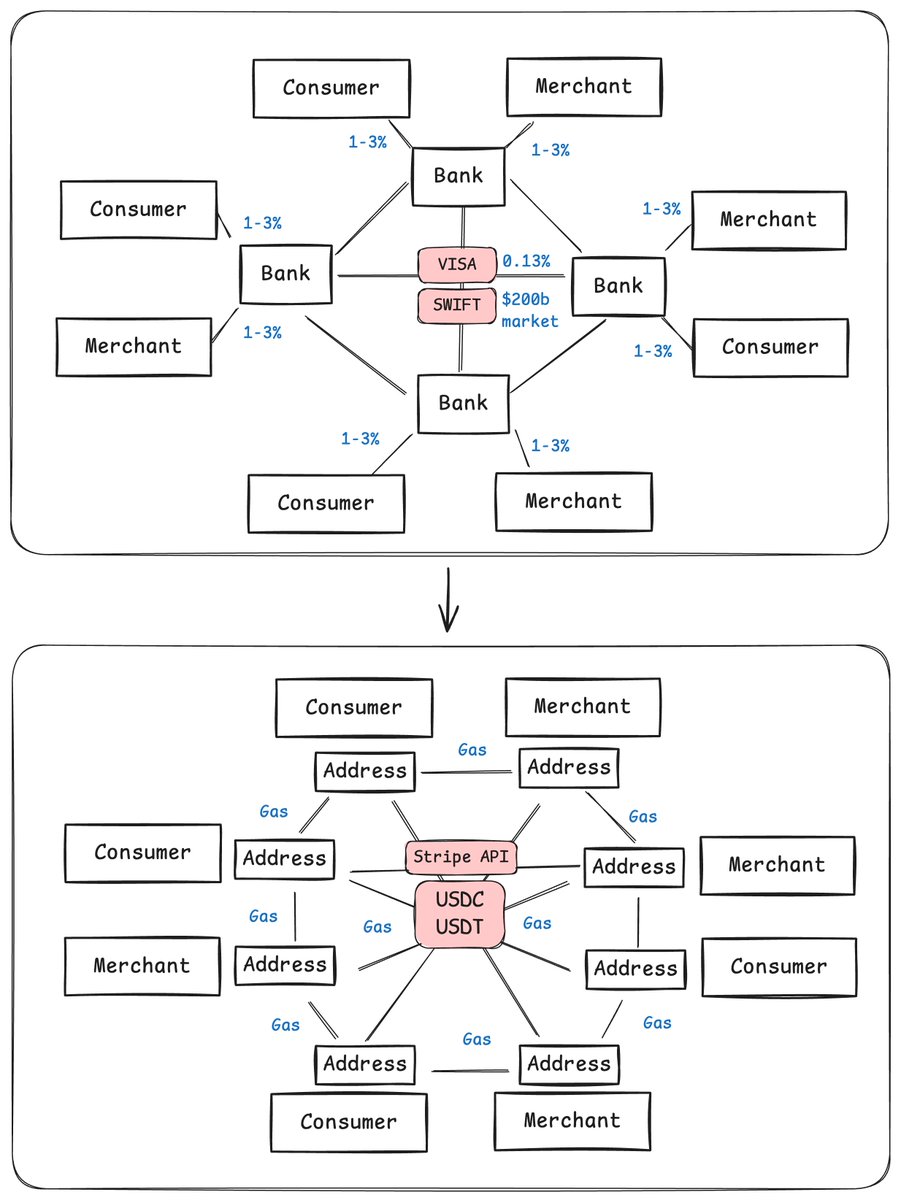
Currently, for a credit card payment, merchants need to pay 1.5% to 3% to banks and card network companies. By using stablecoins for settlement, they could potentially save on interchange fees and acquiring bank fees. Stripe's yearly processed payment volume is projected to be $1 trillion in 2023. A 1% fee on $1 trillion amounts to approximately $10 billion.
The global market for international payments is substantial, with total revenues estimated at around $200 billion annually for banks. This includes transaction fees ($10-$50 per transaction) and foreign exchange revenues (1%-5% of transaction volume, depending on the FX pairs). Additionally, banks can earn interest on funds during the transfer process.
According to these data, stablecoins can help merchants save $10 billion annually just from Stripe's own transaction volume. Additionally, crypto can assist Stripe in competing in the $200 billion B2B cross-border payment market with banks. This suggests that the impact of stablecoins could be very significant. If stablecoins can replace traditional banks and card network companies, it becomes clear why Stripe is willing to spend $1.1 billion to acquire Bridge.
Stripe's acquisition shows they believe the time is right. Consumers and merchants are becoming more open to using crypto for global settlements.
DeFi has found its product-market fit; now it just needs a good distribution channel.
Stripe is eating banks, as usual, this time through crypto.
♢ MOVE your BTC for Real Yield ♢
Echo Protocol is the first Bitcoin liquid re-staking & yield layer on MoveVM.
Today we are announcing our pre-seed investment!
Here is how Echo is about to change the game
—and how you can tune in early.
❗️Tangle Treasury committee election results are in*❗️
The new team will be:
Program lead: @LinusNaumann#Shimmer Reviewers:
@cheerful_nicole@finanzgoblin@Phantom_3D@STWei8
*results are preliminary and will be verified by Shimmer L1 node owners over the next days. #IOTAEVM
Parallel - What Happens When AI Agents Gain Property Rights?
@ParallelTCG is a sci-fi trading card game that leverages NFTs to enable a play-to-earn experience. Recently, the project raised $35 million from prominent investors, including Paradigm, Distributed Global, VanEck, Solana Ventures, Base Ecosystem Fund, and Amber.
It's an interesting game, but what excites me more are their two other projects - @ParallelColony and @AIWayfinder . Let’s dive into these.
---
Colony - Sandbox of AI Agent with Property Right
Parallel Colony is an AI-powered web3 survival simulation game.
Players own Parallel Avatar NFTs and use PRIME tokens to interact with these AI Avatars. These avatars have their own digital wallets on Solana, storing assets, earnings, and even memories. Players set tasks for their avatars, ranging from political campaigns to resource gathering, which the avatars autonomously execute. Avatars can explore environments, gather resources, engage in combat with other colonies, and evolve over time. Successful gameplay earns rewards in PRIME tokens. Colony is anticipated to launch in late 2024 or early 2025, marking a significant milestone in the integration of AI and blockchain technology.
Integrating wallets into AI avatars in Parallel Colony is very interesting. It allows avatars to engage in autonomous transactions, learn from real-world economic interactions, and develop sophisticated behaviors. This integration also provides more clearer objective for the avatars, such as growing their wallet balance or acquiring specific resources (represent with NFTs). By incorporating the concept of capital markets into the gameplay, avatars might learn and adapt more deeply. They can leverage DeFi resources to access more data and computing power, potentially leading to better outputs and increased profitability.
So it's a good time to introduce the Parallel team’s bigger ambition - Wayfinder.
Wayfinder: The Google Maps of on-chain AI Agent
Wayfinder is a groundbreaking tool designed to enable AI agents to navigate the blockchain, trade independently, and manage web3 wallets securely.
Wayfinder aims to provide AI agents with a comprehensive understanding of blockchain environments, enabling them to perform tasks autonomously and efficiently. Currently, AI agents lack an understanding of blockchain-specific contexts and tools for real-time data access. By addressing these issues, Wayfinder ensures that AI agents can function effectively within the blockchain ecosystem.
Wayfinder Architecture:
- LLM Fine-tuning: Wayfinder is developing a compact LLM fine-tuned for EVM function calls, allowing seamless integration with blockchain operations.
- Strict Instructions and Permissions: AI agents (referred to as Shells) operate within strict boundaries set by their owners, ensuring secure and controlled actions.
- Wayfinder graph: An mapping system represent the interconnections within blockchain ecosystems. By transforming the graph into a dynamic toolchain, each contract function is represented as a separate, callable entity.
- Wayfinder path: Wayfinder Path is the building block of the graph and is community-driven. Paths are monitored by community-maintained verification agents. Path builders receive rewards when other agents utilize their paths and must stake Wayfinder’s tokens for their proposed paths. If a proposed path is found to be incorrectly formatted or potentially dangerous, the staked tokens will be slashed.
Wayfinder has diverse and impactful use cases. In gaming, AI agents can mine resources. They can also act as application-agnostic agents, providing utility across various platforms. AI agents could assist in efficiently minting NFTs and serve as smart trading bots, optimizing investment strategies based on portfolio management, asset allocation, and arbitrage trading tailored to users' risk tolerance and goals.
---
Closing Thoughts
In fact, what Wayfinder aims to achieve is incentivized RLHF. While LLMs can understand the context between words, their understanding of trading behaviors and game theory is still far from sufficient. Wayfinder provides incentives to gather substantial real human feedback and uses the Colony simulation environment as a sandbox to test the limits of AI agents with property right. Ultimately, these technologies will be applied to the blockchain domain.
This is a very ambitious project. Whether AI should have human rights has been a topic explored in many science fiction films, such as "Blade Runner" and "Westworld." Although it is still too early to discuss AI's rights to life and freedom, Parallel's attempt to grant AI property rights is a significant first step. Whether this brings us closer to the singularity or closer to extinction can only be determined through experimentation.