Today’s card: Andrej Karpathy.
Some people define models.
Some people define systems.
He did something rarer:
He defined how a generation understands AI.
From CS231n → Tesla Autopilot → GPT → nanoGPT
his work spans research, product, and education.
That’s why he lands at 95/100 —
a true ecosystem-level builder.
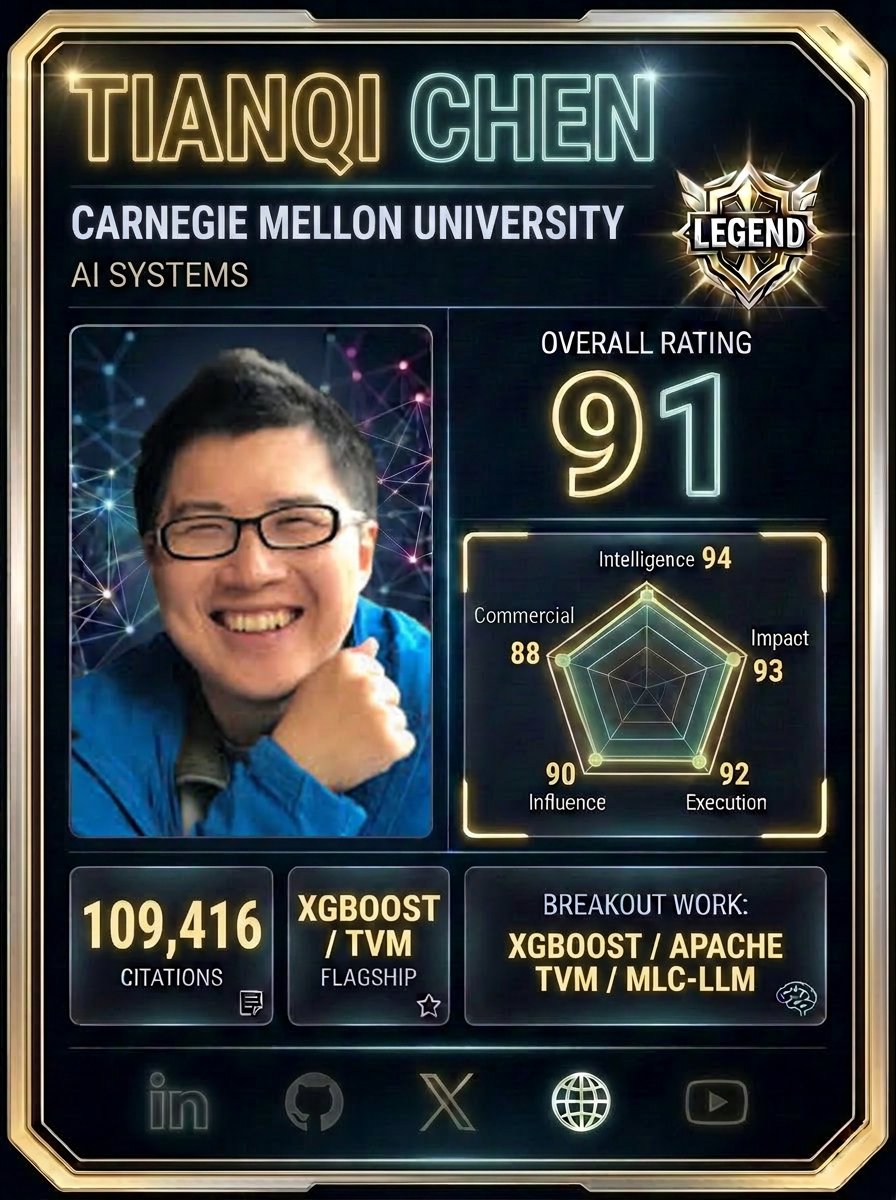
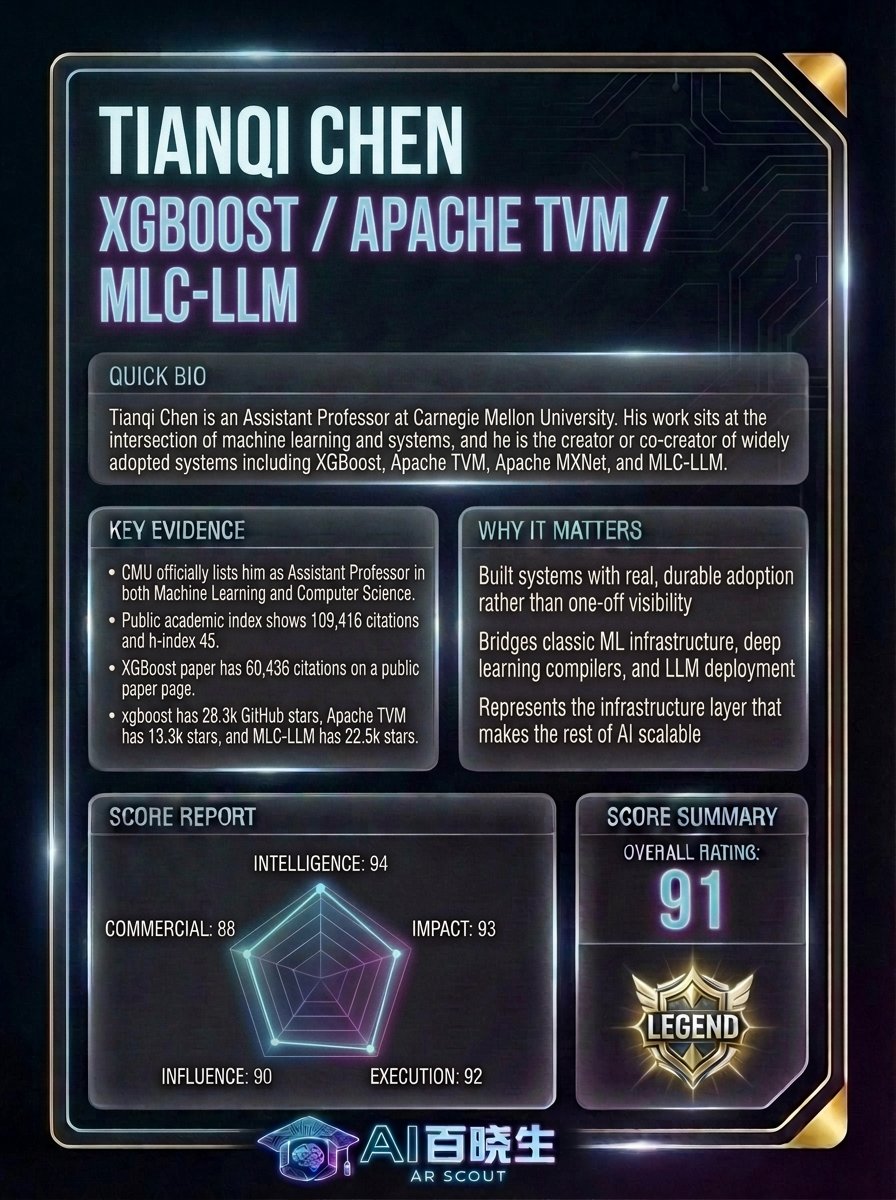
Today’s card: Tianqi Chen.
Some researchers build better models.
Some build the systems that make modern ML possible in the first place.
Tianqi Chen belongs in the second group.
From XGBoost to Apache TVM to MLC-LLM, his work keeps showing up at the infrastructure layer — the part of AI that decides whether models can actually train, compile, deploy, and scale.
That is why I score him 91/100.
Not a generic rising name. A real category head in ML infrastructure.
#AI #Tianqichen #TVM
If you’ve seen this problem in real customer projects, I’m collecting a few examples.
Reply with “on-prem” or DM me — I’ll send a short 3-minute questionnaire.
AI agent demos often run fine on a laptop or cloud API.
Enterprise pilots are different.
A MacBook is too personal.
A DGX/H100 setup is often too heavy.
A bare GPU server still leaves the team to build model serving, monitoring, deployment, and support.
This is the gap I’m thinking about:
small AI agent teams need a practical local AI appliance.
Something that can run inside the customer environment, serve as a shared model endpoint, support multiple users, give IT visibility, and grow from pilot to production.
Not the biggest GPU box.
Not a personal workstation.
A lower-friction path from cloud demo to on-prem AI pilot.
If you build AI agents / RAG / automation solutions, have customers asked you for local or private deployment?
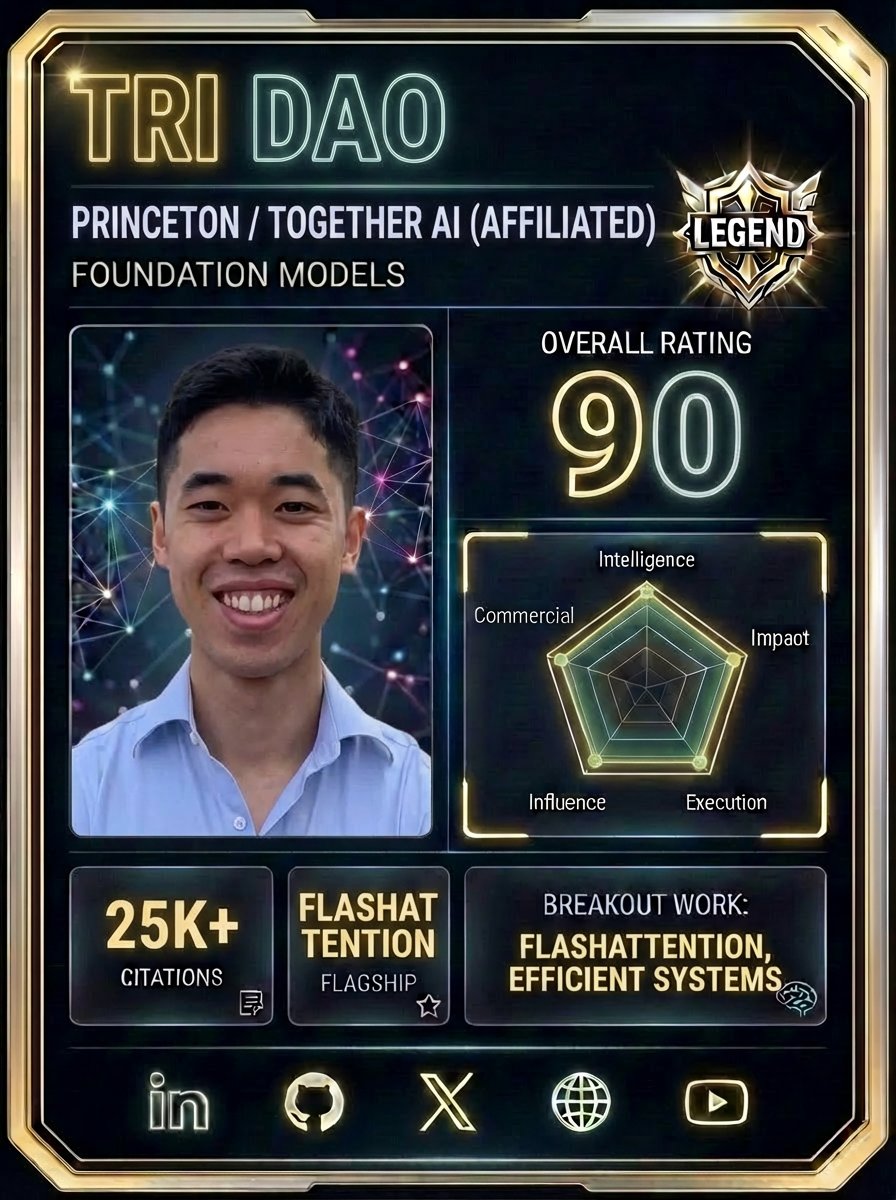
Tri Dao quietly became one of the most important people in modern AI.
Not by inventing a new model —
but by making all models faster.
FlashAttention is now everywhere:
• PyTorch
• OpenAI stacks
• Long-context LLMs
He didn’t change AI’s direction.
He changed its speed limit.
Score: 90/100 🧠⚡
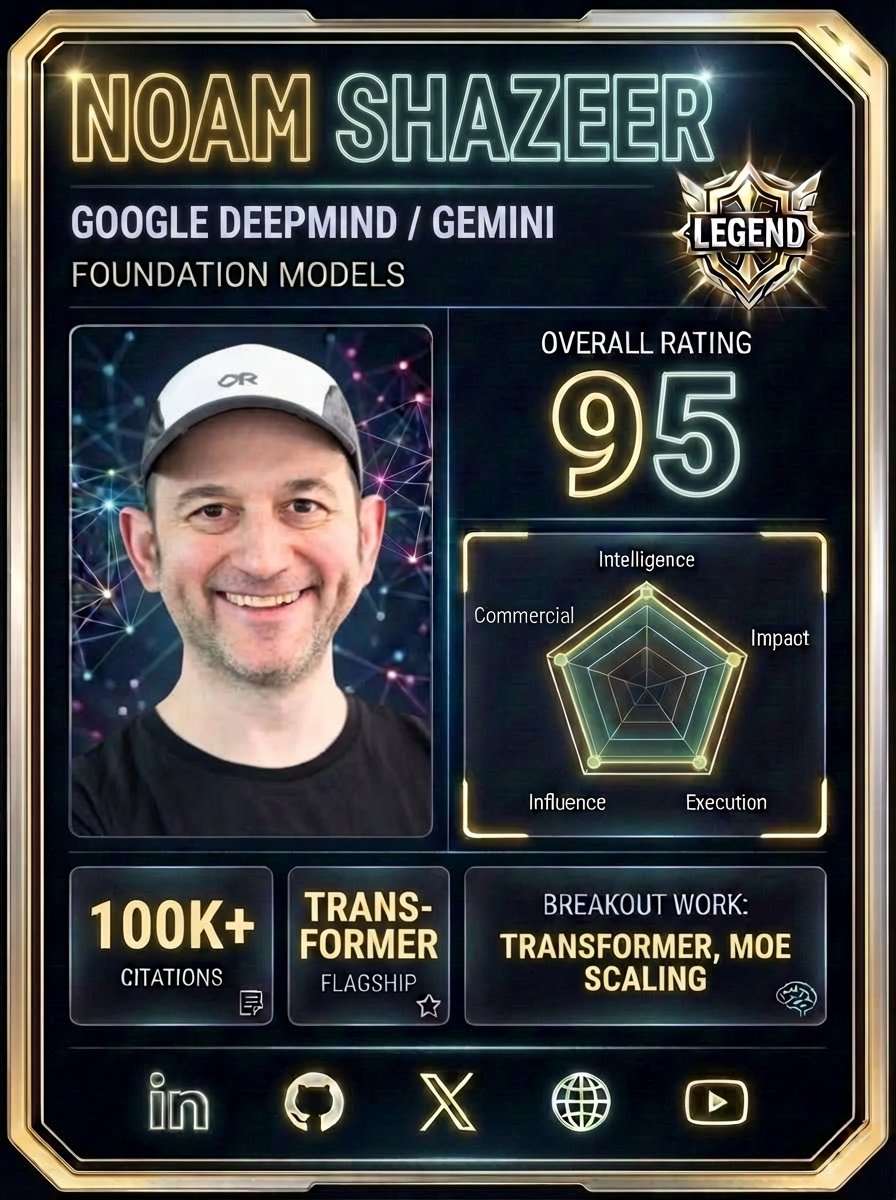
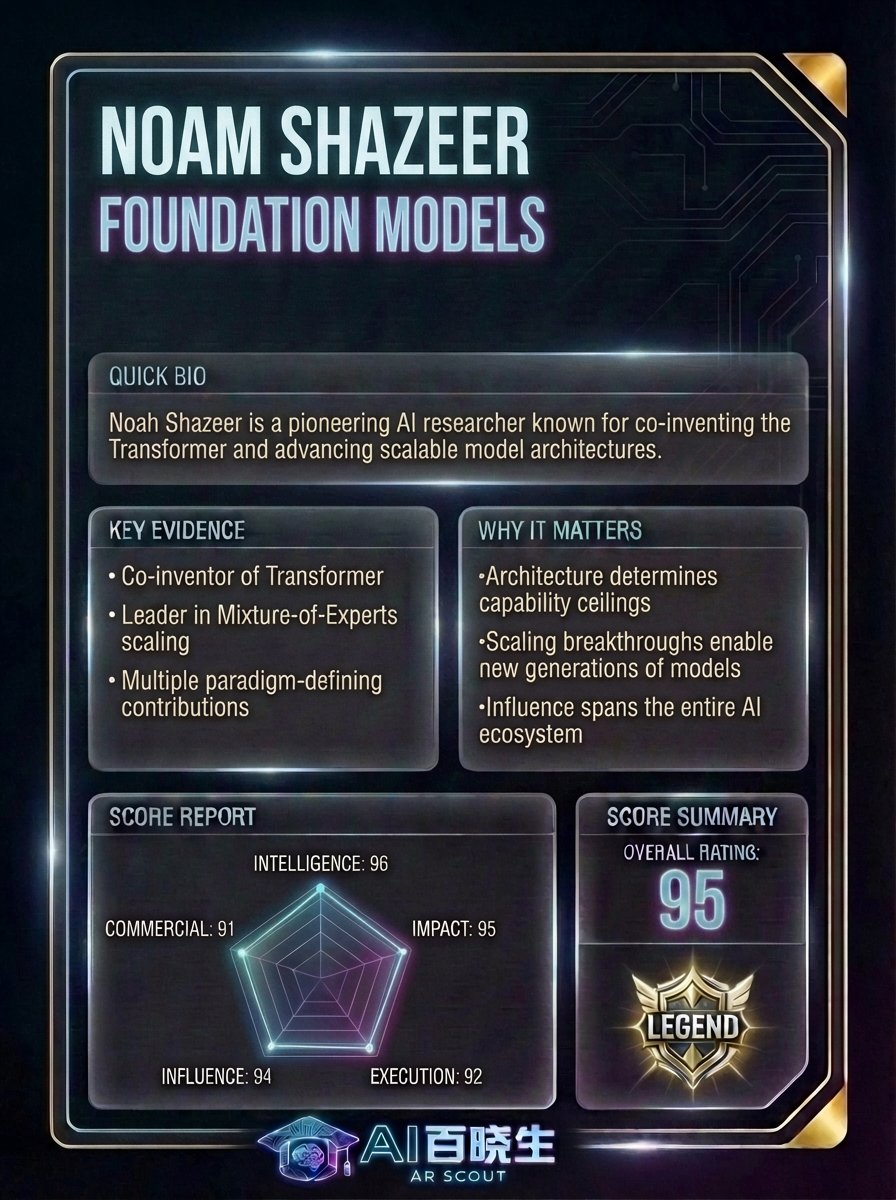
Noah Shazeer is one of the rare researchers whose work defines entire eras:
Transformer → foundation of modern AI
MoE scaling → next wave of efficiency and scale
Unlike many high scorers:
Not dependent on a single phase
Repeatedly shapes how models are built
That’s why he reaches 95/100 — firmly category head, near top-master boundary.
Today’s card: Percy Liang.
Not just building models — shaping how we evaluate them.
Stanford professor, CRFM director, creator of HELM.
This is category-level influence → 90/100.
He’s one of the people defining what “progress” in AI even means. #AIScout
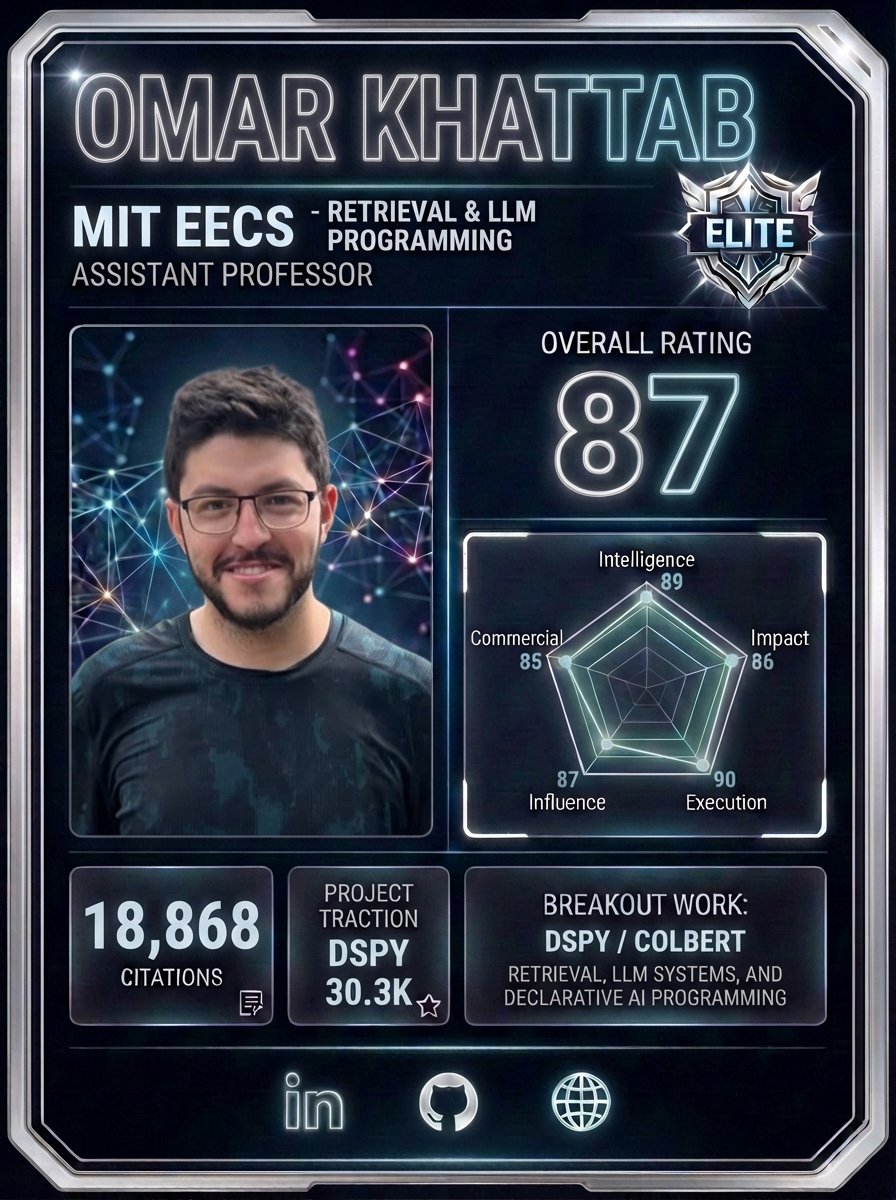
Today’s card: Omar Khattab.
What makes this profile interesting is that it sits at a very important layer of modern AI:
retrieval, LLM systems, and programmable AI.
He is now an Assistant Professor at MIT EECS / CSAIL, and his work has already produced systems with real community adoption:
DSPy: ~30.3k GitHub stars
ColBERT: ~3.7k GitHub stars
This is why I see him as an 87/100 profile in the 2026 AI researcher universe — not just someone with good papers, but someone building infrastructure that other people use.
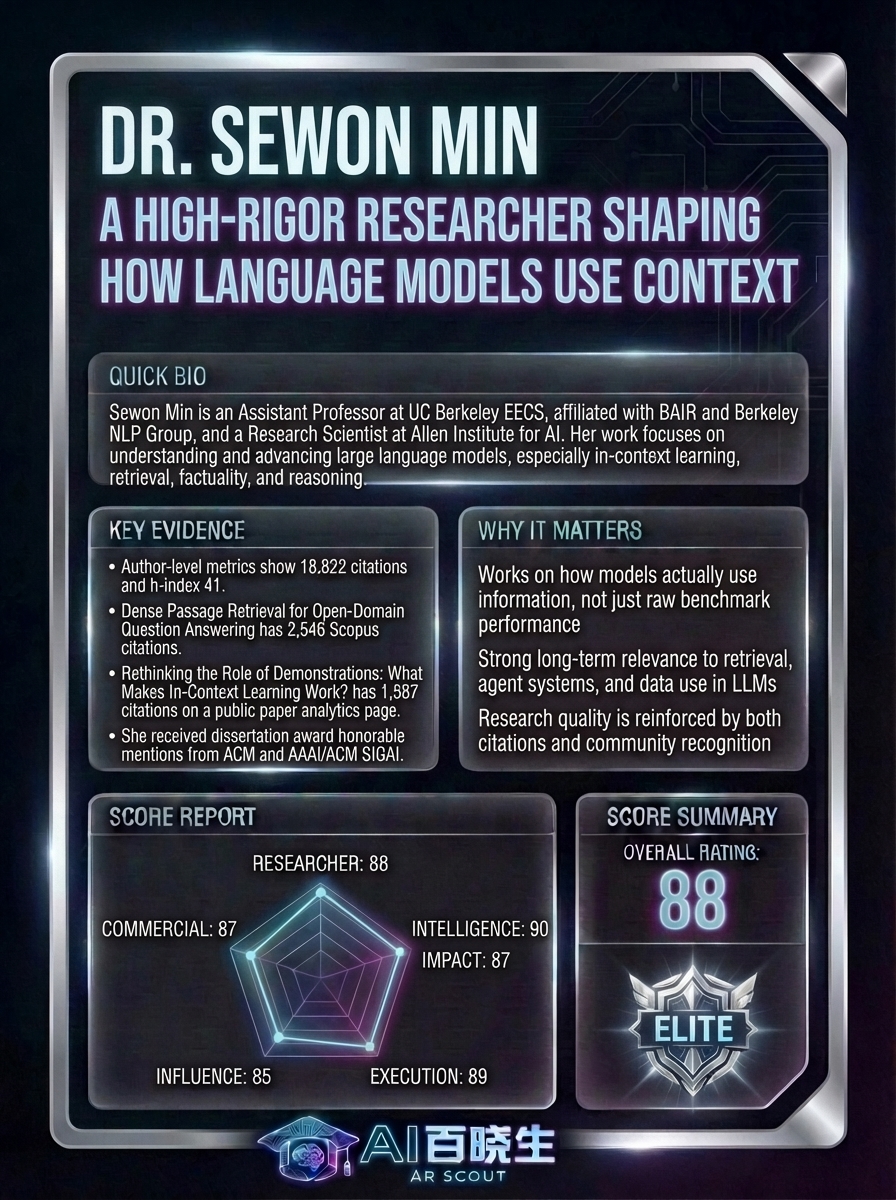
Today’s card: Sewon Min.
What makes her profile stand out is that she works on a very high-leverage layer of AI:
how language models actually use information.
From retrieval to in-context learning, her work is less about flashy demos and more about understanding the mechanics that make LLMs reliable, adaptable, and useful. That is also why her track record matters: roughly 18.8k citations, h-index 41, and highly cited work like Dense Passage Retrieval and Rethinking the Role of Demonstrations.
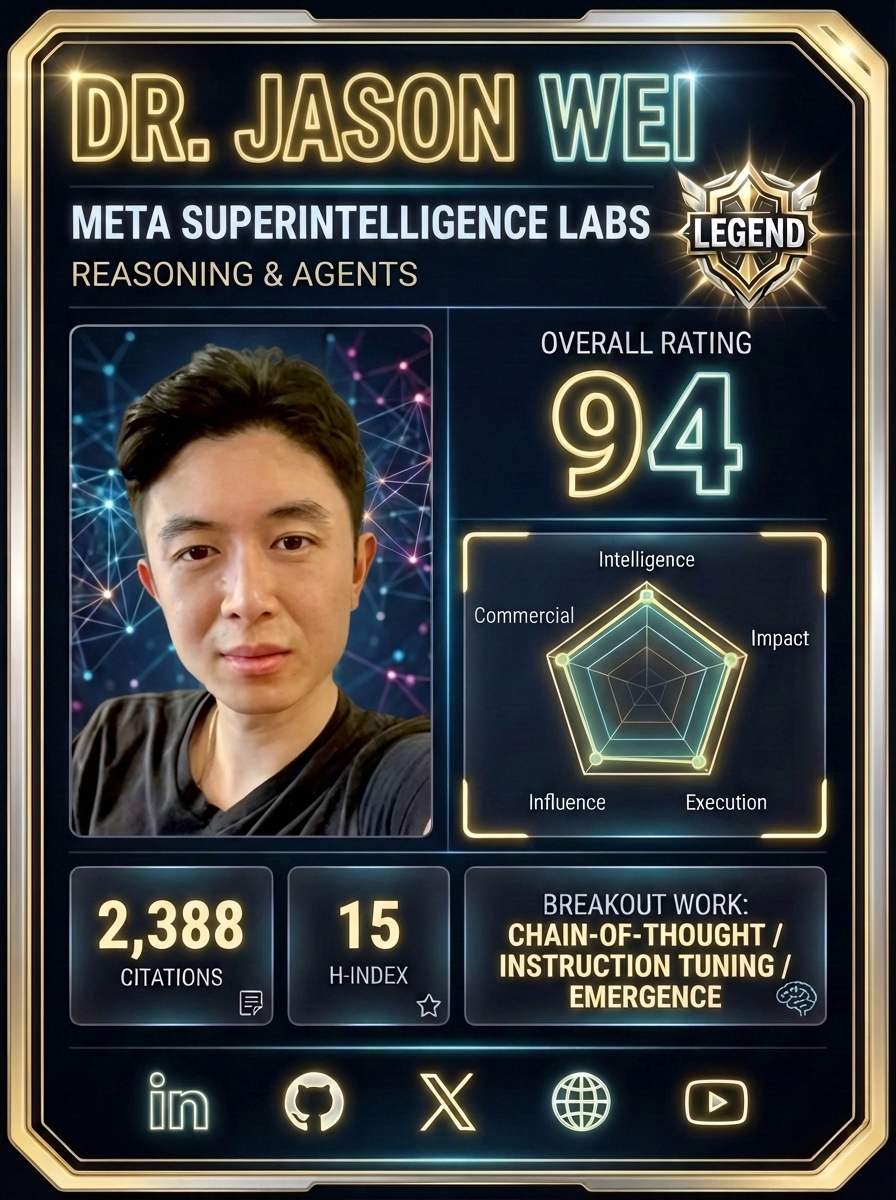
Here is our first legend card - Jason Wei.
What makes him stand out is not just research quality, but category-defining influence.
His work is closely tied to chain-of-thought prompting, instruction tuning, and emergence — ideas that became central to how people understand and evaluate modern LLMs.
That is why we see him as more than a rising name.
He is already one of the important coordinates in the reasoning category.
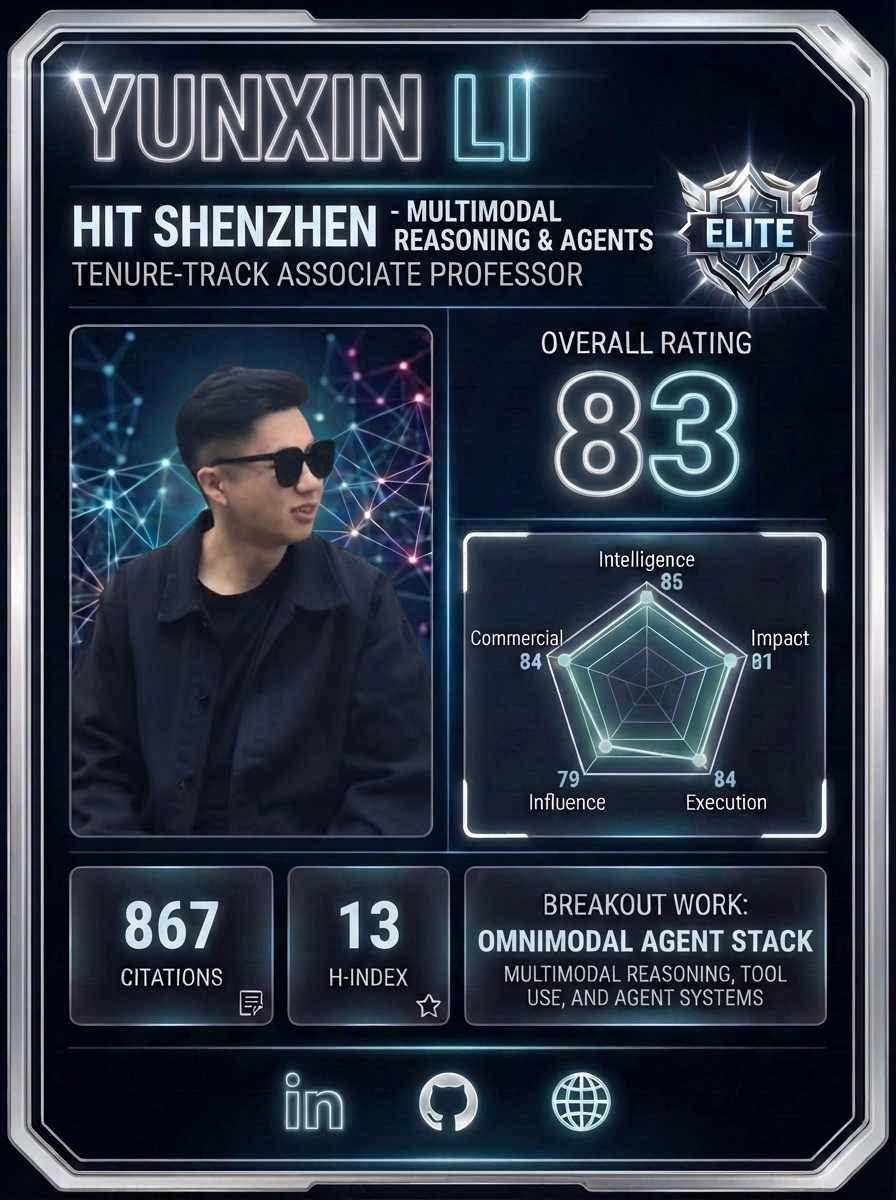
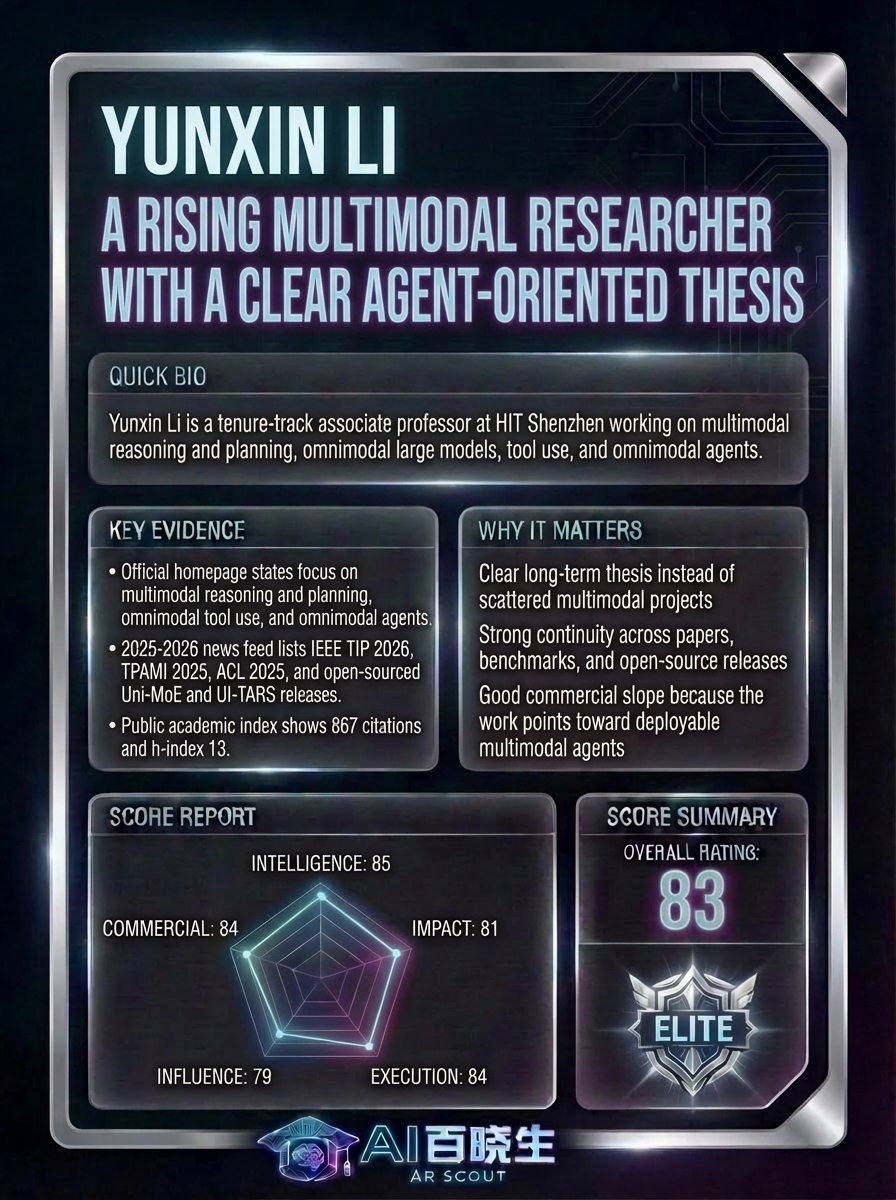
This is a card for Yunxin Li.
He is a Elite researcher working on multimodal reasoning, planning, tool use, and omnimodal agents. What stands out is that his work is not just about making multimodal models look more capable in demos, but about pushing them toward systems that can actually reason and act across different inputs.
We chose him because this is the kind of profile that usually becomes more important over time:
clear research direction, steady output, and a line of work that connects well to where multimodal agents may be going next.
Meet the latest card from AI Scholar — our AI researcher ranking card series.
Each card highlights one researcher we think is worth watching, with a score, a tier, and a short scouting report.
This one is Xiangyu Qi.
He works on one of the most important questions in AI right now:
how to make large language models safer and harder to break.
We picked him because he is not just working on “AI safety” in a broad sense.
His research focuses on a deeper problem: why safety alignment often looks effective on the surface, but can still fail underneath.
That makes his work especially relevant as more powerful models get deployed in the real world.
In our system, he lands at 82 / Elite — a strong researcher with clear momentum, strong technical depth, and a real chance to become one of the important names in AI safety.
More cards coming.
#AIScholar #AIResearch #LLMSafety #Alignment
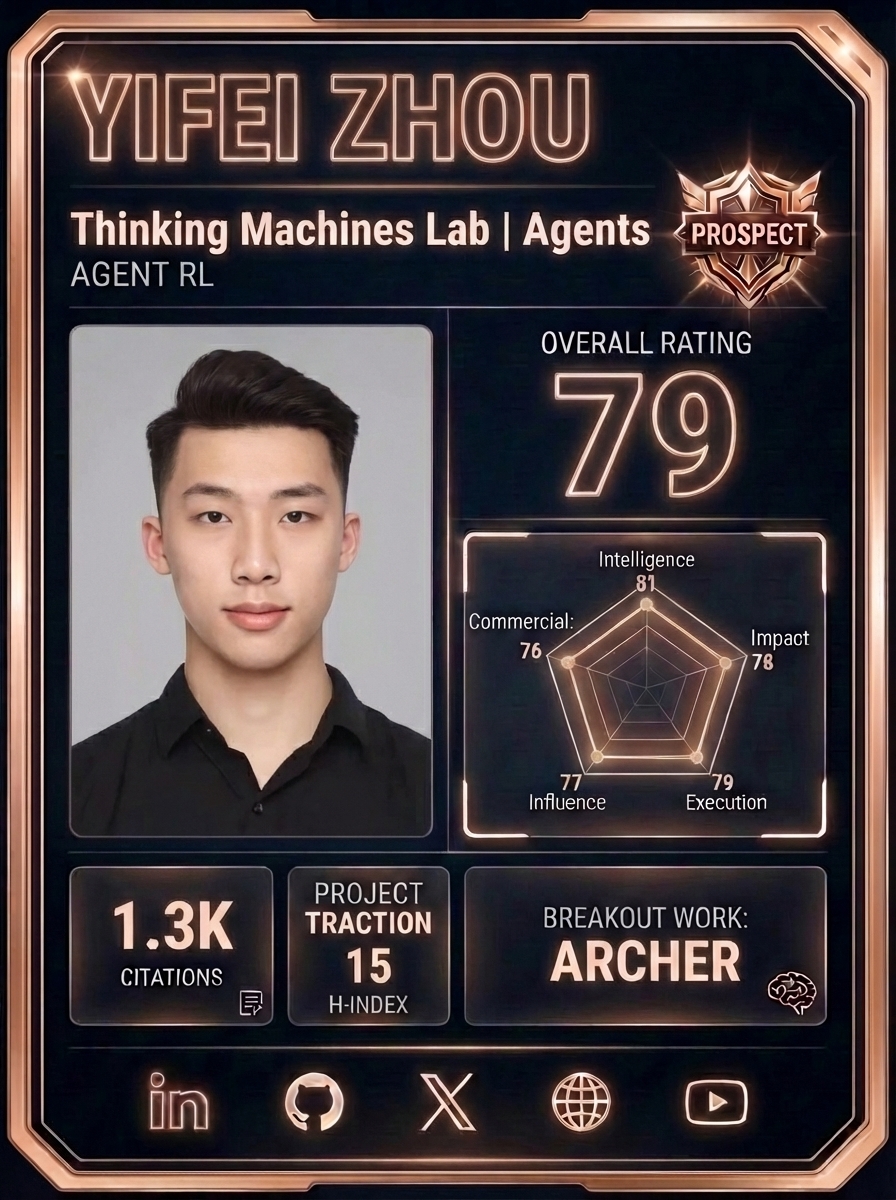
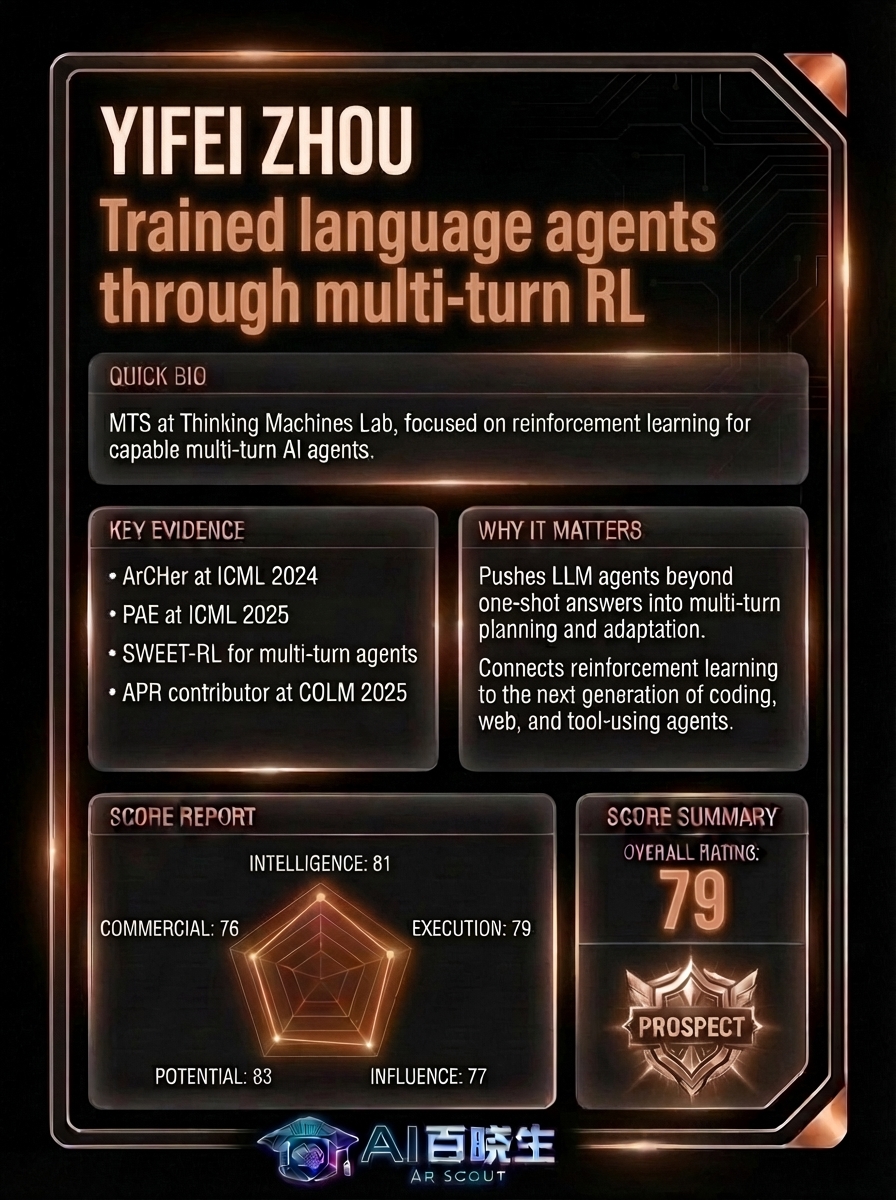
the third AI Researcher 2026 card goes to Yifei Zhou.
He’s currently at Thinking Machines Lab, with previous research experience at xAI, FAIR, and Berkeley, and his work sits right at one of the most important frontiers in AI right now: training stronger agents with reinforcement learning. #AIScout #AIResearch #Agents #AgentRL #LLM
This is the second card in our AI Researcher 2026 series: Rishub Tamirisa.
Rishub is a researcher focused on LLM safety, safeguards, and alignment, with work centered on whether model defenses actually hold up under realistic attacks. Compared with more surface-level safety measures, his research pays more attention to robustness under pressure and deployment risk.
We chose him because this is exactly the kind of work that matters more as models become more widely used.
Not just how to add safeguards, but whether those safeguards remain effective when people actively try to break them.
That makes his work worth tracking early.
Our first card spotlights Yueqi Song, a promising researcher at CMU LTI working on agent data, multimodal reasoning, and training protocols for the agent era. We see this as exactly the kind of early work worth tracking: foundational, practical, and likely to matter more over time.
We’ve been building something new for 2026:
AI Researcher — a scouting-card series for the next generation of AI talent.
We’ll begin with emerging researchers first, not just the household names.
Because the interesting moment is often before consensus.
Before the awards.
Before the mainstream attention.
Before everyone agrees.
Each card captures:
who they are
what they’re working on
why it matters
how we rate their current trajectory
From Prospect to Elite, from Elite to Legend —
this is our way of tracking the people shaping the future of AI.
First one is live. More soon.
I fixed my “AI fake productivity” loop. I used to consume a lot, ship little. Now I run one rule: No link, no write. Older than 48h, no chase. Then: 5 one-line insights → 2 short posts → 1 long-form seed. Result: less noise, more shipping. Not perfect posts — just consistent, real output. What blocks you most right now: ideas, writing, or consistency?
I thought I needed more time.
What I actually needed was a repeatable system.
This week, I started using OpenClaw as an AI execution layer.
Not just a chatbot.
A trained assistant for daily workflows.
My current role is simple: I’m an AI user/practitioner.
I test tools in real life and keep what actually improves output.
My 3 bottlenecks before this:
- scattered input
- inconsistent content output
- constant context switching
So in week 1, I only did 3 things:
1) Defined clear usage goals for the agent
2) Built a fixed daily input mechanism (top global signals)
3) Separated drafting from publishing
Immediate results:
- more consistency
- less decision fatigue
- better output quality in the same time budget
I’ll keep this as a public series:
setup → workflow → what worked → what failed.
And I’ll include daily token/cost tracking too.
If you use AI tools every day, what’s your biggest bottleneck now?
Reply and I’ll break down 3 real cases in EP02.
#AIUser #OpenClaw #Productivity #BuildInPublic