The AWBI is supposed to protect animals, but its legal submissions systematically built the blueprint for the devastating May 19 Supreme Court judgment.
While their January 2026 filing hid behind sanitary phrases like preventing dog bite incidents, the mechanics were vicious. Knowing municipal shelters completely lacked space to permanently hold dogs exiled from institutional campuses, the AWBI openly volunteered cattle facilities (Gaushalas).
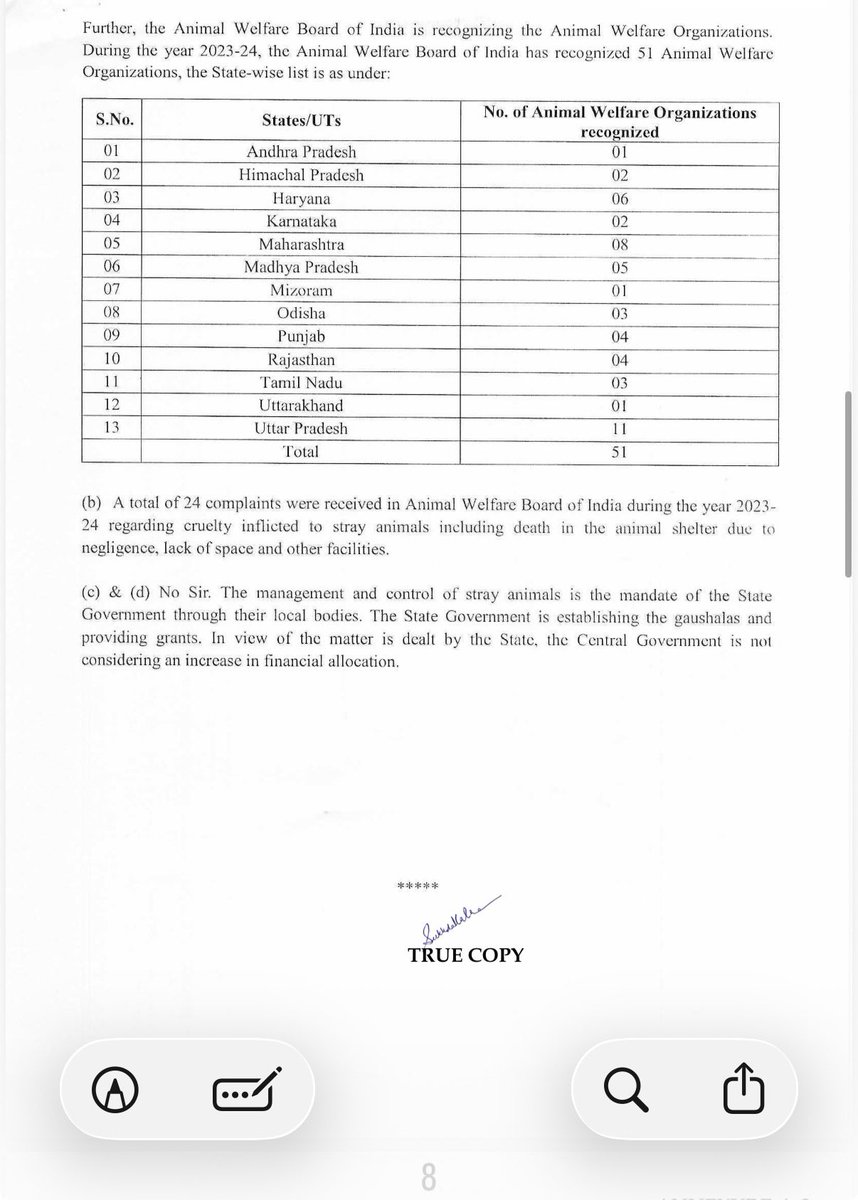
In Paragraphs 8 and 9, they cited Lok Sabha data on India's 17,420 gaushalas and actively pressured the Court to force these gaushalas to establish "makeshift shelters" to lock up displaced community dogs.
This logistical betrayal directly fed into this months final ruling. Because the AWBI provided a mechanism to bypass ABC Rules via gaushalas and grazing lands, the Court felt empowered to formalize campus bans.
Worse, the case evolved from mass displacement to state-sanctioned killing. The final judgment explicitly greenlights the euthanasia of "dangerously aggressive" dogs, while shielding municipal officials from criminal proceedings for acting in "good faith".
They engineered a broken, underfunded dumping system, and then legalized killing the victims when the infrastructure inevitably failed.
@farddepartment@LalanSingh_1@moefcc@AwbiBallabhgarh@LiveLawIndia@PMOIndia@dilthi_gujarati@GiorgiaMeloni@gauri_maulekhi@pfaindia@Manekagandhibjp@UNHumanRights
#SaveIndianDogs #BycottAWBI #BycottAAP #SavePunjabDogs #SaveHaryanaDogs
🚨 Indian researchers solve a long-standing puzzle in chemistry.
Scientists around the world had tried different combinations, but a truly carbon-free molecule with a similar structure and stability could not be synthesized.
Researchers at IIT Madras and IISc Bengaluru have achieved a major chemistry breakthrough by synthesizing a new carbon-free molecule that copies the unusual ‘sandwich’ structure of the famous carbon-containing ferrocene molecule, solving a problem that had challenged scientists for over "seven" decades.
I have worked in R&D of Tata Motors.
Tata would test 10's of vehicles over lakhs of Kms of single model over years before vehicle launch. Heck, they would just smash 4-5 vehicles for crash testing & safety rating.
The change this massive in fuel system of nation would require testing & validation across different brands of all petrol 2W& 4W vehicles spanning across 100's of vehicles over few years before giving all clear.
While different agencies claim E20 compatibility, an RTI requesting test reports to be made public was rejected 😅