Every time a microbiologist anywhere in the world writes the name Streptomyces pimprina, they are naming a town near Pune.
This is the story of the man who put it there....
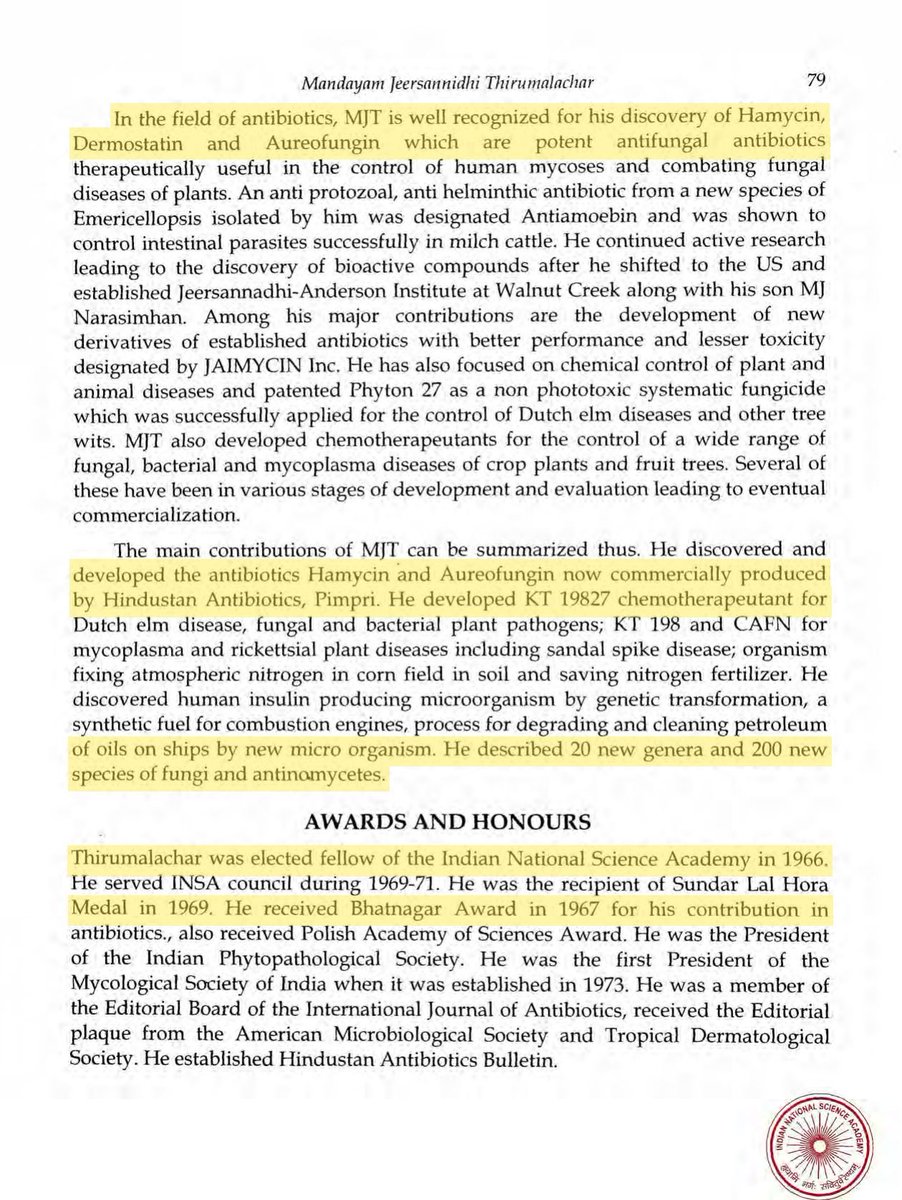
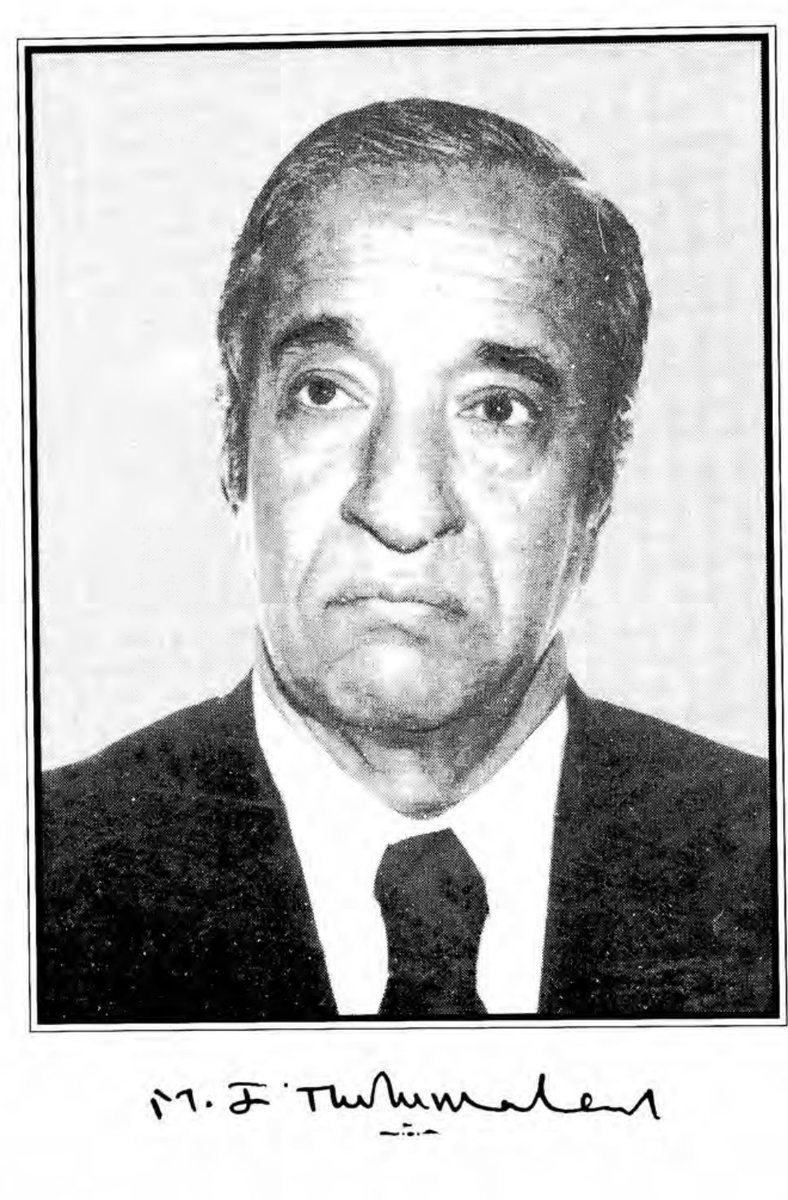
M. J. Thirumalachar was born in Bangalore in 1914, the son of M. J. Narasimhan, one of India's pioneering plant pathologists.
After a PhD at the University of Wisconsin, he came back home, and in 1953 joined the newly set up Hindustan Antibiotics at Pimpri as its chief mycologist.
His job: find new antibiotics in Indian soil.....
His team found three that mattered: Hamycin, Dermostatin and Aureofungin, all antifungals. The Hamycin microbe itself came from a soil sample collected in Pimpri, and he named the new species after the town. Hamycin and Aureofungin went into commercial production at Pimpri.
A 4th, Antiamoebin, was used by our Armed Forces to deworm military dogs. Mixed into animal feed, it raised milk yield in cows and egg production in poultry. This is from the citation of his 1967 Bhatnagar Prize.
In 1966, the United States granted him a patent for Hamycin.
The inventor line reads: "Mandayam J. Thirumalachar, Pimpri, near Poona, India."
He described 20 new genera and 200 new species of fungi. One genus, with a colleague, he named Narasimhania, after his father.
He died in 1999. Outside mycology, almost nobody knows his name. 🙏🙏
Sources: INSA Biographical Memoir by V. Ramamurti (2007); US Patent 3,261,751 (1966); Bhatnagar Prize citation, 1967.
Photo 1: Signed portrait from the INSA memoir
Photo 2: INSA memoir p. 79
Photo 3: US Patent 3,261,751, page 1
Who can work without any attachment? That is the real question. Such a man is the same whether his work succeeds or fails. His heart does not give one false beat even if his whole life-work is burnt to ashes in a moment.
- Swami Vivekananda
{CWSV-1 : Lectures and Discourses : The Gita II}
#VivekanandaKendra #Spirituality
Prof. Mitali Mukerji Ji (Professor in the Department of Bioscience and Bioengineering at IIT Jodhpur) sent me a paper a few days ago and I have not stopped thinking about it.
Her team found that a meditation retreat and a sleeping pill leave a similar mark in the blood.
Let me explain, because it took me a while to absorb...
Her IIT Jodhpur team had blood gene-activity data from 106 people who went through an Inner Engineering meditation program. Samples were taken before the preparation began, after 8 weeks of preparation, after the 8 day retreat, and 3 months later.
Most of us would ask the usual question: did meditation reduce stress?
They asked something else entirely.....
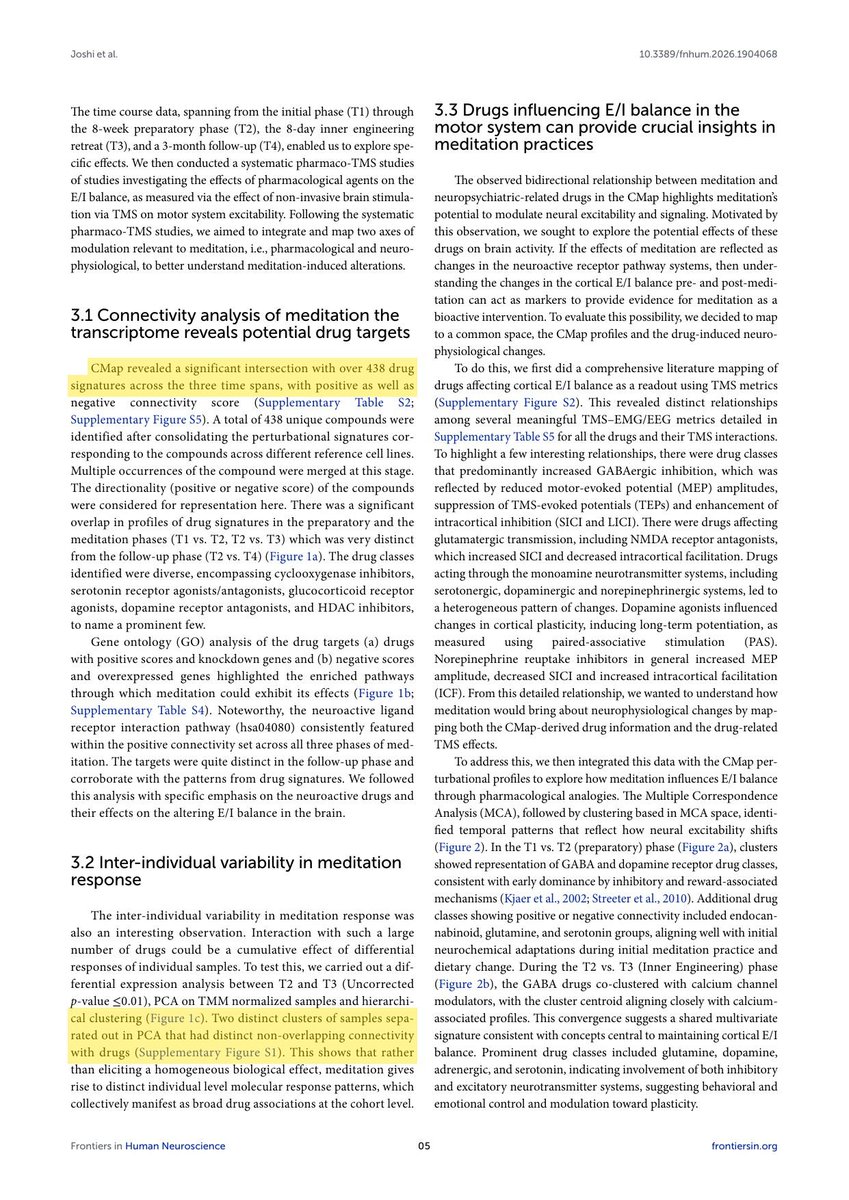
They took this data to the Connectivity Map, a giant library that records how about 5,000 drugs change gene activity in human cells. And they asked: which drug footprints does the meditation footprint resemble?
The answer is 438.
Read that again. Four hundred and thirty eight.
And where did the matches keep pointing? The brain. One pathway showed up at every single stage: the neuroactive ligand-receptor pathway, the wiring through which chemical signals speak to our nerve cells.
But here is the part that stuck me the most.
The most striking single match was zolpidem, a common sleeping pill. The gene pattern of the retreat phase resembled a drug that works through GABA, the brain's main braking system. Deep meditation, a practice with no pill involved, left an echo of a sedative's signature in the blood.
And the story kept changing with the stage. Preparation resembled dopamine and reward-related drugs. The retreat itself, GABA and calcium-channel modulators. Three months later, GABA together with dopamine and serotonin, the molecules of motivation and mood.
One more detail I cannot stop thinking about. The 106 people did not all respond the same way. Their molecular responses split into 2 clear groups, with completely different drug matches.
Meditation is not one medicine. It behaves like a personal one.
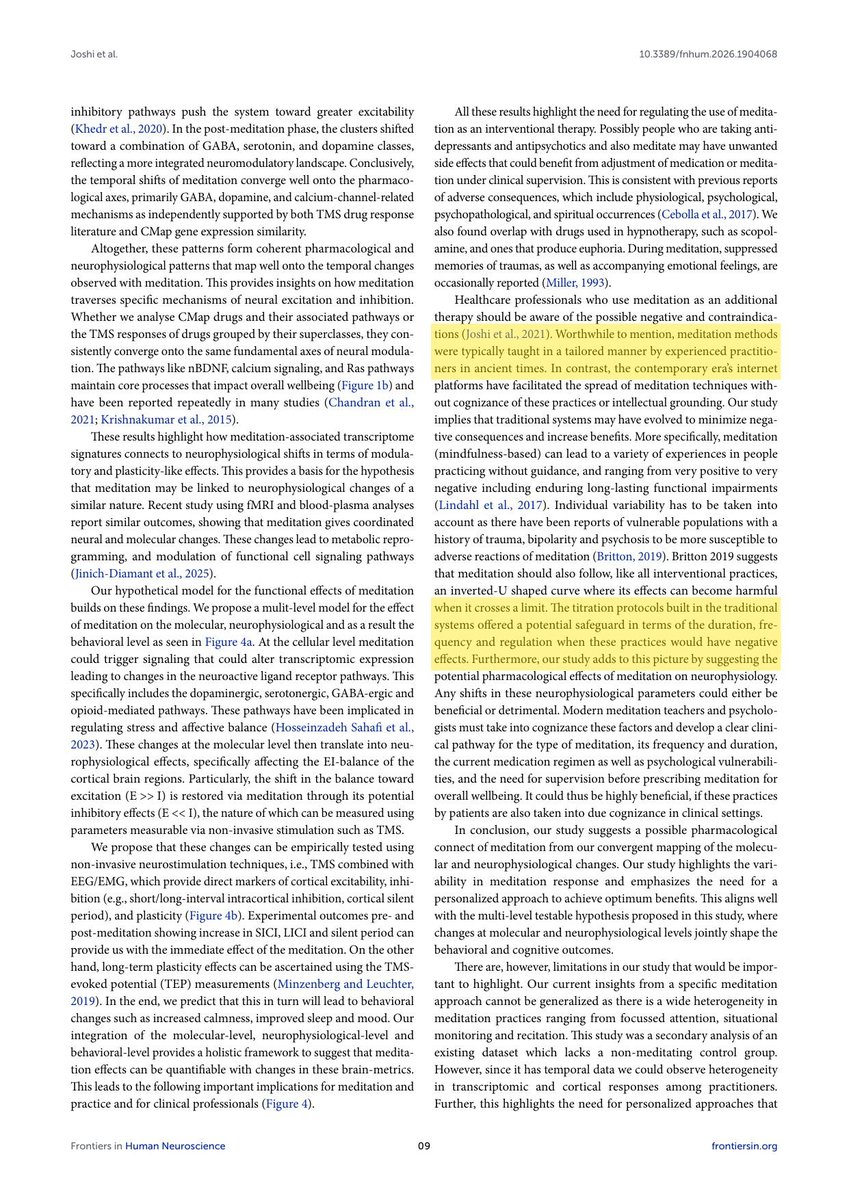
Which is exactly how our traditions always taught it. The paper notes that ancient teachers never taught meditation the same way to everyone; they tailored it to the student.
The authors suggest these systems evolved as safeguards, because a practice that touches the same pathways as psychiatric medicines needs care, especially for people already on antidepressants or antipsychotics.
Thank you, Mitali ma'am, for sharing this with me. 🙏🙏
The images below are figures from the paper itself. I am waiting to see what this team does next.
Source: Joshi, Muralidharan, Patel and Mukerji, Frontiers in Human Neuroscience, 2026
Photo 1: All 438 matches, pathway heatmap, two response groups
Photo 2: Stage by stage drug-class map
Photo 3: Page 7, zolpidem line highlighted
Photo 4: Page 5, 438 drugs and the two response clusters highlighted
Photo 5: Page 9, tailored teaching and titration safeguard highlighted
D.: Are there heaven (swarga) and hell (naraka)?
M.: There must be someone to go there. They are like dreams.
We see time and space exist in dream also.
Which is true, dream or wakefulness?
M.: Give up thoughts. You need not give up anything else.
Sri #Ramana#Maharshi Talk 41
The Fibonacci sequence (0,1,1,2,3,5,8,13…) isn’t just math — it’s a universal pattern. As it grows, ratios of terms approach the Golden Ratio (Φ ≈1.618), a harmony found in spirals, plants, shells, galaxies & even DNA.
[🎞️ thevisualalchemy]
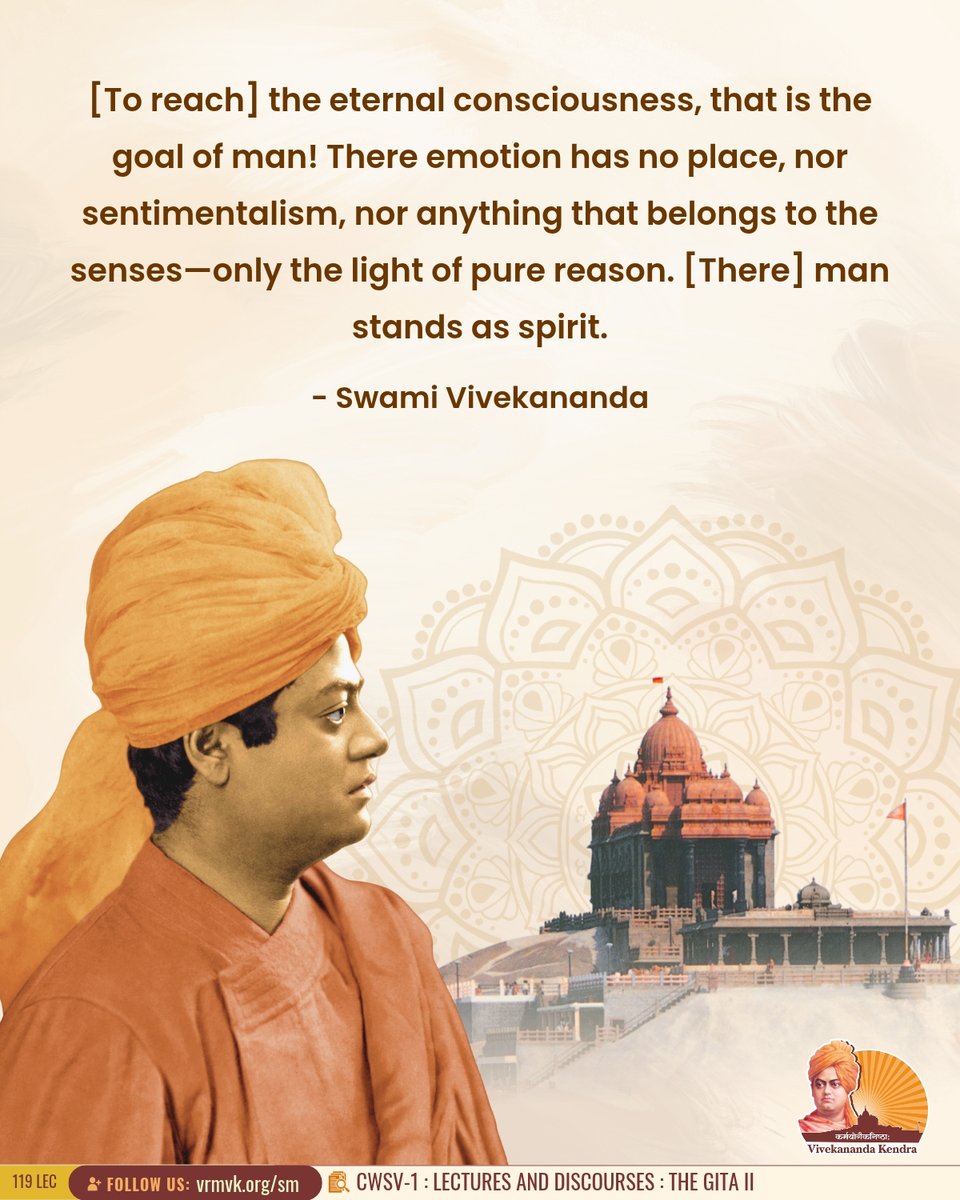
[To reach] the eternal consciousness, that is the goal of man! There emotion has no place, nor sentimentalism, nor anything that belongs to the senses—only the light of pure reason. [There] man stands as spirit.
- Swami Vivekananda
{CWSV-1 : Lectures and Discourses : The Gita II}
#VivekanandaKendra #Spirituality
Spiritual progress, growth, involves change. Progress, after all, is nothing but a change for the better in our condition. Sadhana or spiritual practice is process created to bring about continuing change for our spiritual betterment, from moment to moment.
#Chariji#Sahaj#Marg
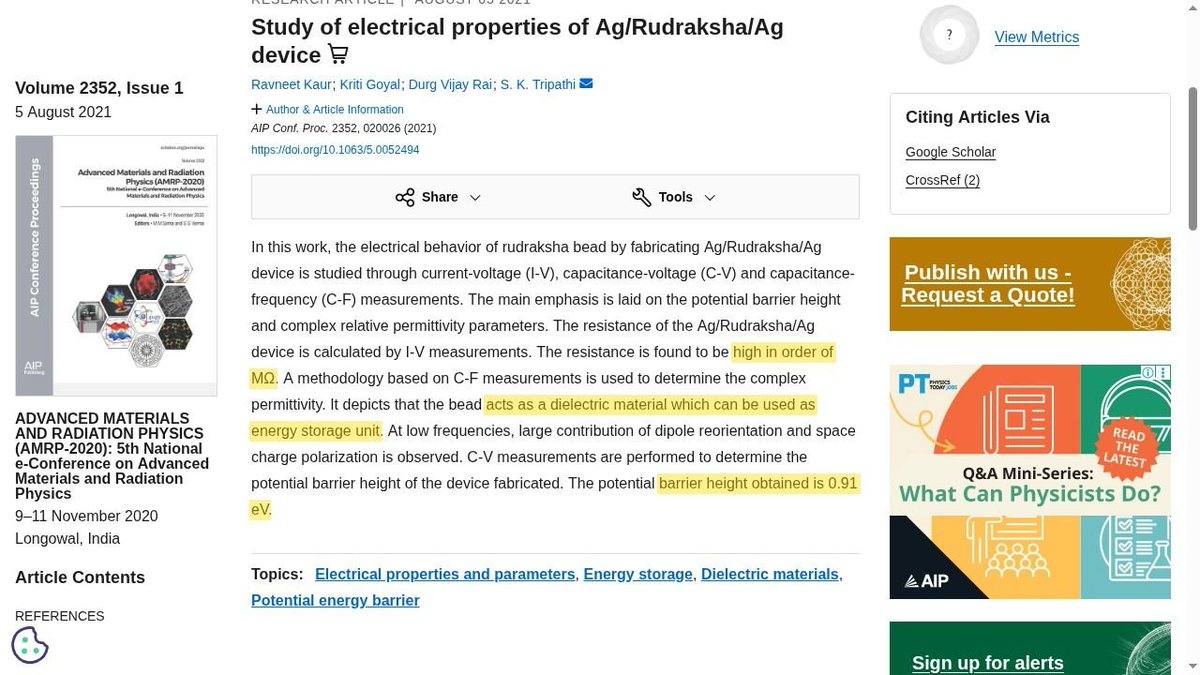
A rudraksha bead went into a physics lab in Punjab. 2 silver electrodes clamped it. Out came a number: an energy barrier of 0.91 electron volts.
The researchers' verdict: the bead is a dielectric, the same class of material that holds charge inside a capacitor.
But but but...that is not the strange part....
In Tamil Nadu, another team took shells of Elaeocarpus tectorius, a close cousin of the rudraksha tree, and carbonized them into a supercapacitor.
- 385 farads per gram.
- 96% of capacity still there after 1,000 cycles.
The paper's stated target: wearable electronics....
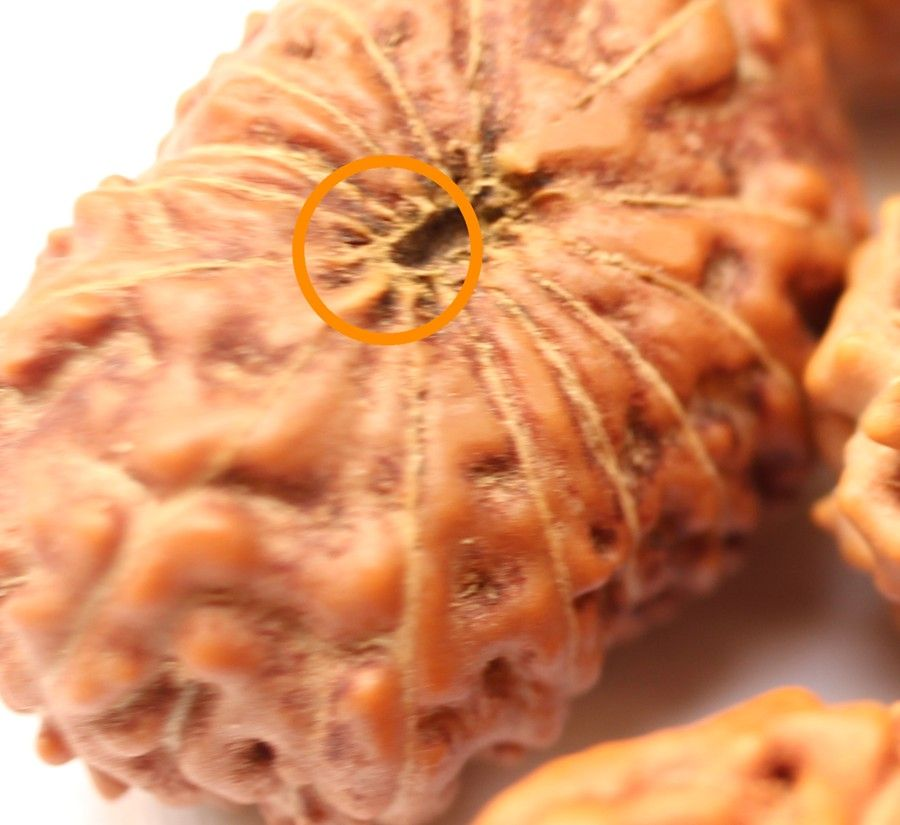
Now read what the Rudraksha Jabala Upanishad asks of the bead. Choose the one with a natural hole, not a drilled one.
Reject 6 kinds of defects. Test it on a touchstone.
Then: wear it always, even in sleep.
A natural hole. A seed made to be strung. An instruction to keep it on the body at all times.
And 2 labs now measuring it as an electronic material.
Sources: Kaur, Goyal, Rai, Tripathi, AIP Conf. Proc. 2352 (2021), doi 10.1063/5.0052494; New Journal of Chemistry 2020, doi 10.1039/C9NJ04813H; Rudraksha Jabala Upanishad.
Photo 1: A rudraksha bead forms with a natural hole through its center. No drilling needed. Credit: Merasmita, Wikimedia Commons (CC BY-SA 4.0); circle added.
Photo 2: Panjab University study: rudraksha bead between silver electrodes, megaohm resistance, a dielectric that can be used as an energy storage unit, 0.91 eV barrier.
Photo 3: Tamil Nadu study on a cousin species: 385 F/g, 96% retention after 1,000 cycles, and the paper's own words: wearable electronic devices.
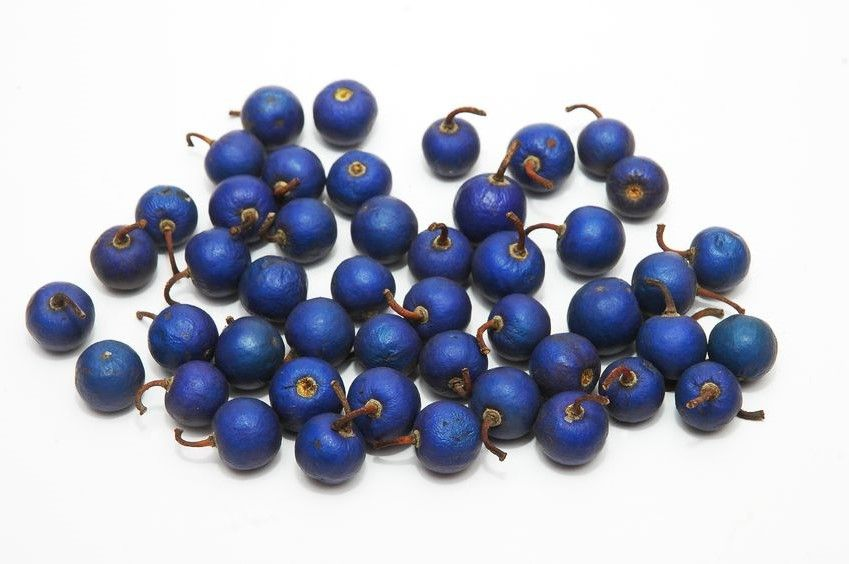
Photo 4: The rudraksha bead is the stone pit of this fruit. It ripens bright blue. Credit: Shiv Sahil, Wikimedia Commons (CC BY-SA 4.0).