Our #IoT articles from the past few months:
Changing Engines while you're in flight p1 - https://t.co/traf0kicPC
p2 - https://t.co/TMUjqTi7q0
Does your querying strategy match your user stories? - https://t.co/m2RanTH8nh
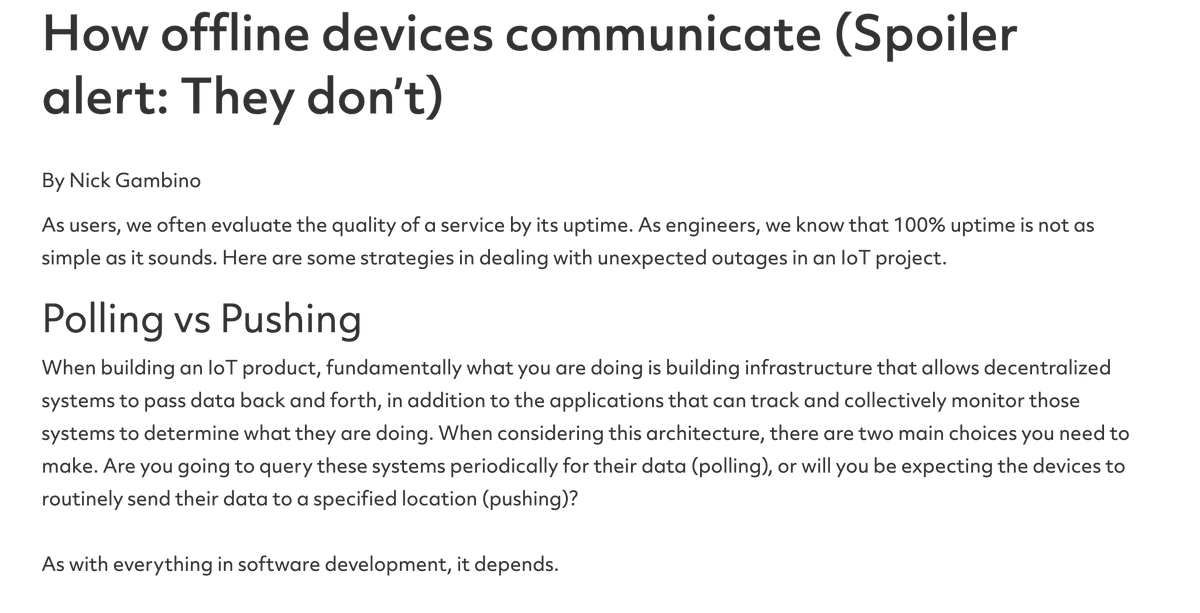
How offline devices communicate - https://t.co/qEBgSwmtzr
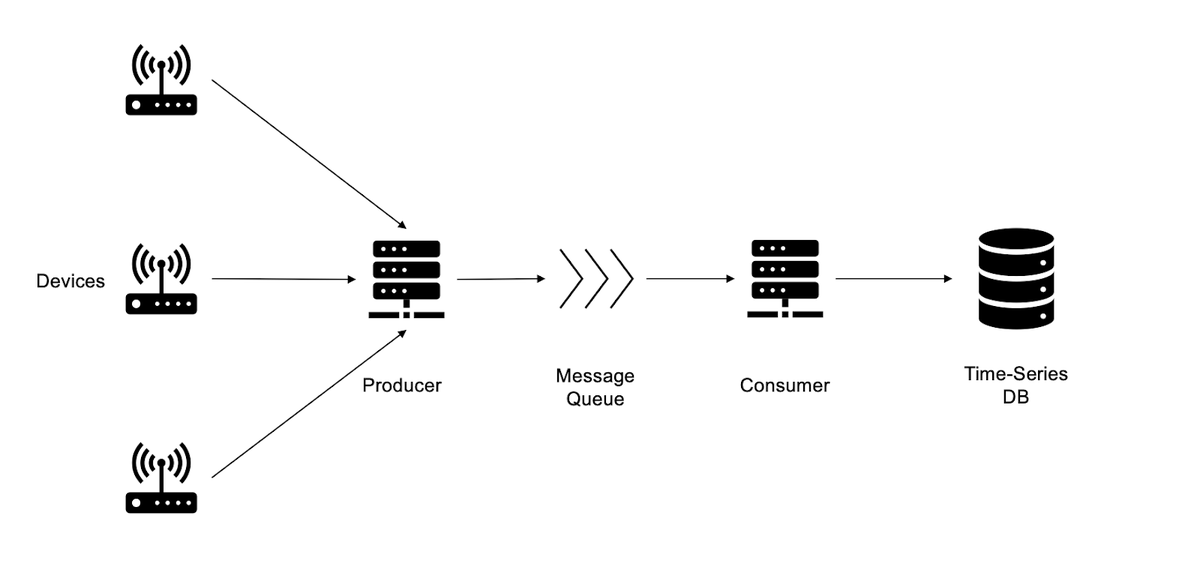
As a capstone to our series on #IoT application development, @gambinish puts together a guide on how to build an IoT network in an afternoon https://t.co/OlpQ2NXuti Tech used: @InfluxDB@Docker@RabbitMQ
"a robust Golden AMI pipeline is what’s considered a “security guardrail”, where your DevOps team doesn’t “approve” deployments, but rather “enables” them" From our most recent blog - DevOps: Saving Time and Sanity with Automated EC2 Updates https://t.co/ZxjYIiSOzi #devops
Orchestrating cloud infrastructure at scale is one of our most important considerations when developing new products and services on the web. In this article, we illustrate our approach to automating infrastructure. #DevOps#nosweat https://t.co/ZxjYIiSOzi
As a dev shop, our impact on the planet can sometimes feel invisible as we work from home firing up servers thousands of miles away. For Earth Day we built an assessment tool to aid our engineering practice. We hope this is helpful to others. #EarthDay https://t.co/a0hPcqD6qP
Effectively orchestrating cloud infrastructure at scale is arguably one of our most important considerations when developing new products and services on the web. Our recent blog illustrates the benefits and of automating EC2 Updates https://t.co/ZxjYIiSOzi #AWS#DevOps
When do you need an app to work offline across an array of devices, operating systems, and screen sizes for a limited budget with one dev team? We document our work with Western Pacific Fisheries in solving these problems and more: https://t.co/8mYHVeLI29 #PWA#IoT
Developing apps for IoT can sometimes be daunting, which is why we have been documenting our experiences in IoT. This first part focuses on transitioning between streaming database services while the app is live.
P1: https://t.co/traf0k0Br2
P2: https://t.co/TMUjqT0w1q
How does one build an app built that works offline, avoids app stores, and works on iOS, Android, and desktop? We built a PWA with WesPac Council to hit these requirements in order to maintain sustainable fish populations. Read our latest case study: https://t.co/8mYHVeu7aB
After fisheries in the Pacific closed, there was a loss of trust with those setting the Annual Catch Limits. Our latest case illustrates our work in creating a self-reporting suite that continually works to build trust and transparency. https://t.co/8mYHVeu7aB
In 2019 several fisheries in the Pacific region closed due to overfishing. We worked with the Western Pacific Fishery Management Council to develop a self-reporting PWA to restore transparency and trust in these communities. https://t.co/8mYHVeu7aB
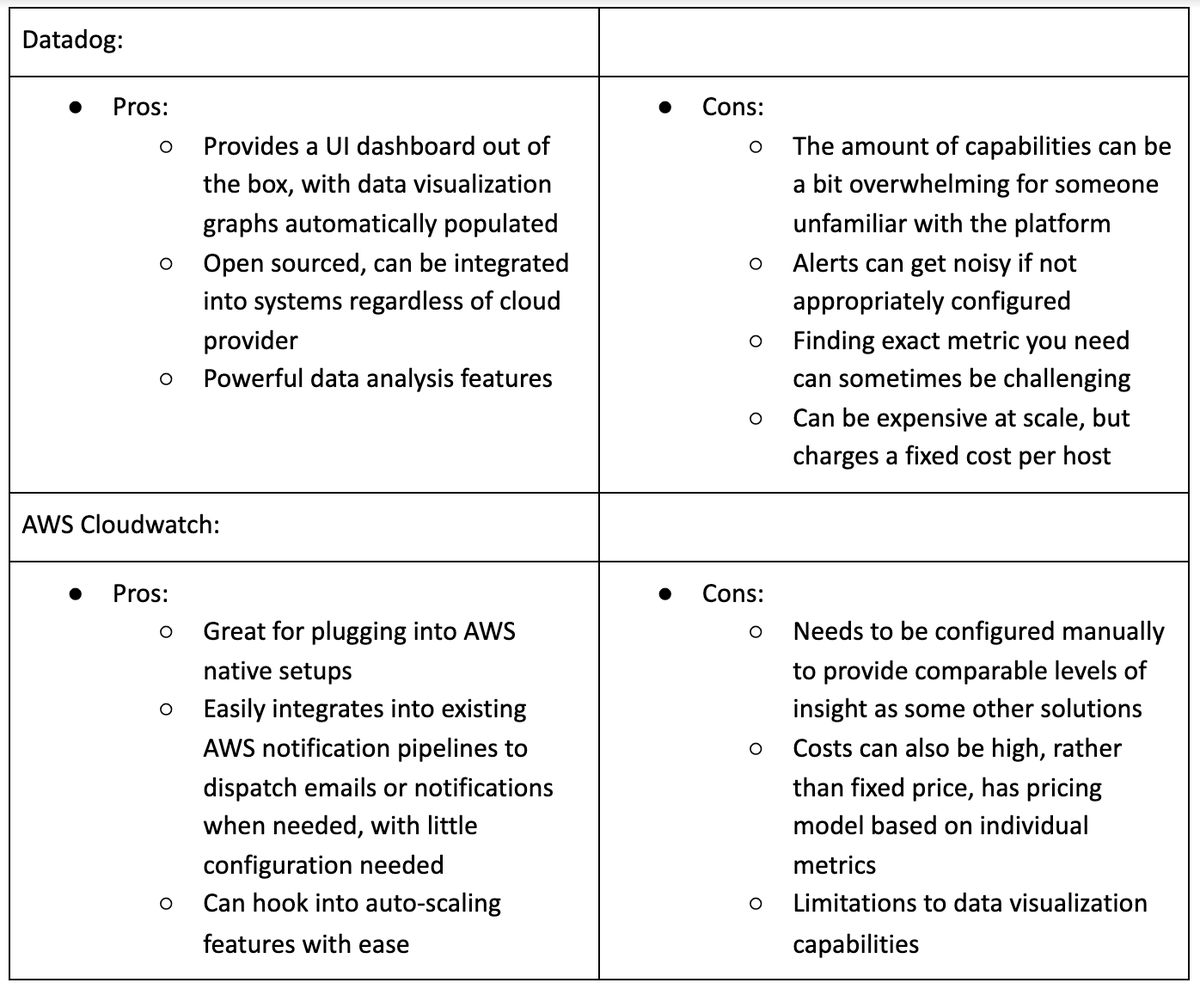
100% uptime in IoT is never as simple as it sounds, but always in demand. In this article, we outline a few strategies: How offline devices communicate (Spoiler alert: They don't) #IoT#decentralized#monitoring
https://t.co/qEBgSwE4qZ
An excerpt :
"The data pipeline is critical for any data-driven application to function effectively. Particularly in a distributed system, we found that we often needed to query specific segments...."
https://t.co/traf0kicPC
Working on apps for IoT can be challenging, so we've been putting together a series to help fellow developers work with the challenges in this field starting with system migrations between data services. What's your scariest engineering story? https://t.co/traf0kicPC
Does your querying strategy match your user stories? Engineer @gambinish writes up his insights as to how clear user stories help to guide the design of #InfluxDB queries. Anyone have stories of queries gone awry? We love hearing those too 😂
https://t.co/m2RanTH8nh